After months of anticipation – it was finally our big day in Athens.
We were going to visit the Acropolis.
Not the museum, not a model and not a replica. The real deal.
We took a nice leisurely walk from our hotel and paid the 60 euro entry fee (30 euro each) to hike up the steep path to the top of the Acropolis.
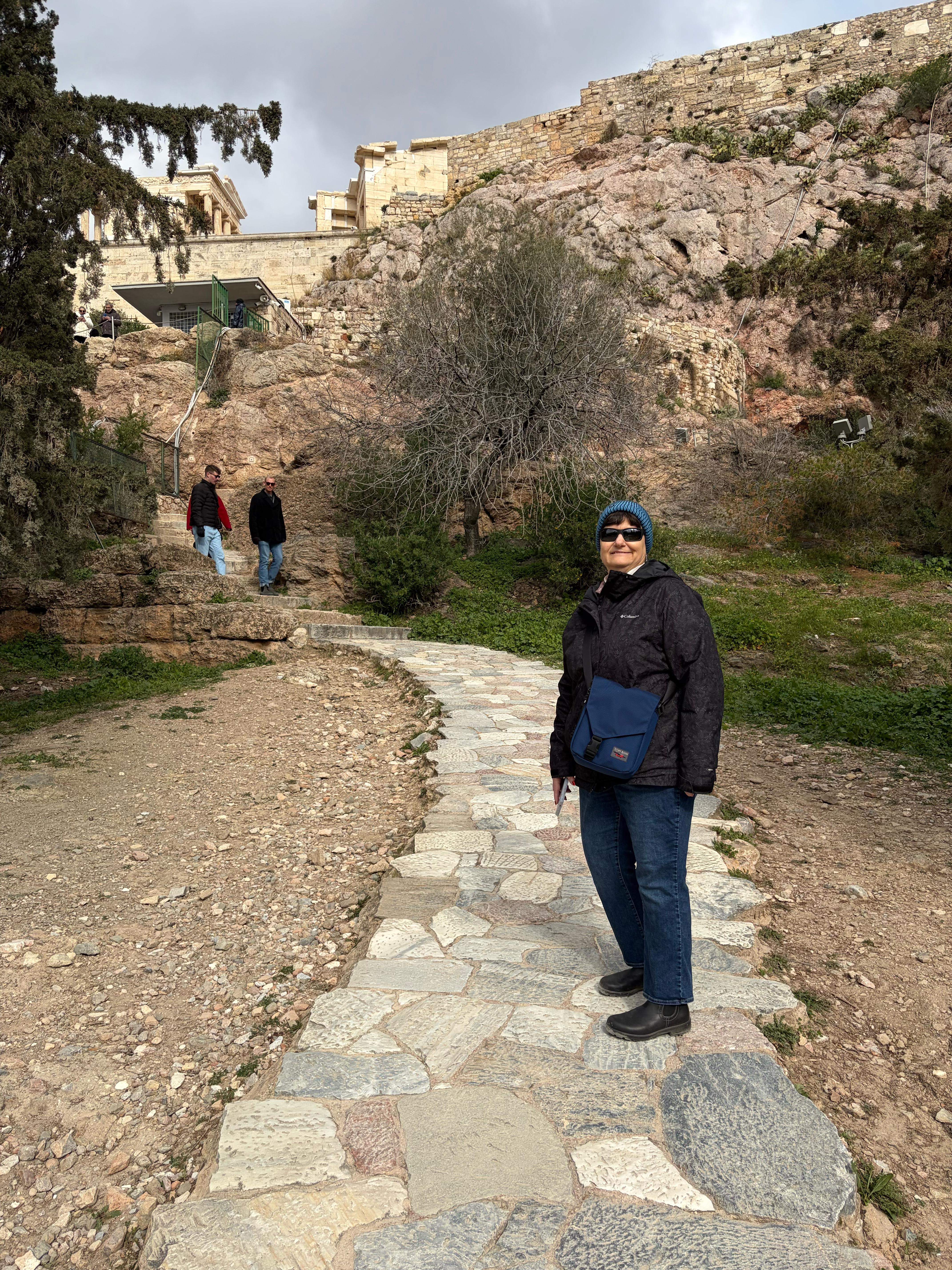
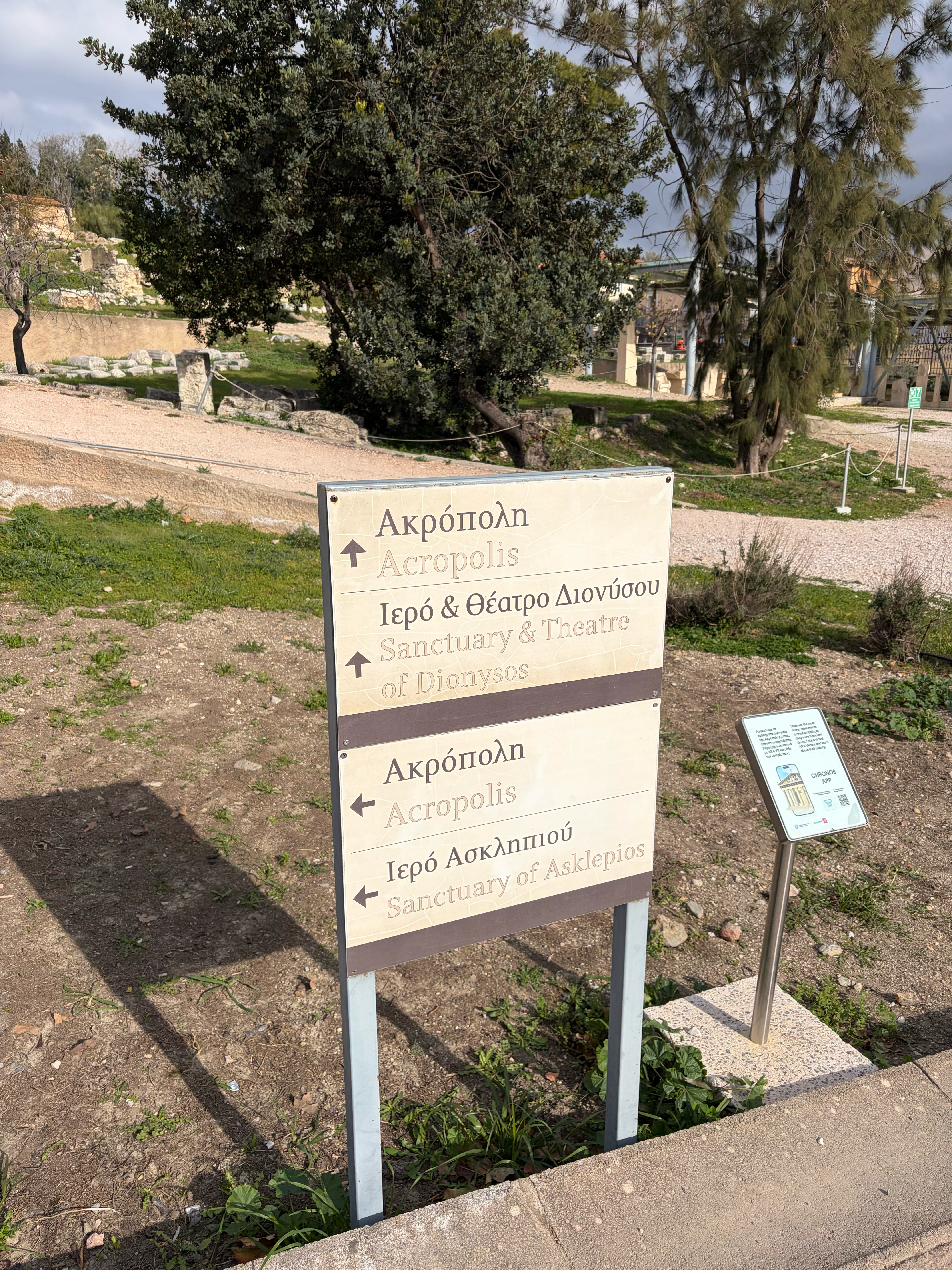
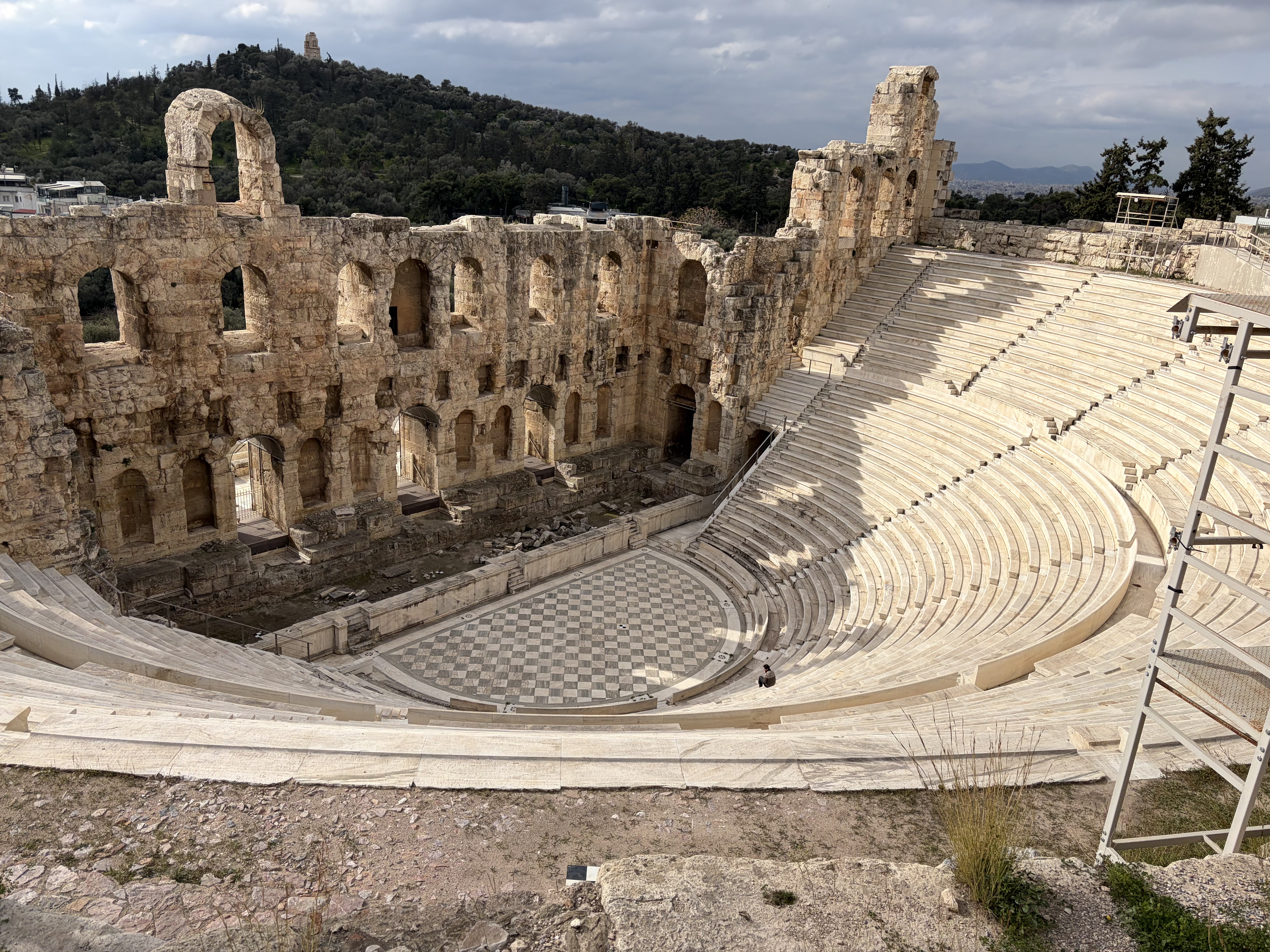
We walked past several ruins on the climb from the entrance to the top of the Acropolis – including the Odeon of Herodes Atticus – a famous Roman theatre that is still used today for music performances.
Once at the top – we popped in our earbuds and did a 60 minute Rick Steves Audio Tour of the key sites and temples on the Acropolis.
The Acropolis refers to the large stone feature (somewhat like a Mesa in the SW part of the United States) that had several different structures built on it during Greek and Roman times. The large temple that is often in the pictures of the Acropolis is called the Parthenon. More on that later.
The first structure we went through was the Propylaea (the main entrance to the Acropolis) which was built to inspire and awe visitors when visiting dignitaries came to the Acropolis. The scale and grandeur of the Propylaea are hard to capture in pictures – but I certainly tried!
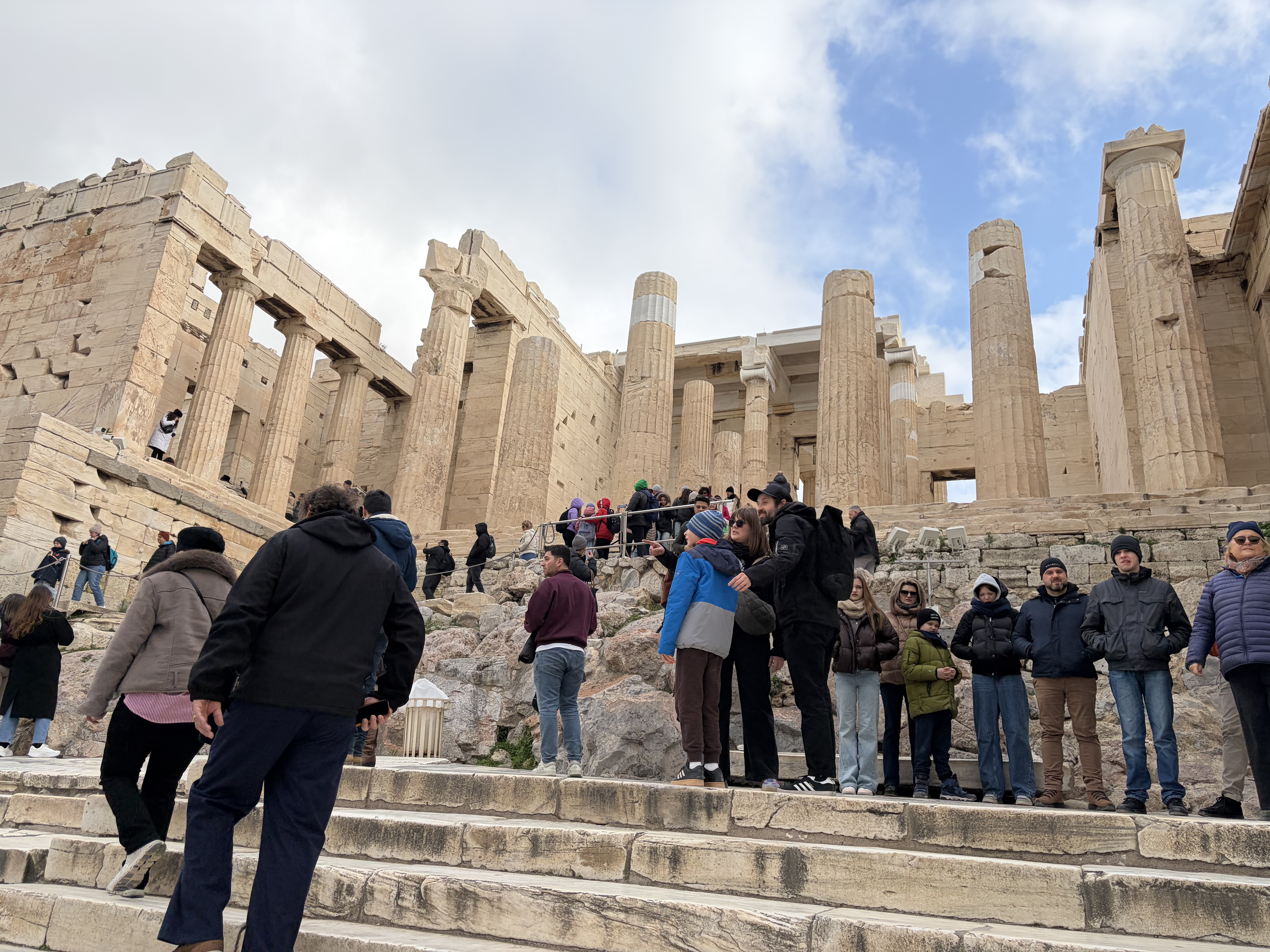

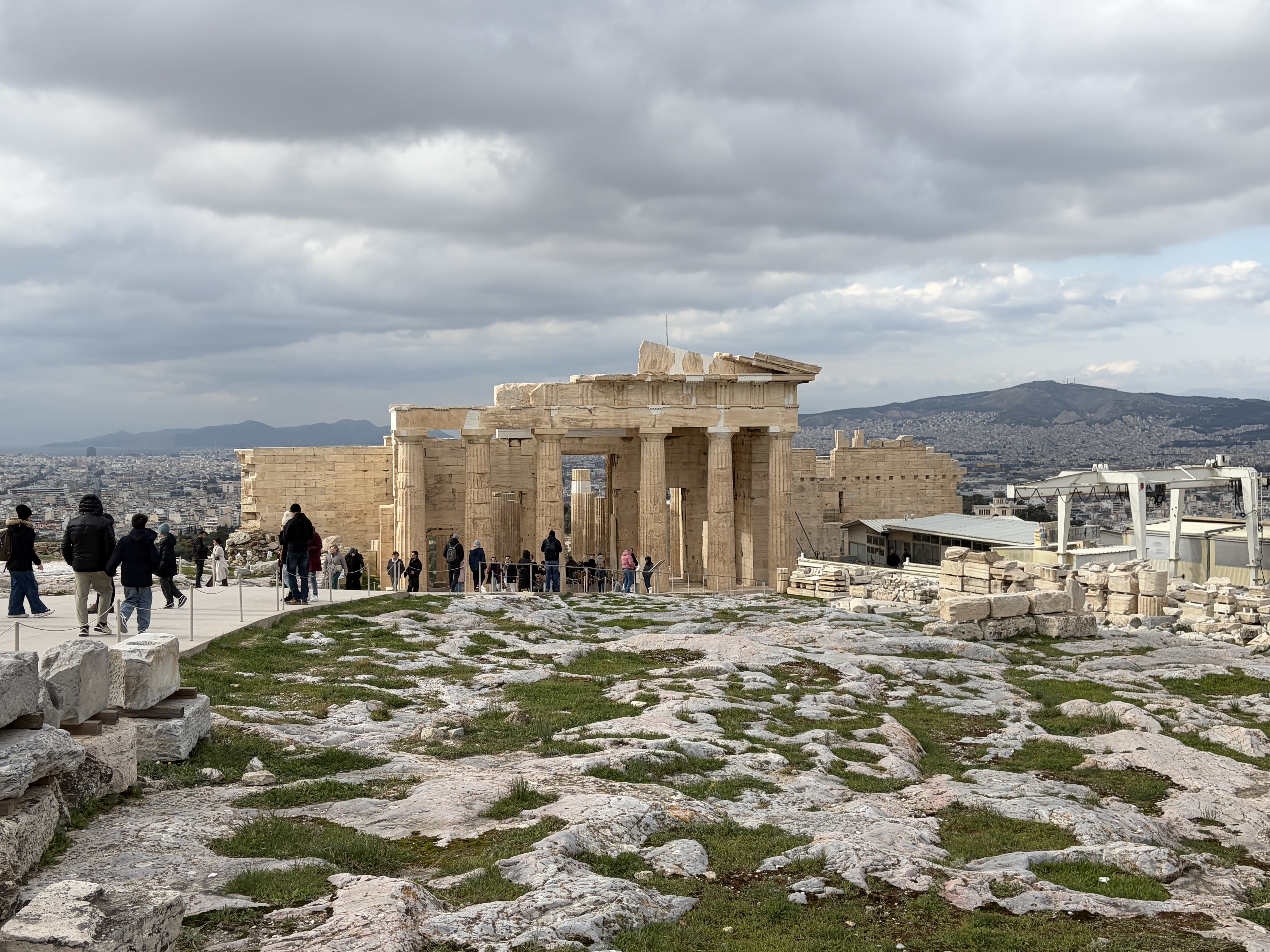
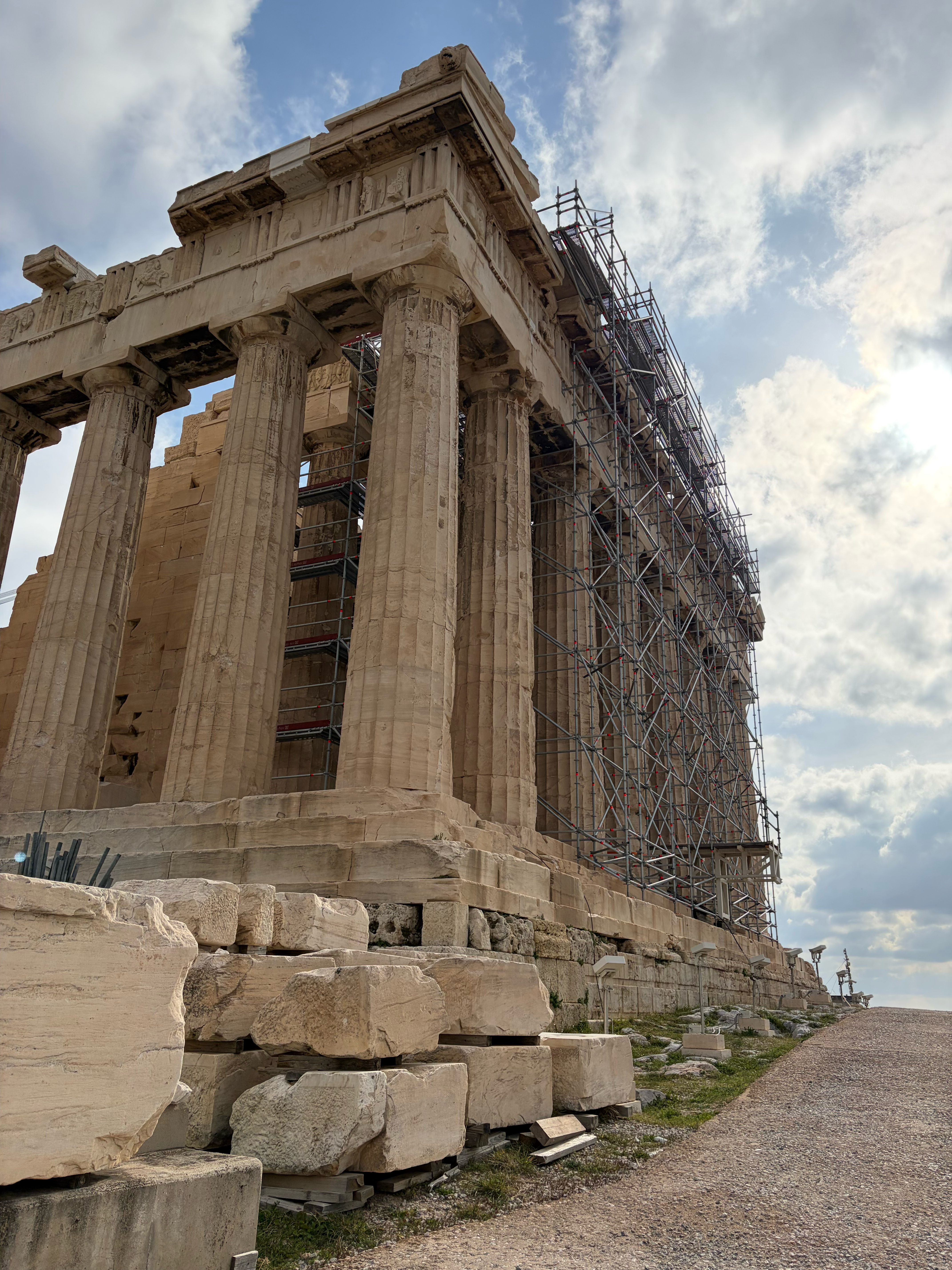
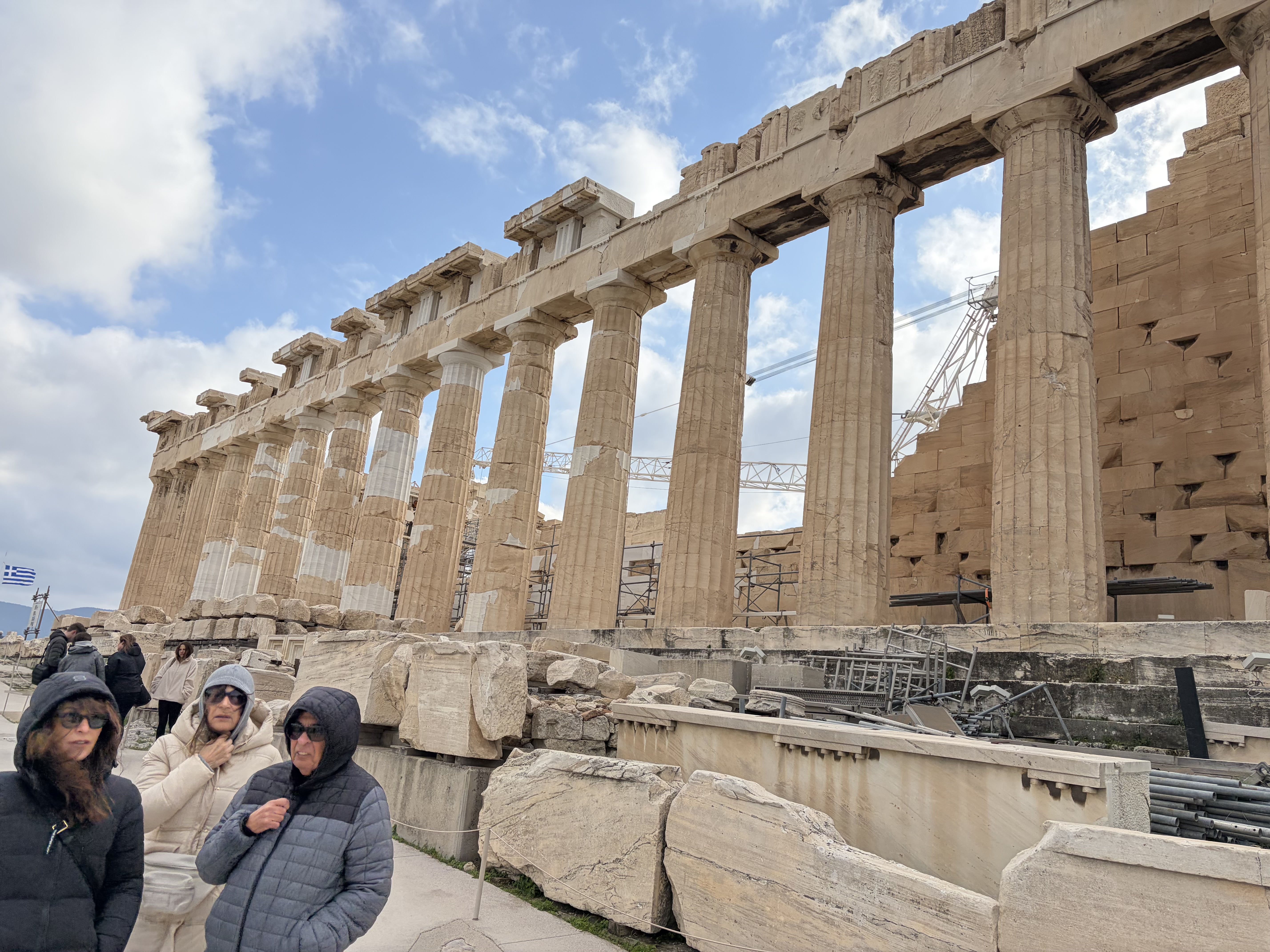
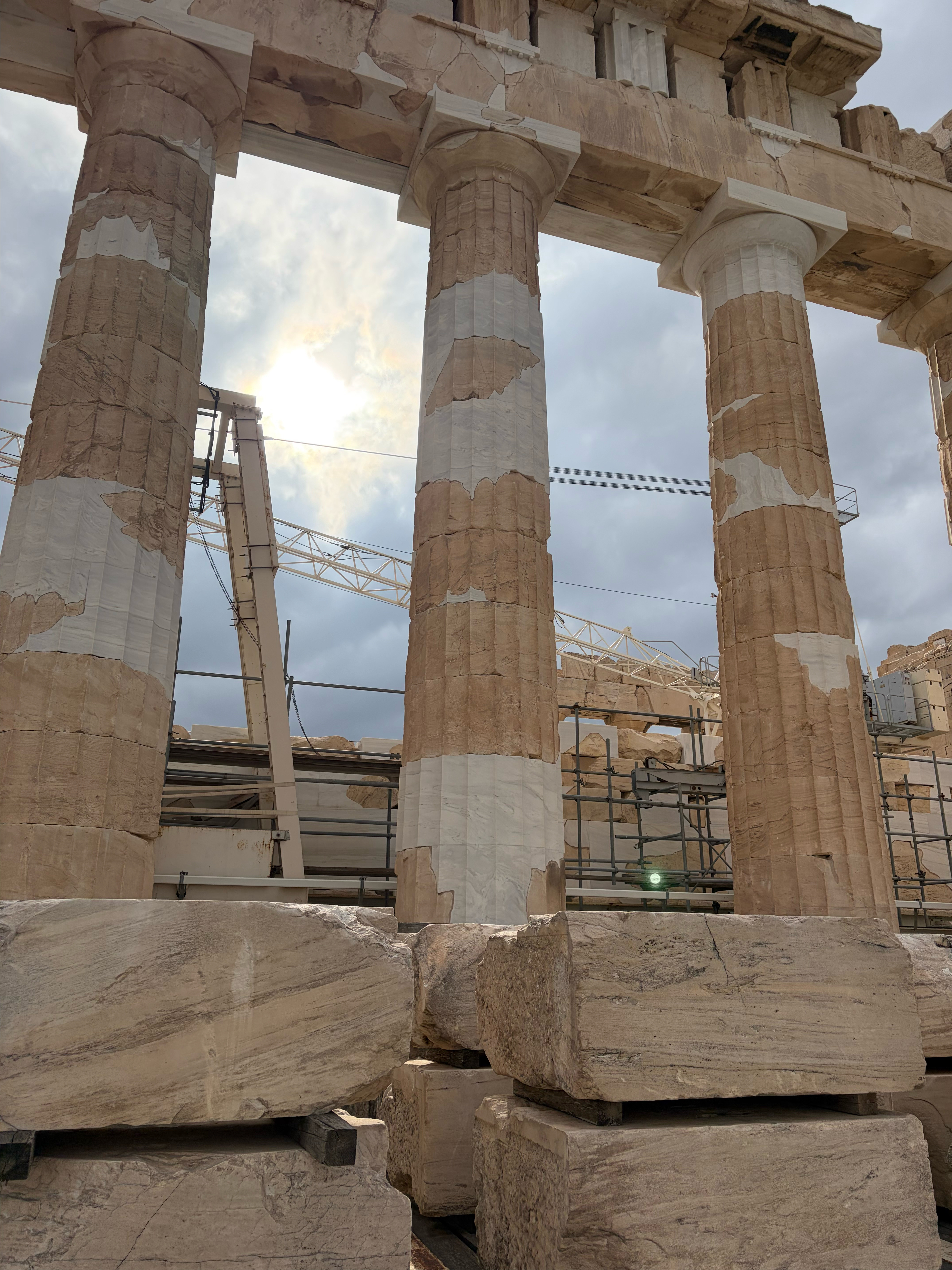
Walking through the Propylaea, we then walked about 100 yards over to the Parthenon and walked around the entire temple ruins. Our audio guide gave detailed descriptions of what we were looking at during our complete circumvention of the temple. There is still active restoration going on – and will be for probably the next decade or so.
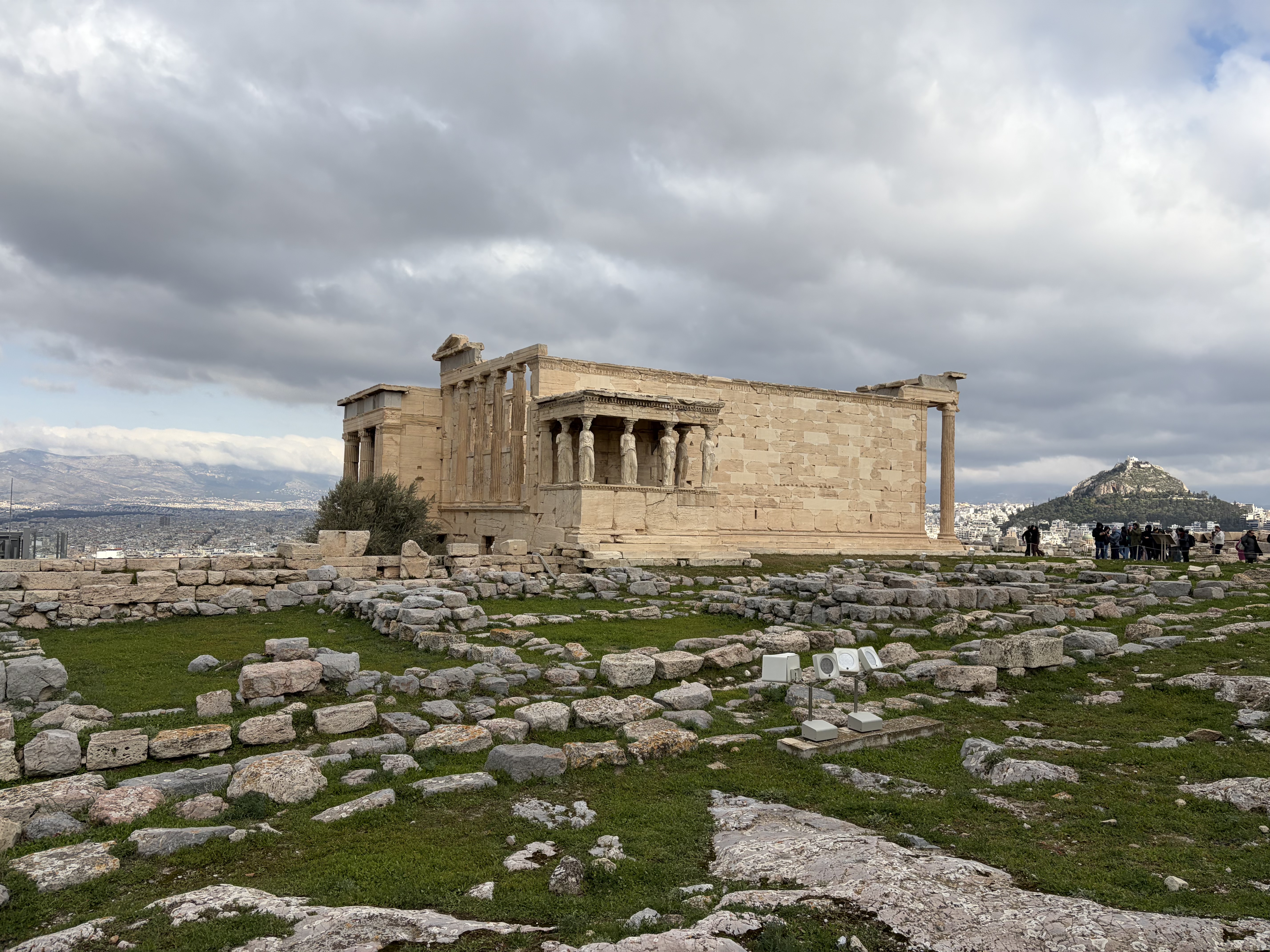
After the Parthenon – we then walked the 50 yards or so to another temple celebrating Athena called the Erechtheion. The most famous part of this structure is the Porch of the Caryatids which contain carved marble statues of women as pillars which structurally held up the porch roof. The statues on display are replicas – with the originals in the Acropolis Museum, the British Museum and one final one in France.
The final stop on the top of the Acropolis was the Viewpoint with a Greek Flag.
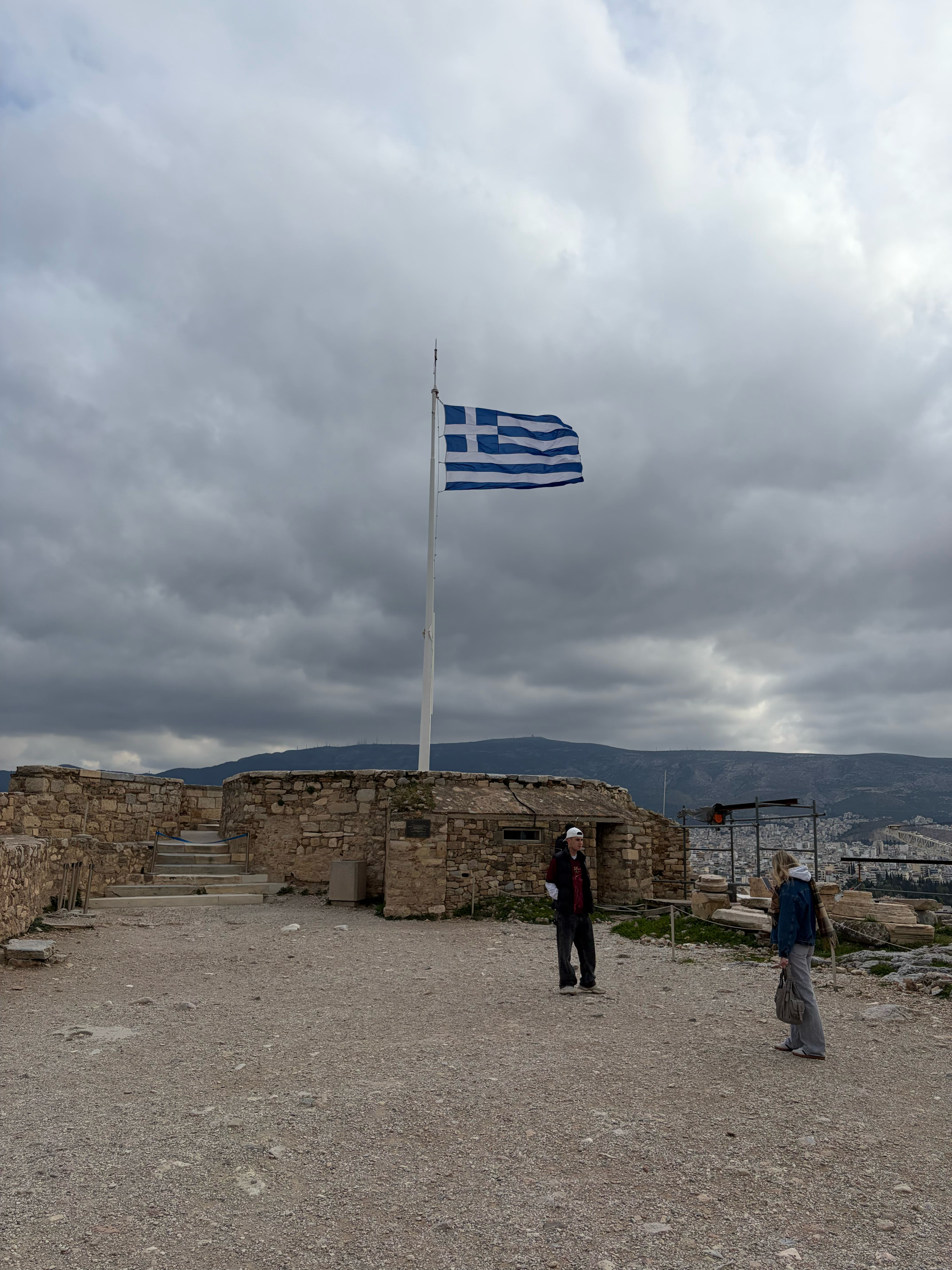
During World War II when the Nazi Army occupied Athens the conquerors attempted to replace the Greek Flag with a Nazi Flag. One of the elite Greek soldiers guarding the flag refused to give it up. In an ultimate act of defiance he took it down, wrapped himself in it, and jumped off the Acropolis. The viewpoint and a plaque commemorated this act of resistance during the Nazi occupation.
It was a bit cold and blustery on top of the Acropolis – so we started our walk back down the hill. While it might not have felt quite as strenuous – sometimes coming down a steep hill can be worse than going up.
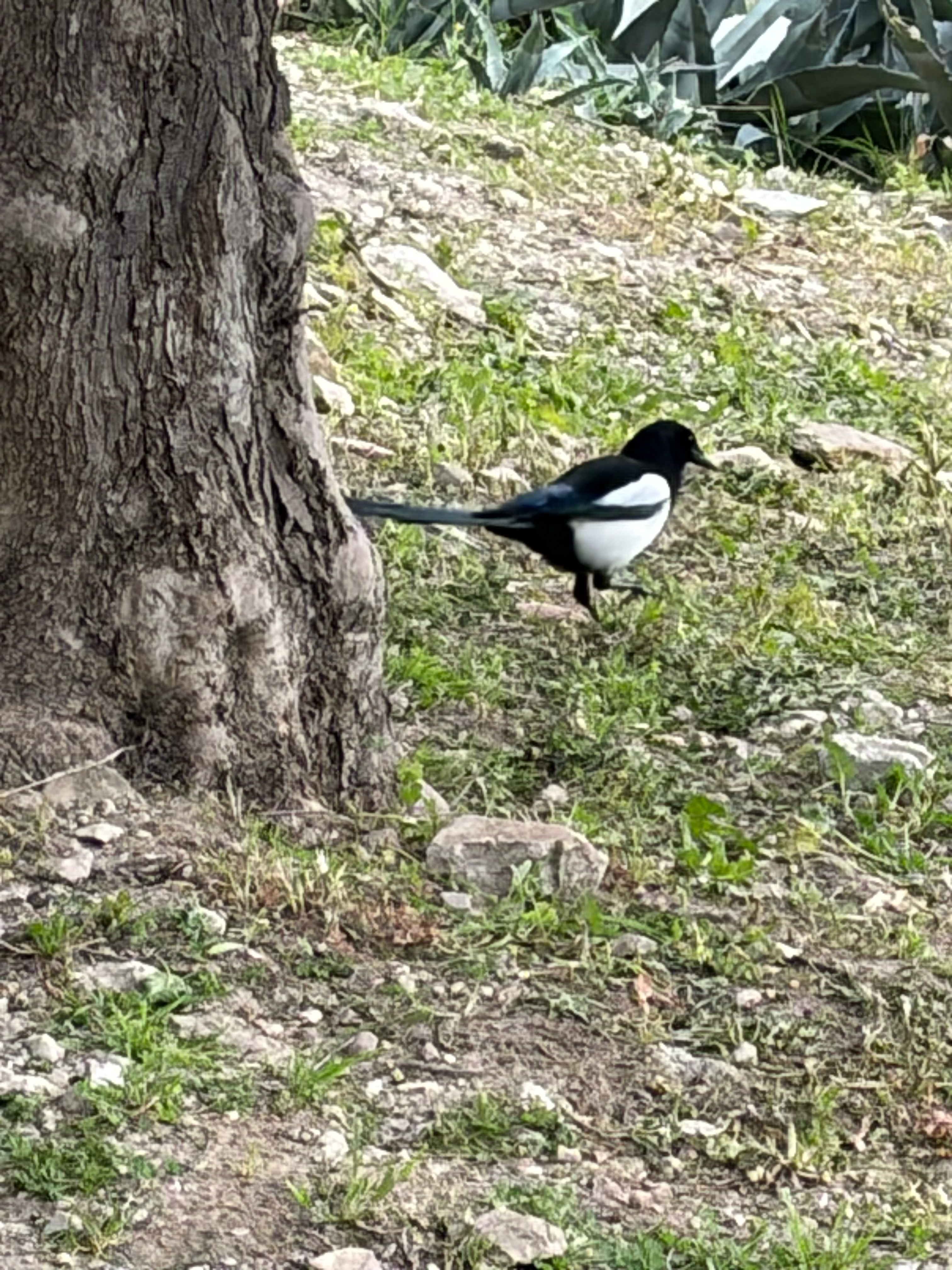
Along the way – I caught a picture of an Eurasian Magpie – and added another new species to my “life birding list”.
After a quick lunch and stroll back to the hotel – it was time to pack up and get ready for our return trip back to Washington.
 Kirk’s Travelogue