
We joined with 69 other soon-to-be friends on our first official day as part of our Viking Nile River Cruise itinerary. All of the cruise passengers gathered at 8 a.m. in the morning for some orientation information, a broad overview of the next ten days and information about our first day itinerary in Cairo which includes visits to Saqqara and the Citadel.

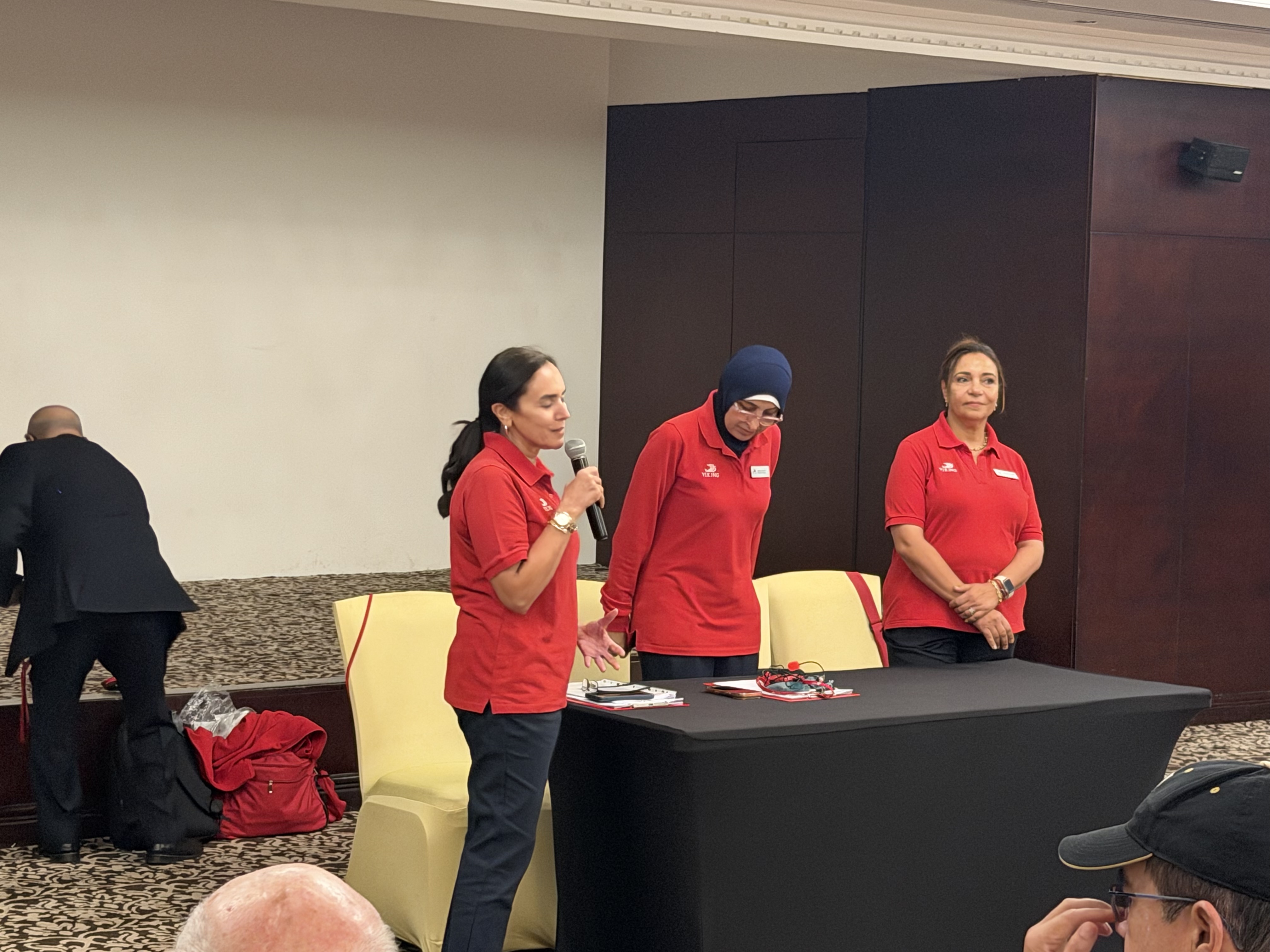
We are broken up into three different groups with creative names like “Bus A”, “Bus B” and “Bus C”.
We were assigned to Bus C and will be with the same tour guide for the entire trip. On previous tours with Viking you relied on local guides at each location but with the Nile River cruises you have the same guide for the entire trip.
Our tour guide is impressive. Heba has a Ph.D. in Egyptology and has been a licensed tour guide in Egypt for over 30 years. In short – she knows her stuff!
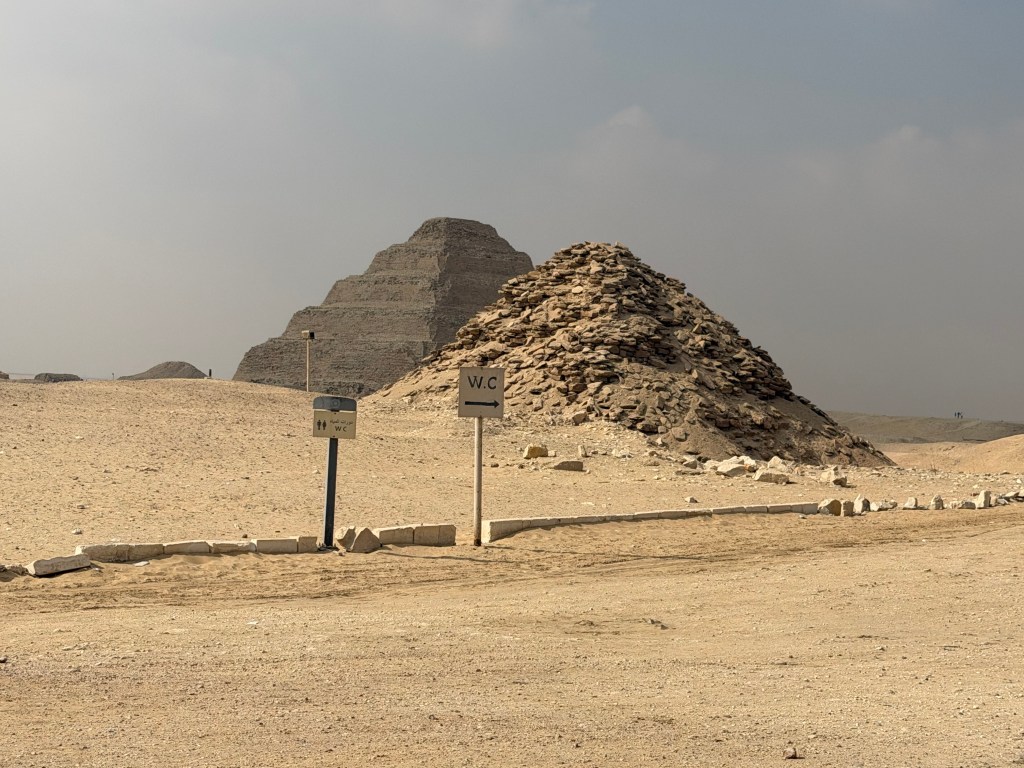
It took us about 40 minutes by bus to reach the the Saqqara Archeological Site for our first up close view of a pyramid – and more specifically a stepped pyramid.
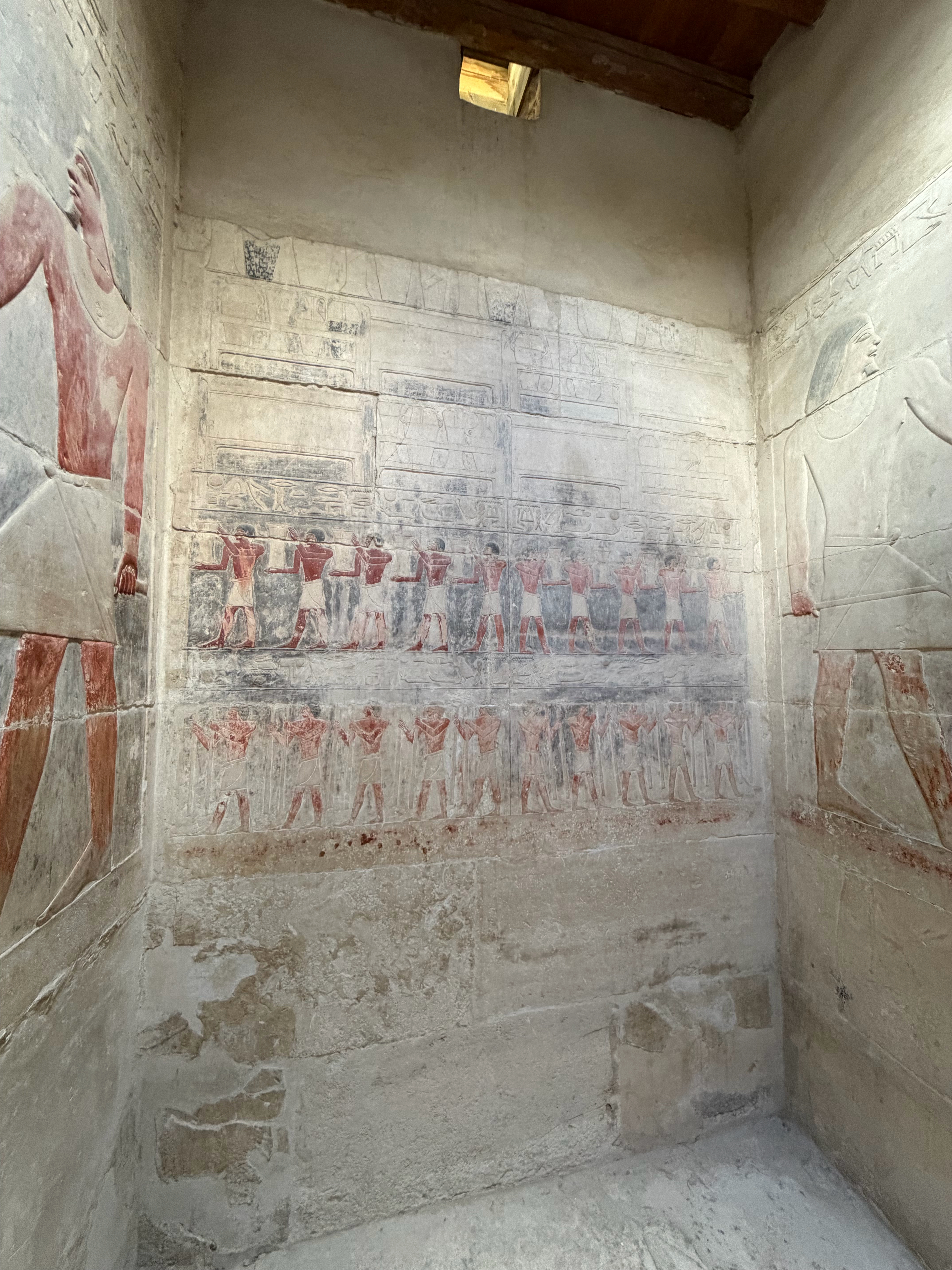
Upon arrival and having our tickets scanned we toured through the burial rooms of Kagemni who was the Vizier of King Teti. His tomb was highly decorated and had many inscriptions – including several that still have the original paint on them from when the tomb was constructed around 2330 BC.
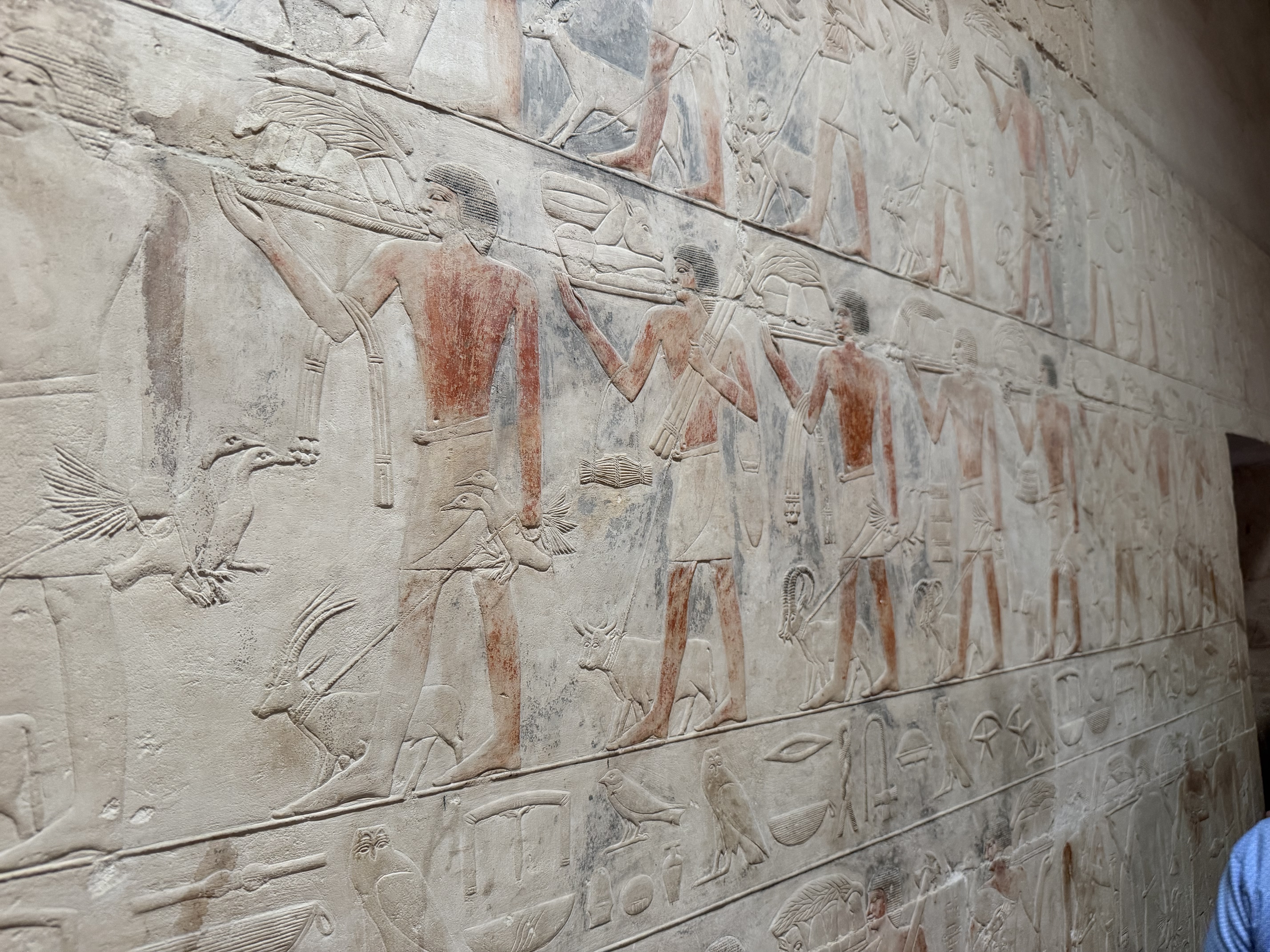
We then had the opportunity to visit the burial chamber of King Teti (around 2330 BC) in a stepped pyramid – but it required a bit of body twisting to get there.
The trip from outside the pyramid to the burial chamber involved hunching over and scooting through a steeply inclined tunnel to view the sarcophagus and burial chamber. The opportunity to go down the small tunnel was optional (definitely not for the claustrophobic) and several of our fellow cruisers made it about half way down and decided further tunnel explorations were not for them.
Noel and I eagerly went through the tunnel and were rewarded with a fascinating view of an actual burial chamber.
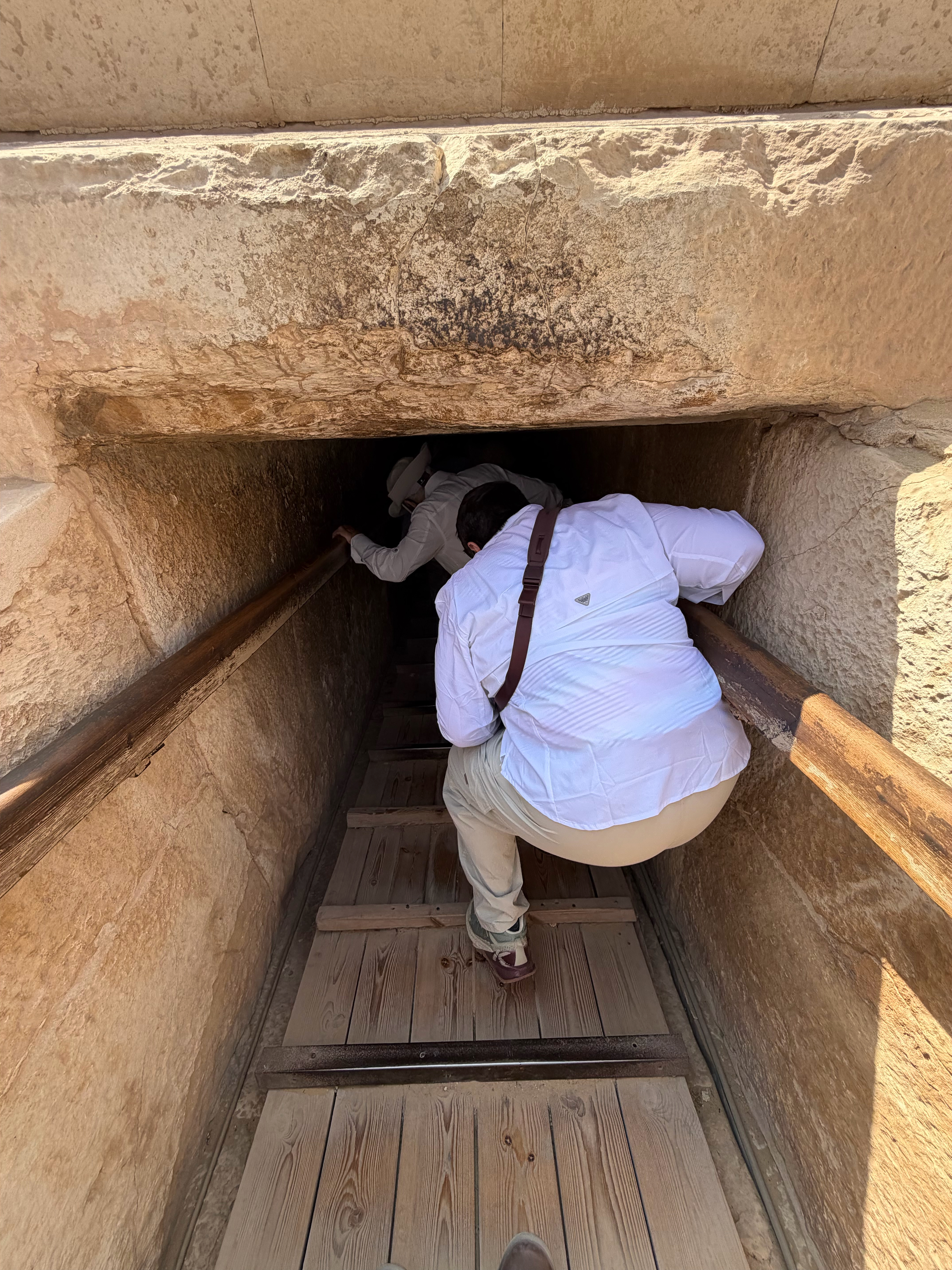
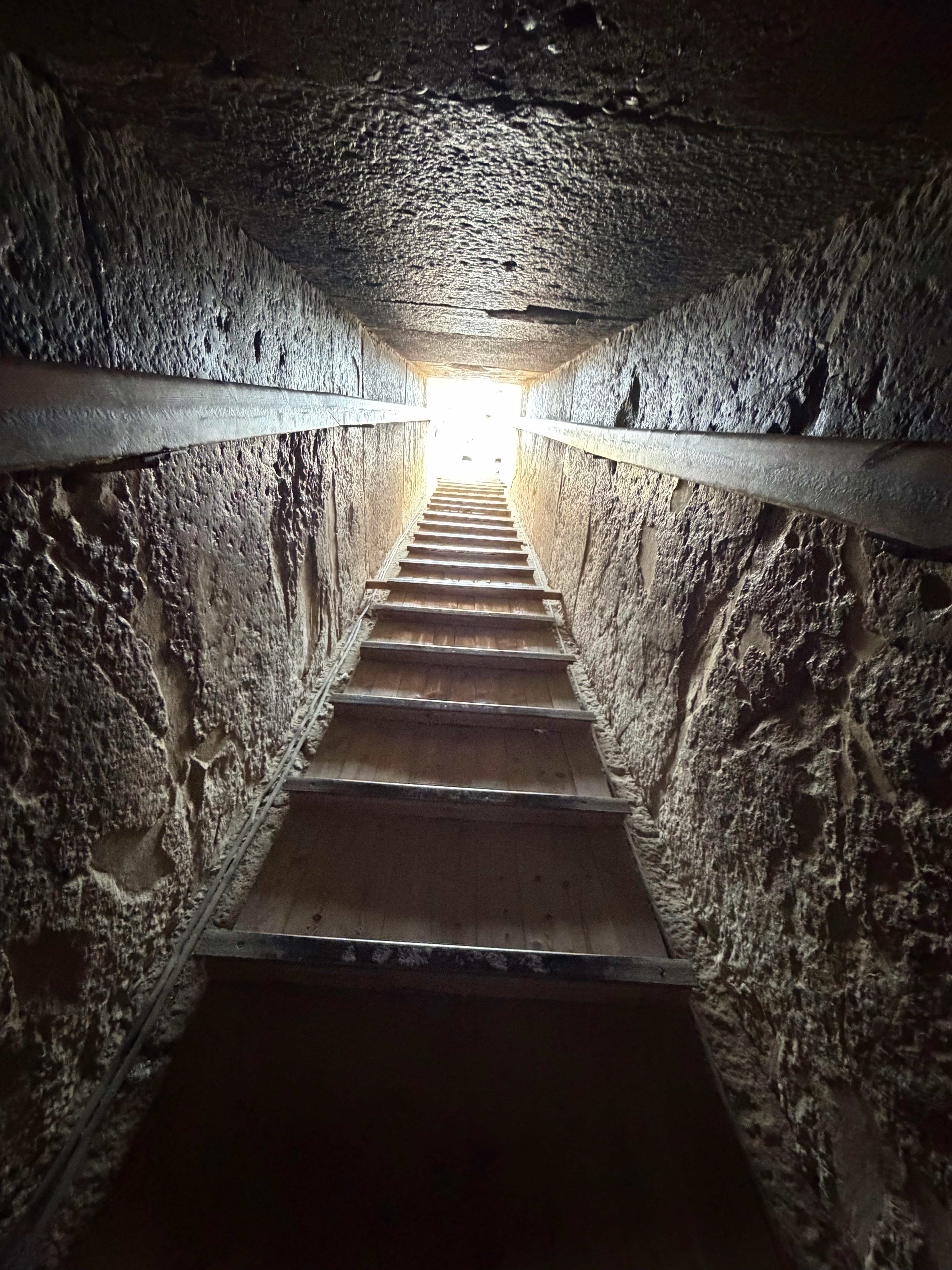
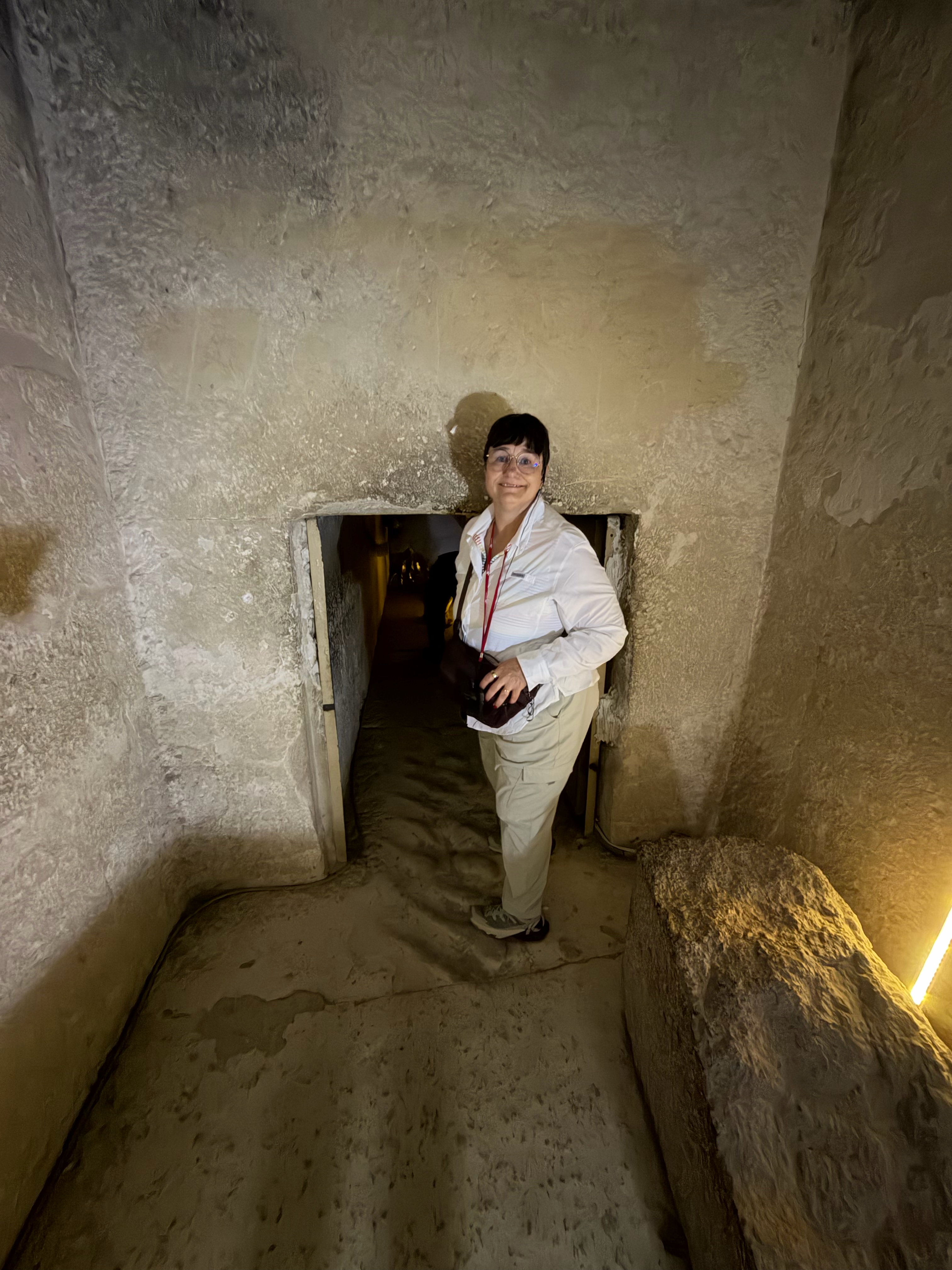
Upon emerging from the tunnel it was good to stretch out a bit before getting on our bus and driving about 10 minutes to the Step Pyramid Complex – also part of the Saqqara archeological site.
We had the opportunity to visit the first pyramid ever built in Egypt by King Netjerykhet (also called Djoser) around 2700 B.C.
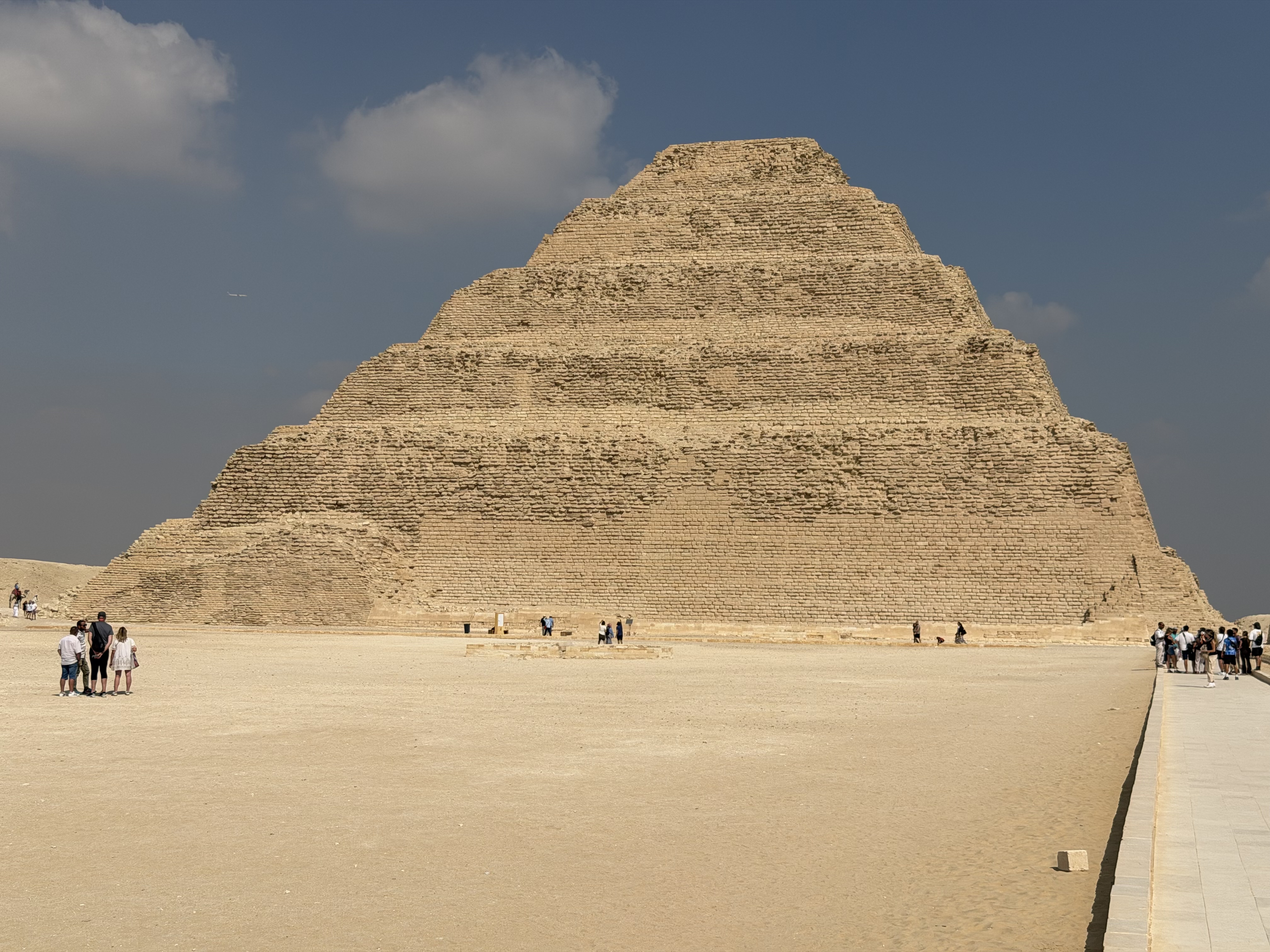
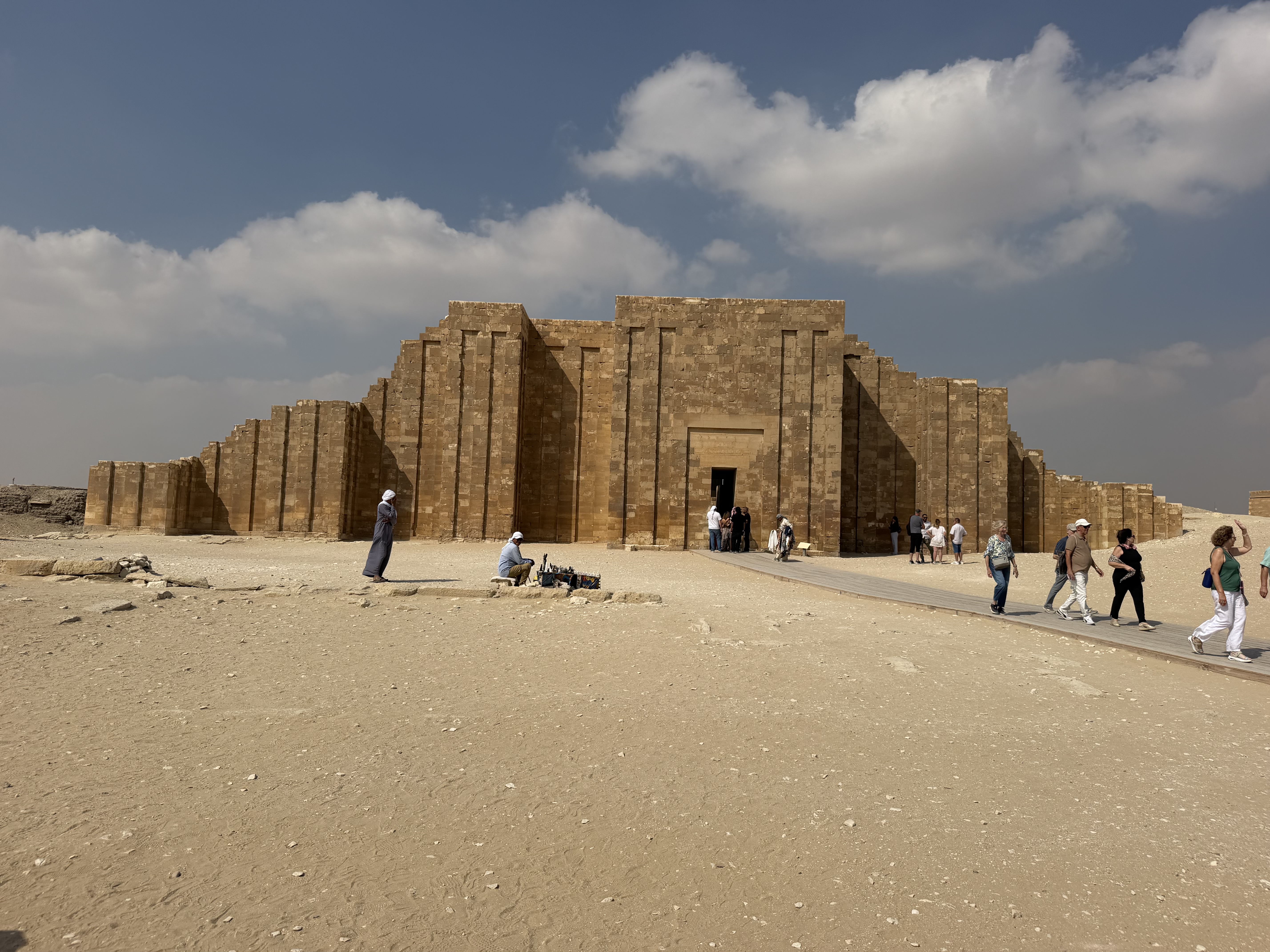
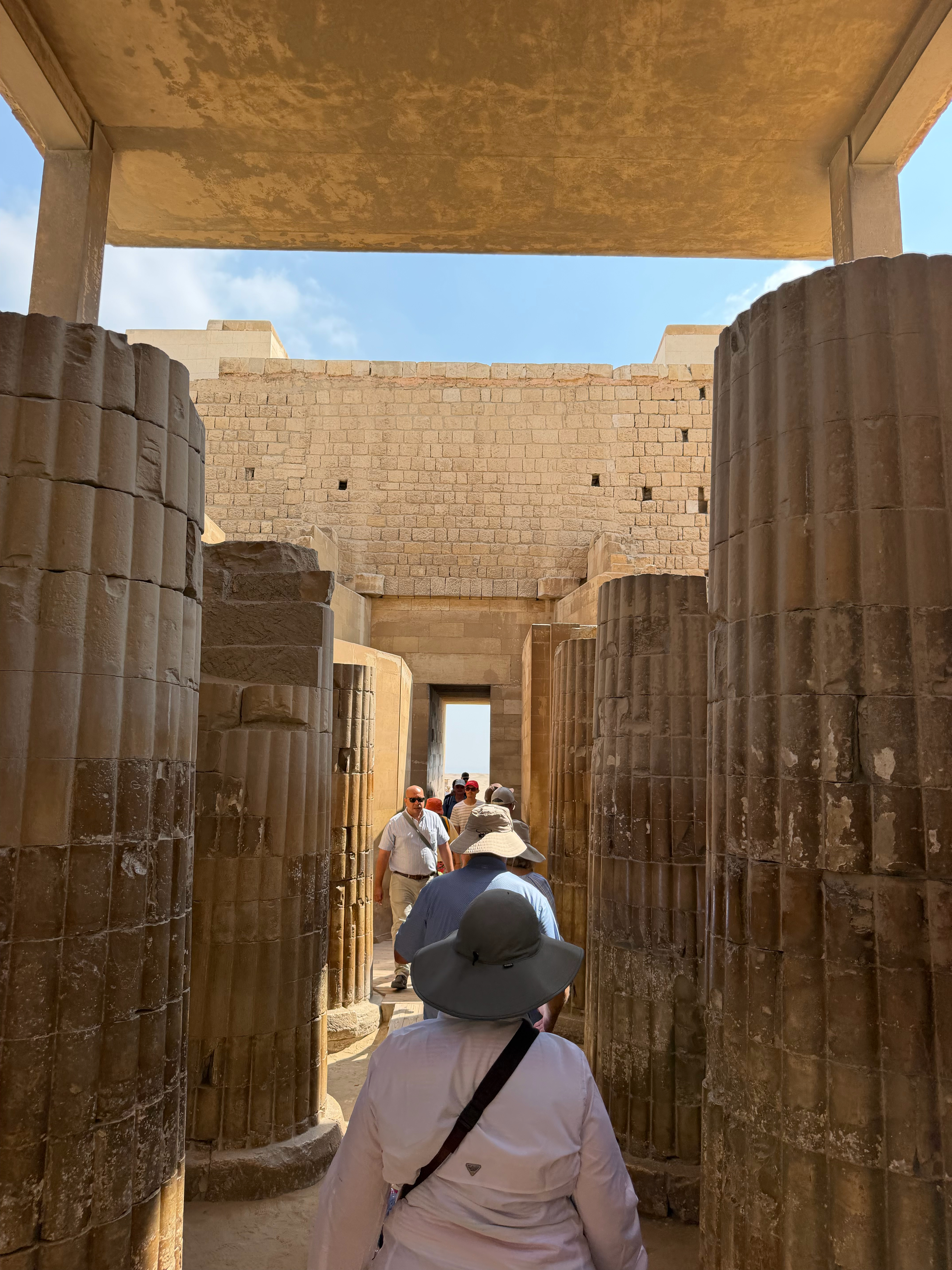
The area surrounding the stepped pyramid was originally enclosed by a 10 meter high wall when it was built. Over the ensuing centuries the wall had been knocked down but had been partially reassembled in the 1920’s. It was stunning to see just how large the complex was when first built.
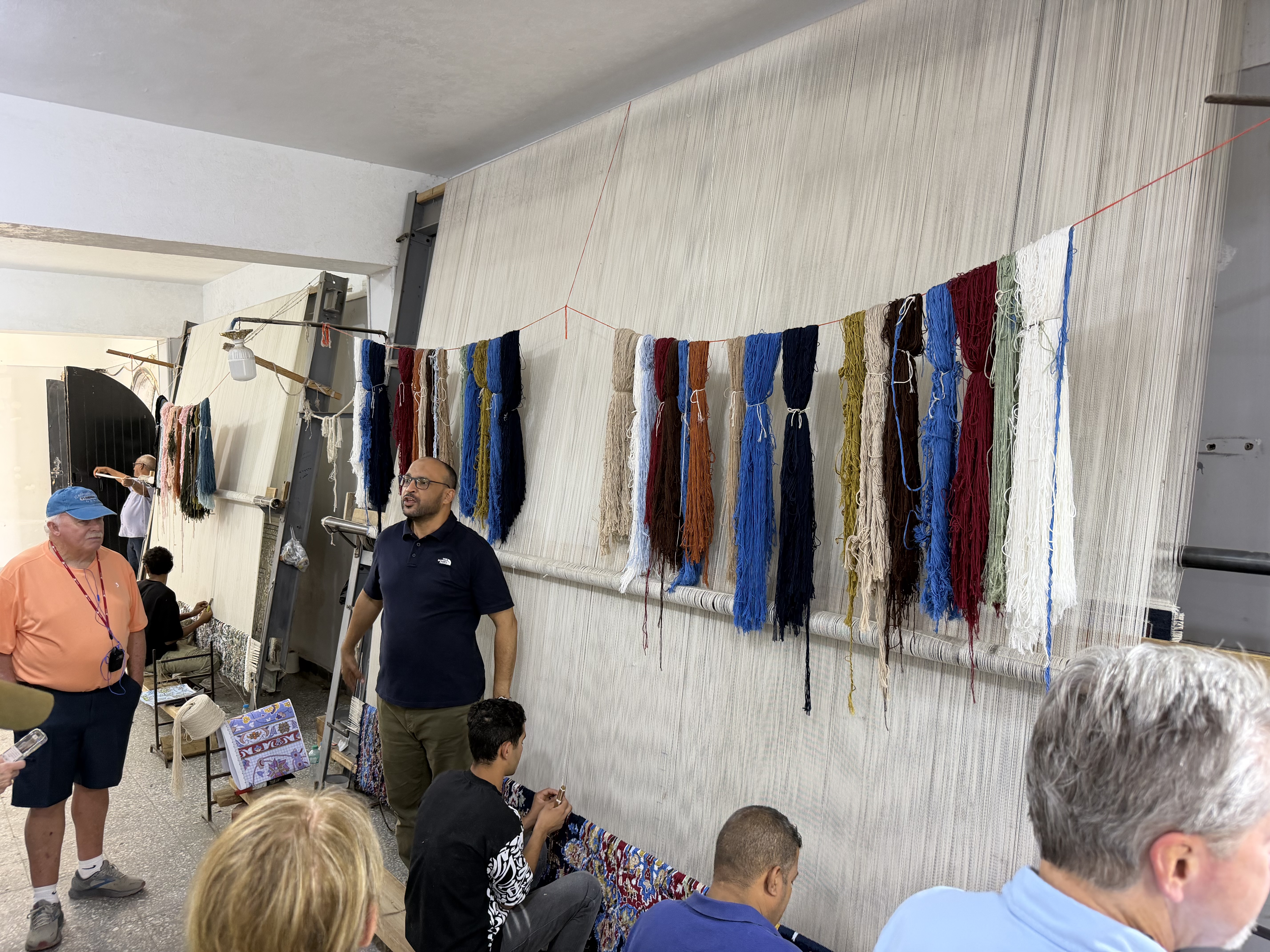
After finishing up at the Saqqara archeological site, we drove to a nearby weaving school and were shown a demonstration on handmade Egyptian Rugs. It was fascinating to watch some of the artisans at work on these beautiful pieces of art.
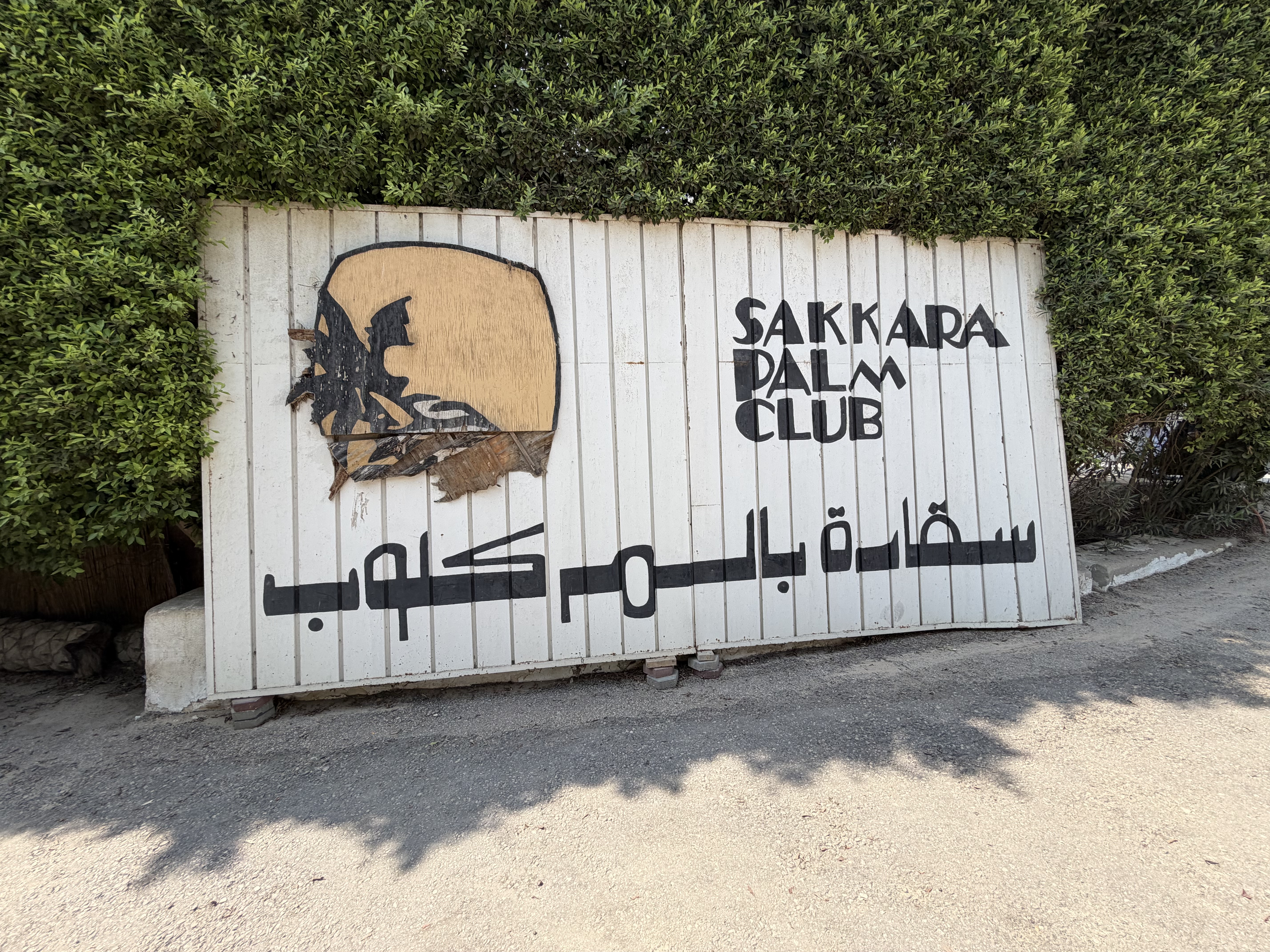
It was time for lunch – and we stopped for a buffet lunch at a local nearby restaurant called the Sakkara Palm Club. Since we were at communal dining tables everyone shared where they were from. One couple we sat with are Rutgers alumni who came to Seattle in 2015 to watch WSU play Rutgers in football. A small world!
After lunch we got on the bus and headed to an historic site called the Salah al-Din al-Ayyubi Citadel – or “The Citadel” for short.
Like many large historical sites – it was slowly built up over centuries. The first part of the Citadel was built in 1176 A.D. This was the seat of Egypt’s rule up until the 1800’s when it was moved to a new palace.
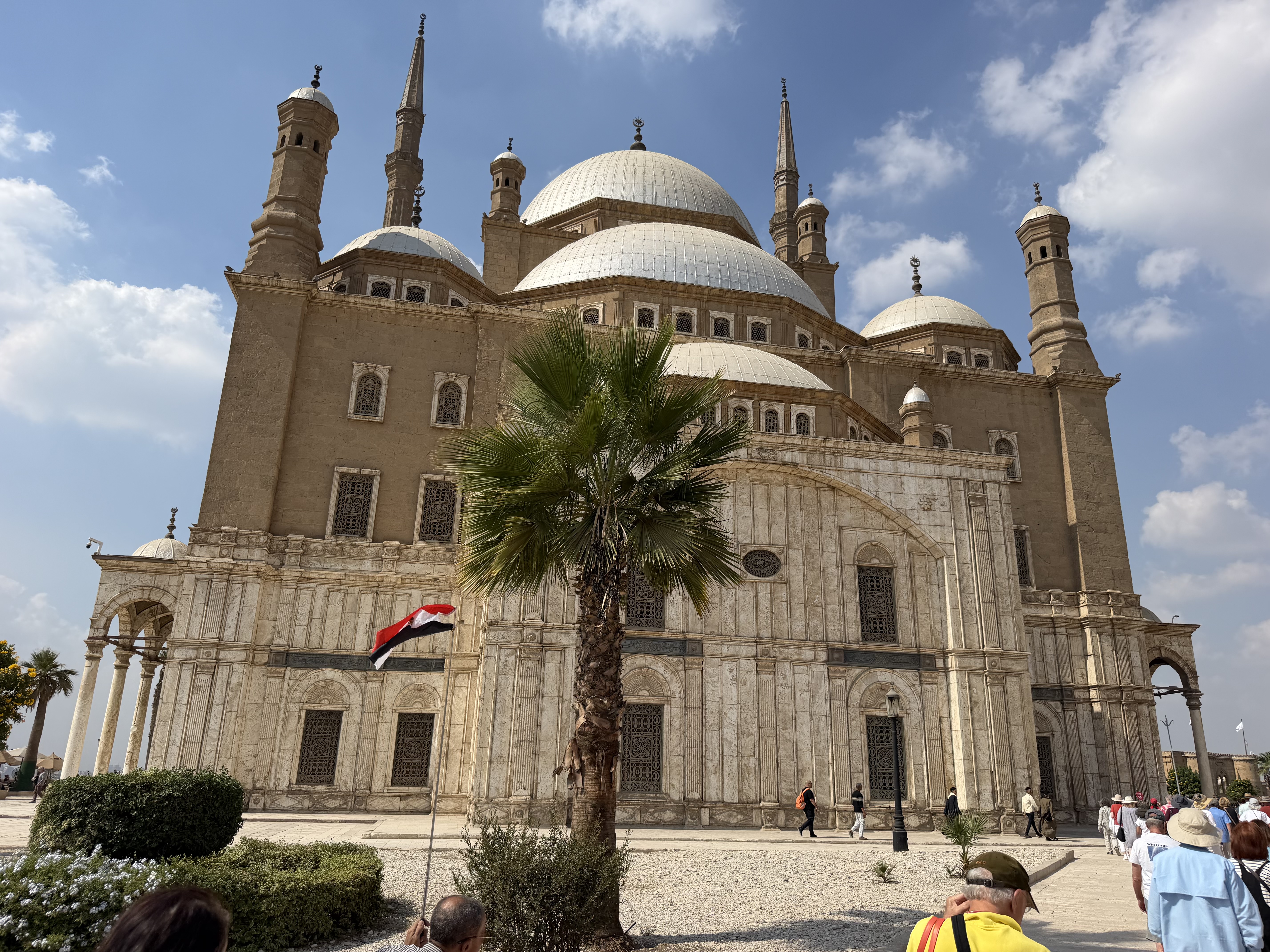
The most impressive part of the site was the Mohammad Ali Mosque – which was finished in 1848 for the ruler at the time – Mohammad Ali.
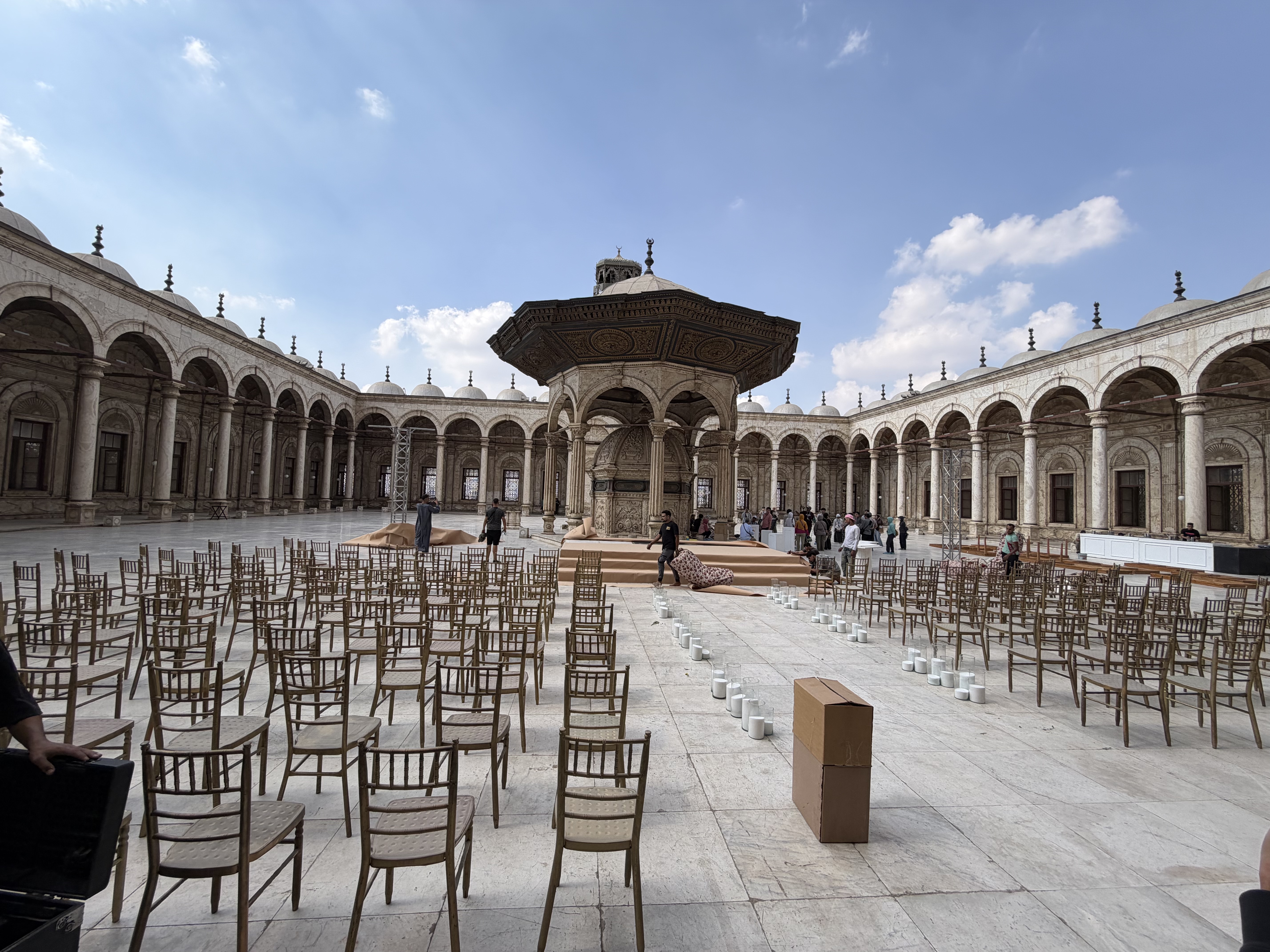
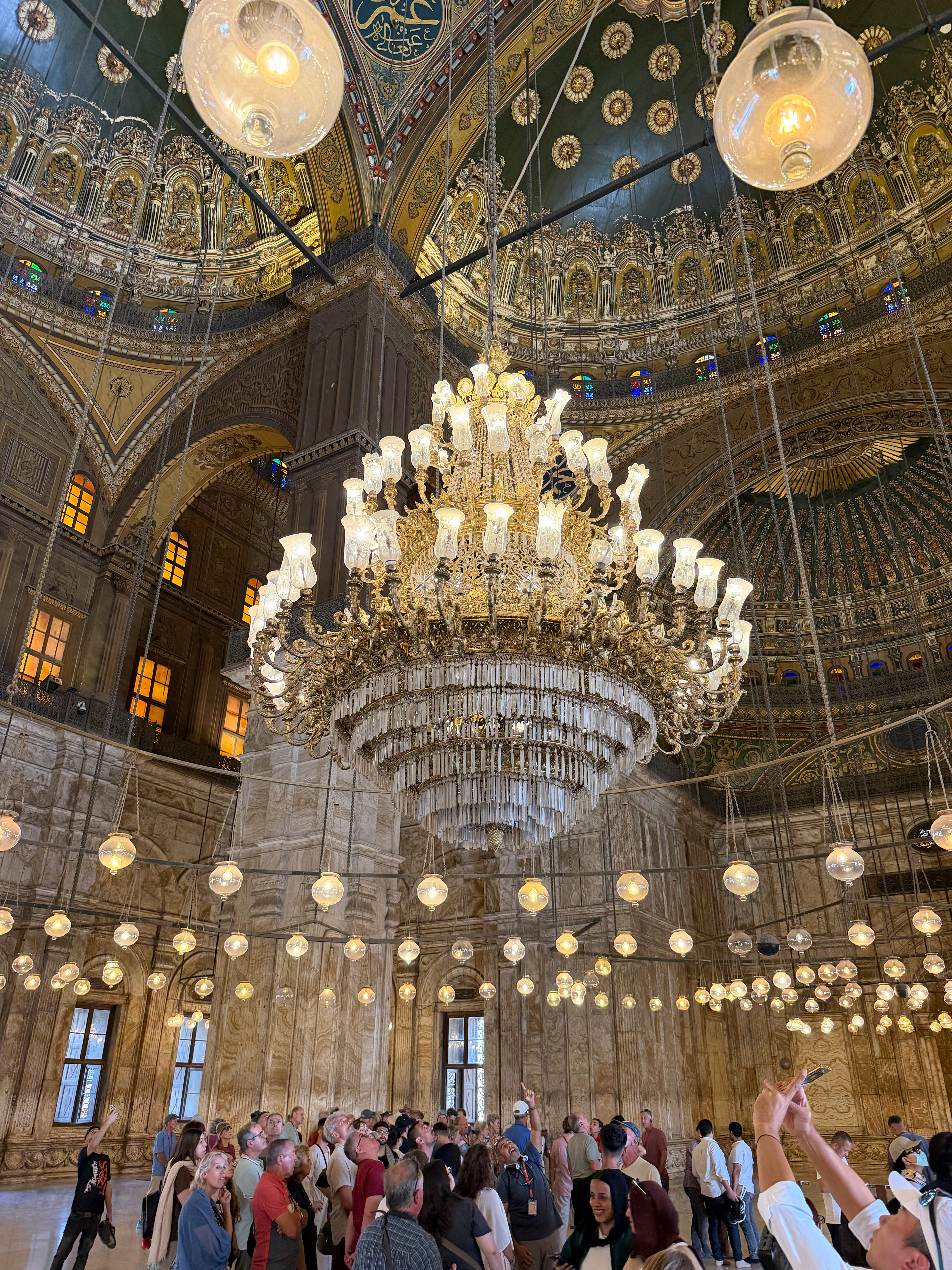
The inside was breathtakingly beautiful with amazing 24 karat gold work, superb stone work and stunning architecture.
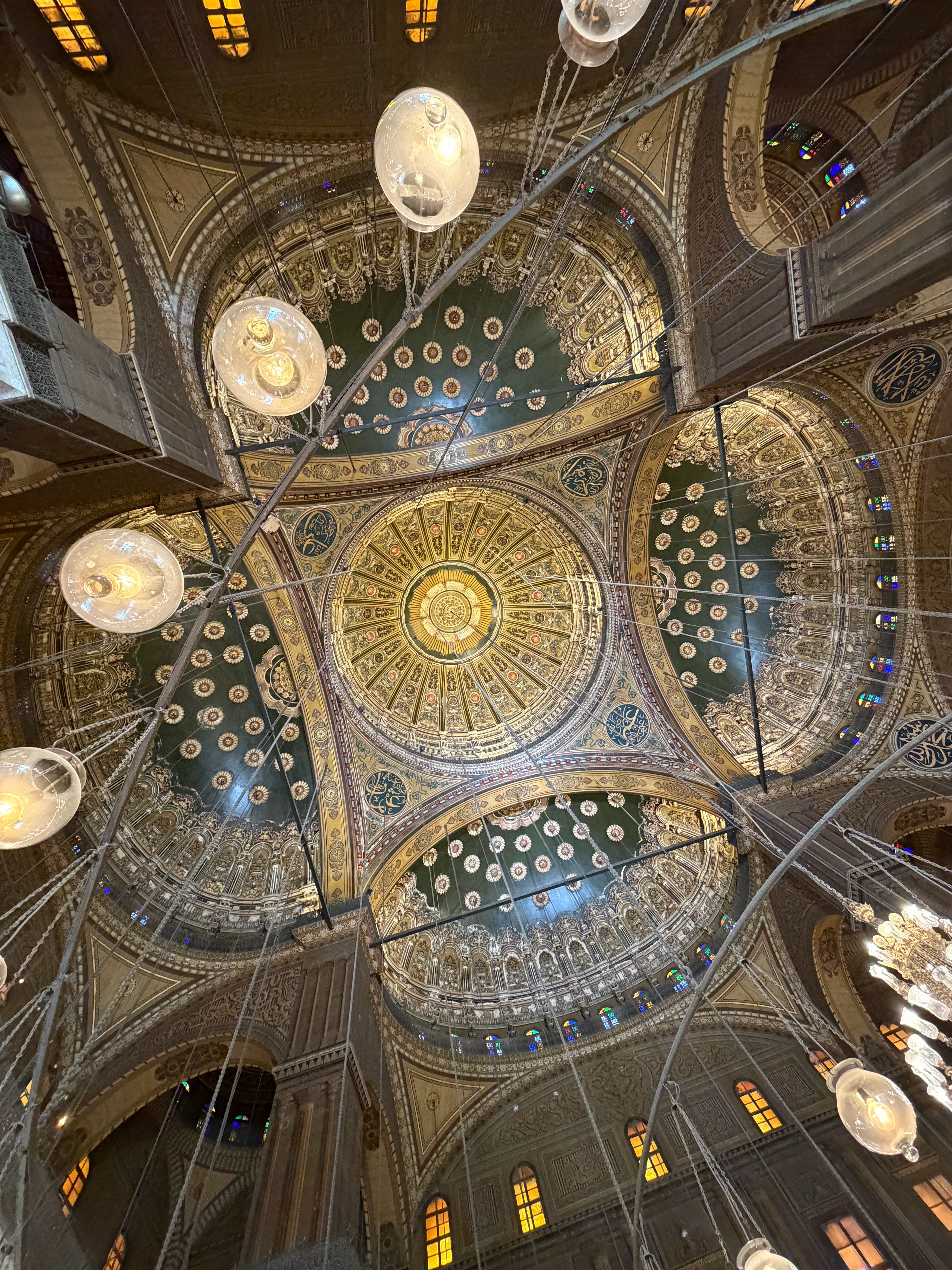
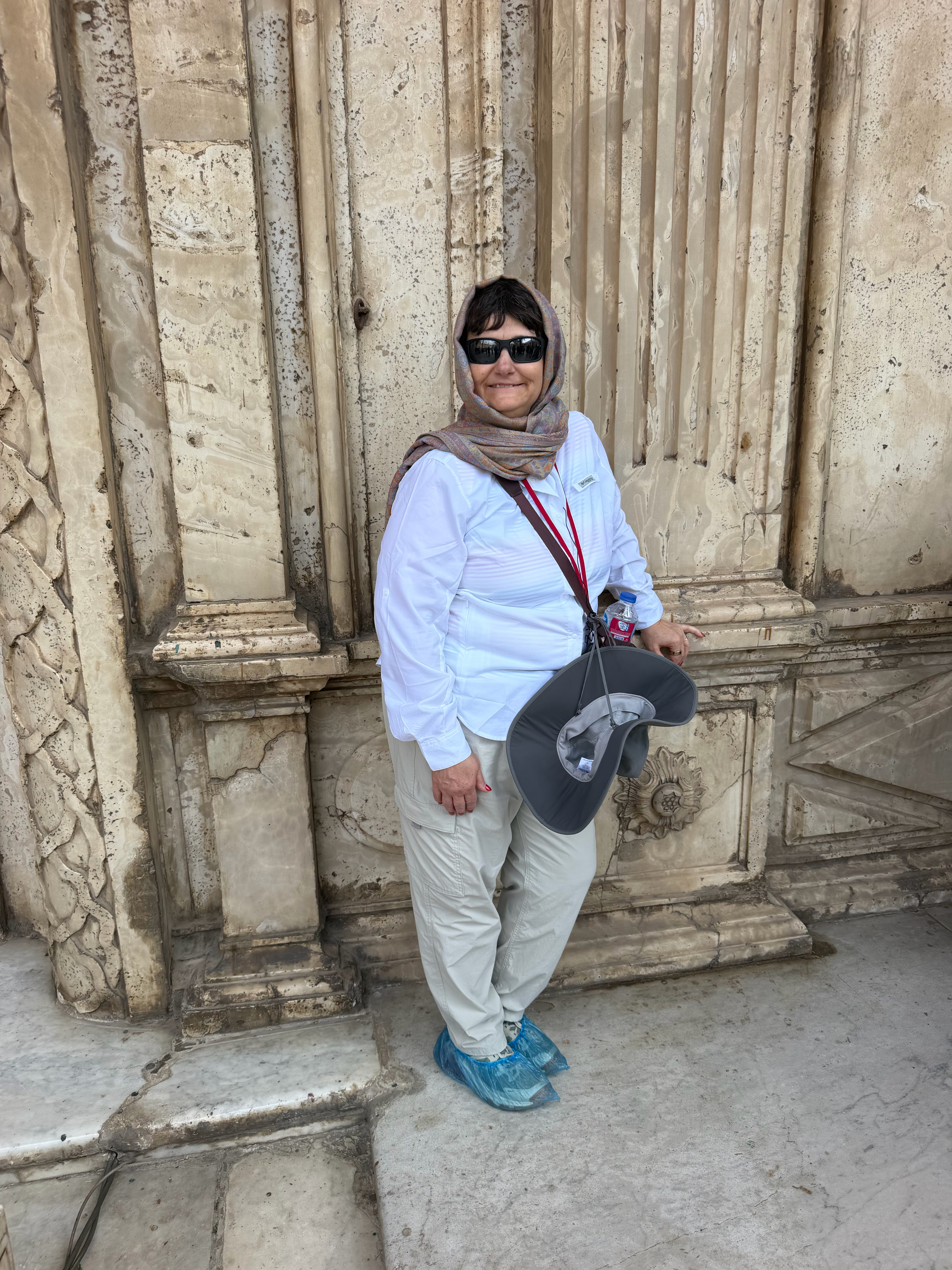
After learning about the mosque and taking a few photos – it was time to head back to the hotel and rest up for our next day of site-seeing in Cairo.
Our first day seeing these historical structures was almost overwhelming given their size, complexity and history. We are eagerly looking forward to new experiences and sites that we will see tomorrow!
Until next time …


