Our second day in Aswan included a visit to a local Nubian village, a temple and the Papyrus Institute. Kirk was recovering from the “Pharaoh’s curse,” so I did the tour solo.
Along our trip we have seen the trade-offs between Egypt’s time of the pharaohs and growth over the last two centuries. This included high-rise buildings creeping very close to the Grand Pyramid. Today we learned more about the impacts of the Aswan High Dam on the Nubians and how temples flooded because of the dam.
To prepare for the trip, Viking recommended the book “Empress on the Nile” by Lynne Olson. While the book started slowly, it provided a detailed overview of Egyptology over the last two hundred years and global political events during this time frame. The book also describes how a French archeologist struggled to save the temples as well as helped spread King Tut’s story and share artifacts around the world.
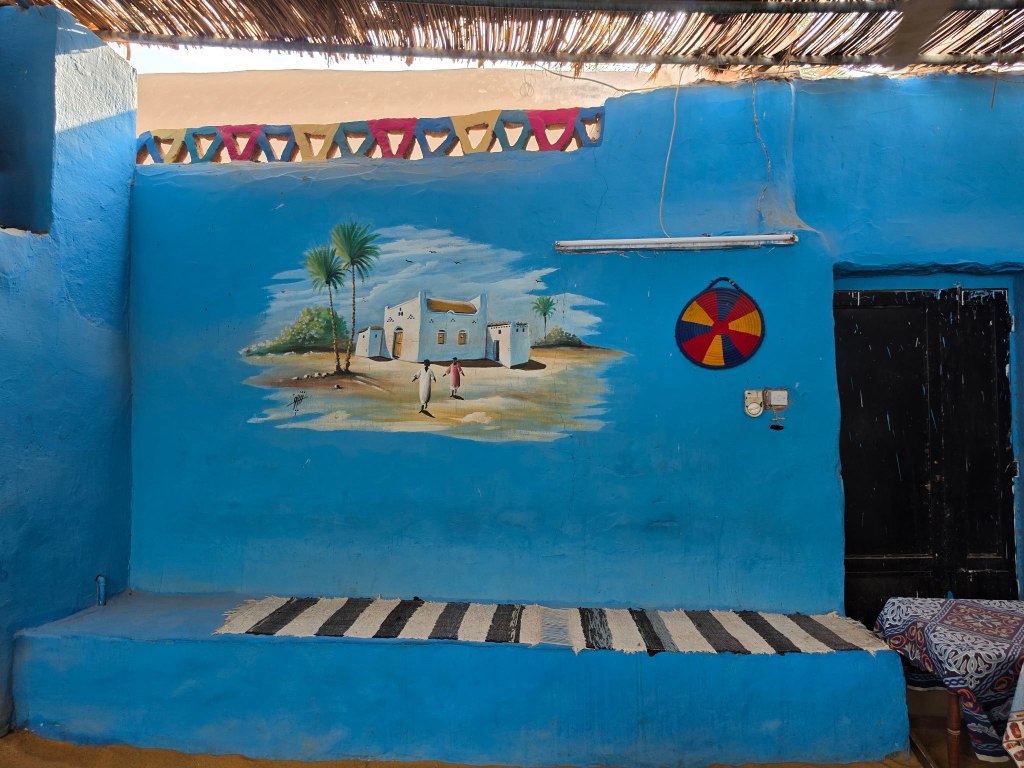
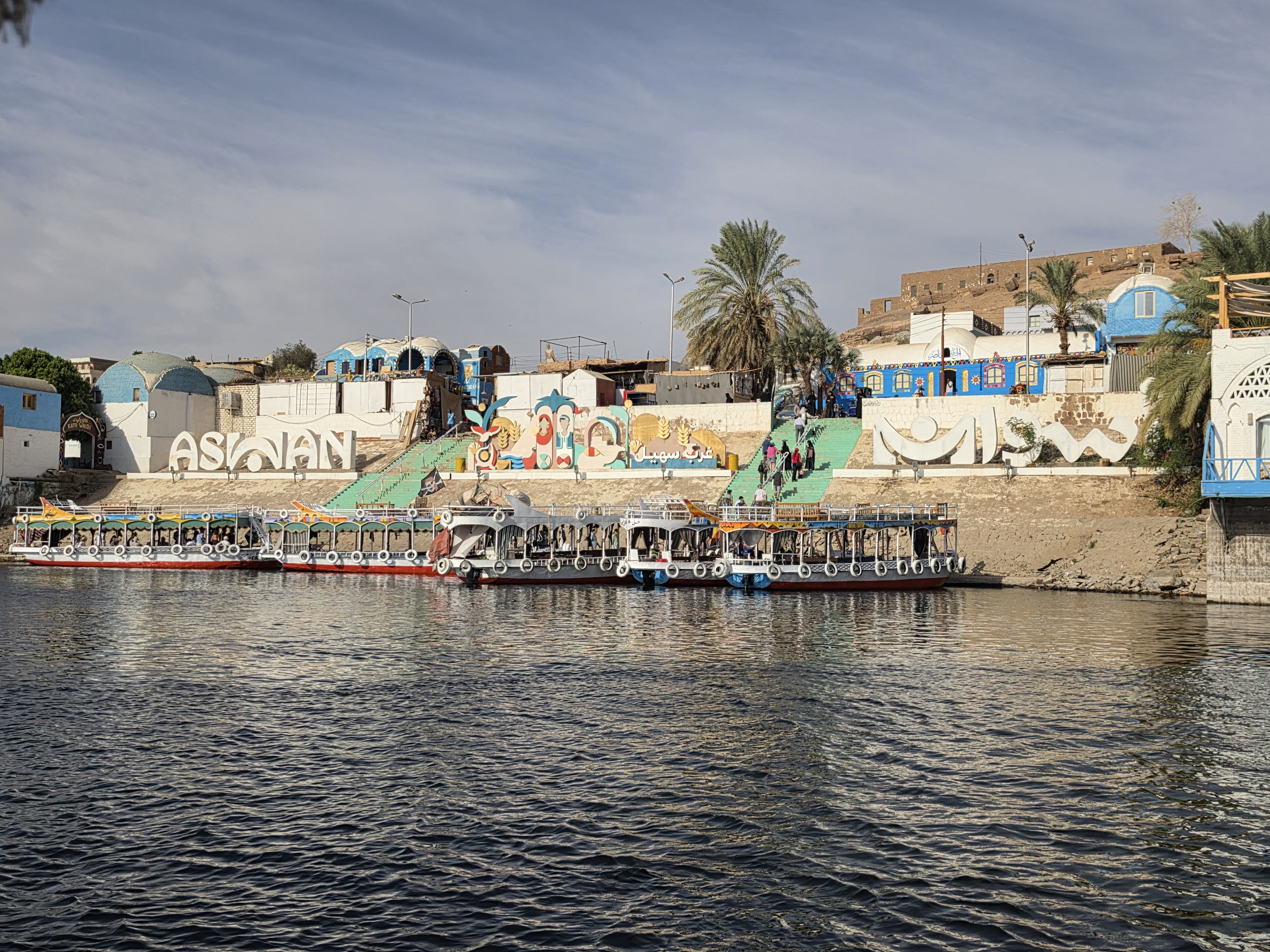
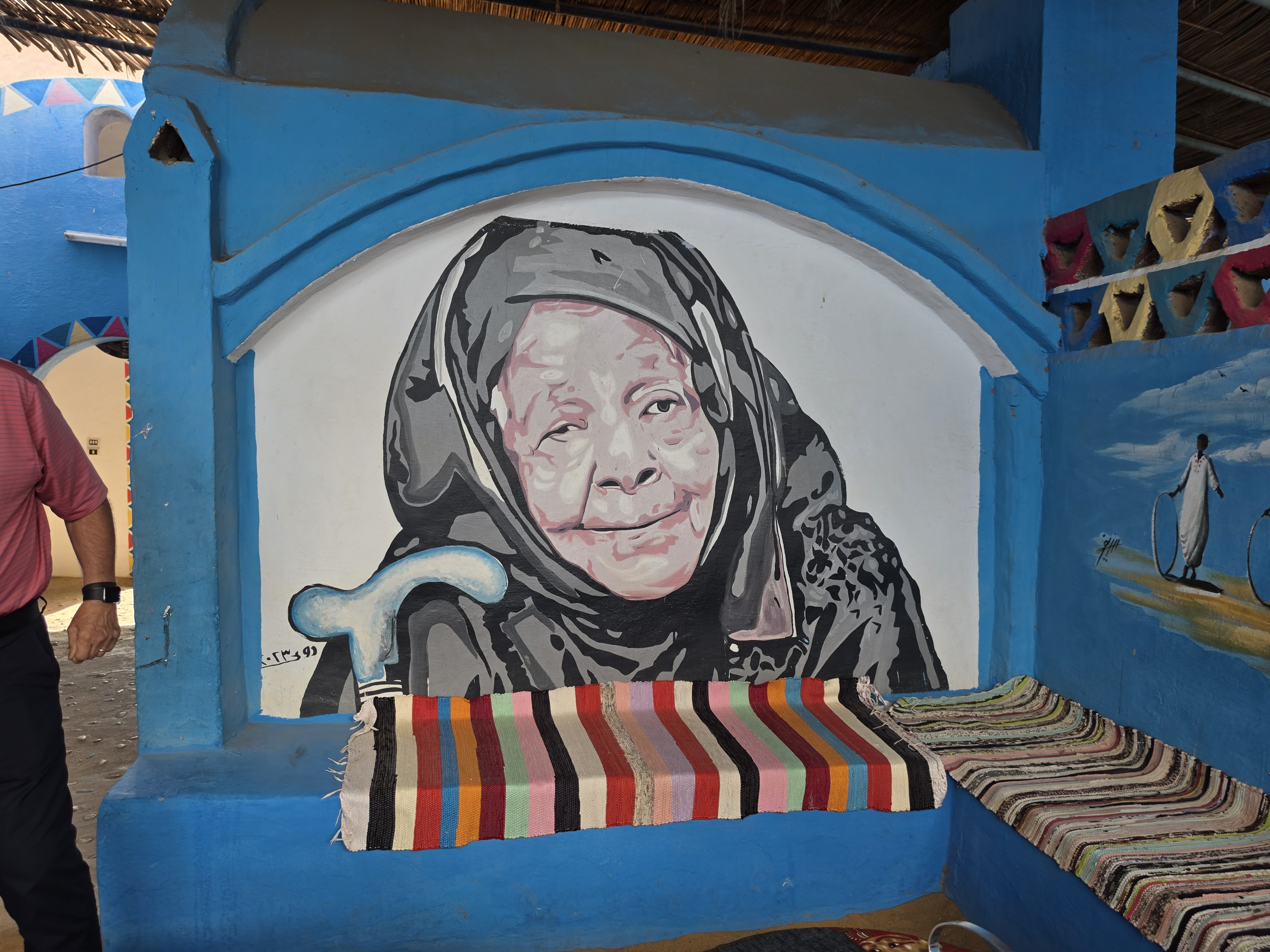
For our first part of our tour, we took a motorboat up the Nile to a Nubian village. The Nubian people are an indigenous ethnic group whose homeland lies along the Nile River in southern Egypt and northern Sudan. The Nubian villages had bright colors and included many painted murals, both outside and inside the houses. As a part of our tour, we visited a two-story Nubian home. Nubian homes have three or four generations living together. The paintings inside were amazing as shown below.
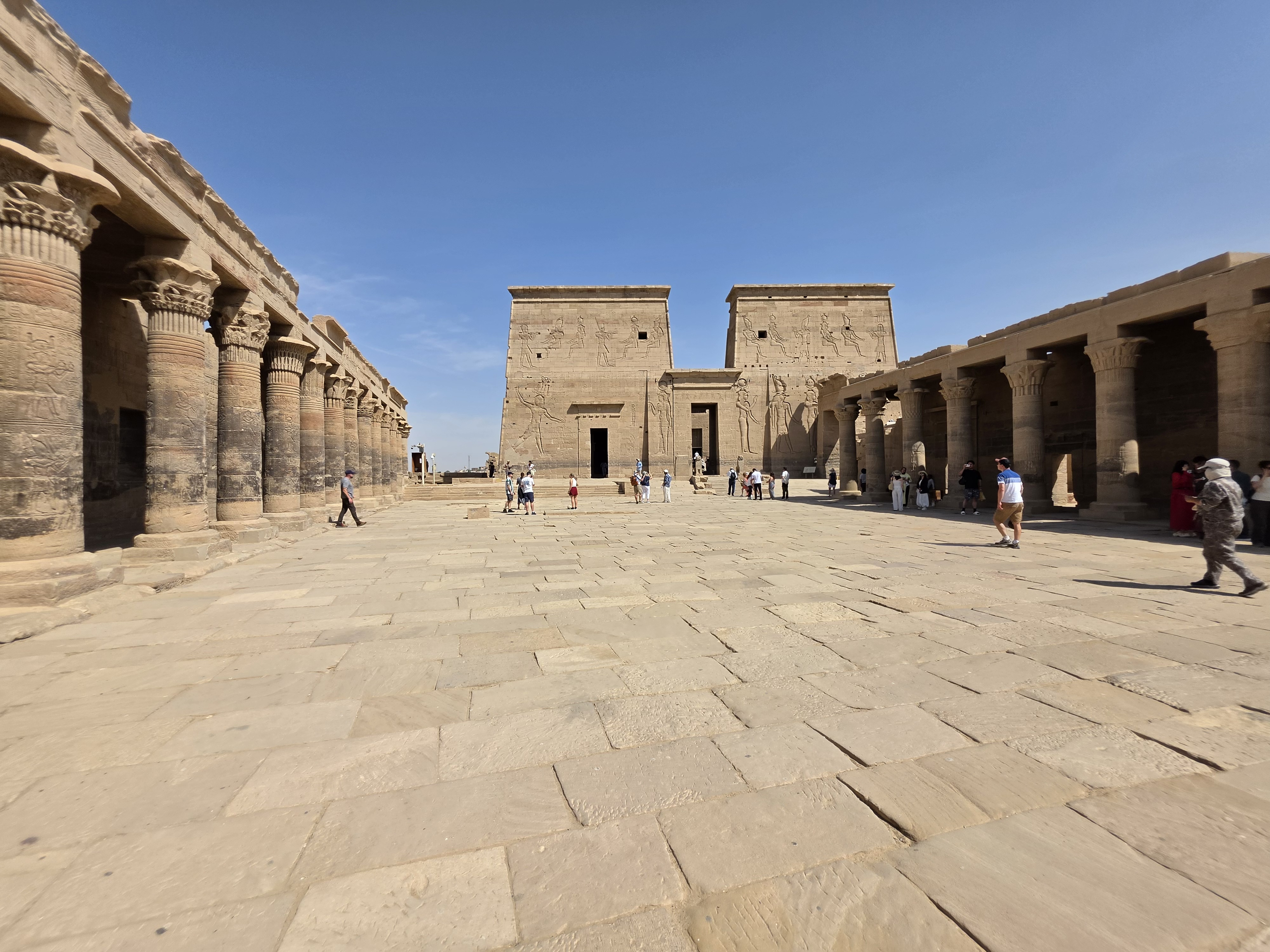
Next, we toured the Philae Temple, one of 19 temples that was moved to prevent it from being underwater when the Aswan High Dam was built. The dam also displaced over 100,000 Nubians as their homes were flooded by Lake Nasser (in Sudan known as Lake Nubia).
To learn more about UNESCO’s efforts on saving temples, read the book mentioned above. The Philae temple, built in 280 BC, is dedicated to the goddess Isis, who was worshipped as the divine mother and protector. Every stone from the original Temple was moved to this nearby island.
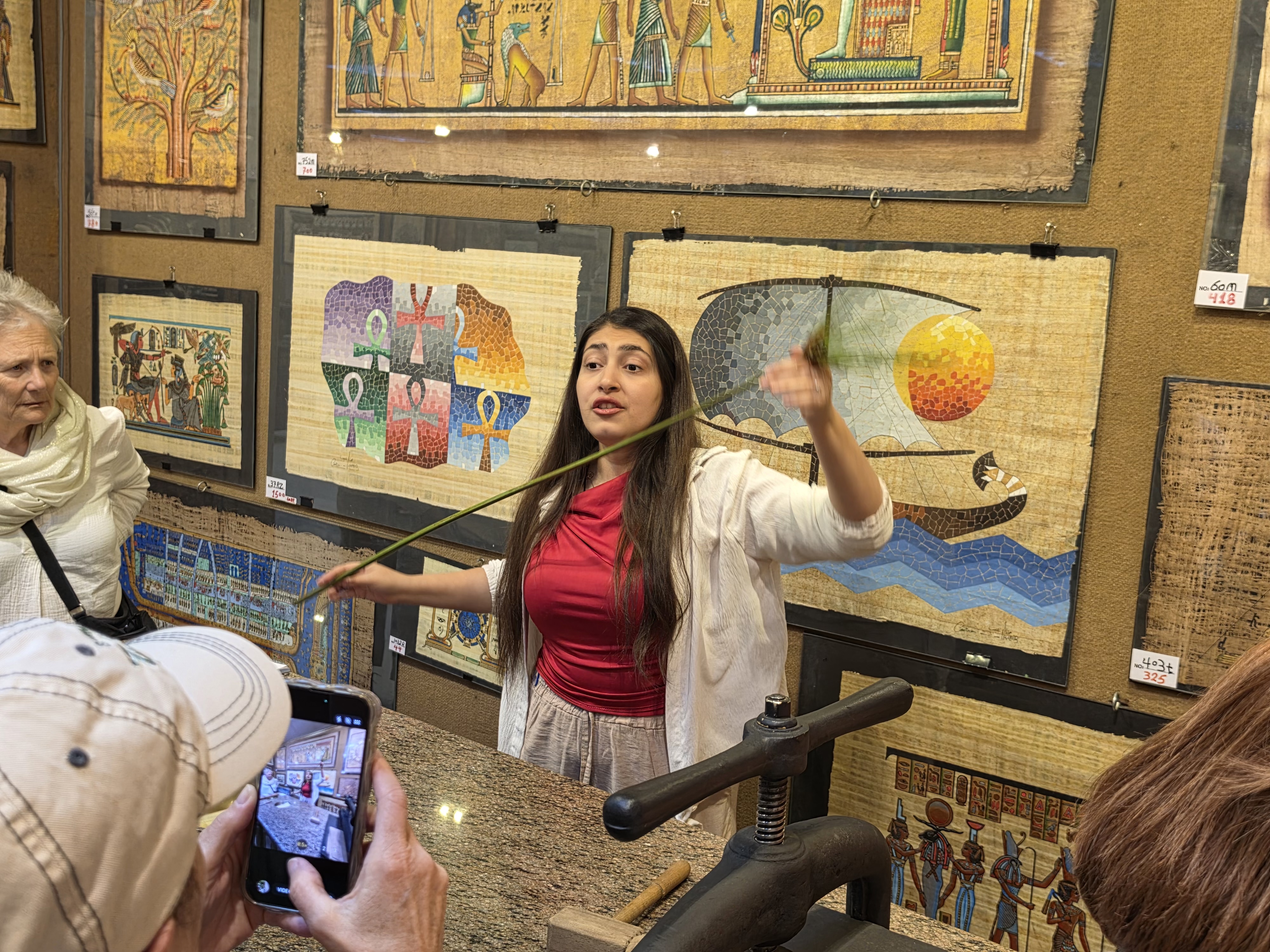
Our last cultural experience for the trip was a visit to the Papyrus Institute where they provided a demonstration on how papyrus was used to create thick paper and we saw many different painted pictures on papyrus. Of course, I needed to bring back a souvenir painting or two.
Fortunately, Kirk felt better and joined our afternoon tour that day.
The variety of our experiences in Egypt provided amazing insights into Egypt and its peoples, past and present, and the tradeoffs along the way.


