
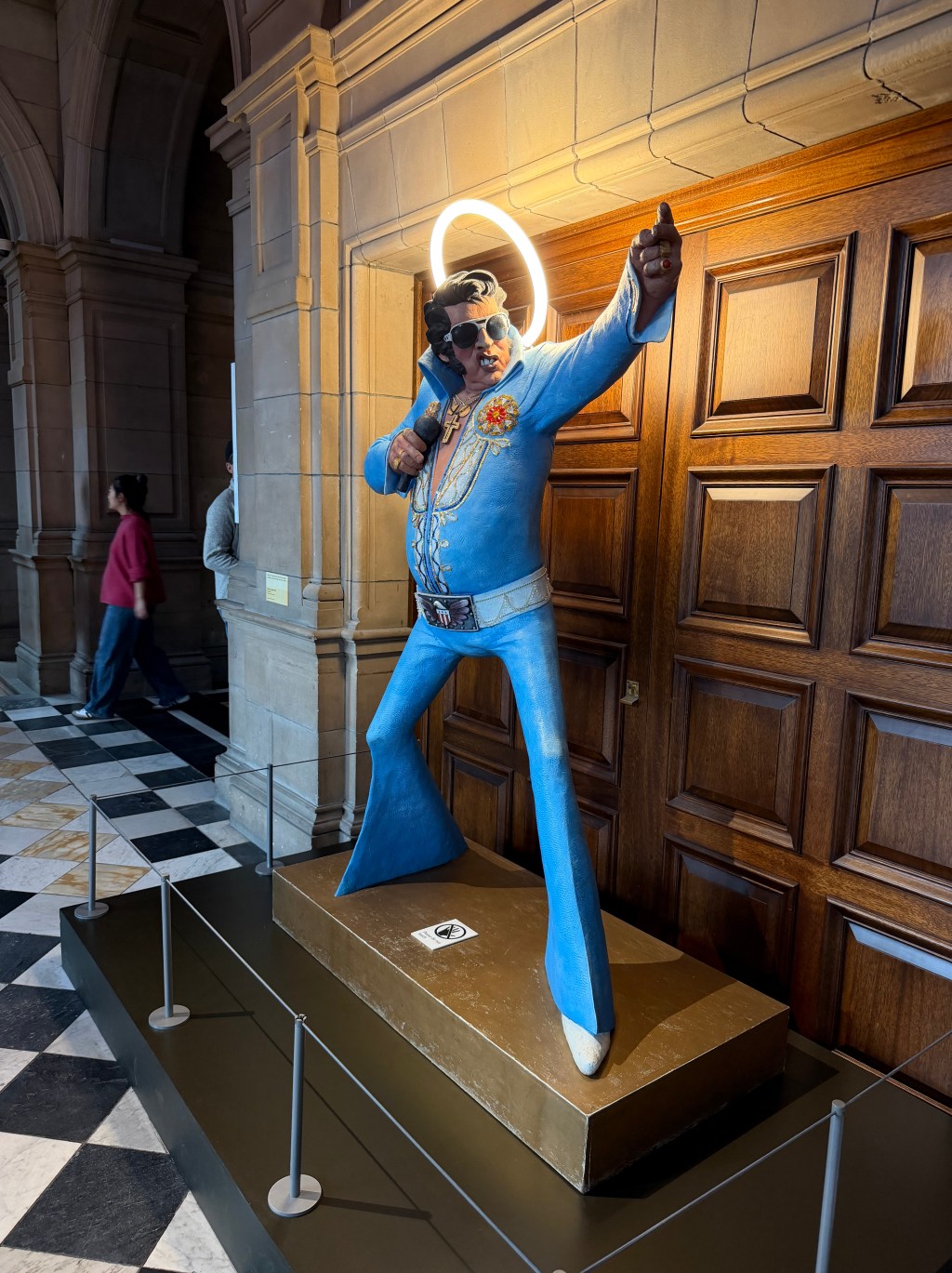
I love going to museums when we travel.
I also insist on reading almost all of the signs and information postings in museums as well.
In short – I tend to lose myself in the experience.
What this means is that I may not be the best person to visit museums with as I often see something interesting and will wander over to check it out. After reading the display – I will look around for other members of the family and found that they have moved onto something else.
Now with just two of us traveling places it is a bit easier – but I still am a bit of a museum wanderer.
There are multiple museums on our travel itinerary – so my wandering gene is ready to go!
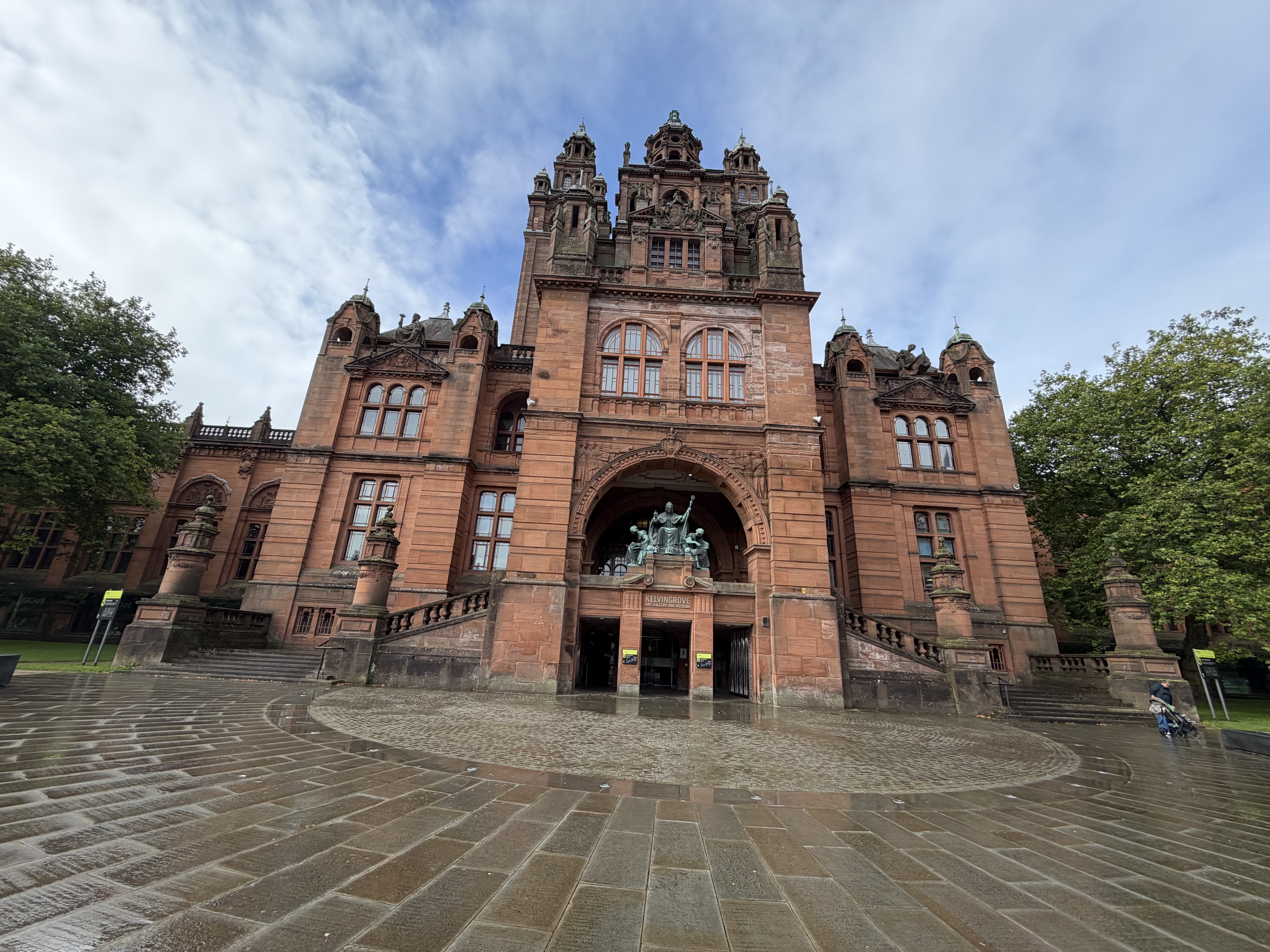
We had the opportunity to visit the Kelvingrove Art Gallery and Museum in Glasgow for an IEEE Reception one night and then for a regular visit the next day. There was lots of time to meander through the displays and enjoy the eclectic galleries.
Glaswegians take their museums seriously and are proud of them. Interestingly, there are no guards around the displays – you are expected to display some common sense and not touch things that you shouldn’t.
A bit different than many U.S. museums in that regard.
The museum is very eclectic and had displays featuring natural science, history, art and social justice. There were several galleries that focused on the significant role Scotland played in the slave trade and how that trade made the city prominent and wealthy. Whether you agreed with the premise of the displays or not – it certainly got you thinking. In my mind that is a key part of a museum experience is to get you learning new perspectives and thinking about things that might be a bit uncomfortable.
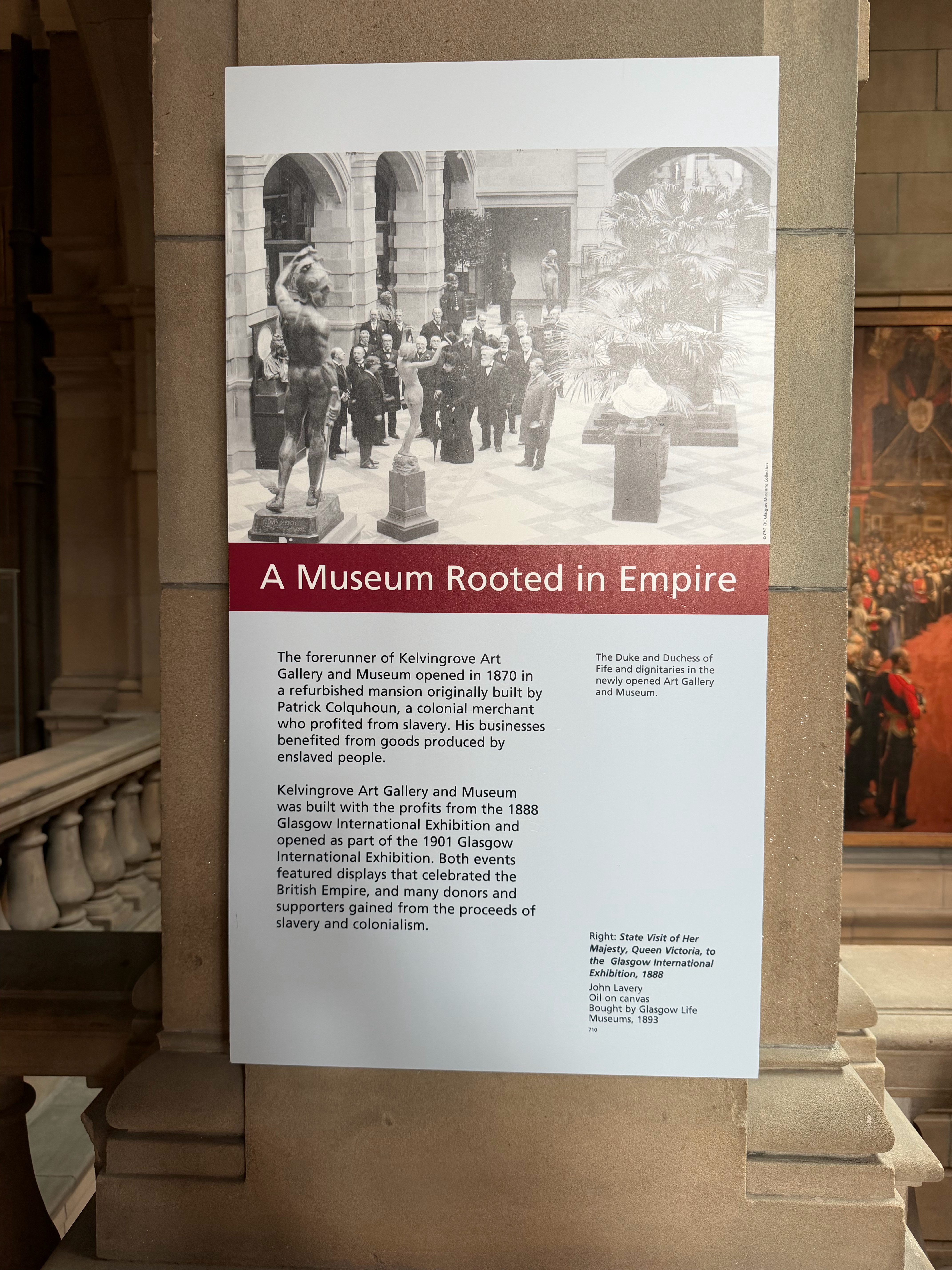
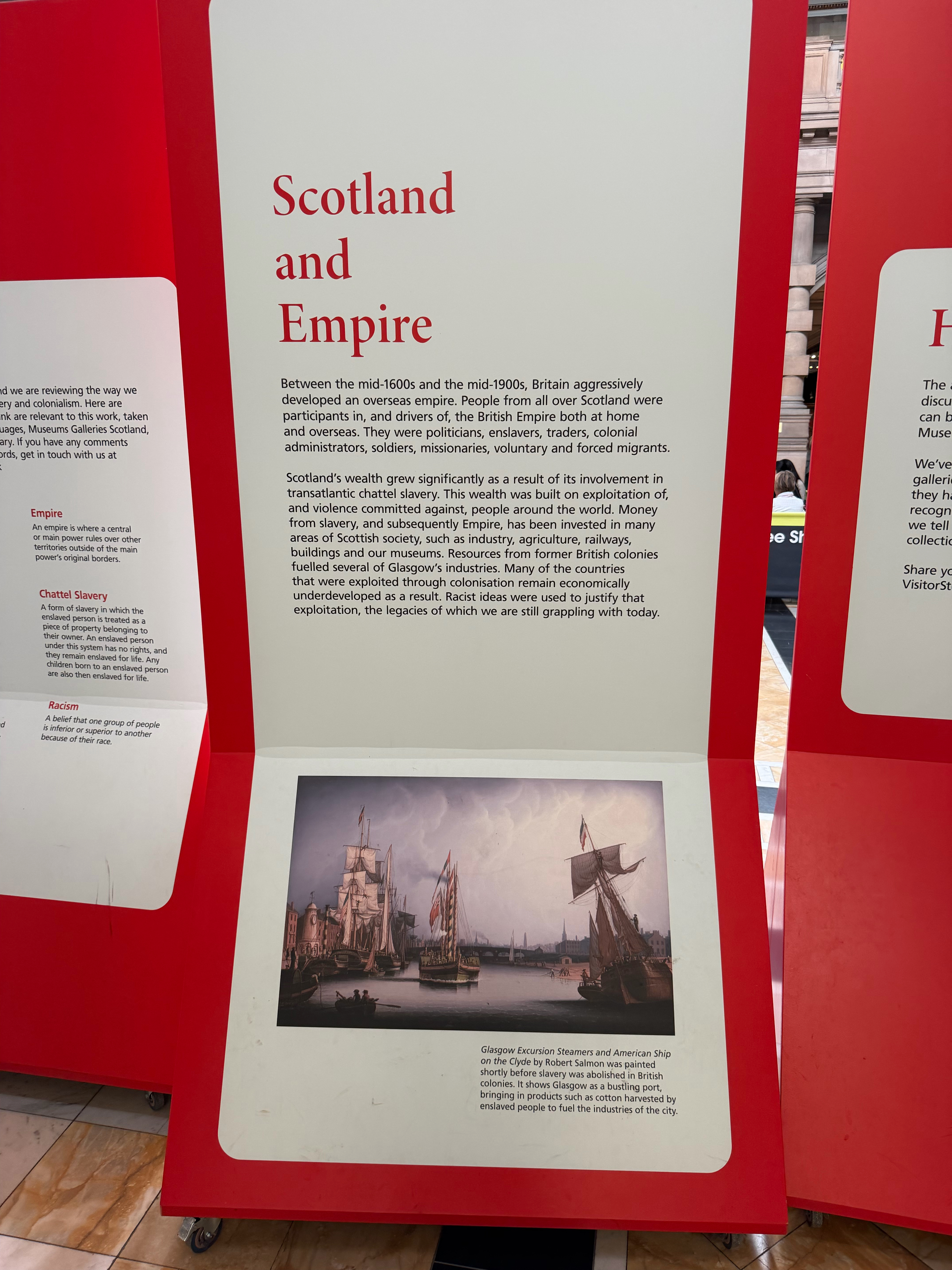
The building itself was built in 1901 to house a large fair which was similar in nature to the world fairs held in the United States. It was built out of local stone and the architecture was stunning – both inside and out. The museum was closed several years ago for 3 years to clean the stone work and to update the and modernize the exhibits.
The museum had two docent led tours each day – and we showed up for the pre-lunchtime 11:30 tour which highlighted several galleries in the museum. Our guide was excellent and very knowledgeable.
We started our tour in front of a stuffed elephant that had been a resident of Glasgow at the turn of the last century. The elephant was very popular with the townspeople and was nicknamed “Sir Roger”. He was a long time resident of the local zoo. Sir Roger got sick and the local gamekeeper decided that he needed to be put down. In an enterprising move – and one that would never happen today – a standing room only crowd paid to watch the killing. While eating his breakfast the elephant was shot and killed – and you could still see the bullet hole in its head. Truly a different time!
One of the prominent pieces in the museum is a large painting of a visit by Queen Victoria to Glasgow (incidentally she was not a fan of the city and only visited the city twice in her reign). Sir John Lavery painted the scene commemorating her holding court in Glasgow (for approximately 20 minutes) – and each of the 253 people who attended are shown individually in the painting. The painter told everyone each of the 253 people had posed in his studio to get their faces done correctly – after his death they found photographs that he took of the scene to be sure he got it right. The photos were not known to exist and Sir John Lavery was offended that anyone would think he used photographs.
These type of anecdotes are part of the reason for doing the docent tours!
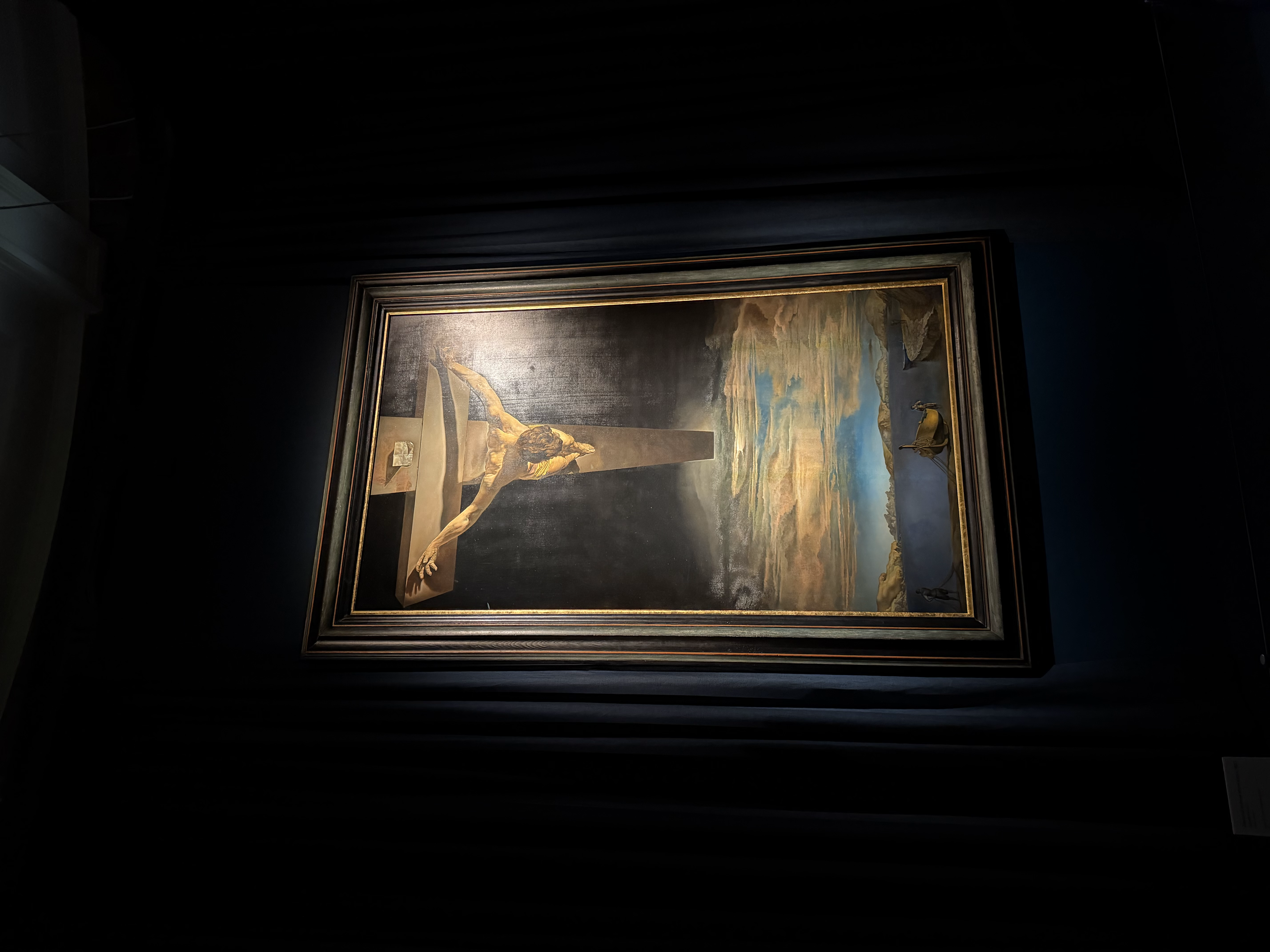
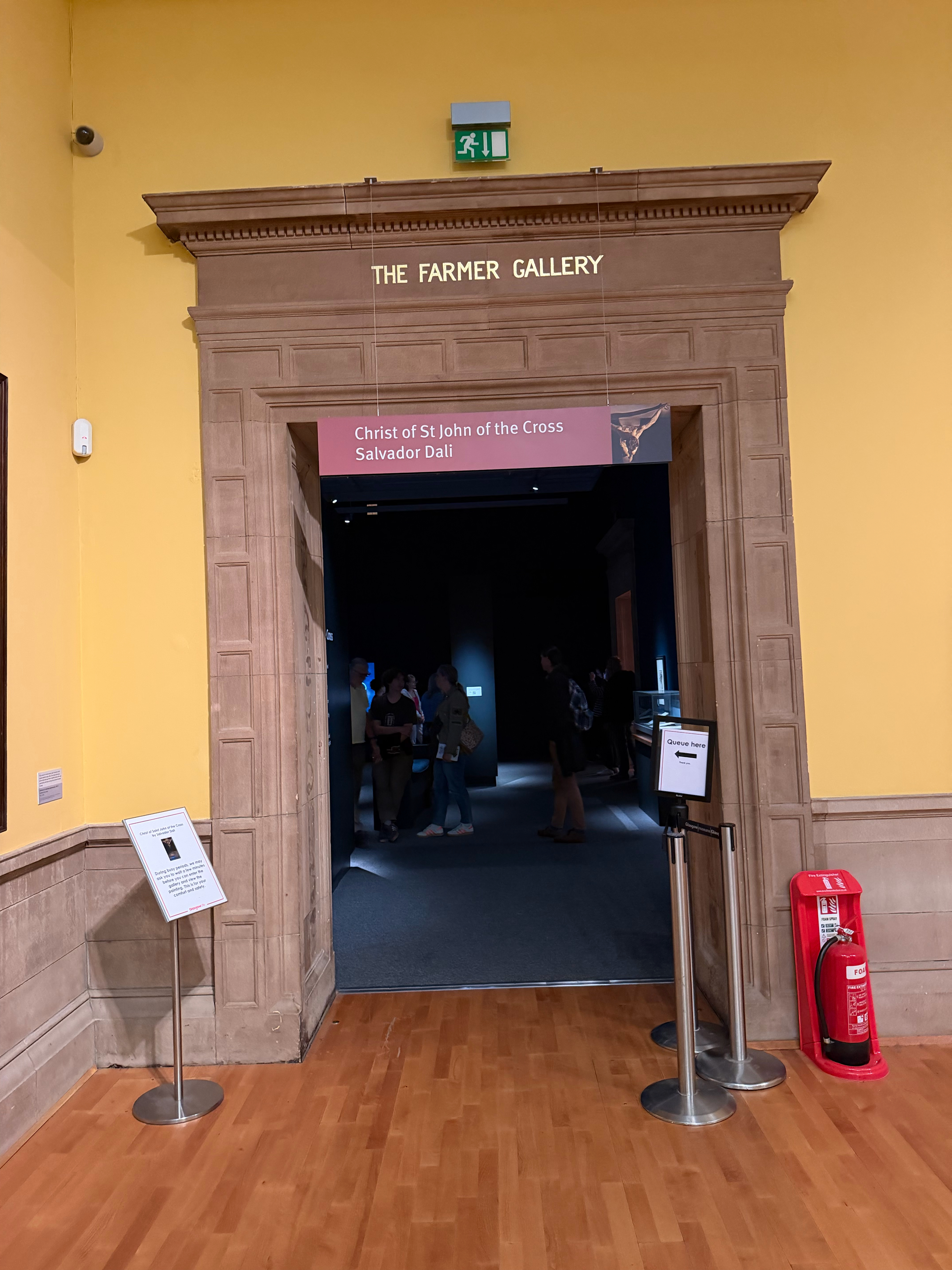
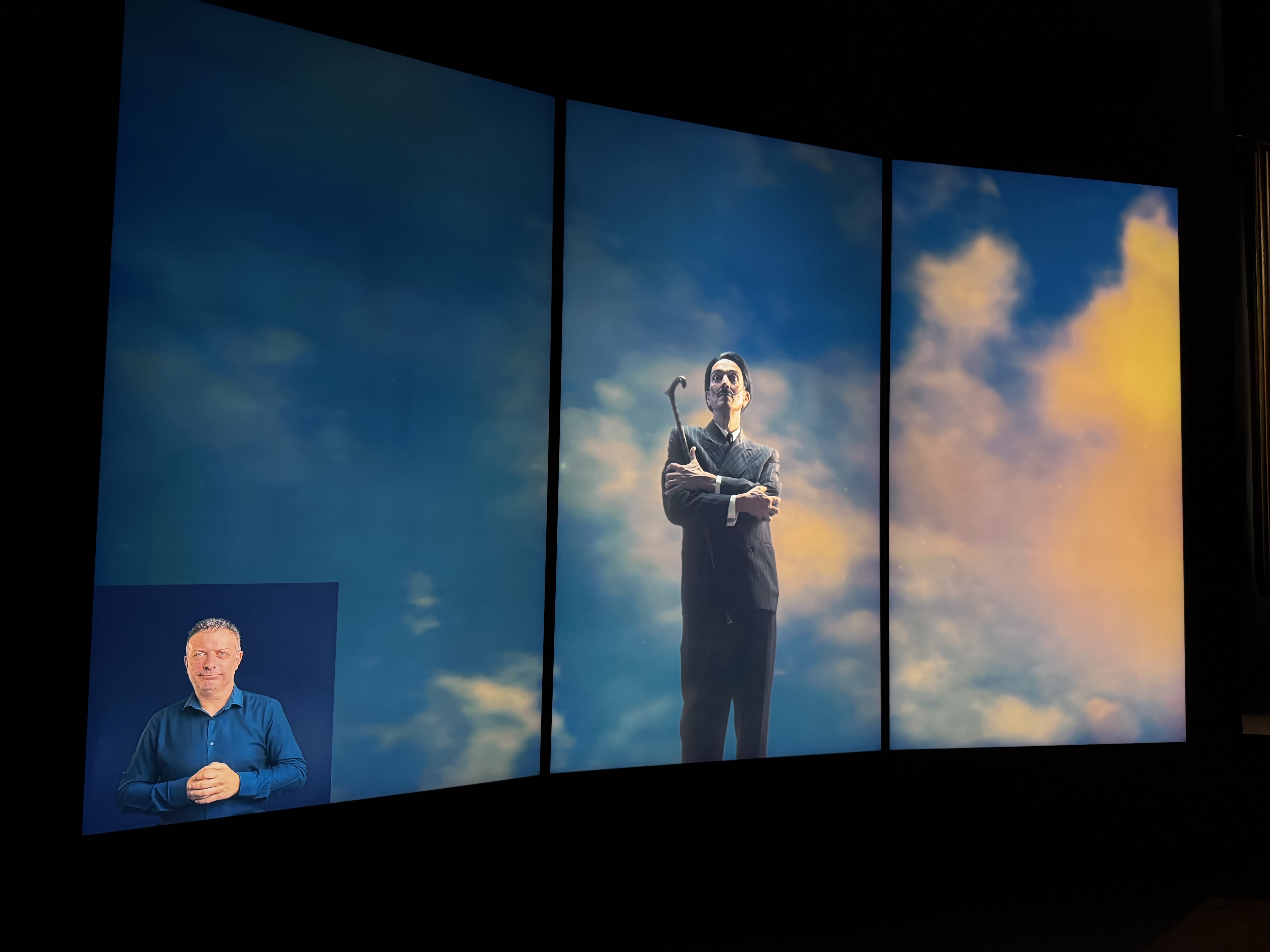
The most prominent piece of art in the museum is entitled the Christ of St. John of the Cross by Salvador Dali – and is a stunning painting. It is the centerpiece of the museum and had its own gallery which included a short video on how Dali painted it including his use of a model tied to a cross in order the get the muscles correct in the painting.
Seeing it was worth the trip alone.
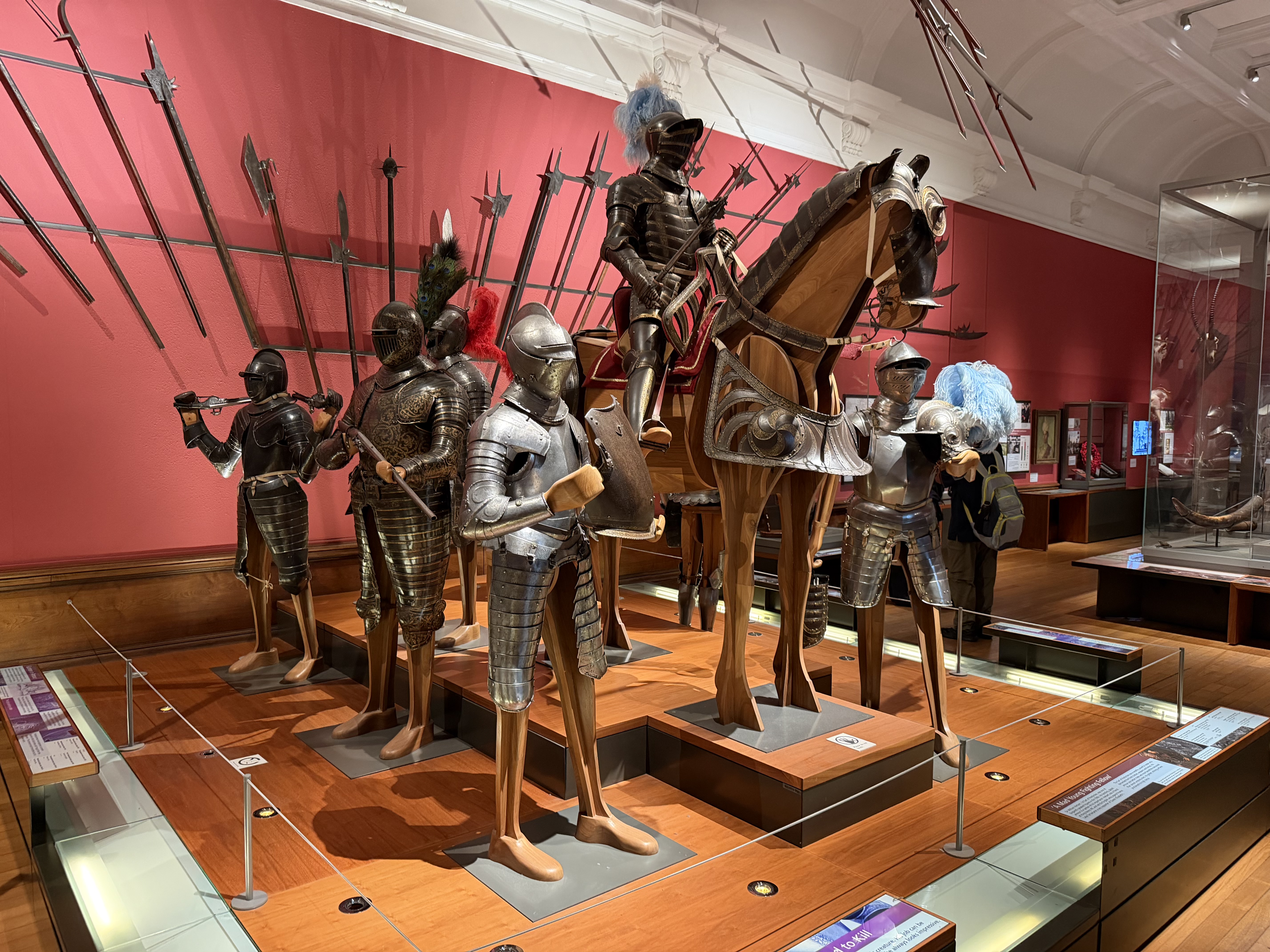
They also had multiple displays of armor and an authentic World War II Spitfire hanging from the ceiling.
There was truly something for everyone!
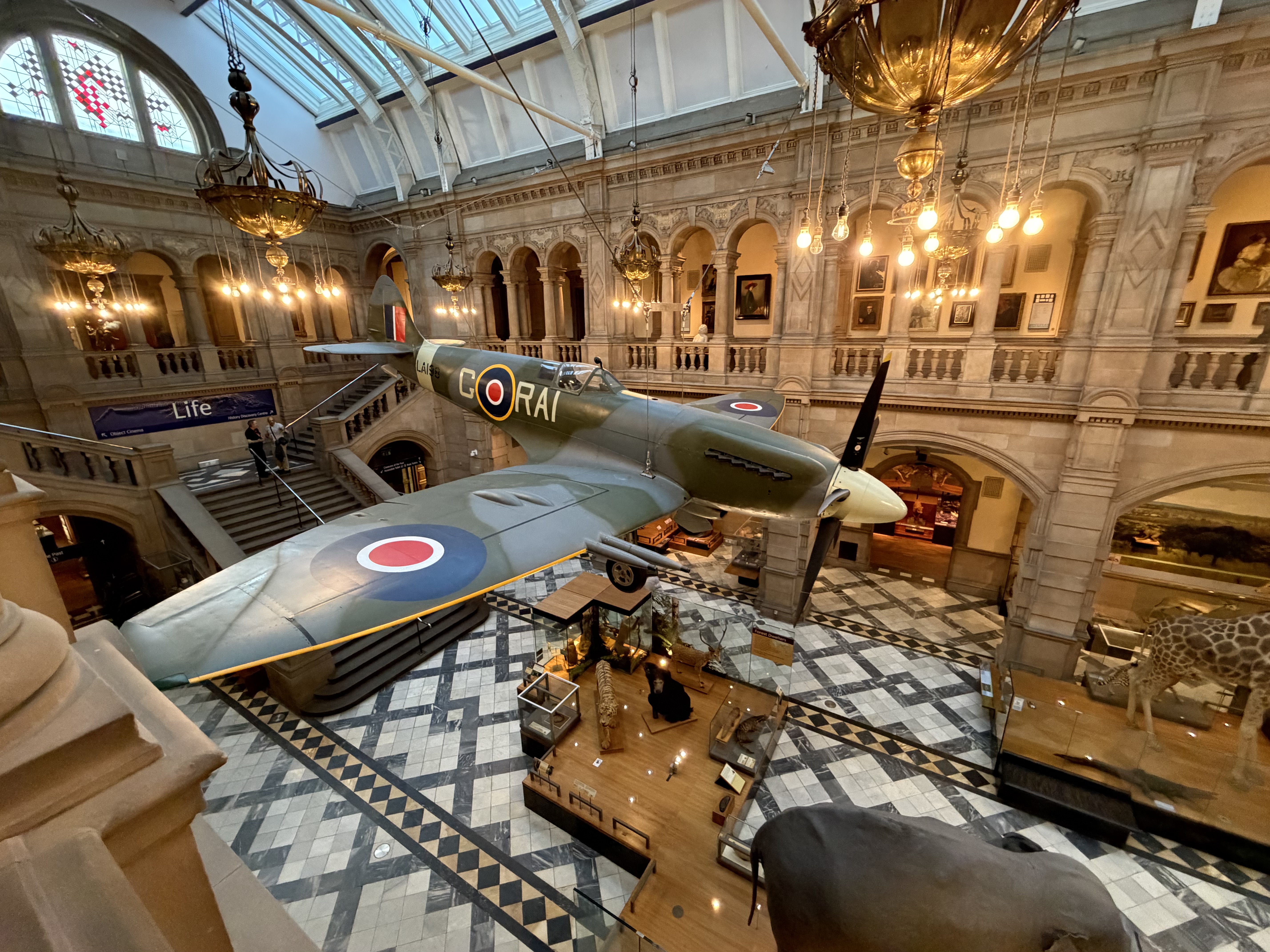
We thoroughly enjoyed our visit to the Kelvingrove Art Gallery and Musuem – and we will certainly spend more time there on a future visit to Scotland!
Until next time ….


