I am not sure when I first got fascinated with Egypt. When I was in elementary school, my parents got me some booklets that talked about different academic areas and one of those was Egyptology. That sounded like a cool thing to study.
Fast forward to the 1980’s when I remember reading “The Chariots of the Gods (1968)” by Erich van Daniken in which he proposed that the technology to build the pyramids was so advanced that aliens from outer space were involved.
Finally, I enjoyed the Mummy movies with Brendon Frazier (1999 & 2001) which have Egyptian ruins, mummies, and the mystique of early adventure in the desert.
What do all of these have in common? A fascination with Ancient Egypt and the Pyramids.
Believe it our not – our tour guide has mentioned on multiple occasions over the last two days about aliens building the pyramids and the Mummy movies – making me think that these are frequent reference points which often arise on visits to Egypt by Americans.
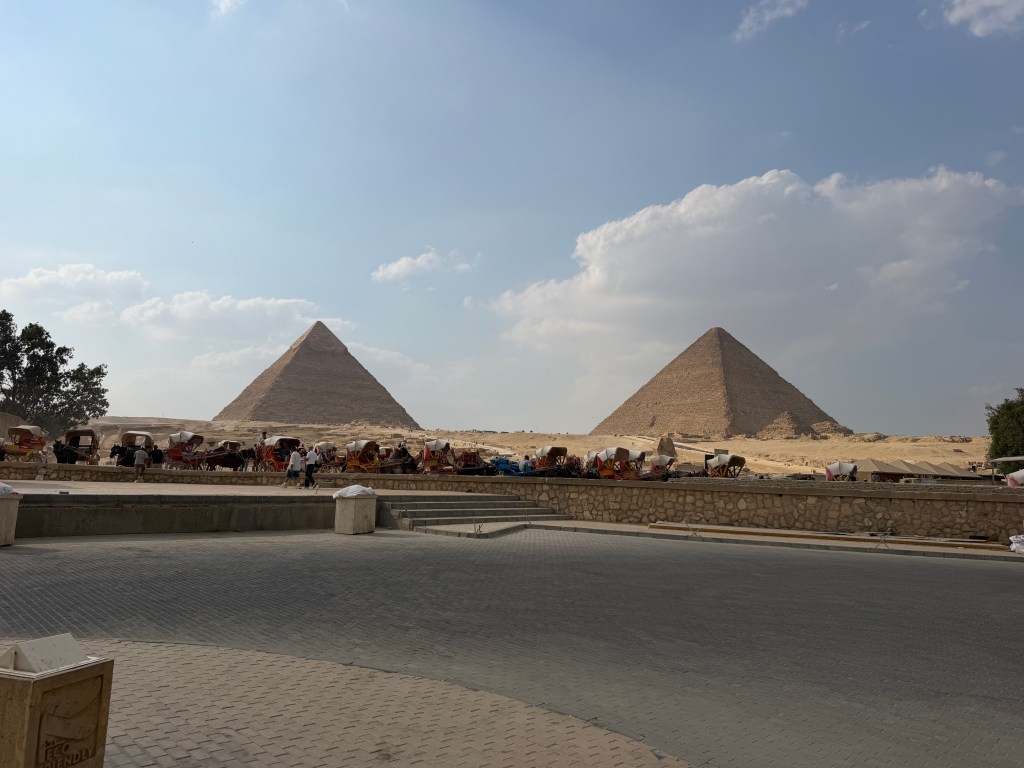
While I could do a long treatise on “The Chariots of the Gods” – I will stick with our travel for the day – which happened to include visits to the Grand Egyptian Museum (GEM) and the Pyramids at Giza.
The GEM is a world class museum on par with the Louve, the British Museum, the Smithsonian and the Acropolis.
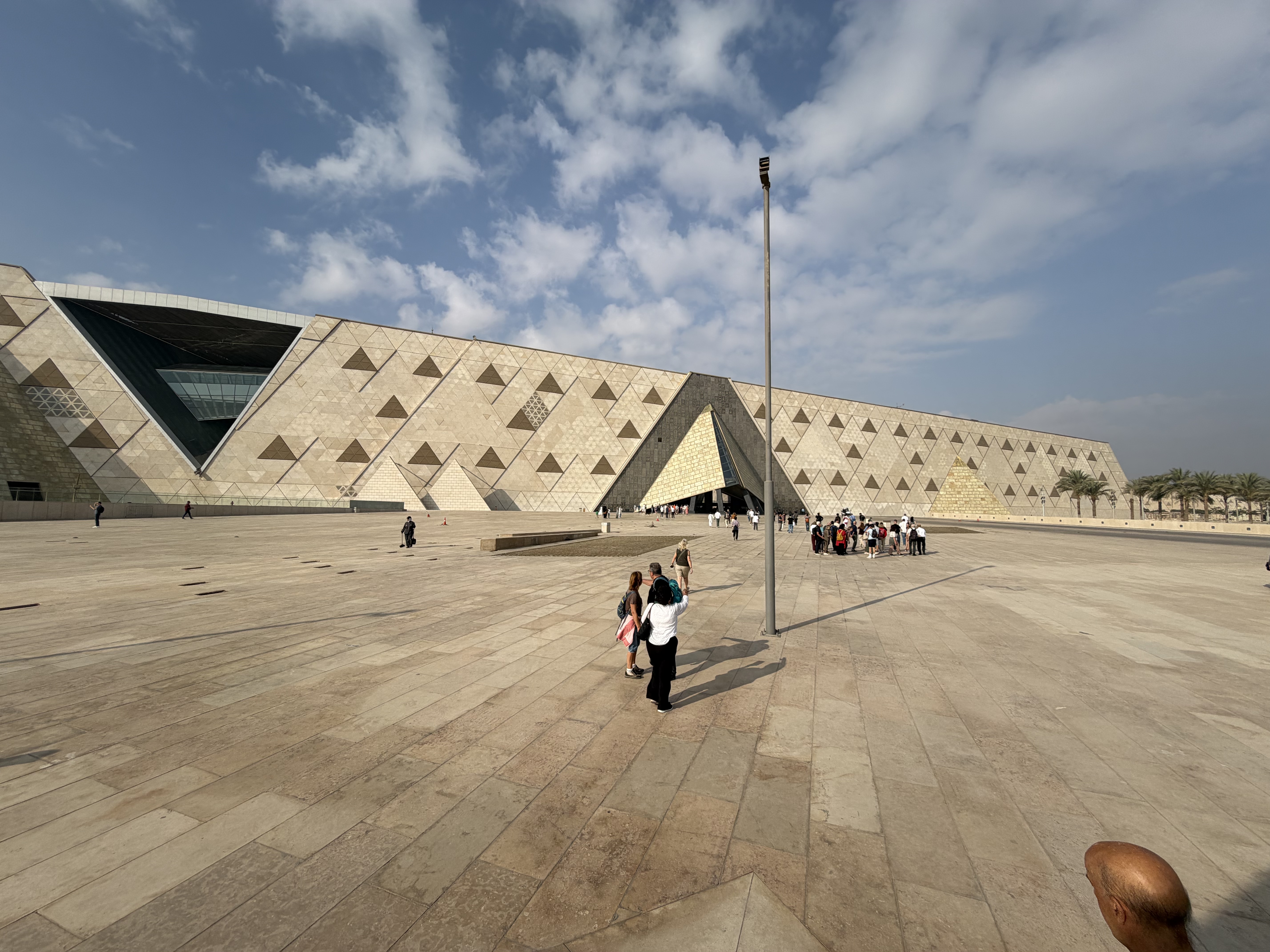
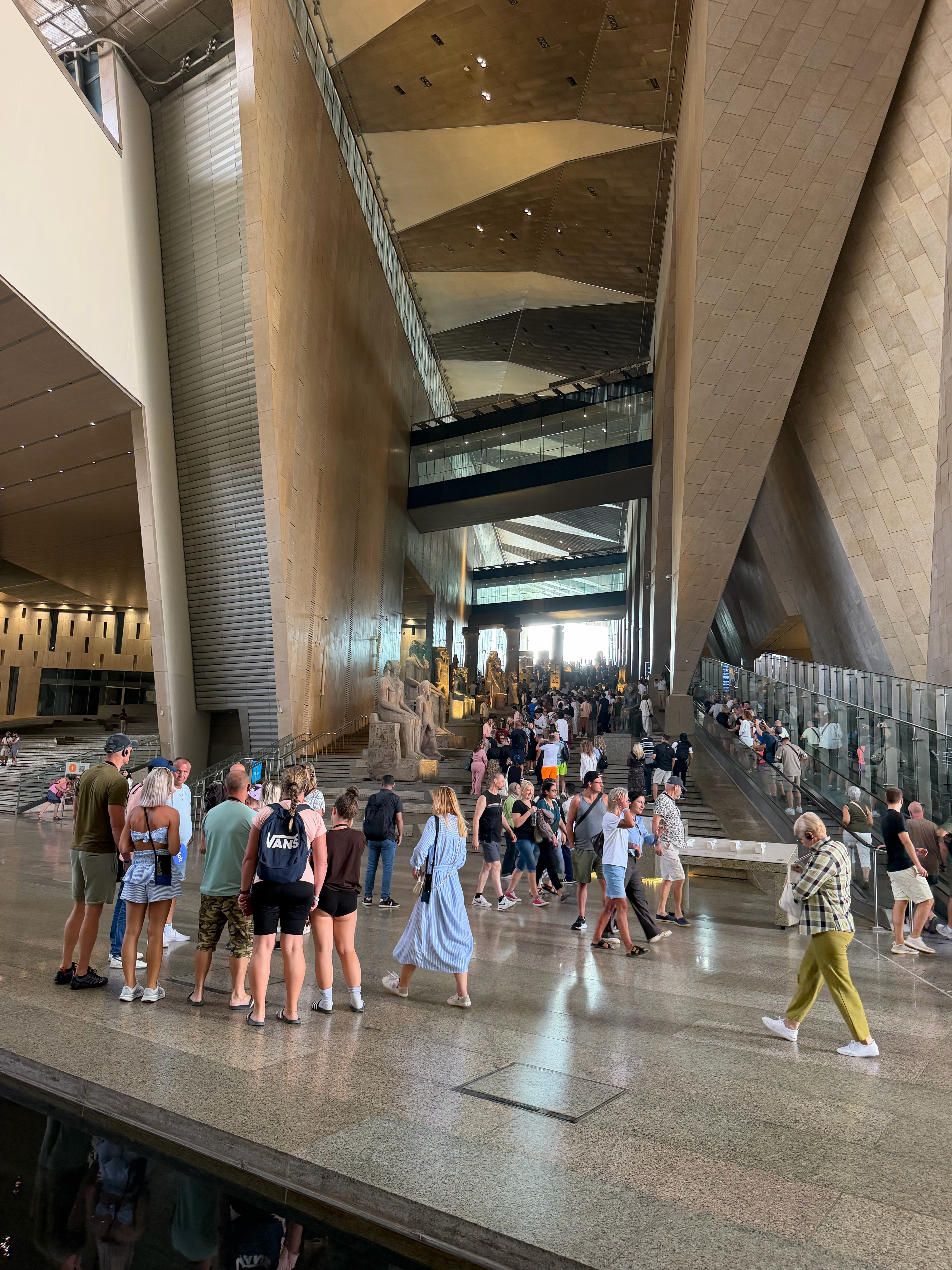
The museum is HUGE – spanning over 490,000 square meters in size. It took over 20 years to build because of variability in the Egyptian economic and political climate at a total finished cost of $2B USD. It opened officially in November 2025 – so it was nice to time our trip to ensure that we got to tour the the newly opened museum.
OK, maybe we just got lucky – but still a nice win for us!
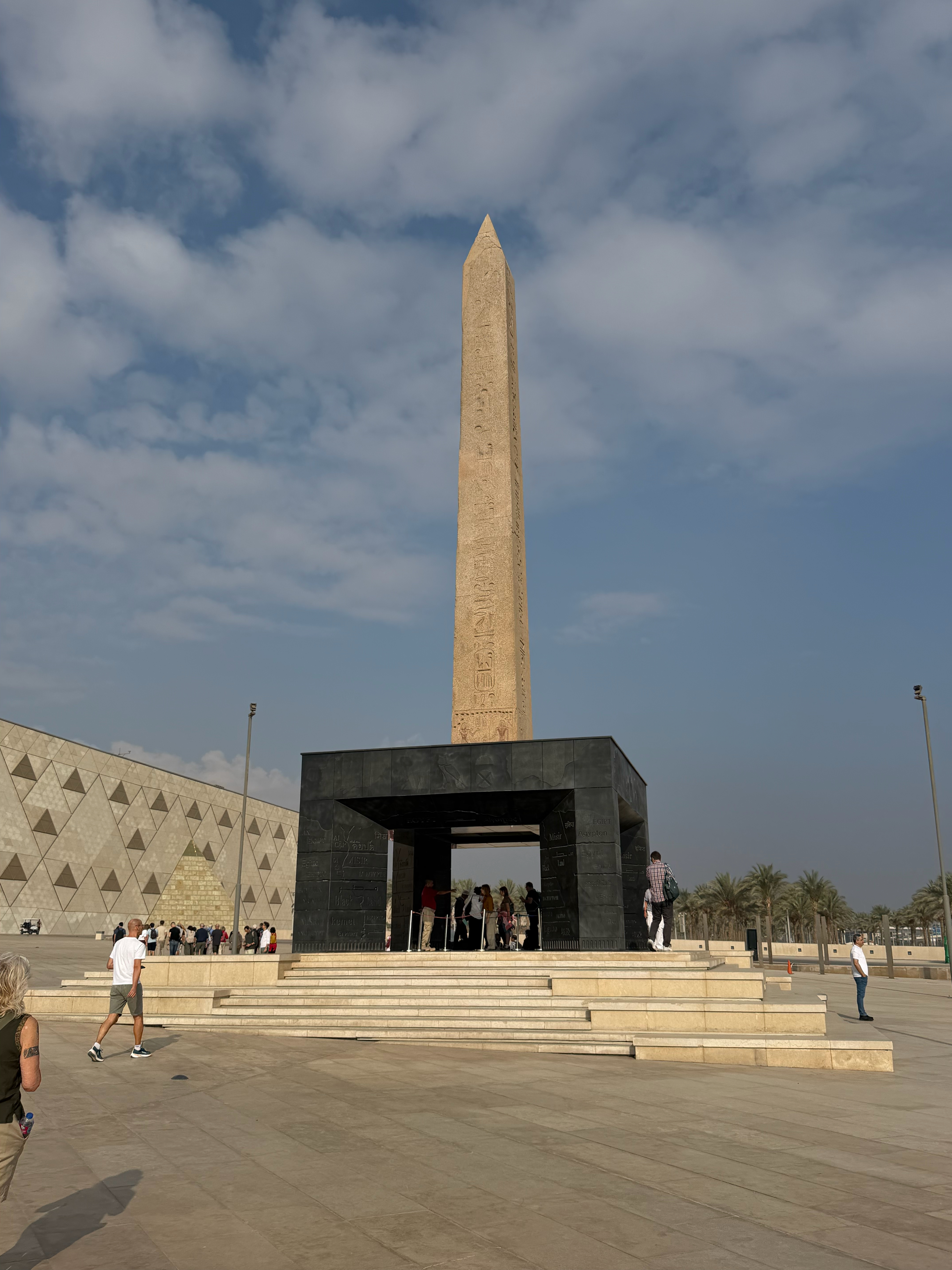
Our tour started outside the museum with an examination of an Obelisk built by Ramses II.
Our guide asked us about how we thought you could identify which pharaoh built many of the buildings and statues found in ancient Egypt.
It reminded me of the questions my physics teacher – Mr. Percival – would ask us in high school in that no one in our group knew the correct answer.
We learned that Egyptologists are able to identify who built many of the structures based on cartouches (or signatures) which are etched on statues and other important artifacts. The cartouches on the bottom of the obelisk clearly identify Ramses II as the person who had it done – which is why it is mounted on a large stand that you can walk under and see the identifying marks.
It was a magnificent way to start our tour.
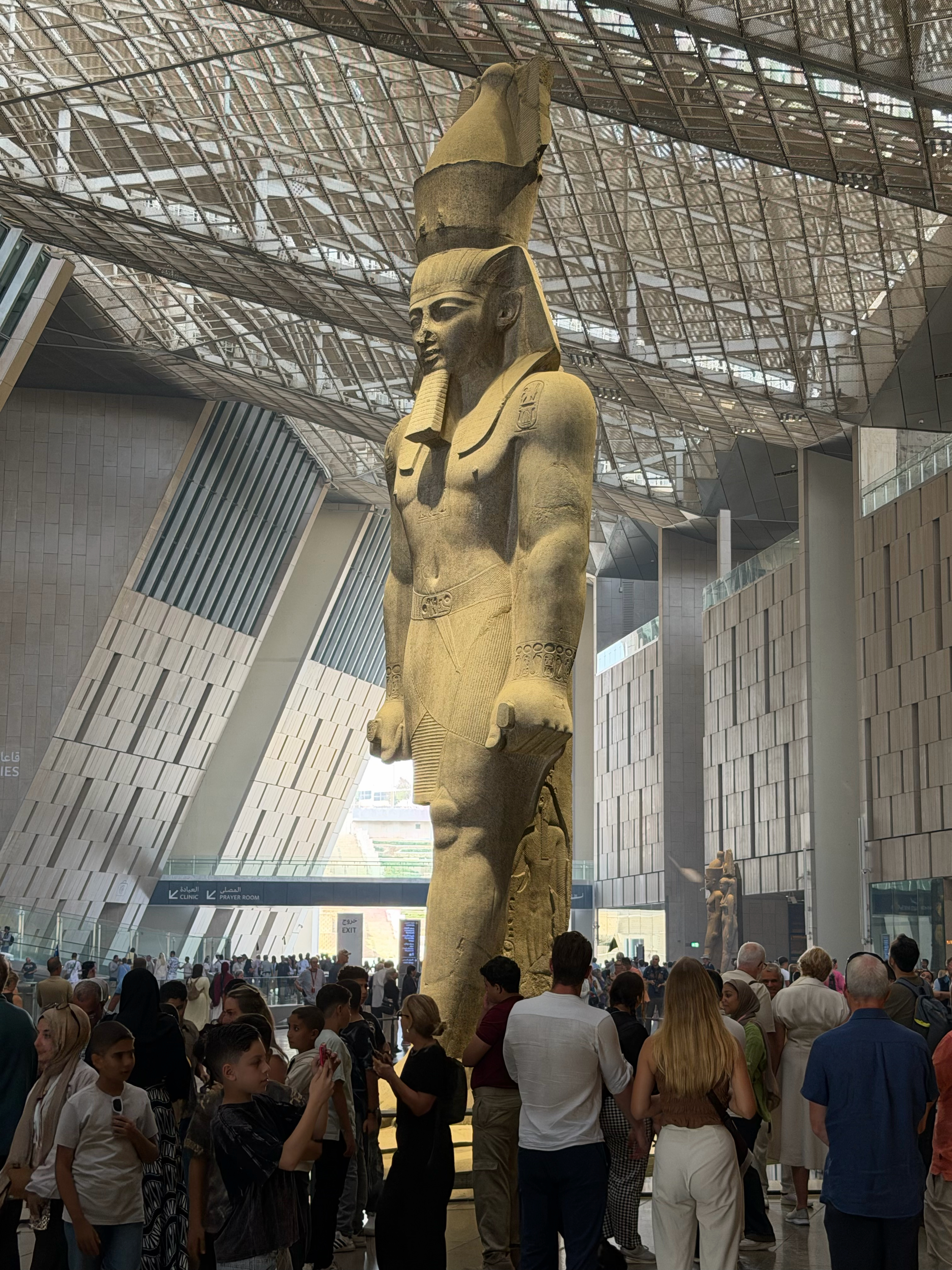
We then made our way into the main atrium of the GEM. You are greeted by a large 22 ton statue of Ramses II. The statue was originally outside and was located in the downtown Cairo area and had to be moved standing upright over the streets of Cairo without breaking it. This was a noticeable engineering feat! In anticipation of the building of the GEM it was moved to its current location about 18 years ago – long before the museum was actually completed and opened.
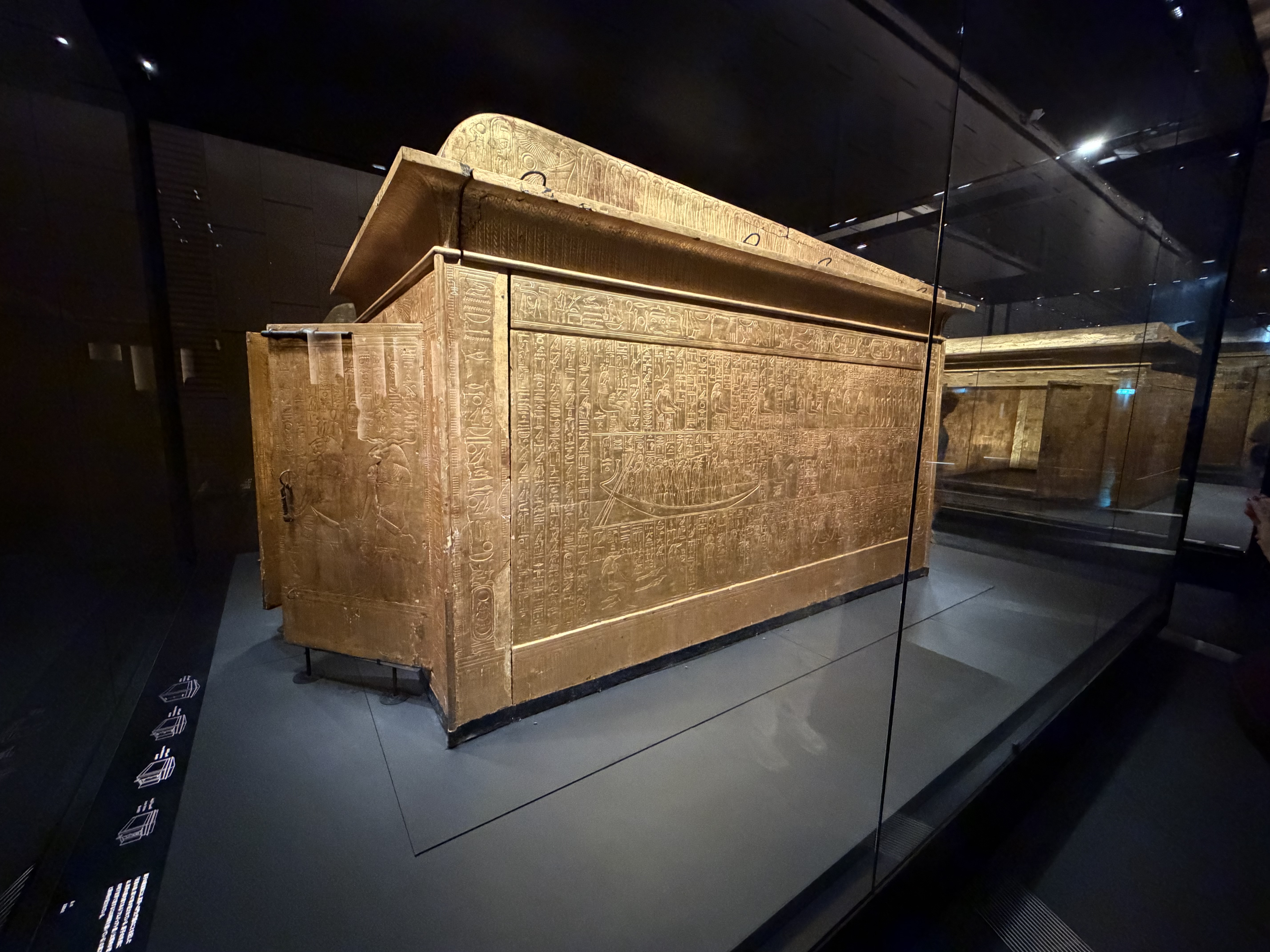
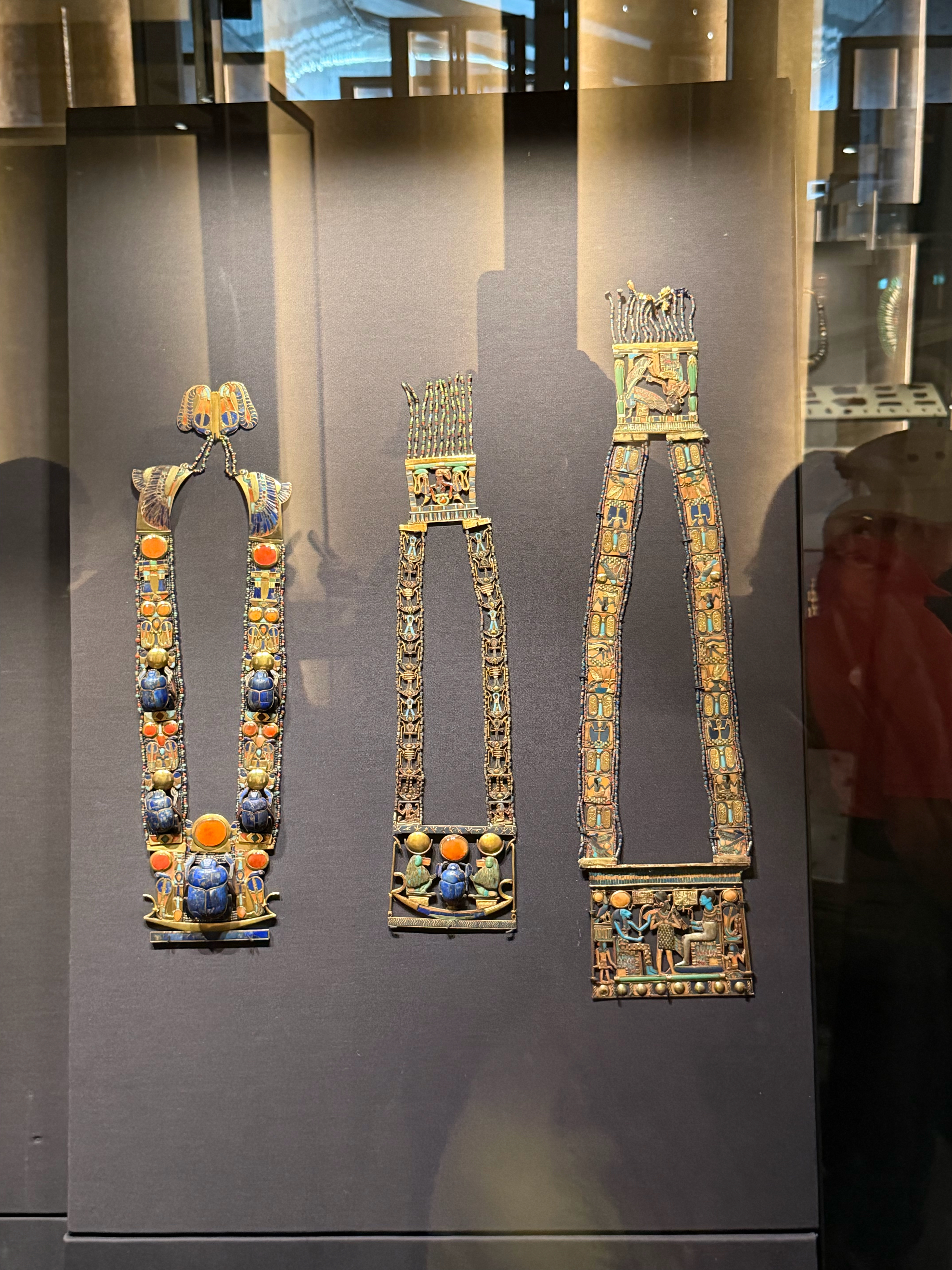
The highlight of the museum was a complete collection of artifacts from the tomb of King Tut – including all 5803 objects that were catalogued in his burial chamber.
While I know I am dating myself – how many of you think of Steve Martin’s “King Tut (1978)” performed on Saturday Night Live when you think of this particular Pharaoh?
I digress.
How do you fit 5803 objects in a relatively small space? Many of them were stacked and nested together to make room for everything.
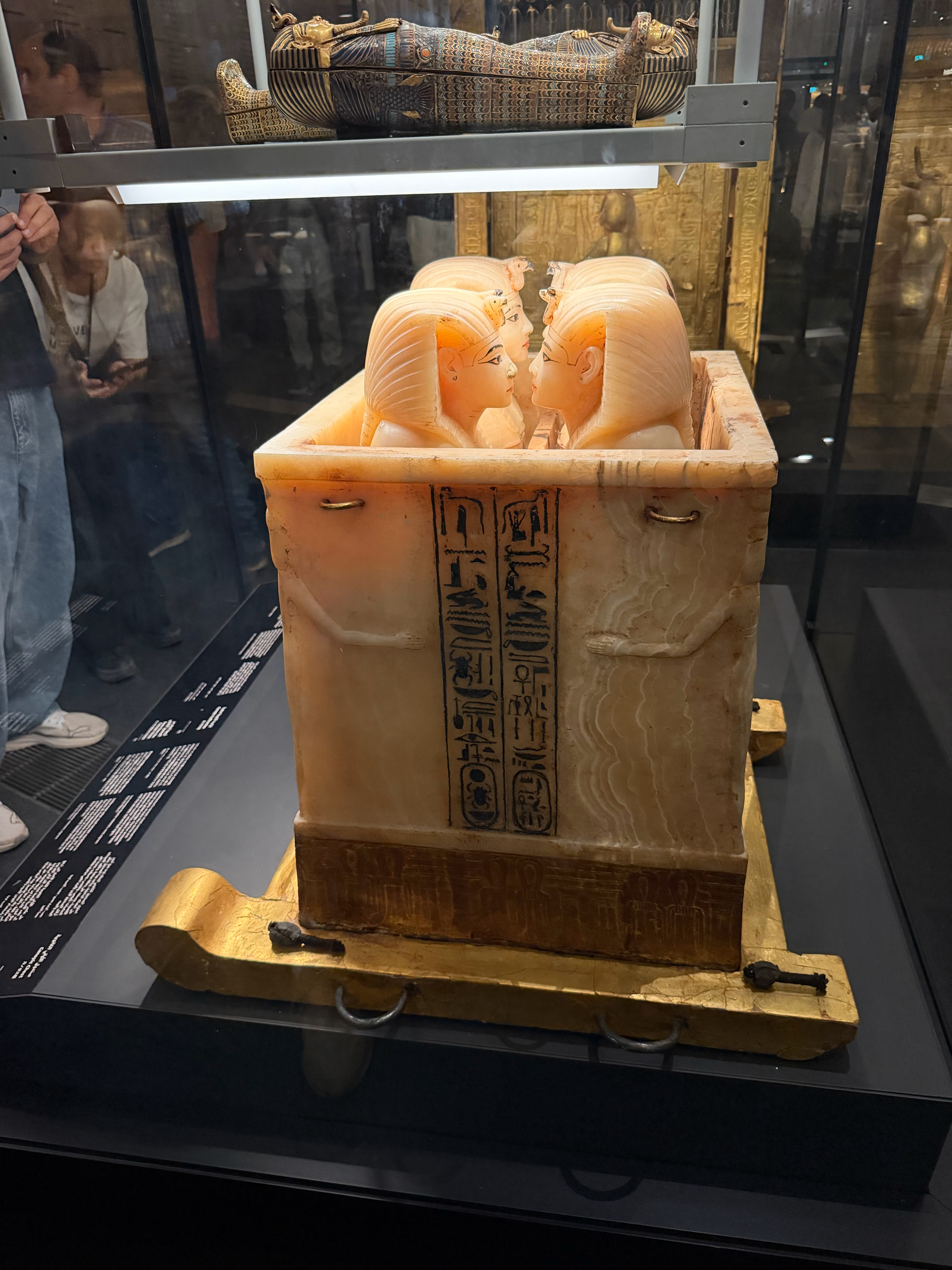
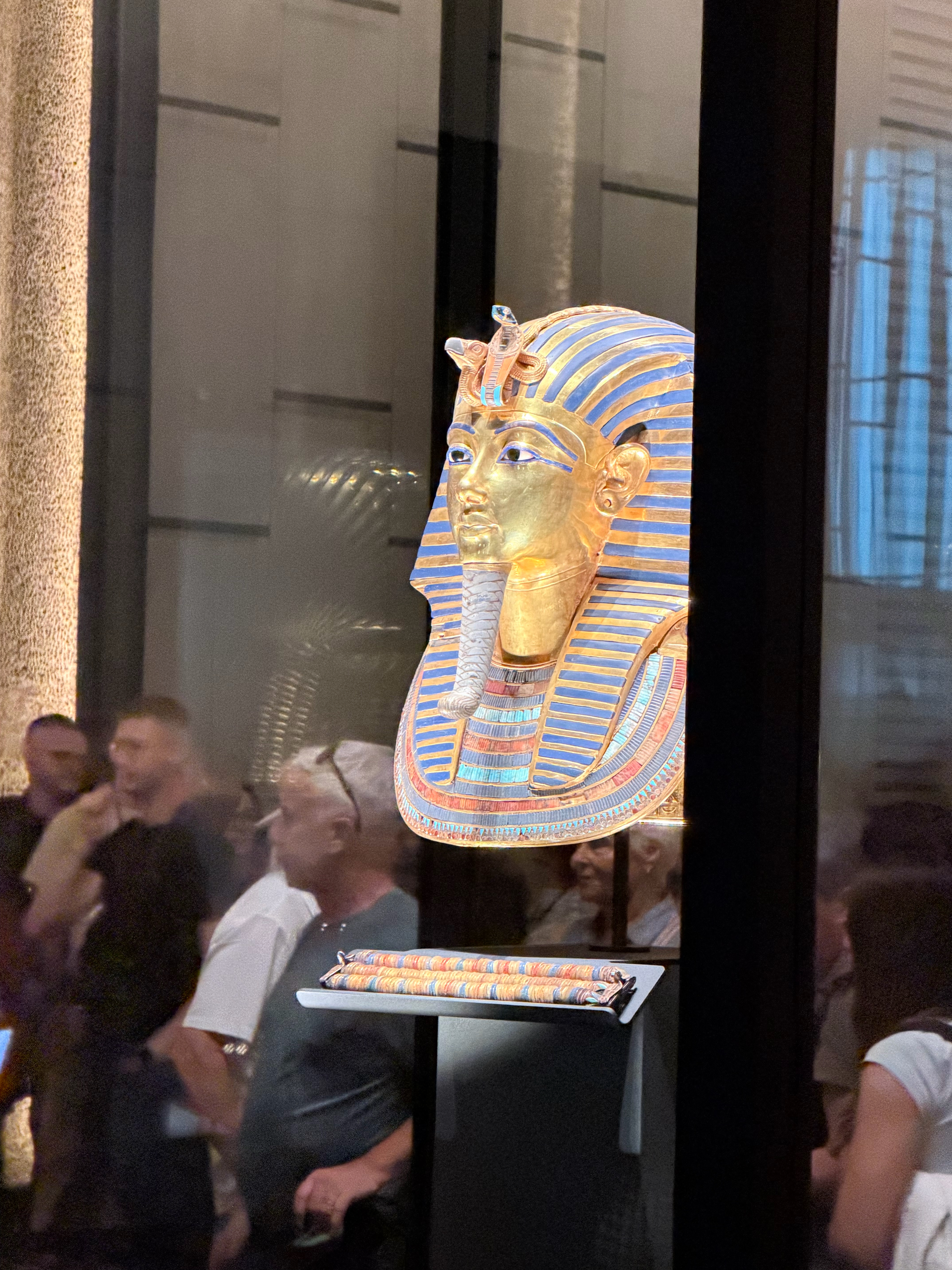
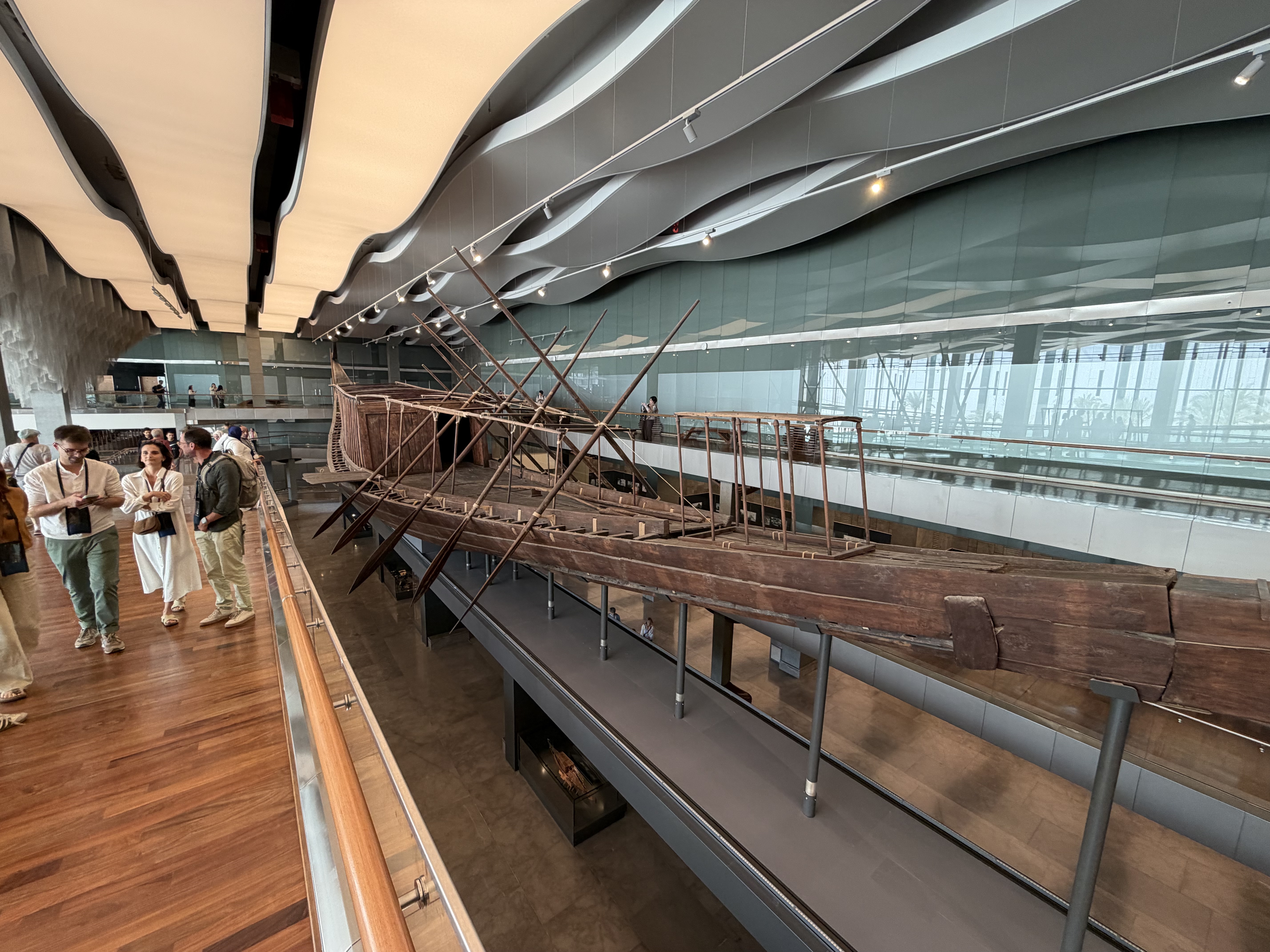
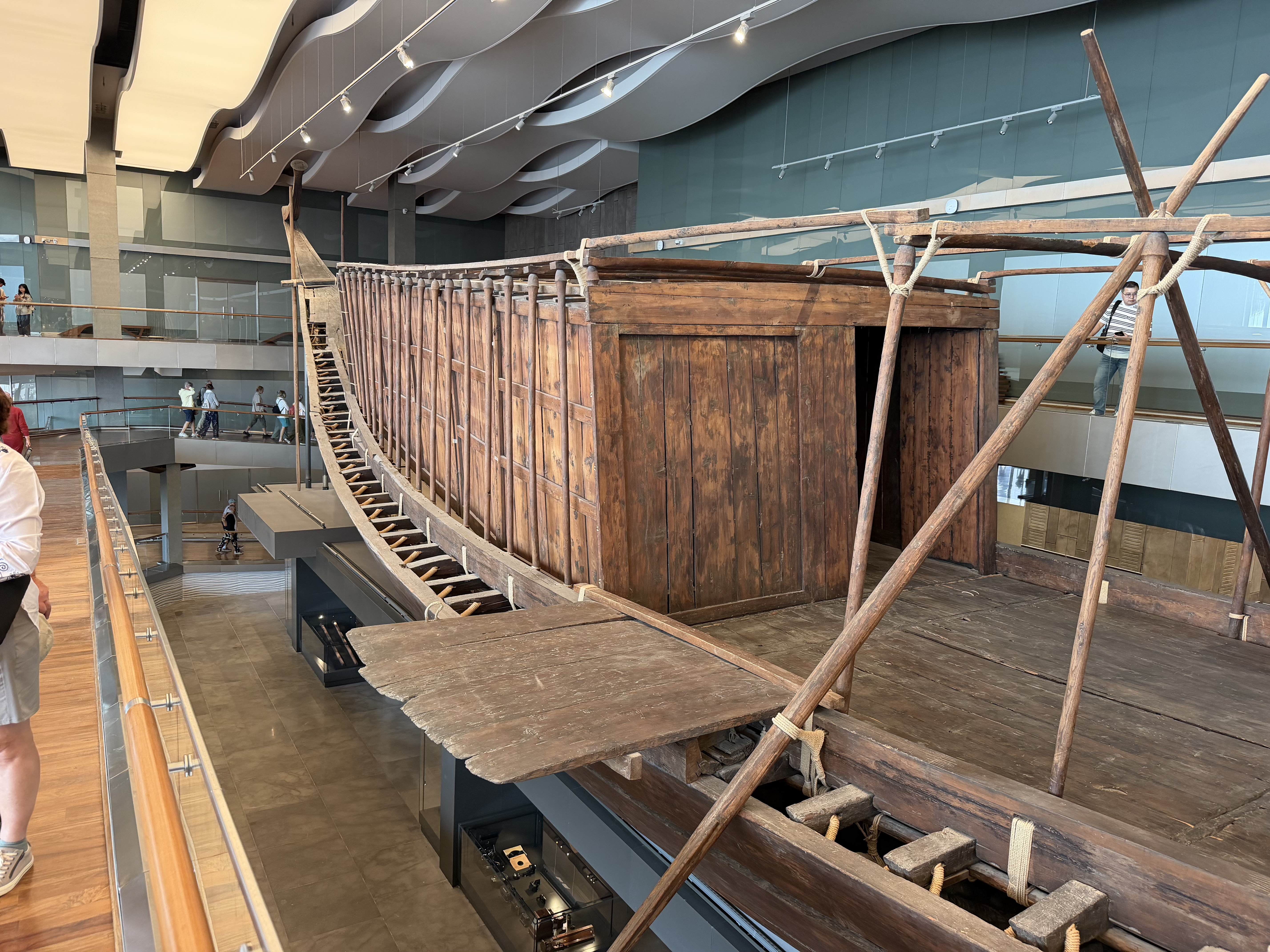
After a quick lunch at the museum food court, we toured Khufu’s Boats Museum which is in an adjacent building to the main part of the GEM.
Archeologists discovered several pits next to the Great Pyramid that contained disassembled boats that were buried and were meant to be used by the pharaohs as they journeyed in the afterlife. The boat pieces were labeled with hieroglyphs that provided information on how the boat would be later reassembled. It was stunning to see the boat that was rebuilt from the original wooden pieces by modern archeologists.
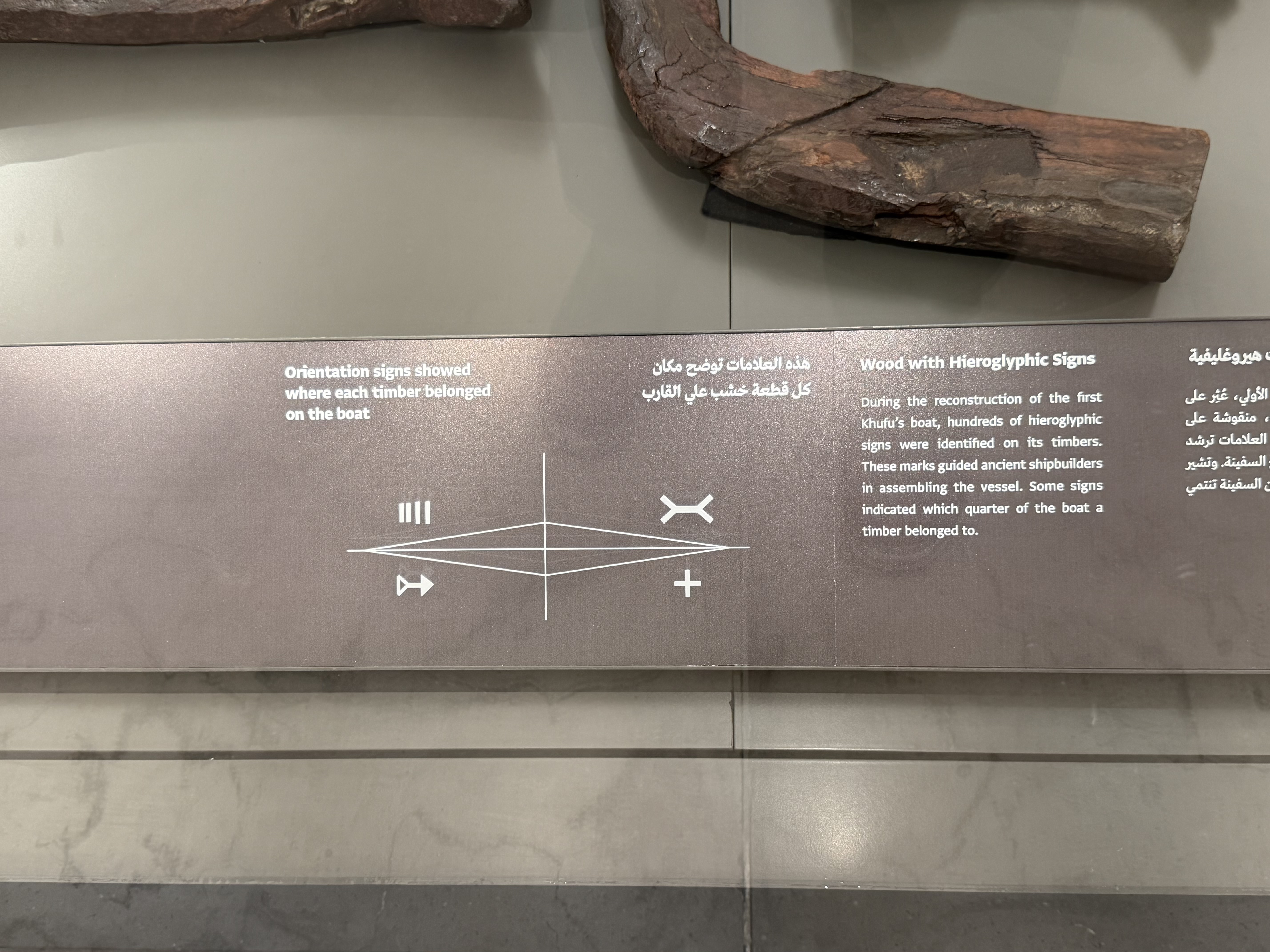
We could have spent a couple of days seeing all of the displays at the GEM – but it was time to get back on the bus and to travel just a few miles to Egypt’s most famous archeological site – the Pyramids at Giza.
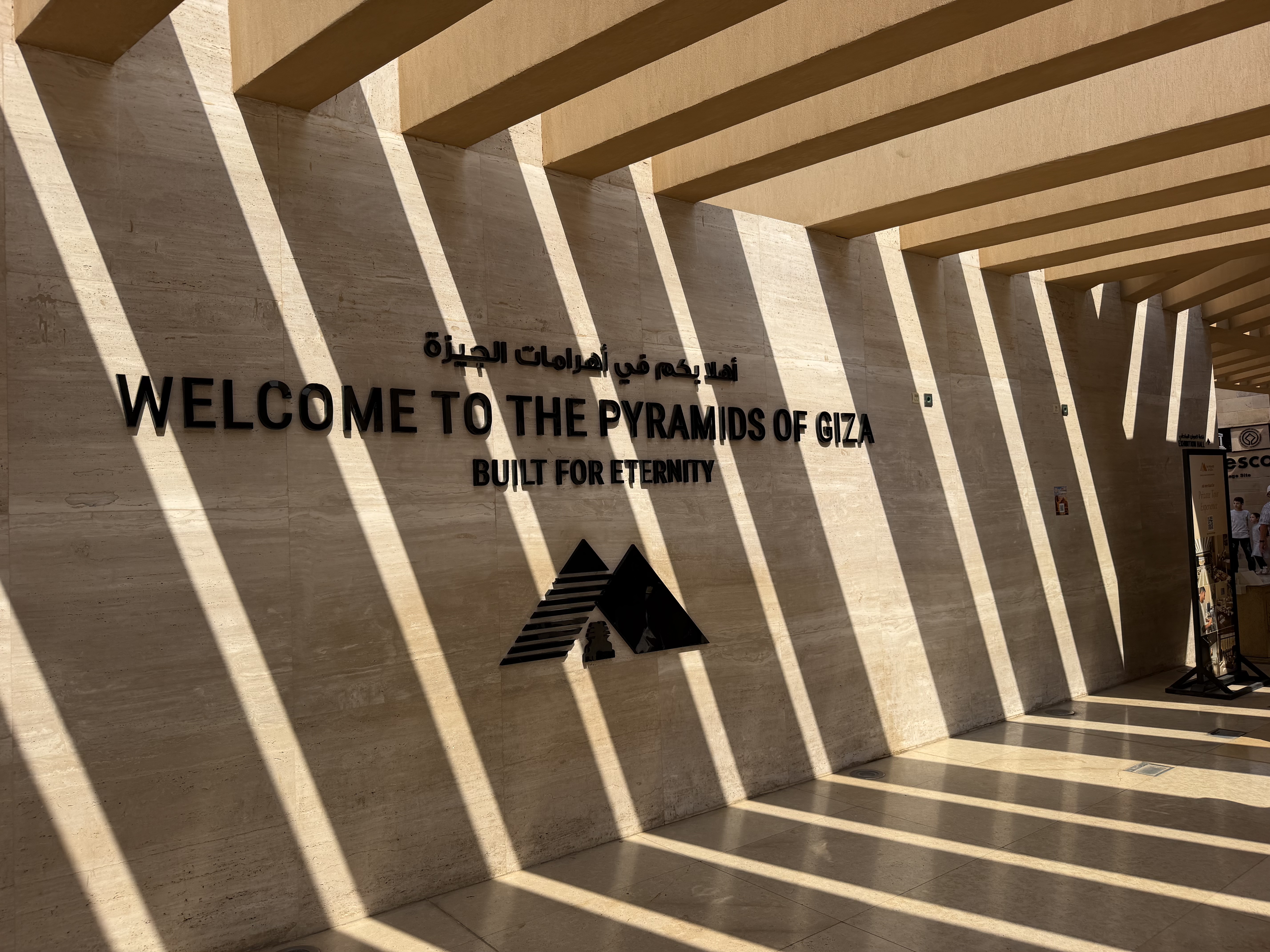
Upon arrival at the Pyramids site Viking Cruise Lines had arranged for those who are interested to do a short camel ride. After we had crawled through a tunnel to see a burial chamber how can you say no to a camel ride?
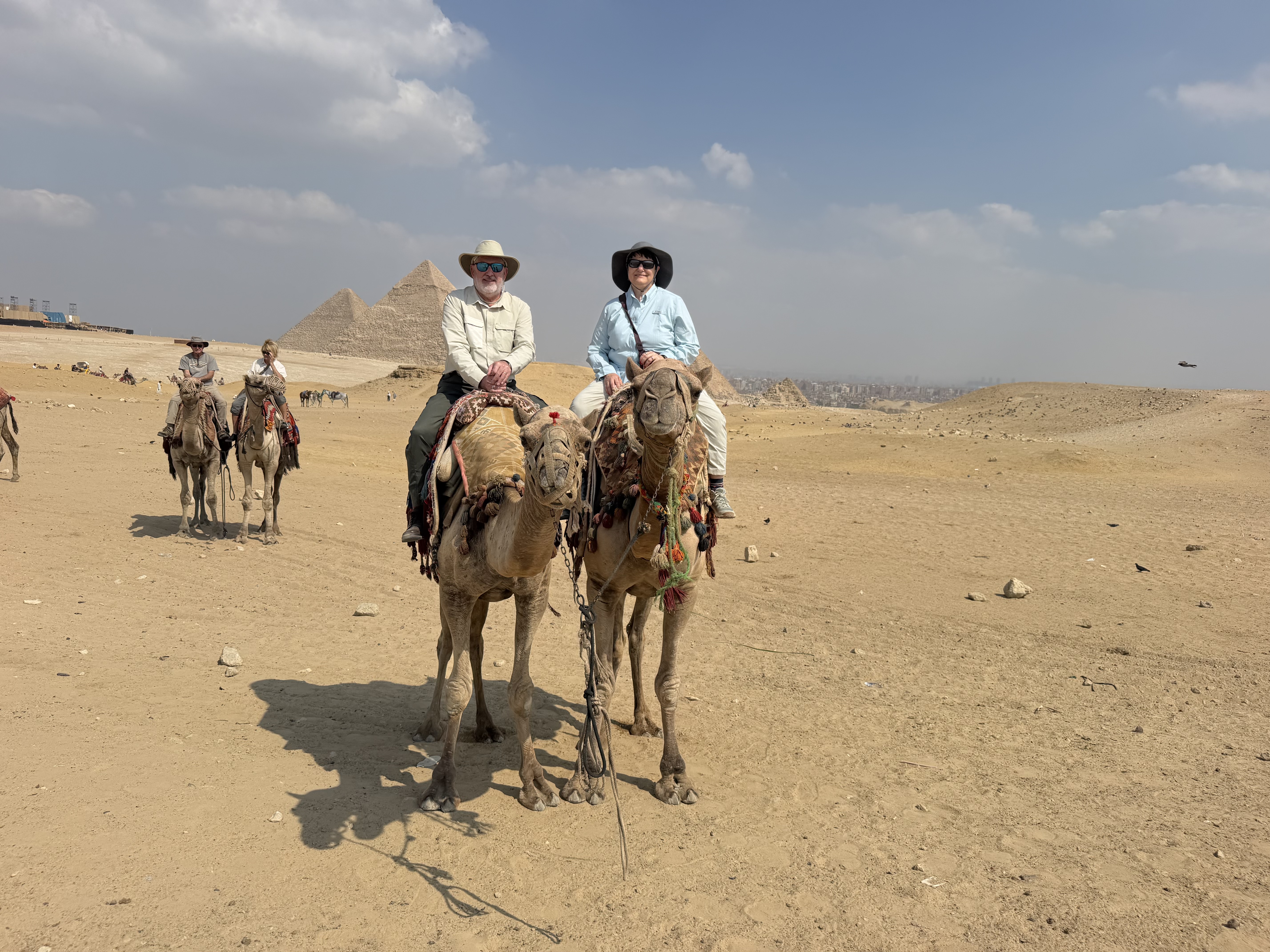
We enjoyed a quick 10 minute ride through the sand – and then posed for a couple of pictures before getting back on the bus to arrive at the Great Pyramid.
What can I say? It was great touristy fun!
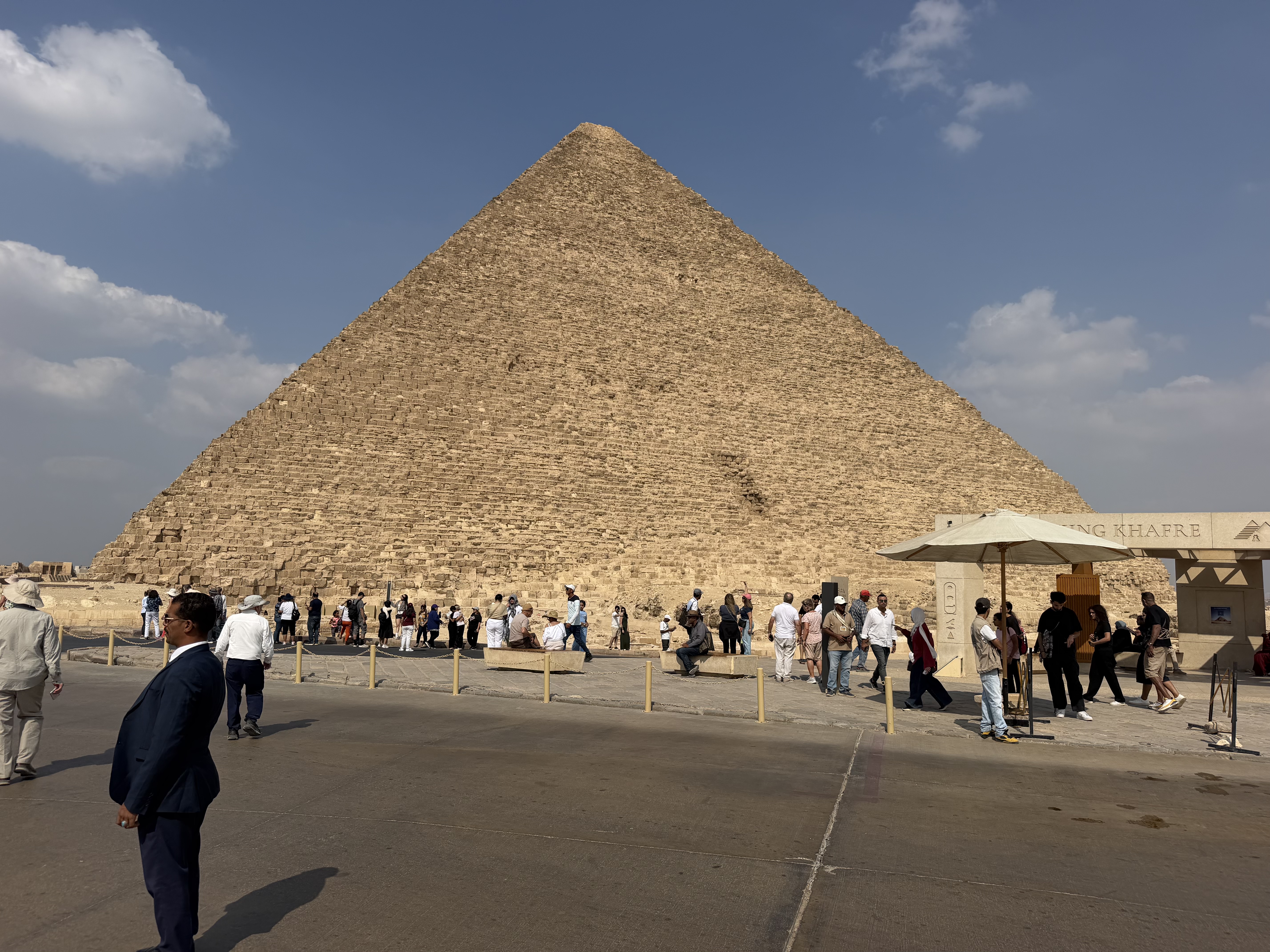
I had seen many pictures of the pyramids throughout my lifetime – including the Great Pyramid – but the images do not capture the immense scale of these structures when seeing them firsthand.
The Great Pyramid of Khufu took between 19 to 21 years to complete and is one of three pyramids grouped together which each interred a father, son and grandson.
Interestingly, when building the Great Pyramid (2540 BC to 2560 BC) the workers did not work year round. Because of flooding on the Nile they worked around half the year in three shifts of around 1000 workers at a time. Several of the displays also mentioned that the pyramids were not built by slaves but instead by paid skilled artisans and craftsmen. A final interesting factoid on the Great Pyramid – there are an estimated 2.3 million pieces of stone that were used in building the pyramid.
Following our visit to the Great Pyramid – and avoiding the very aggressive street vendors – we made our way to the Sphinx.
The Sphinx was roped off – so you could only get so close to it. However – it is really dwarfed by the three pyramids on site and I did not appreciate the relative scale of the the Sphinx and three pyramids until seeing it first hand.
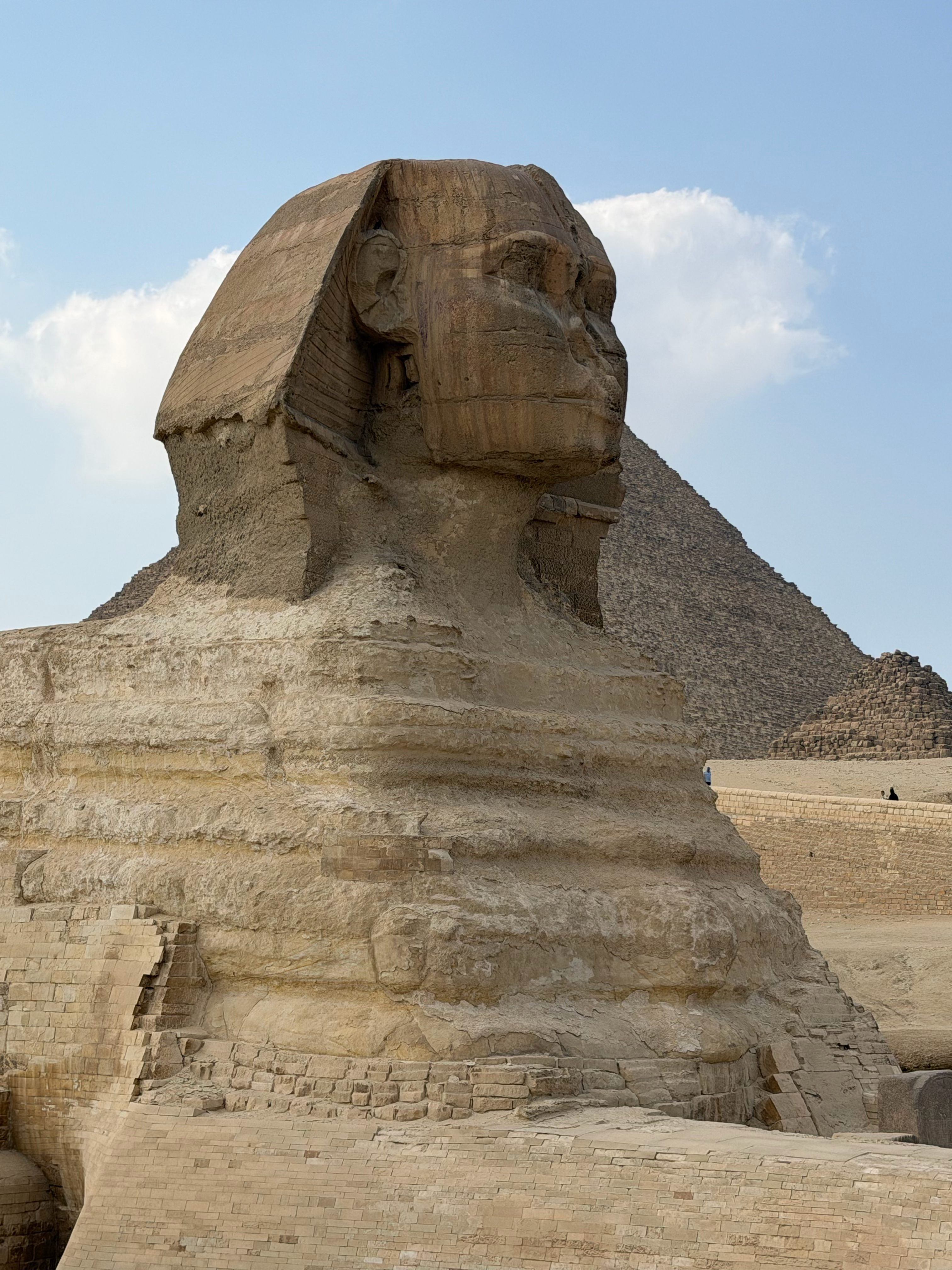
At the end of the day – it was a rare moment to remember reading about Egypt in elementary school – watching Steve Martin perform on Saturday Night Live – and coming full circle by standing next to the Great Pyramid and Sphinx decades later.
It had been an amazing day touring but we were exhausted and ready to rest back at our hotel for the evening.
Our next stop is Luxor and getting on board our Nile River cruise ship – so more excitement and new things coming tomorrow.
Until next time …


