
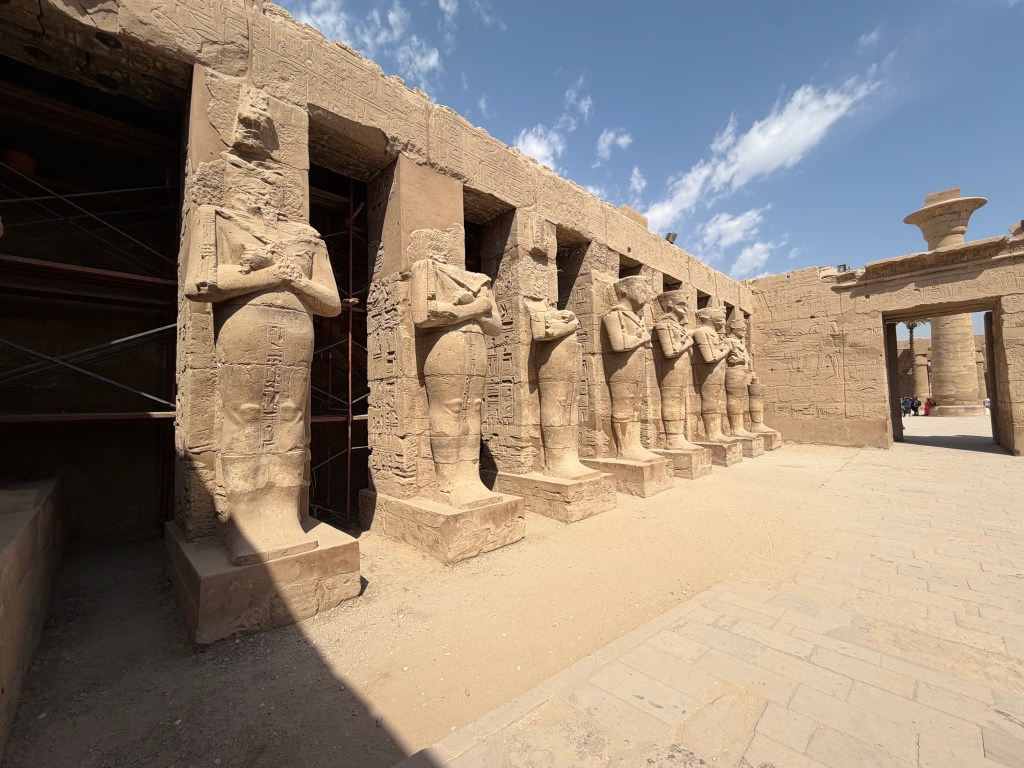
It was an early start to the day as we had to have our packed luggage outside our door by 5:15 a.m., grab breakfast and be on the bus by 6:00 a.m., head to the airport for a 1 hour charter flight to Luxor, and then head from the airport to the Karnak Temple.
I am exhausted just typing all that in!
Luxor is a little over 500 km south of Cairo and is a moderately sized city of about 1.4 M people on the Nile focused mostly on tourism and agriculture. In ancient times Luxor was called Thebes and has a distinct agricultural feel to it with sugarcane, corn, mangoes and other warm weather agricultural products. Our tour guide also mentioned that a lot of the agriculture is still done via hand labor with domestic animals instead of tractors or mechanized equipment.
The Karnak Temples comprised a site of over 20 acres and took 200 years to finish.
Each day I continue to think – “How can it get any better than yesterday?” – and while it isn’t always “better” it has been absolutely different and unique.
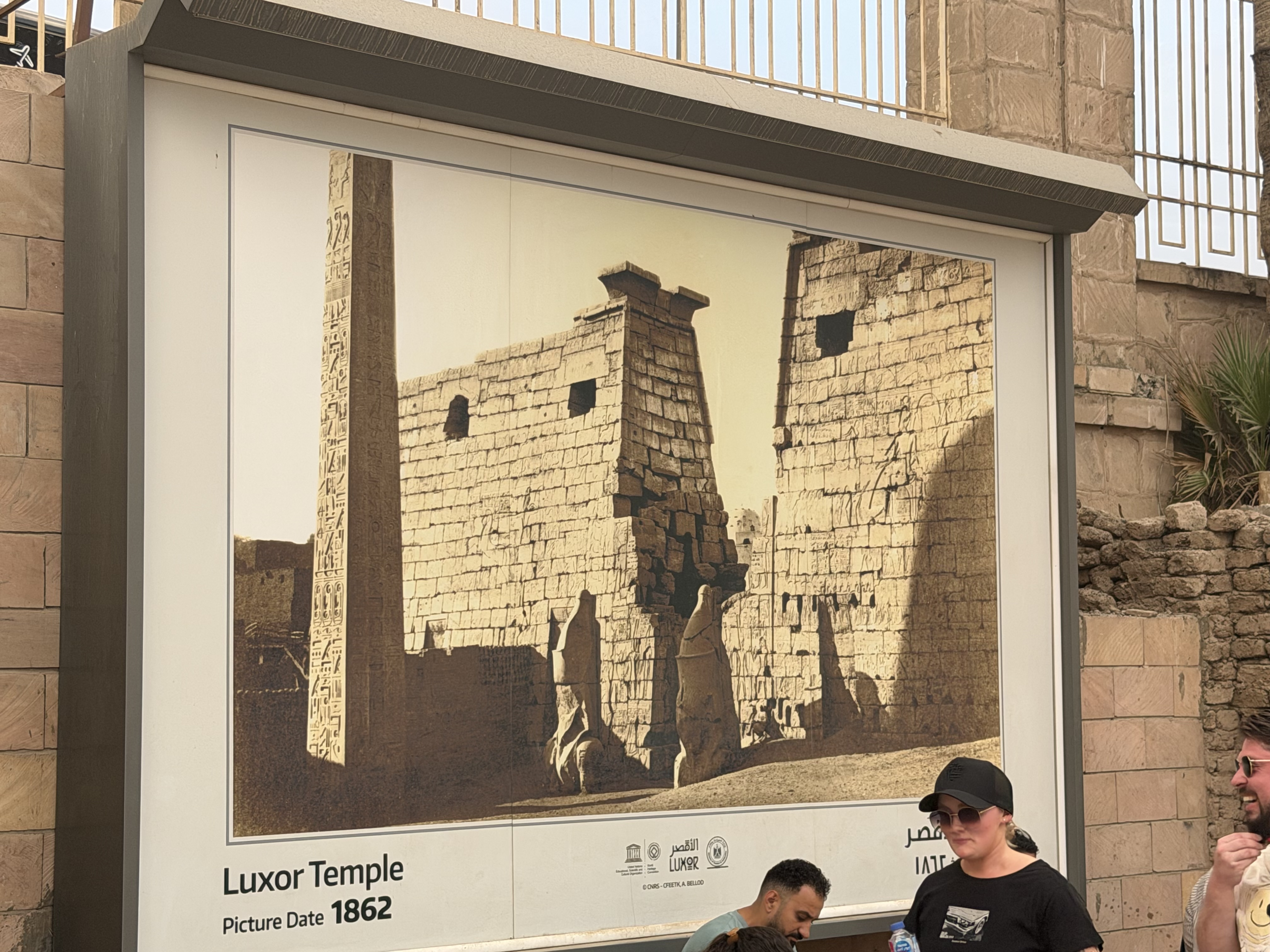
One of the things I did not appreciate was how many of these ancient ruins were under large amounts of sand and debris in the 1800’s. We have seen several places where inscriptions were made on walls by different people that seemed near the top – only to find out that when the inscription was made there was 20 feet of sand and debris piled up around the ruins. It was clearly ignorance on my part but I thought that when excavations were done and artifacts brought to other museums that they were essentially laying out in the open. It turns out that often there was extensive work done just to get walls, statues, and other artifacts exposed.
I continue learn interesting facts.
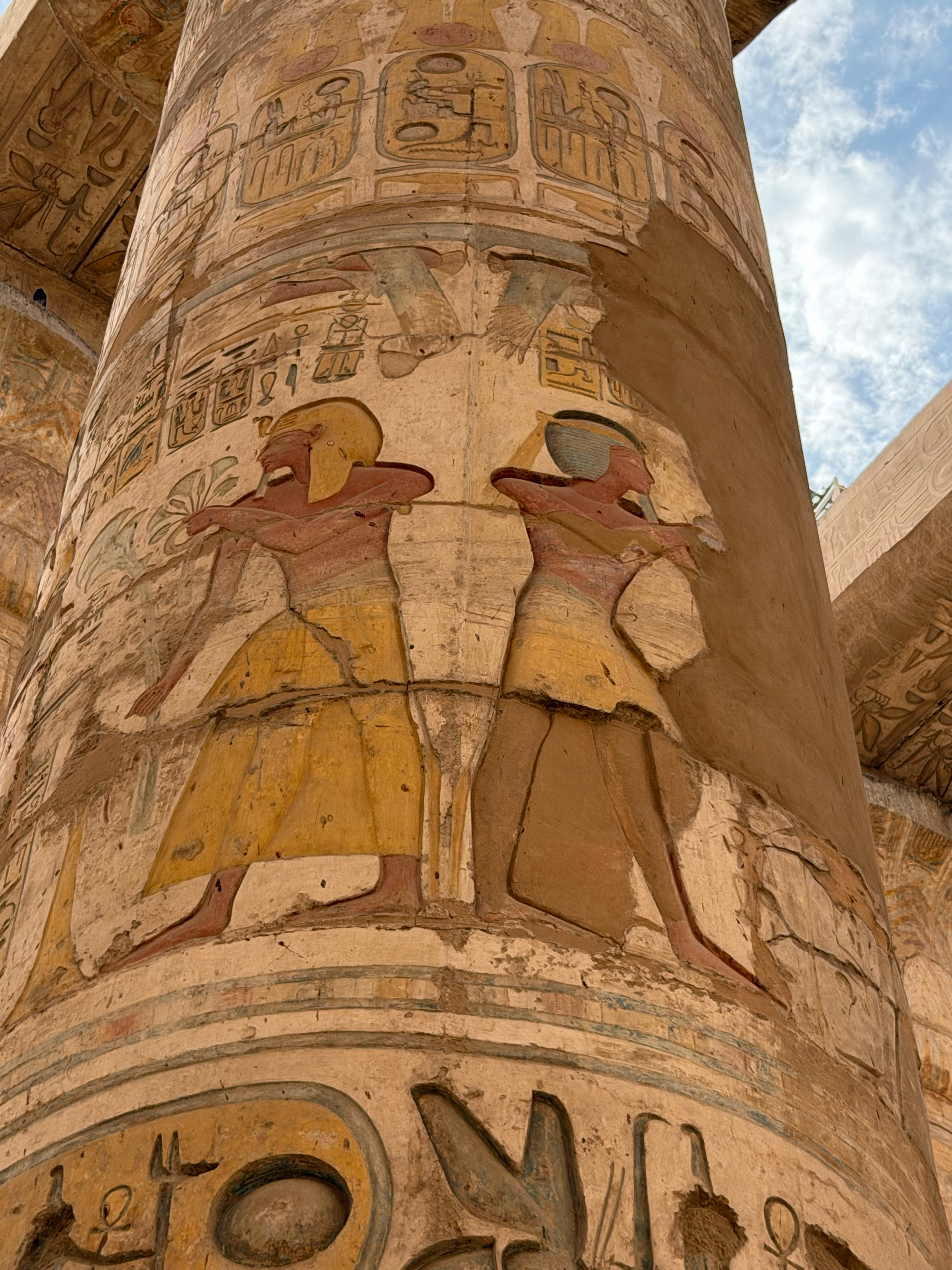
Once again – our guide asked us how you could tell which direction to “read” the hieroglyphics?
As usual – no one knew the answer.
You can look at the direction animals are facing in the hieroglyphics and that is the direction to read!
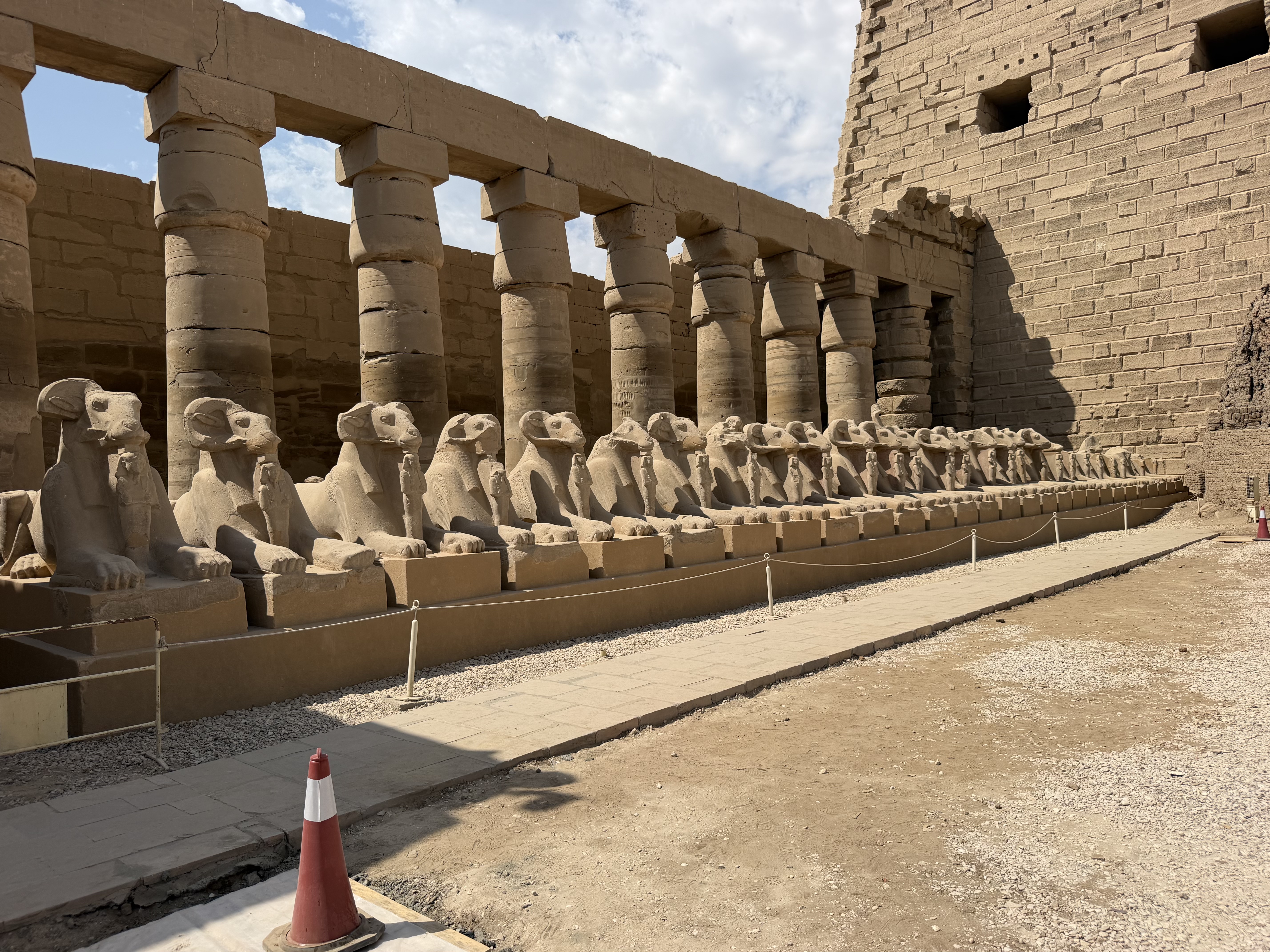
We started our tour of the Karnak Temples walking past some ram headed sphinxes that led the way through a massive gate.
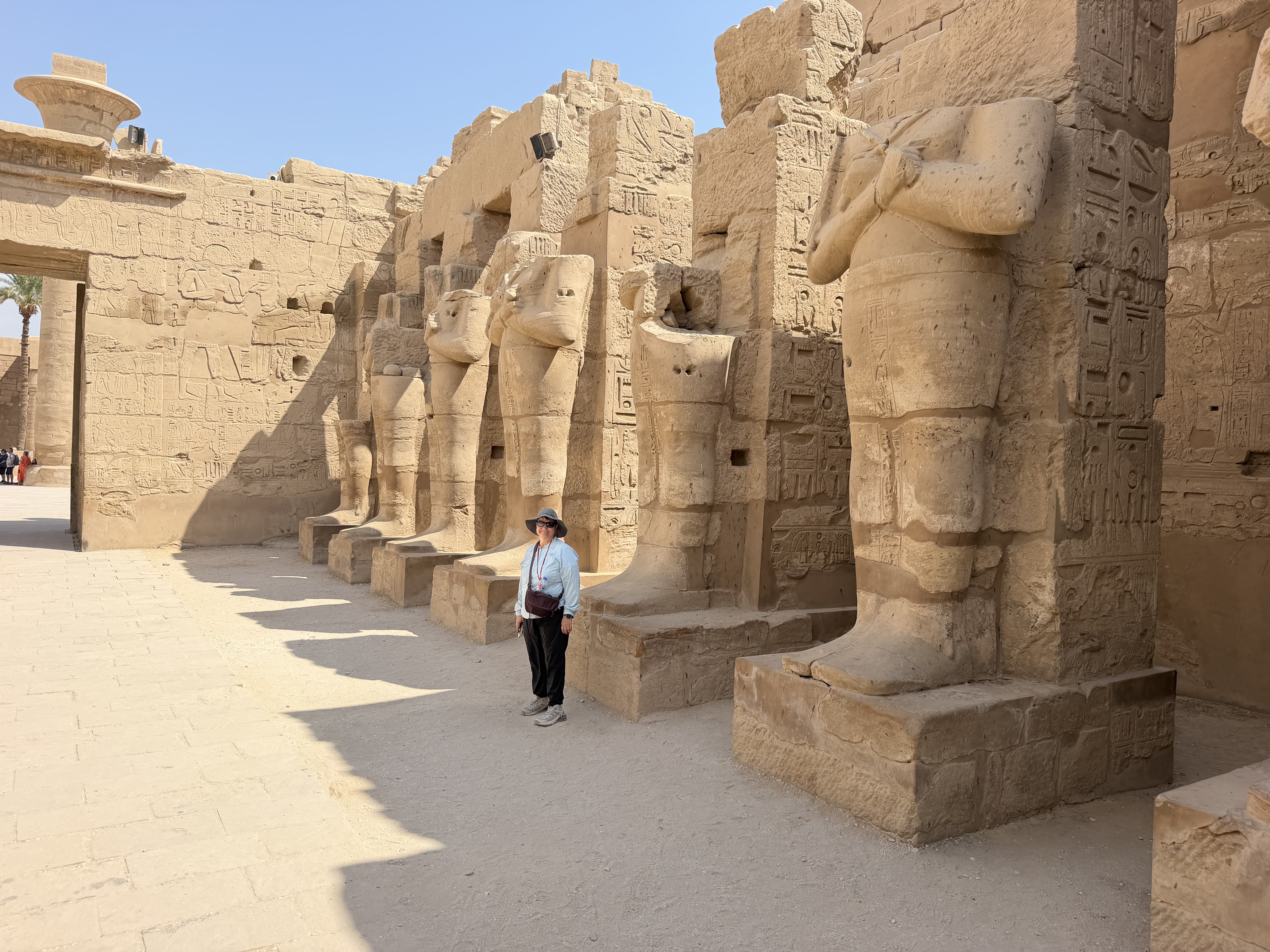
The most impressive part of the Karnak Temples had to be the amazing columns – all 134 of them. Each column had large amounts of hieroglyphics on them telling a story – along with cartouches identifying the ruler who built them. I am blown away that the original paint is still vibrantly colored considering when they were erected and painted in 1250 B.C.
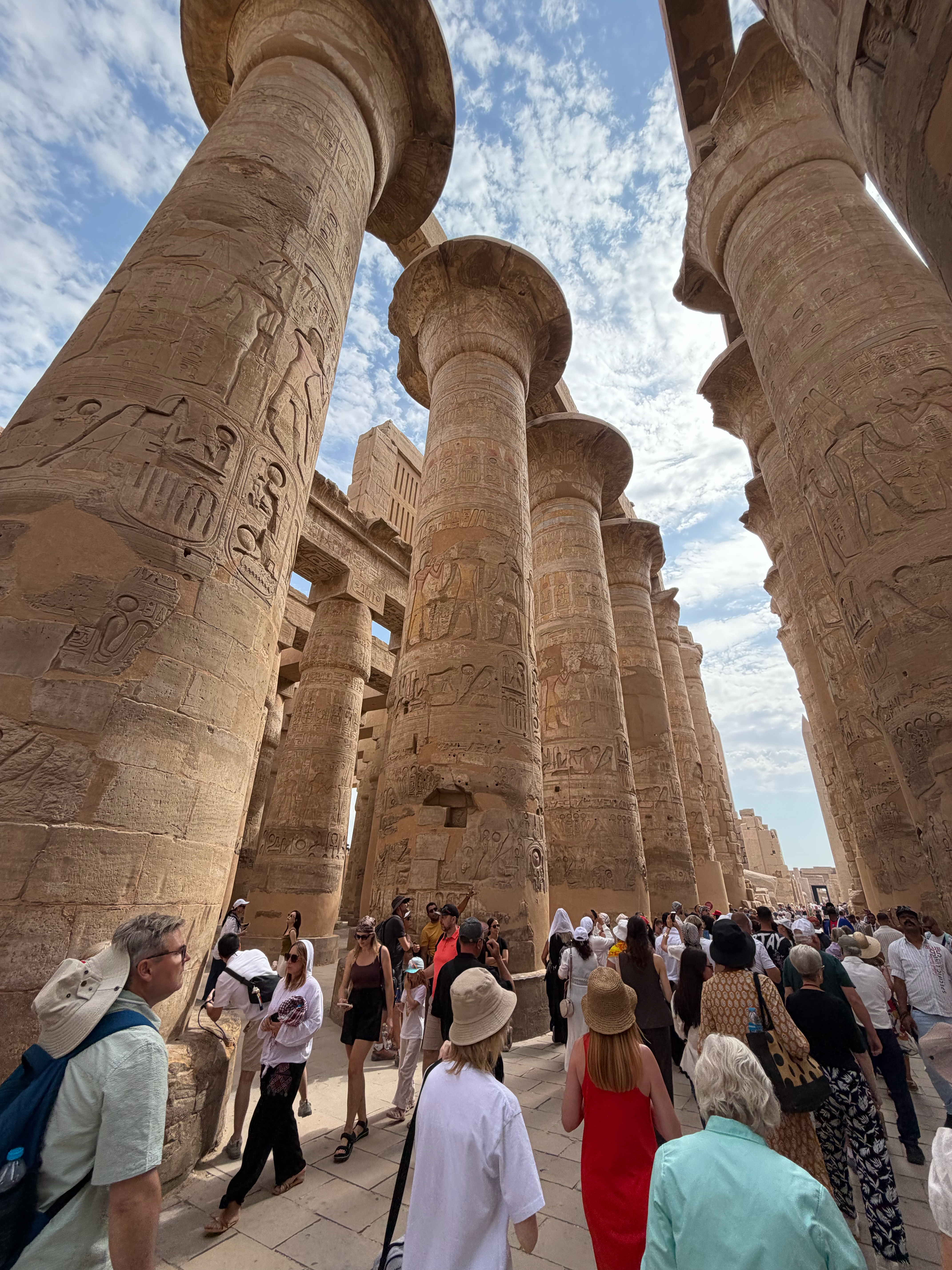
The columns were not just decorative – but when built would have been used to support a wooden ceiling.
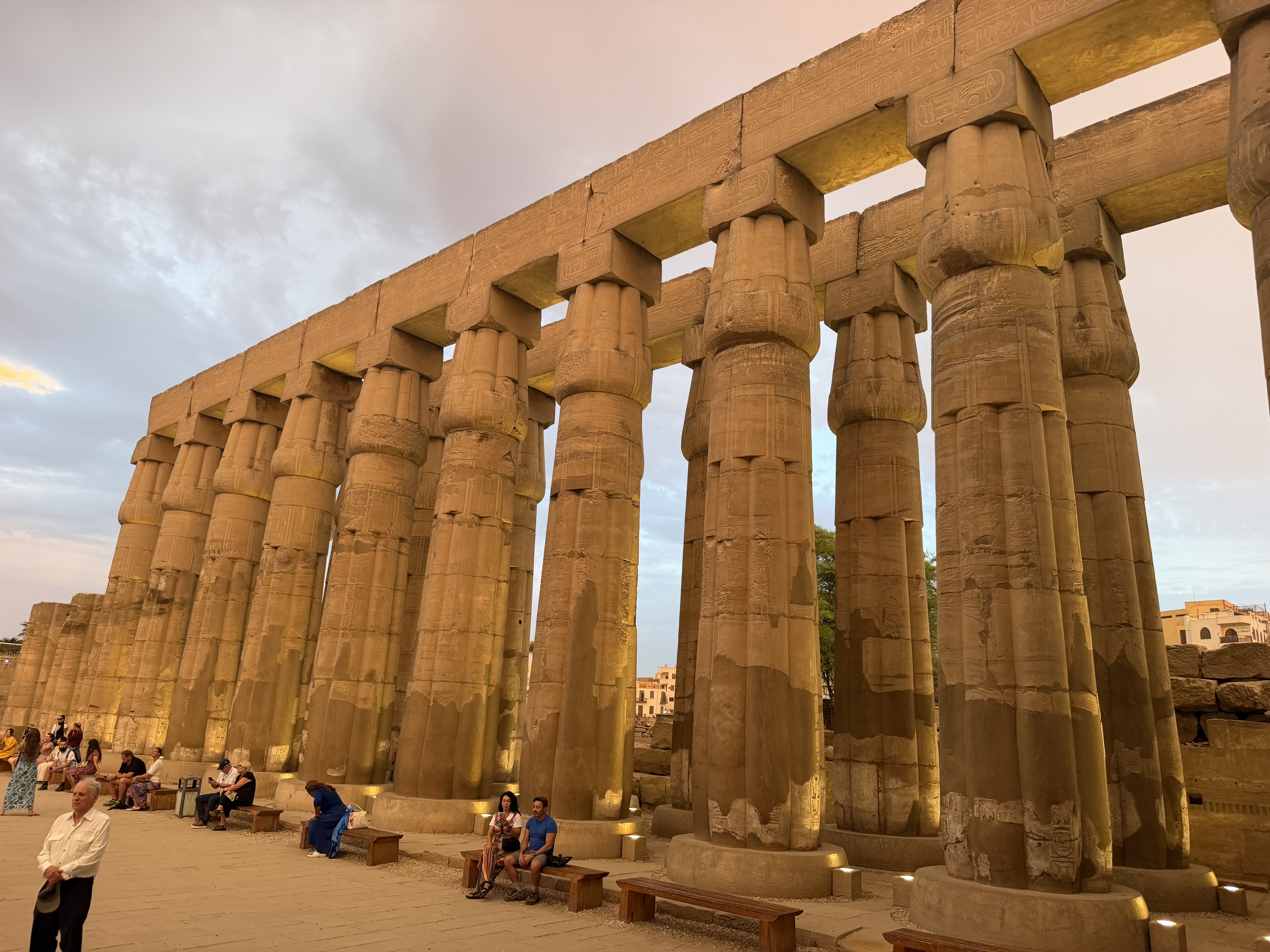
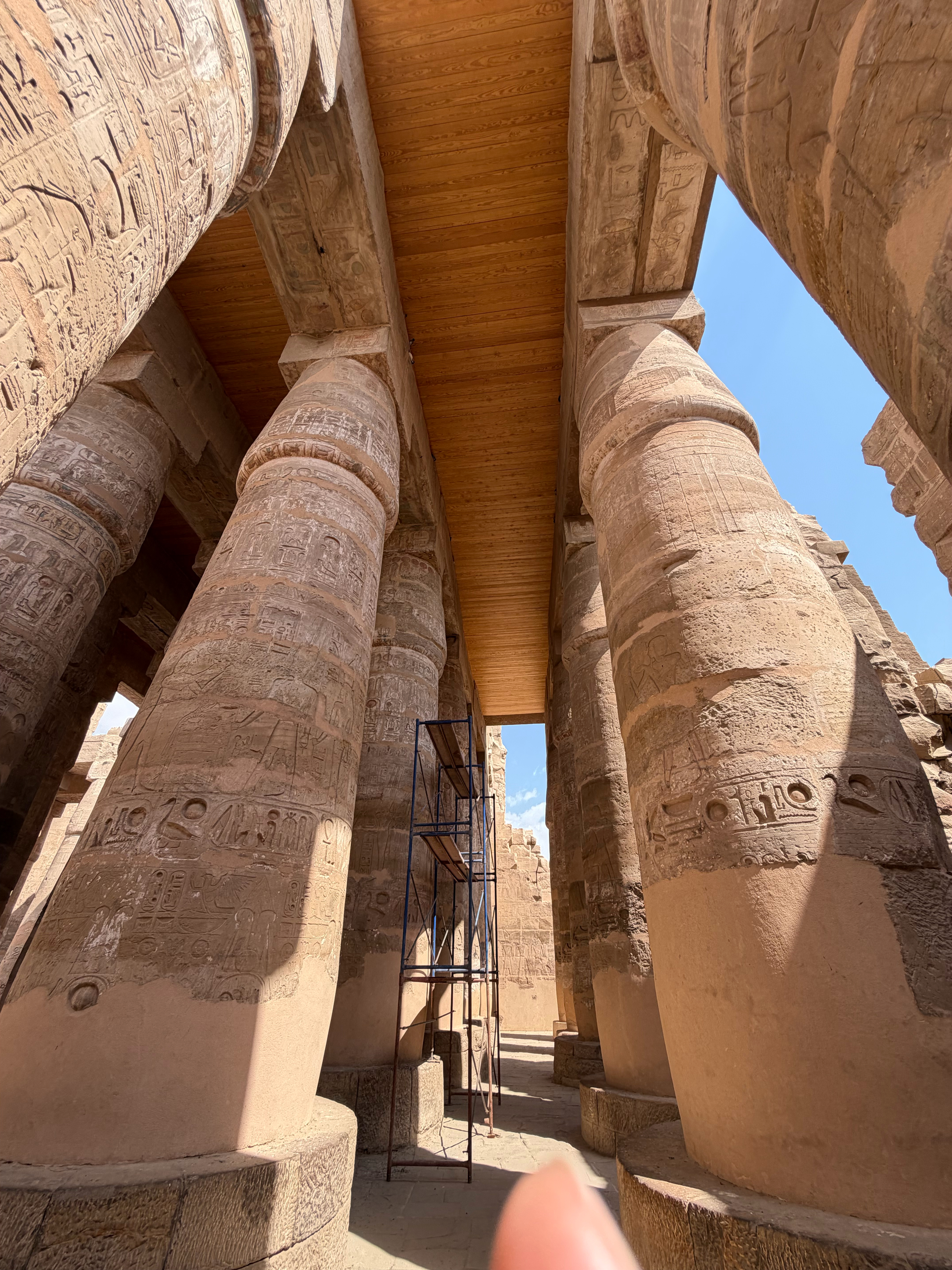
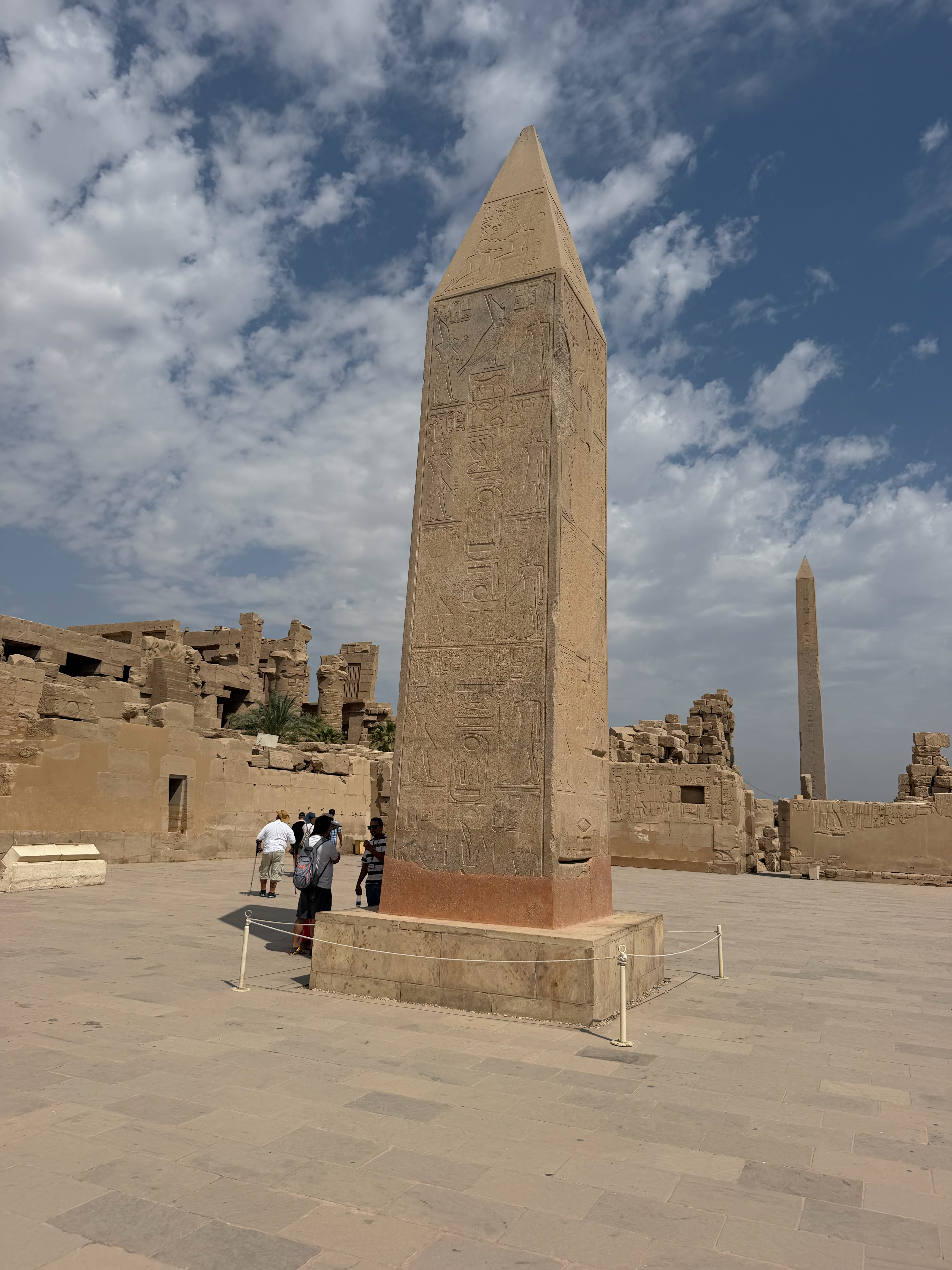
The other striking artifacts at the Karnak Temples were the obelisks done by Thutmosis I and III and daughter/queen Hapshepsut. These are made of a single piece of granite that was carefully selected in a quarry and floated on the Nile and subsequently moved to the construction site. The carvings on the obelisks were intricately done and looked like they were just completed last year.
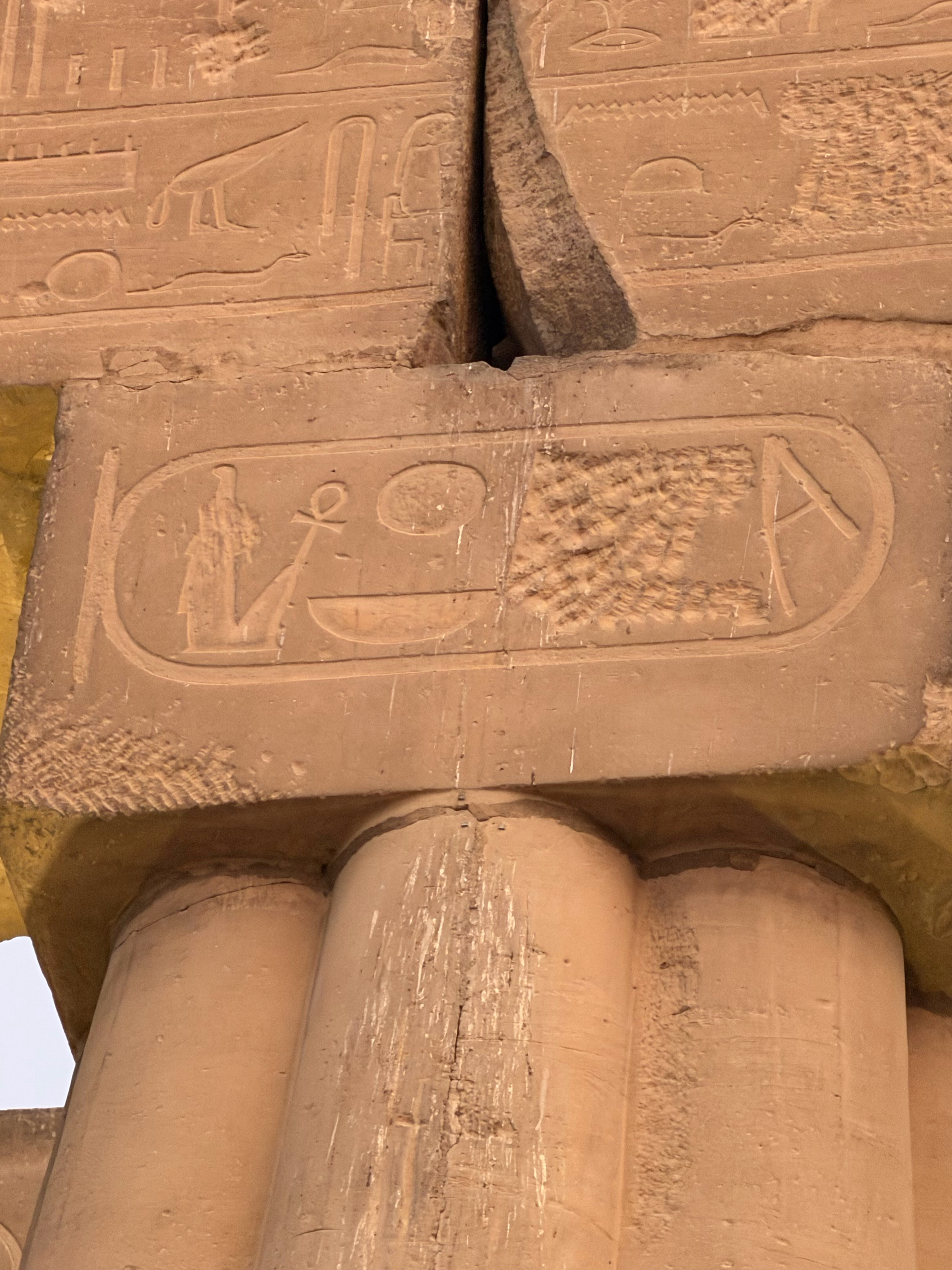
As different rulers came to power they would often try and erase some of the legacy of the people who came before them by defacing the cartouches of the Pharaoh who built them. You could see this clearly in some areas of the Karnak temples. Rulers sometimes went as far as erasing images of the former Pharaoh – we saw evidence of this in several places.
As we see more of the artifacts and temples – the more I am impressed with the civil and structural engineering skills of the Egyptian builders and architects.
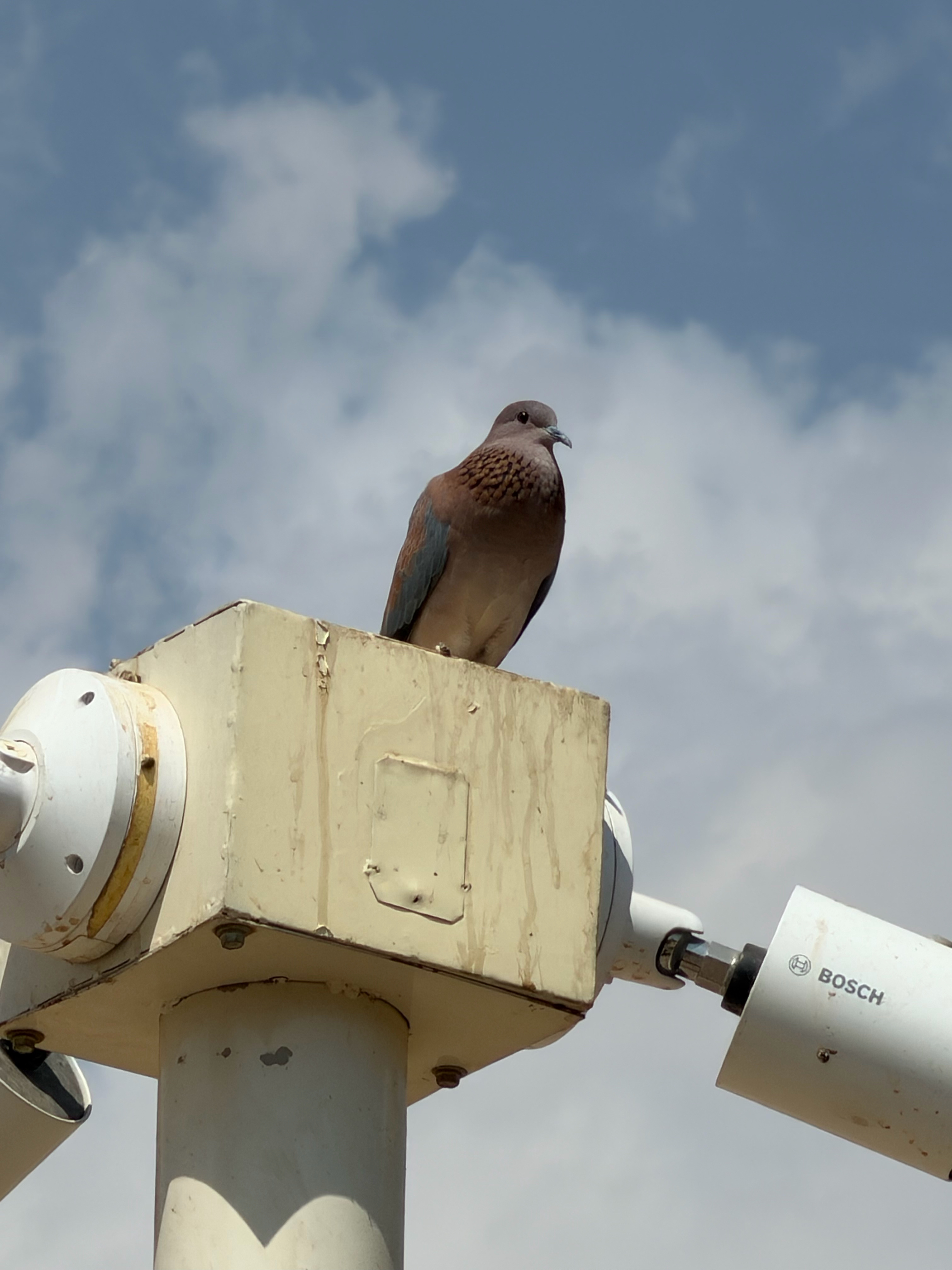
Noel and I are always looking for new bird species as we travel – and once again we ran across a new one. As we were leaving the Karnak Temple – we took a quick photo of what looked a bit like a colorful pigeon. Thanks to our Merlin birding app we identified this bird as a Laughing Dove – another new entry on my life bird list.
After our temple tour we headed to get our first glimpse of our cruise ship – the Viking Sobek.
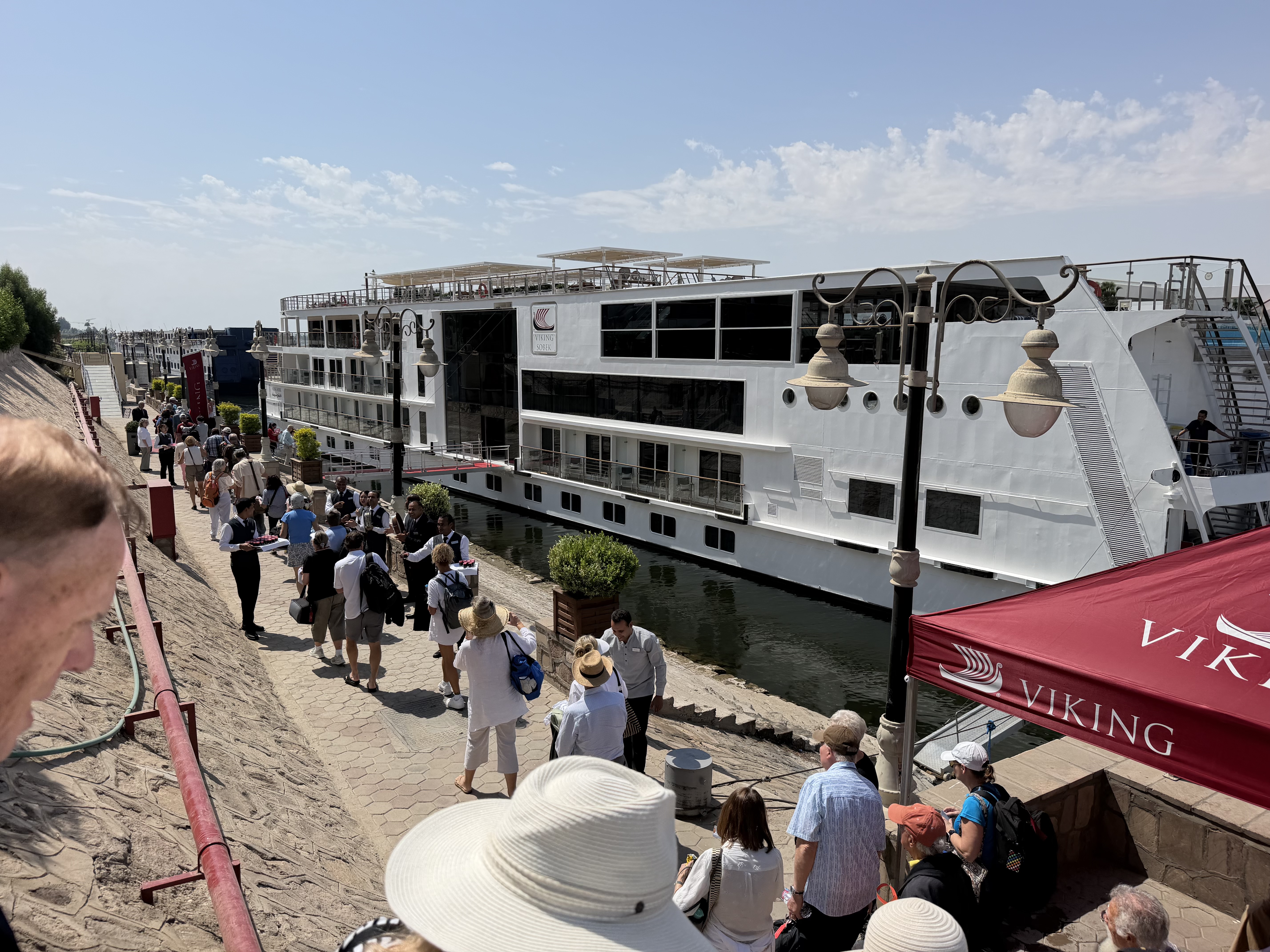
After getting into our room and putting clothes in drawers for our week-long stay on the Sobek – it was time for another temple tour.
After a delicious dinner on board – we boarded the bus and headed to the Luxor Temple – which was connected to the previously toured Karnak temples by a road lined with Ram-headed Sphinxes. It was impressive and a great place for a selfie as the sun settled on our full travel day!
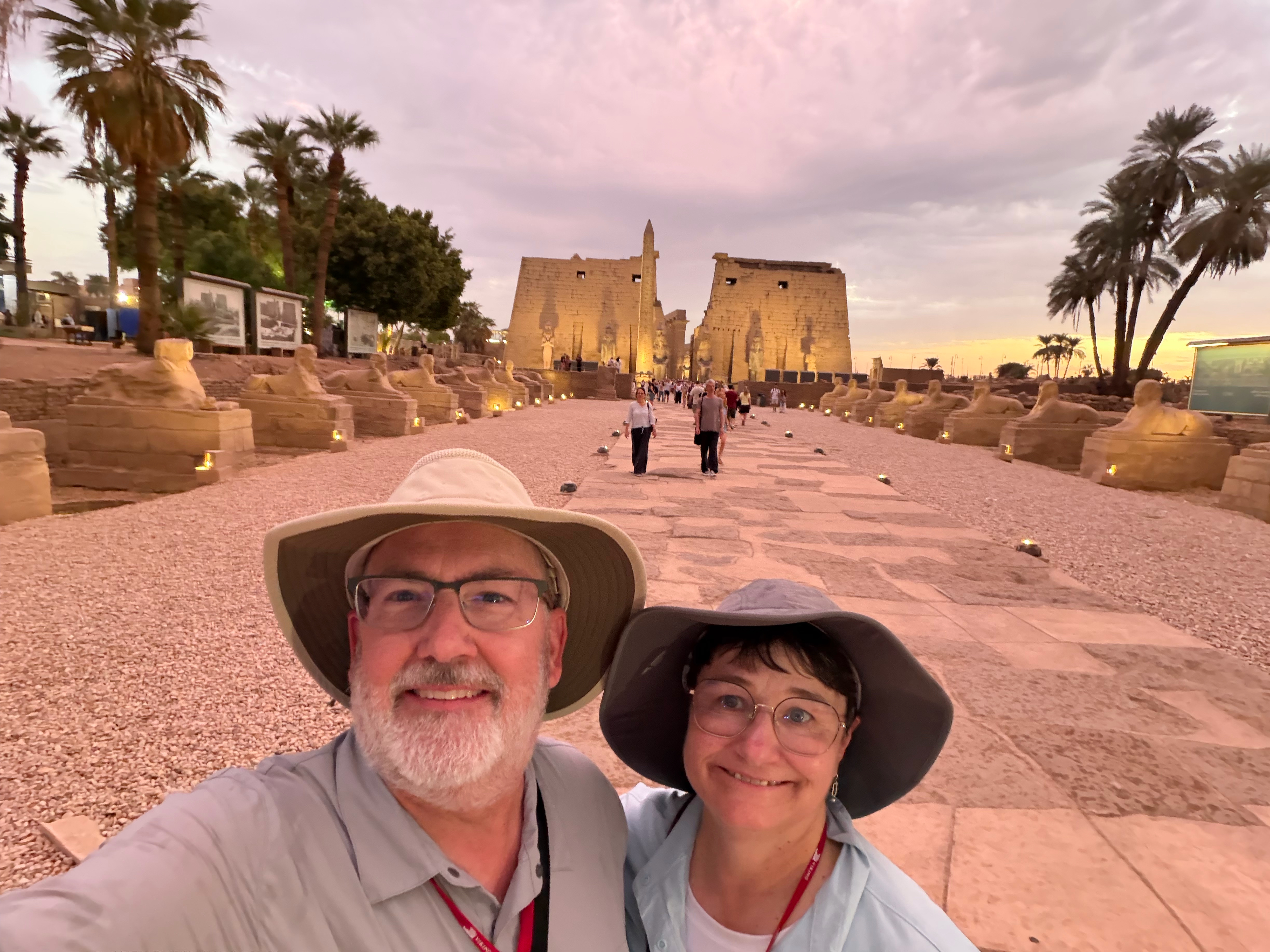
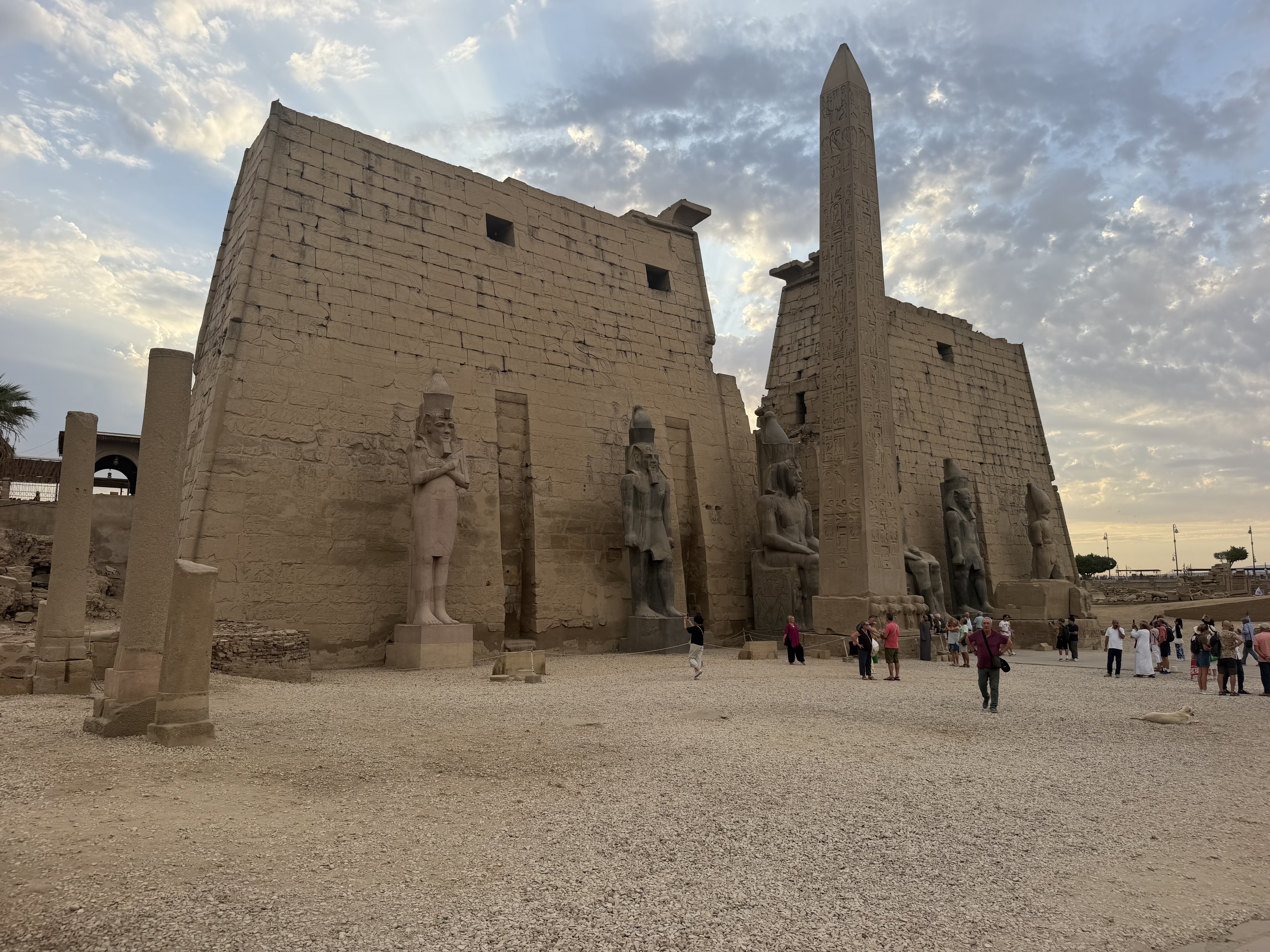
The two pictures below show what the entrance to the Luxor Temple looked like in 1862 prior to any sort of excavation – and what it looks like in 2026. You can see that “ground level” in the 1860’s was at the shoulder level of the statues – which today are exposed down to their bases.
It was time to head back to the Viking Sobek after a long day of touring!
Until next time …


