It is hot in Egypt. Really hot.
I know this will not come as a surprise to anyone and for our Viking Egypt itinerary we normally did temple tours in the morning or late evening.
Remember the old adage that “only mad dogs and Englishman go out in the noonday sun?”.
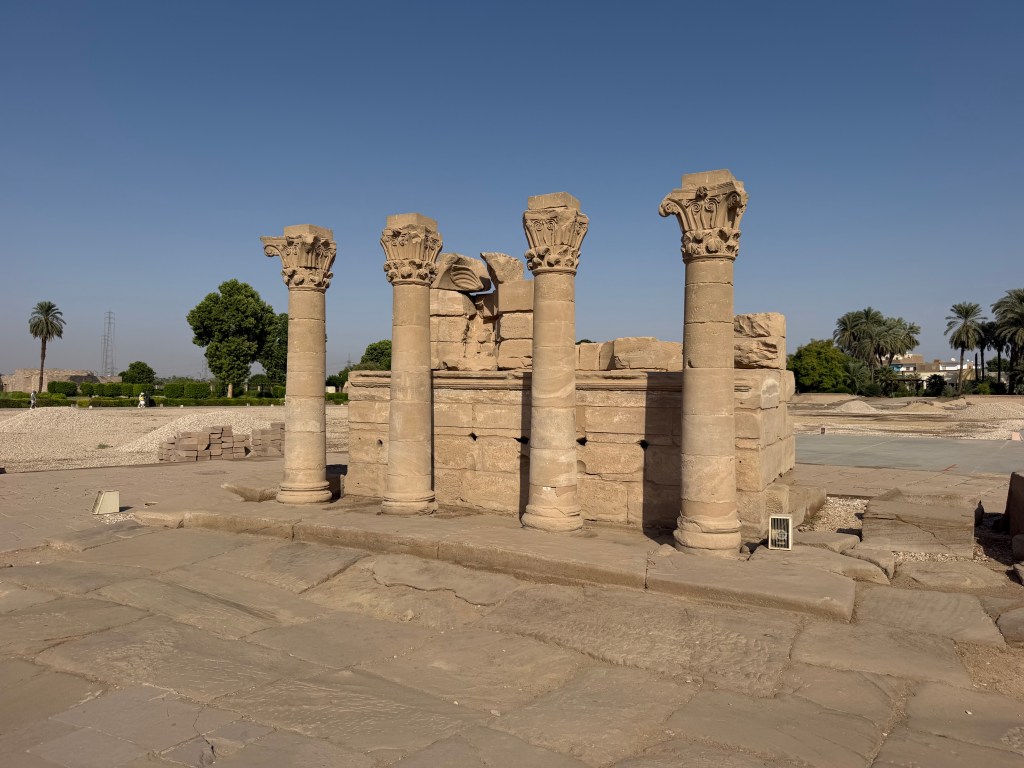
That was an apt description of our tour of the Temple of Dendura in Qena, Egypt right in the heat of the day.
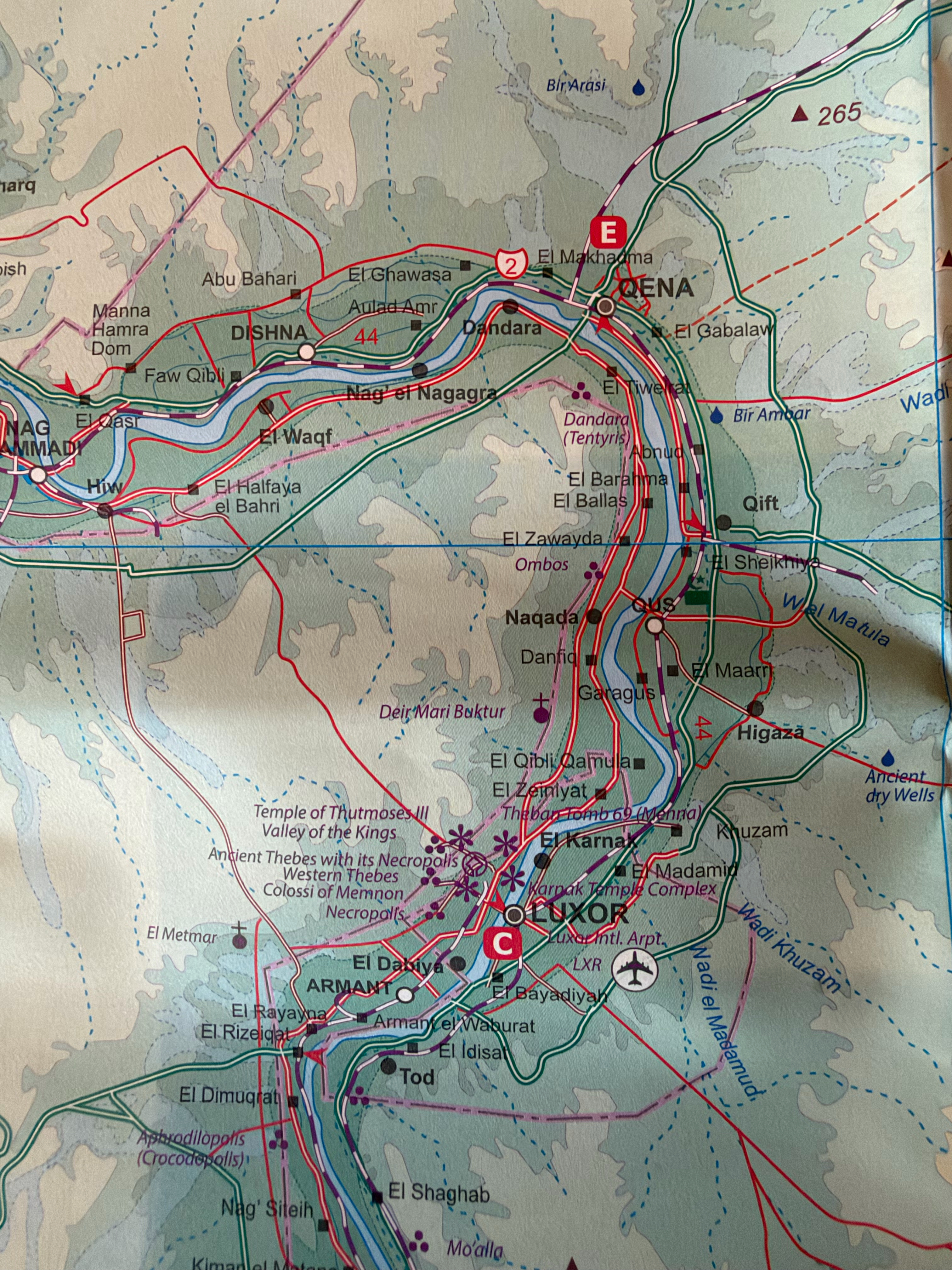
We left Luxor in the morning and had a peaceful cruise north up the Nile River from Luxor to Qena, Egypt.
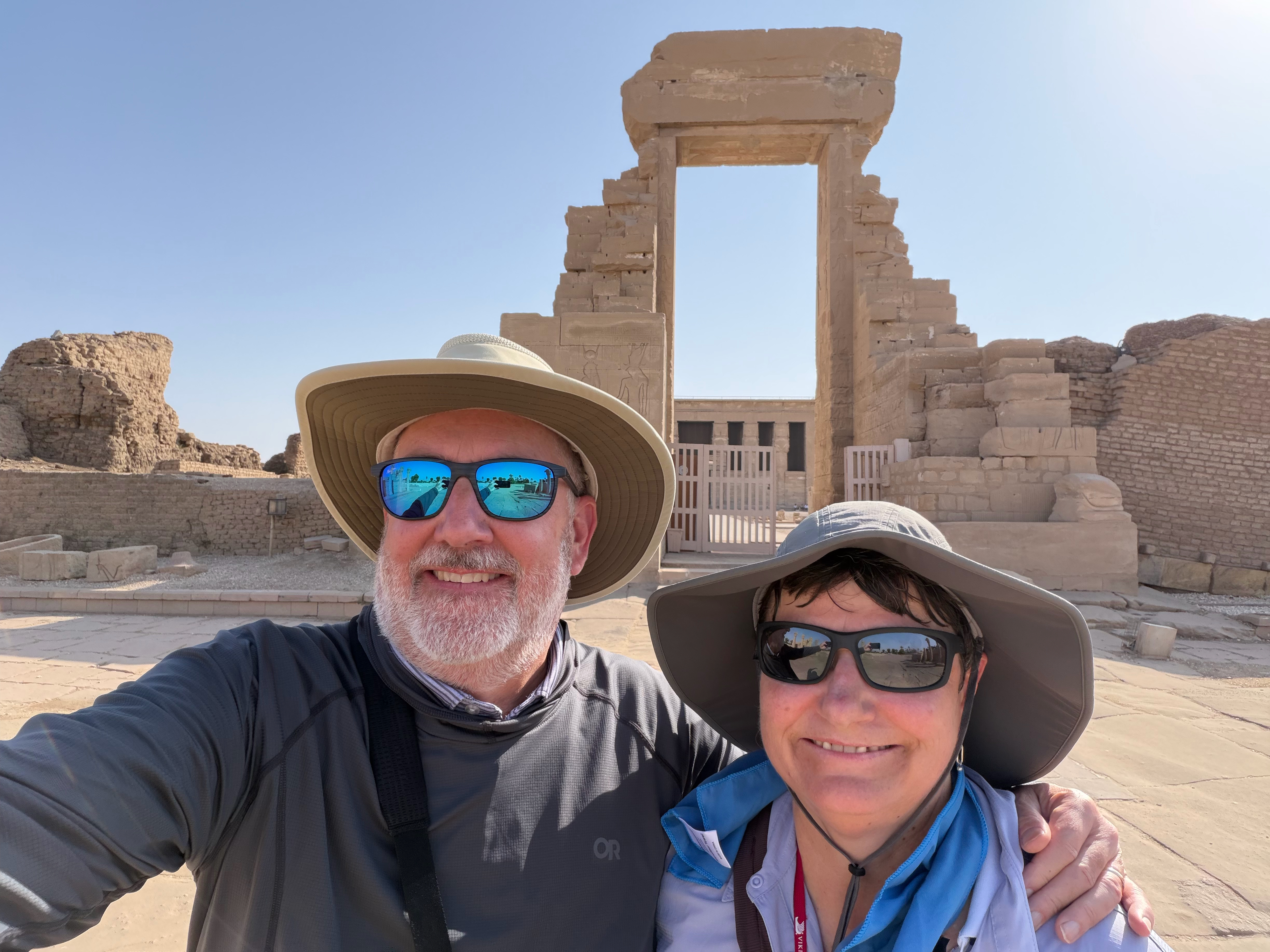
While we might not be either a mad dog or an Englishman – Noel and I have worked to dress appropriately for the hot and sunny weather. I wear a broad-brimmed hat, a long-sleeved sun shirt, and ensure that I drink plenty of water. I might not look fashionable in the pictures – but in general have been prepared to be in the hot Egyptian sun during our tours.
Bottom line – the sweat and heat are uncomfortable but the experience of touring the Ancient Egyptian temples and structures is truly a bucket list experience.
So we slapped on some sun screen, grabbed a bottle of water, and got ready to see another temple in the noonday sun.
One quick side-note before I get to details on our tour. I will be the first to admit that the day-to-day tours can be a bit overwhelming – especially by the second week of touring in Egypt. There is so much detail at each site and so many stories involving pharaohs and Egyptian Gods that the lines all blur a bit between the different locations.
To keep everything straight, I open up my writing app on my iPhone (Ulysses is what I use) at the beginning of the tour and take short notes on tour highlights from our guide. When we are back on the cruise ship I then work to fill in the gaps between my notes and to arrange things into a reasonable journey entry. Sometimes it goes quickly – and other times I wonder what I was thinking when I was writing my notes!
After the morning cruise and a quick spot of lunch onboard, the Viking Sobek docked in Qena. After a short 15 minute bus ride we arrived on site, scanned our tickets and started our tour of the Temple of Dendura.
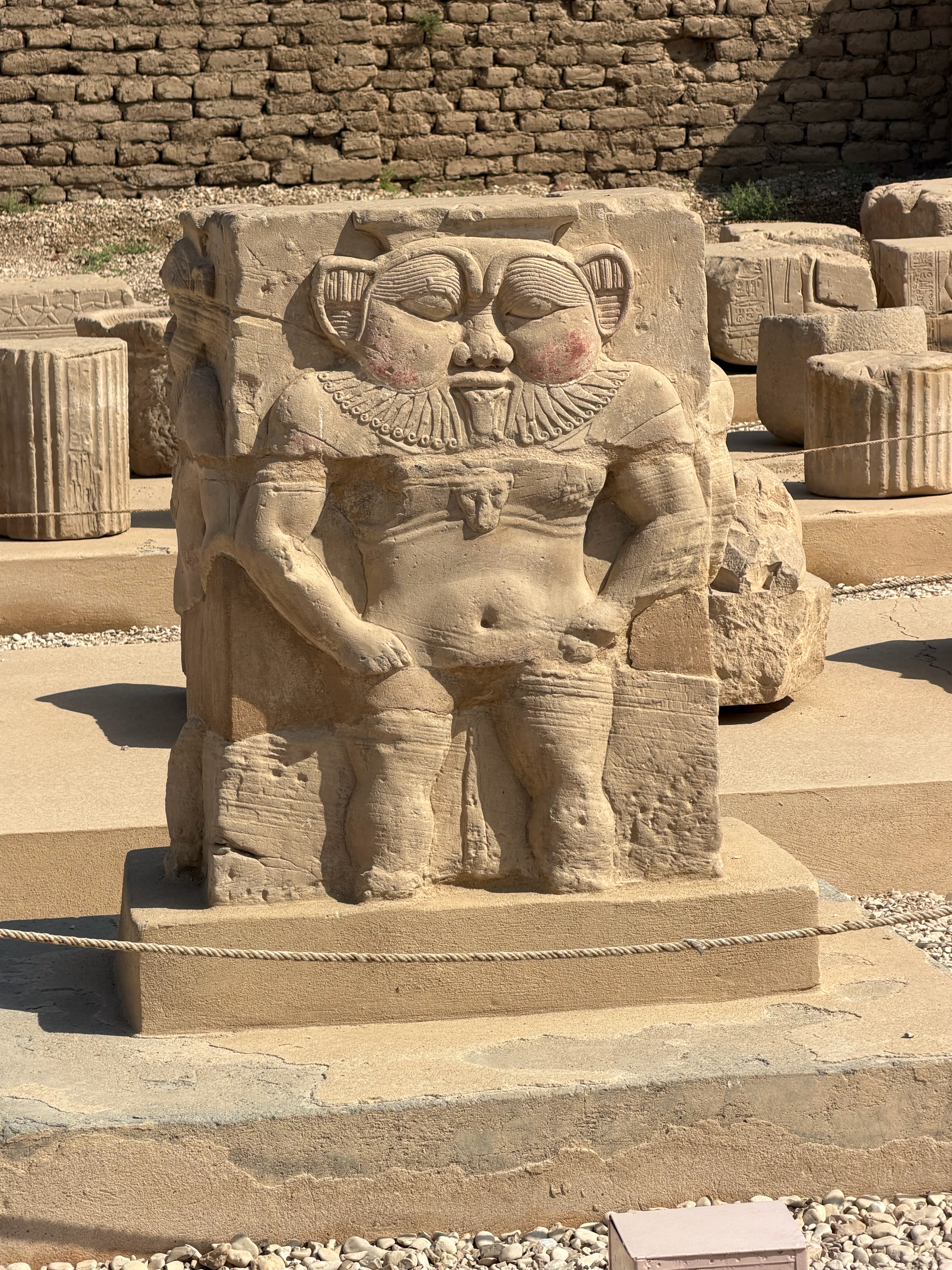
Upon arrival we were introduced to the Egyptian God known as “Bes” who was the deity known for protection of households, mothers, children and childbirth.
Noel felt that the image of Bes reminded her of Danny Devito. I will let you be the judge!
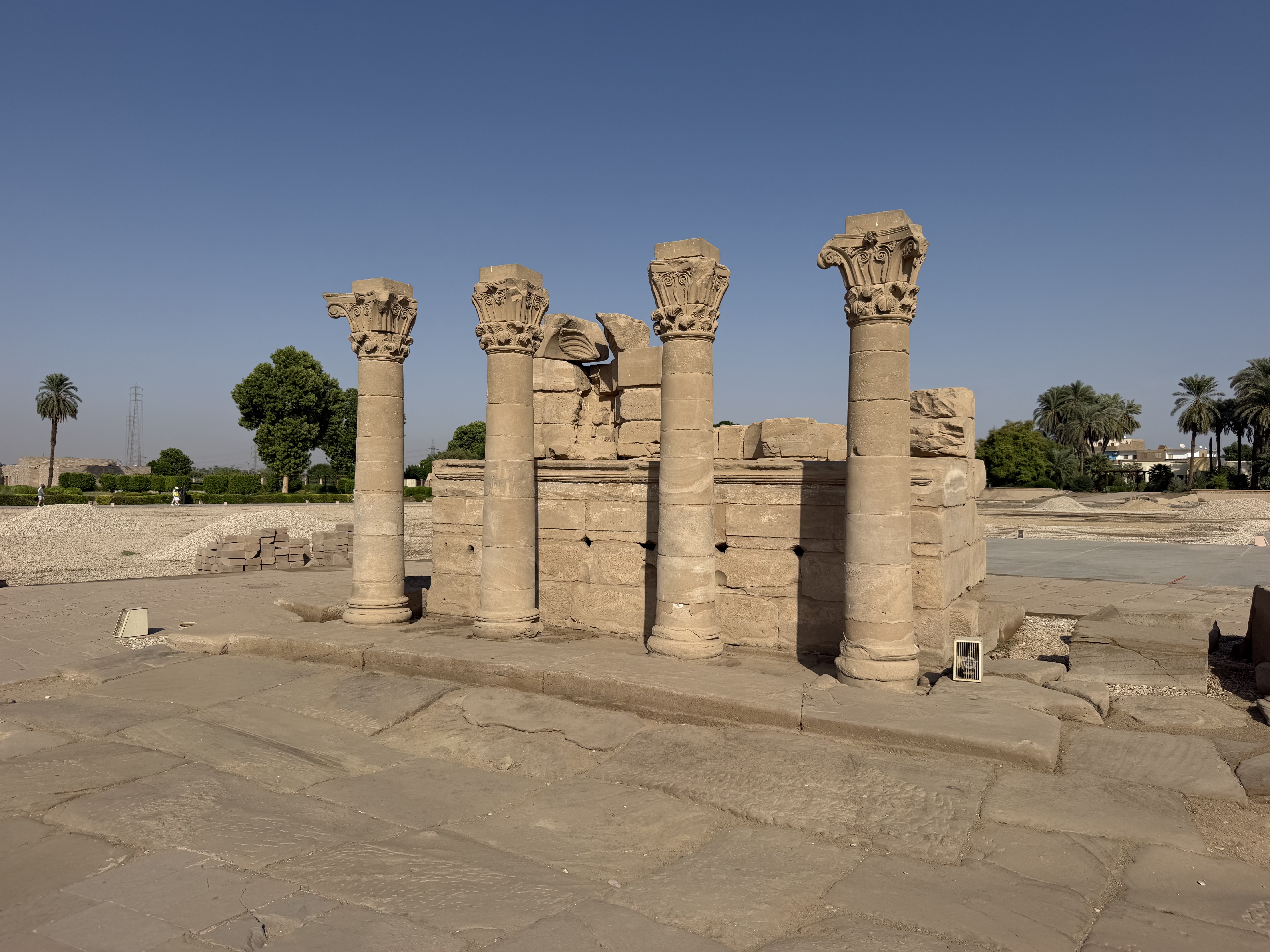
This temple was a unique combination of both Egyptian and Greek & Roman influences – including depictions on the temple walls of Roman historical figures like Cleopatra and Ptolemy.
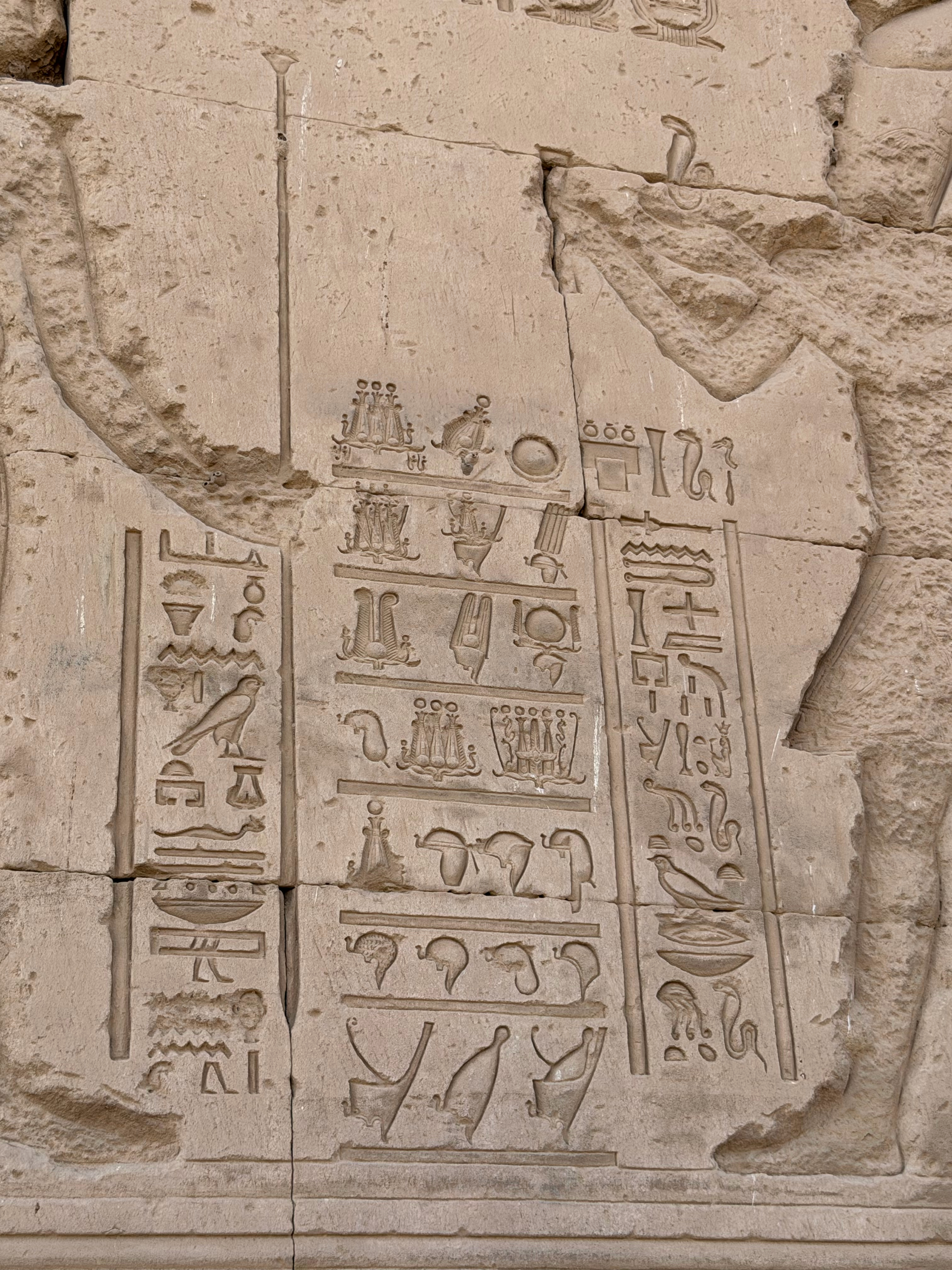
Every wall and ceiling was covered with hieroglyphs which illustrated Ancient Egyptian stories spanning from the beginning of the world to more practical matters like what type of headdress the pharaoh would need to wear for different occasions. Our tour guide pointed to these different scenes on the various walls using a laser pointer. Without her explanation it it would be a large ruin with lots of interesting looking hieroglyphs. There is no question that having a highly experienced Egyptologist with us really enhanced our temple tours.
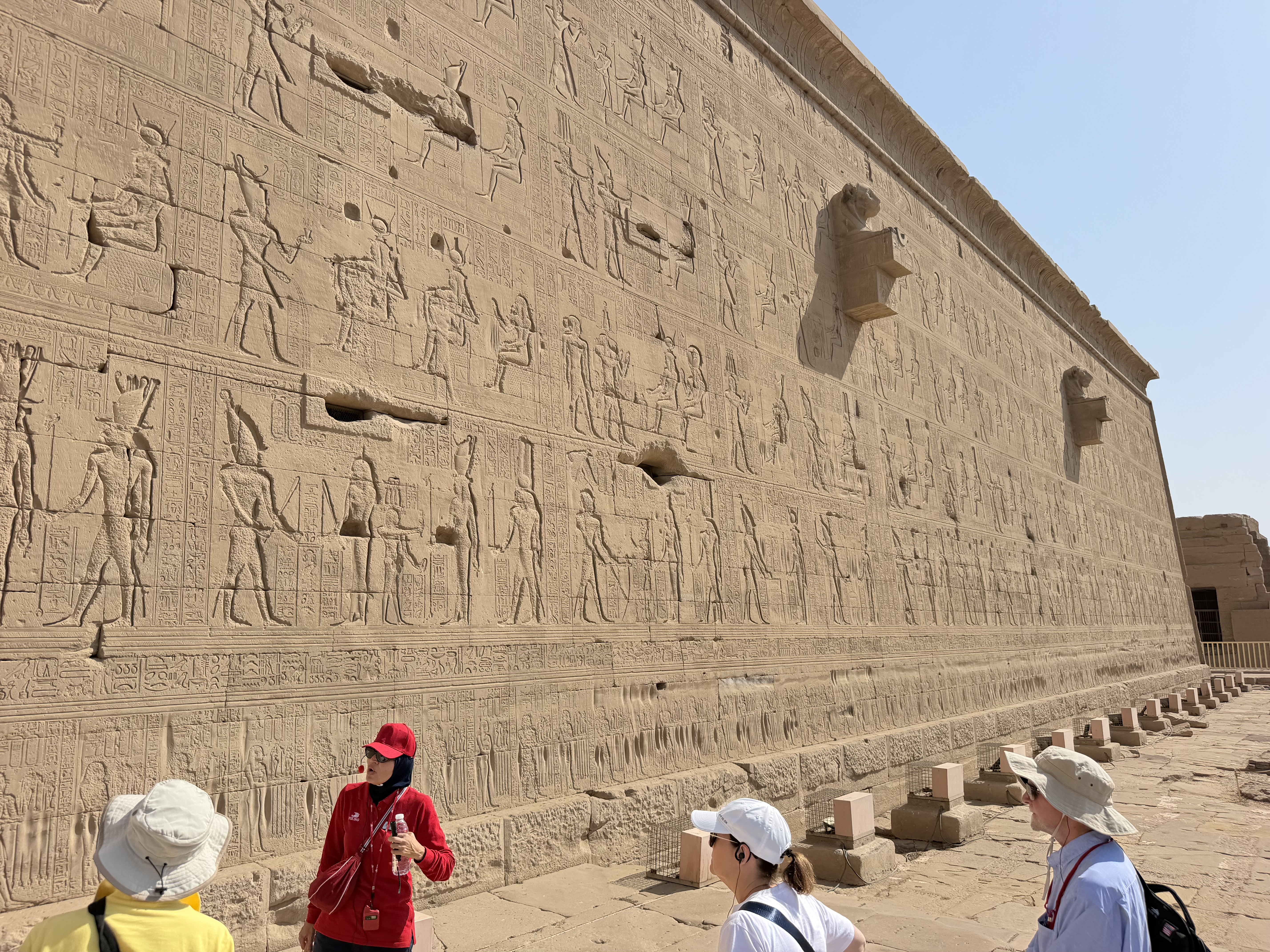
After looking at the outside walls, we then came into the temple and entered what was called “the Hall of Glories”. This part of the temple had ceiling artwork illustrating different Ancient Egyptian stories in vibrant color – in particular a distinctive shade of turquoise blue.
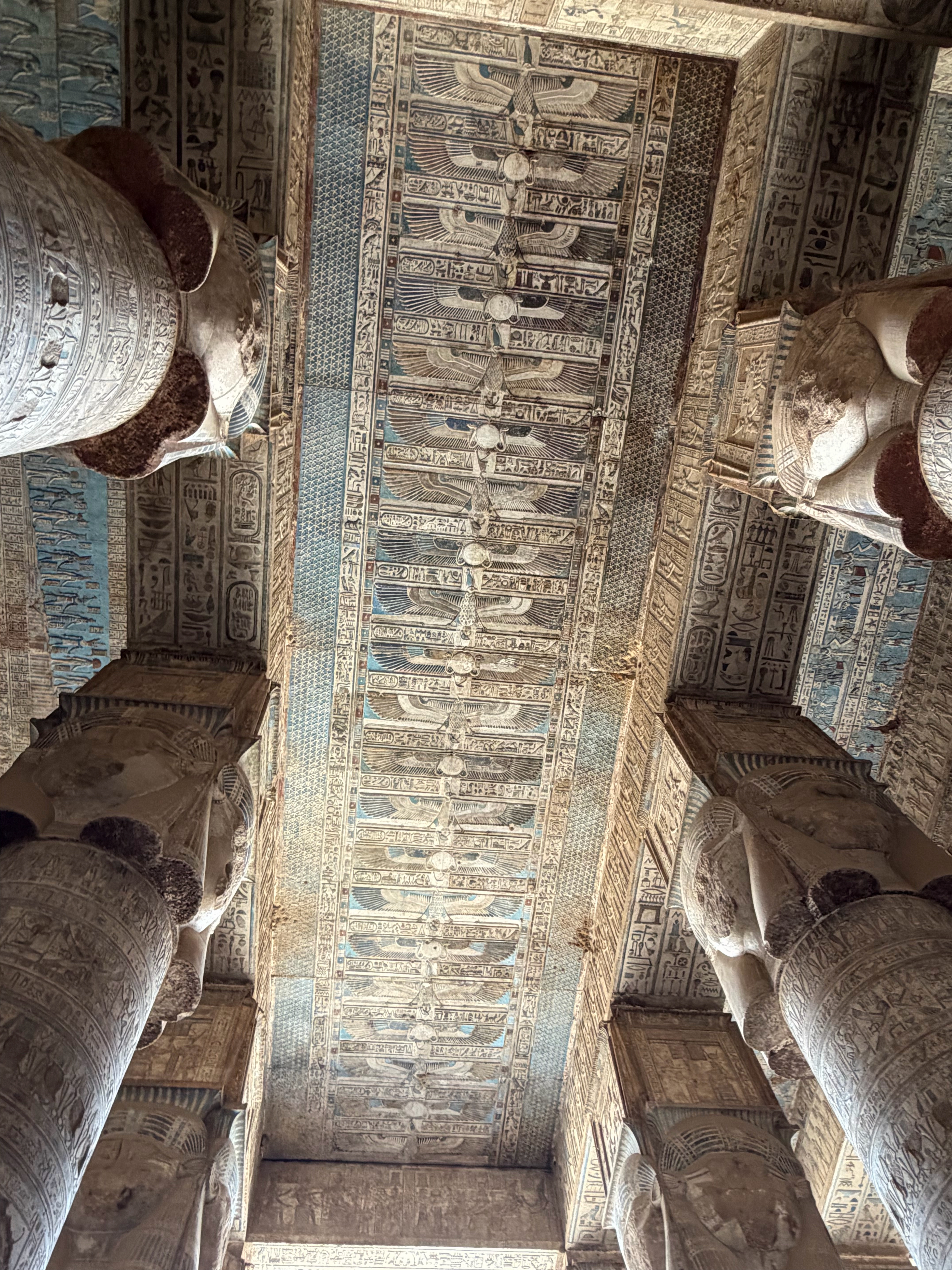
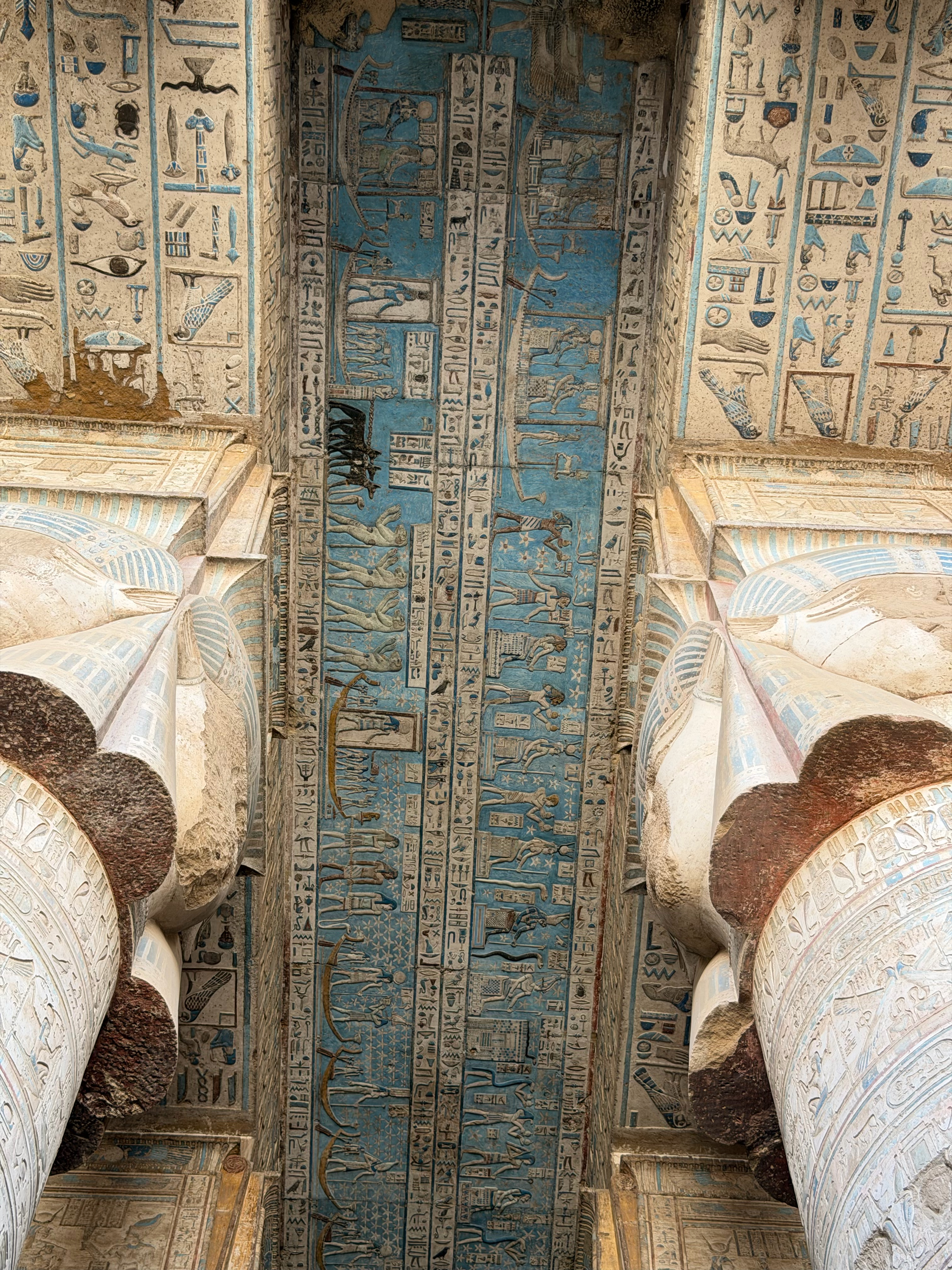
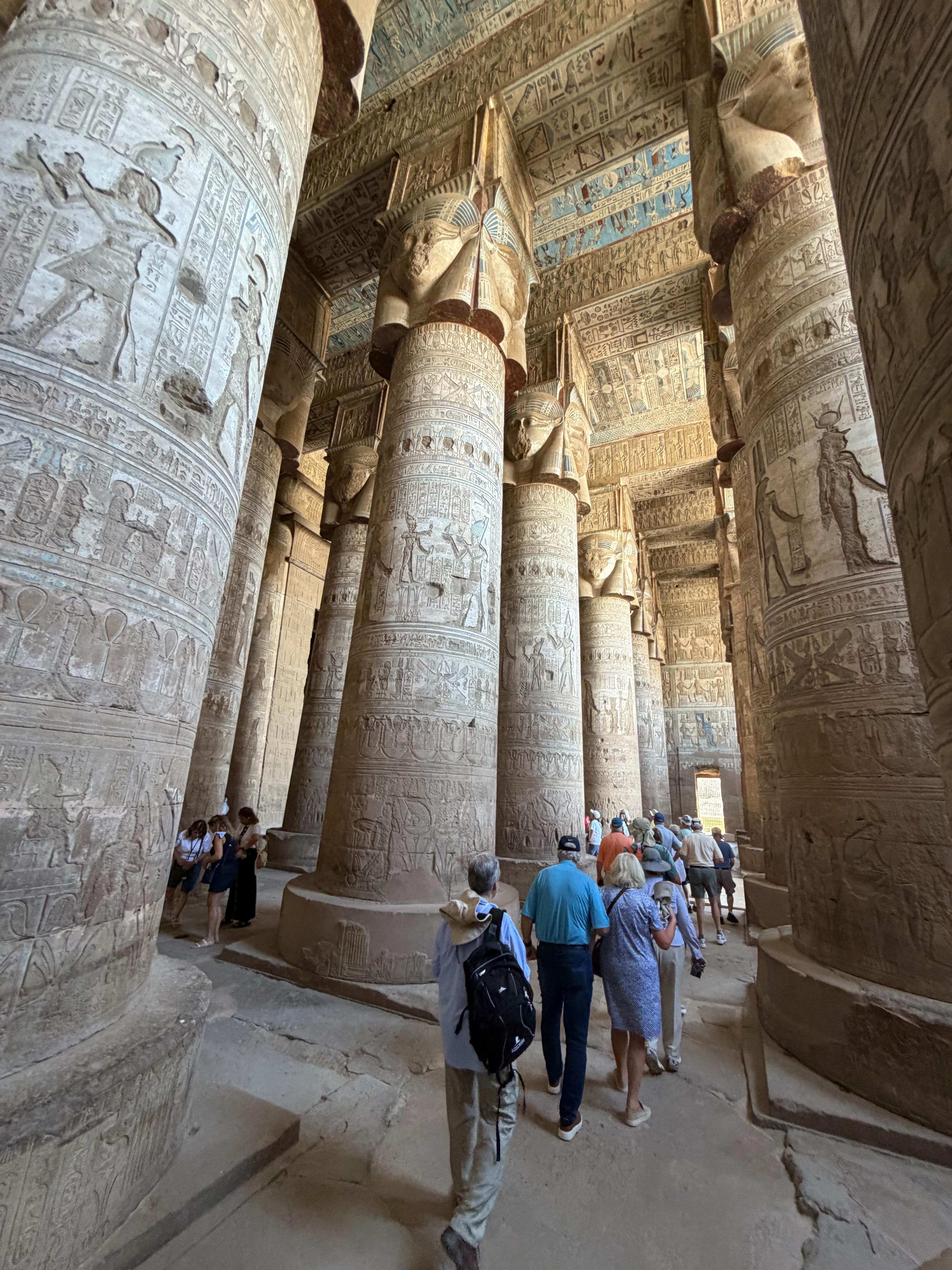
We were reminded again by our tour guide that when built all of the walls of the temples would have had bright colors everywhere. While we can appreciate the fact that many of these colors remain today it would be magnificent to see some of these buildings in pristine form.
After the decline of the Egyptian empire, the temple area was used for centuries as a ruin where people lived – which meant that a thick layer of soot completely covered the artwork following many years of cooking fires. In 2005 special techniques were developed and used by archeologists to remove the soot without disturbing the original colors underneath. We saw several areas which had examples of artifacts that had some soot removed, no soot removed, and complete soot removal.
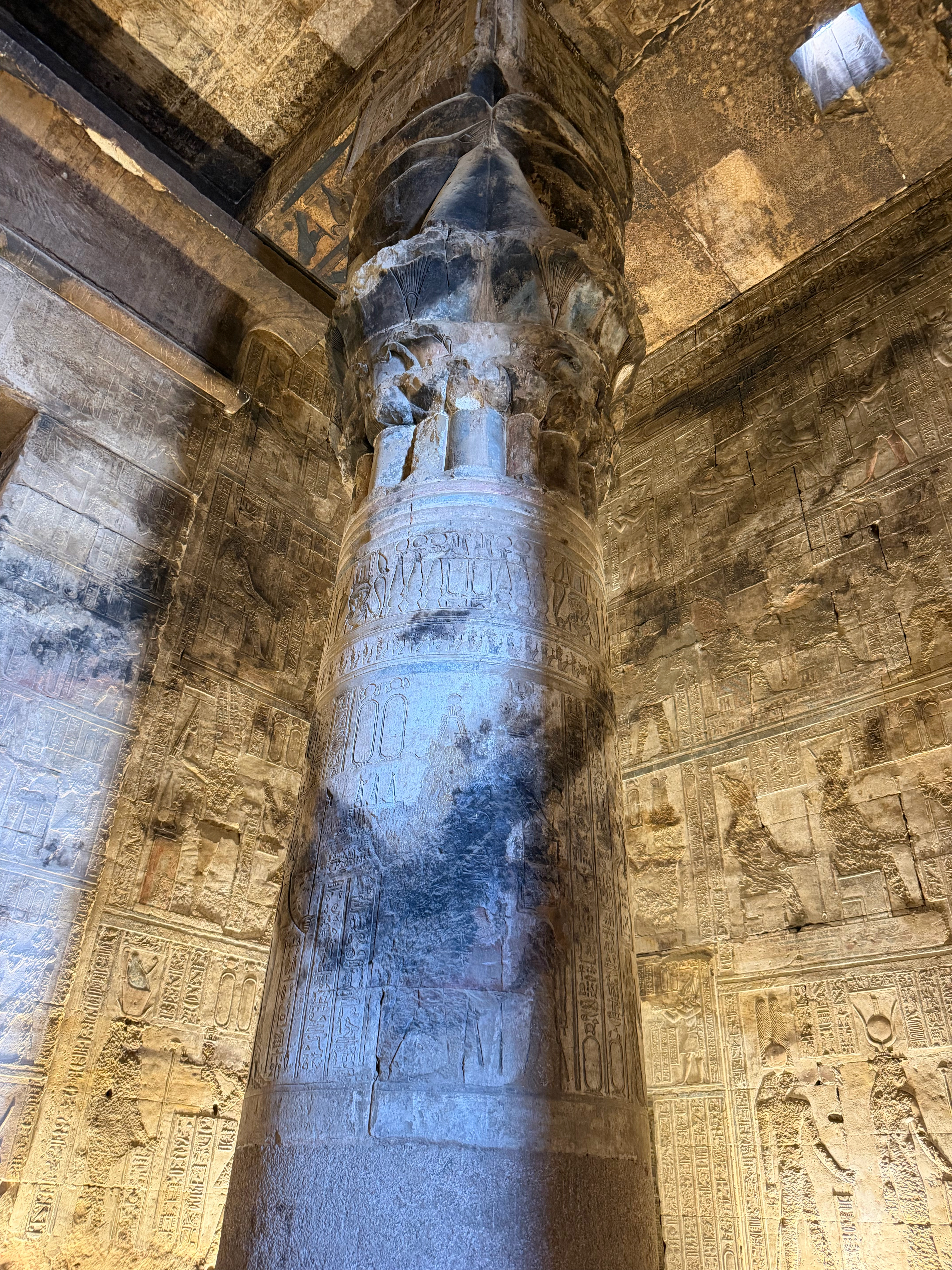
Following a couple of hours going through the different rooms – it was time to head back to the ship and set sail back to Luxor for our visit the next day to the Valley of the Kings.
We had successfully managed the noonday sun – but certainly preferred temple visits in the morning if possible!
Until next time …


