
The Valley of the Kings in Egypt conjures images of magnificence with burial chambers and tombs glittered in gold and treasure for long dead Pharaohs.
What actually greets your eyes when you arrive at the Valley of the Kings is … buses. Lots and lots of tour buses.
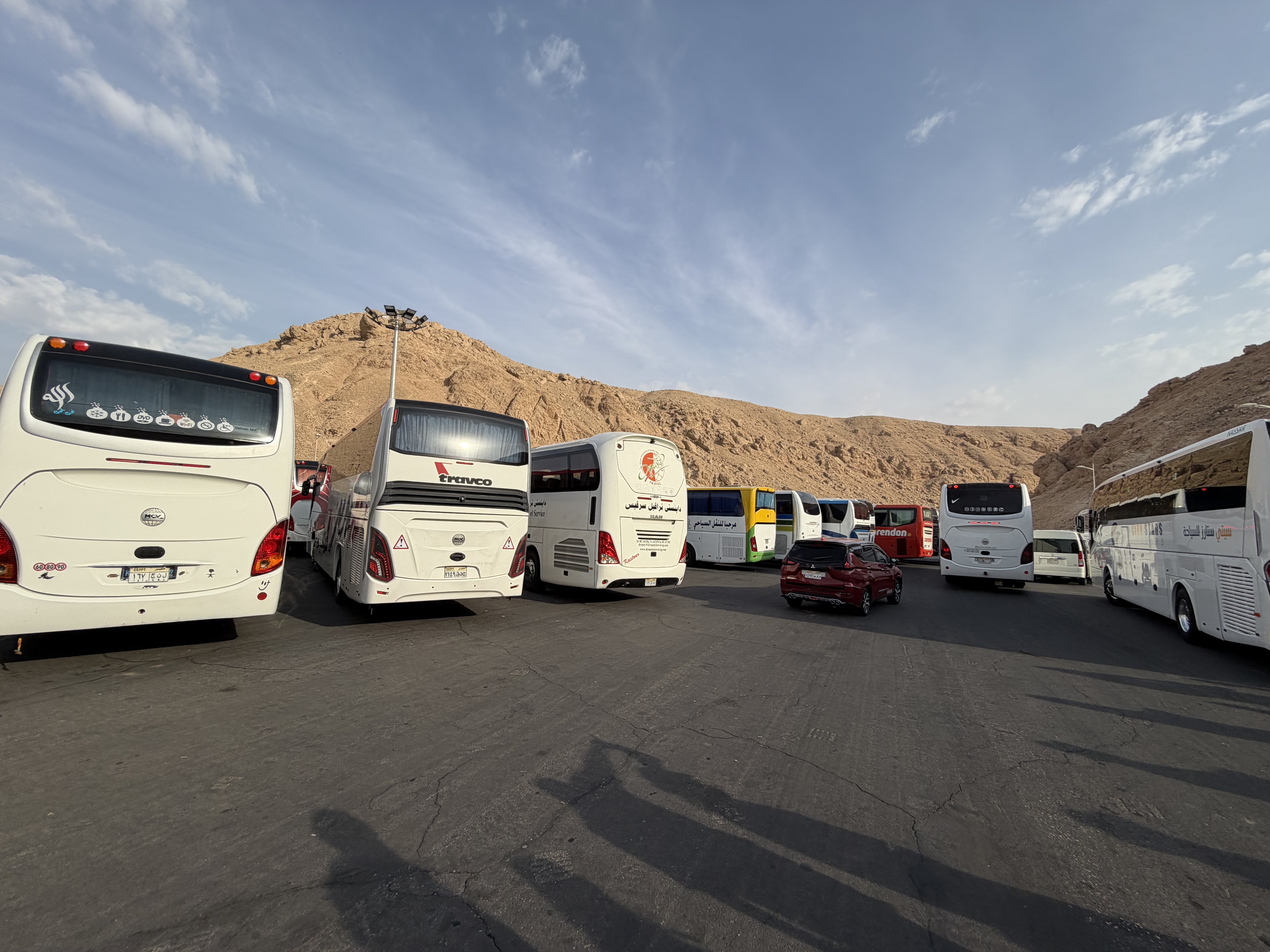
There were mobs of people all coming to see and experience the Valley of the Kings.
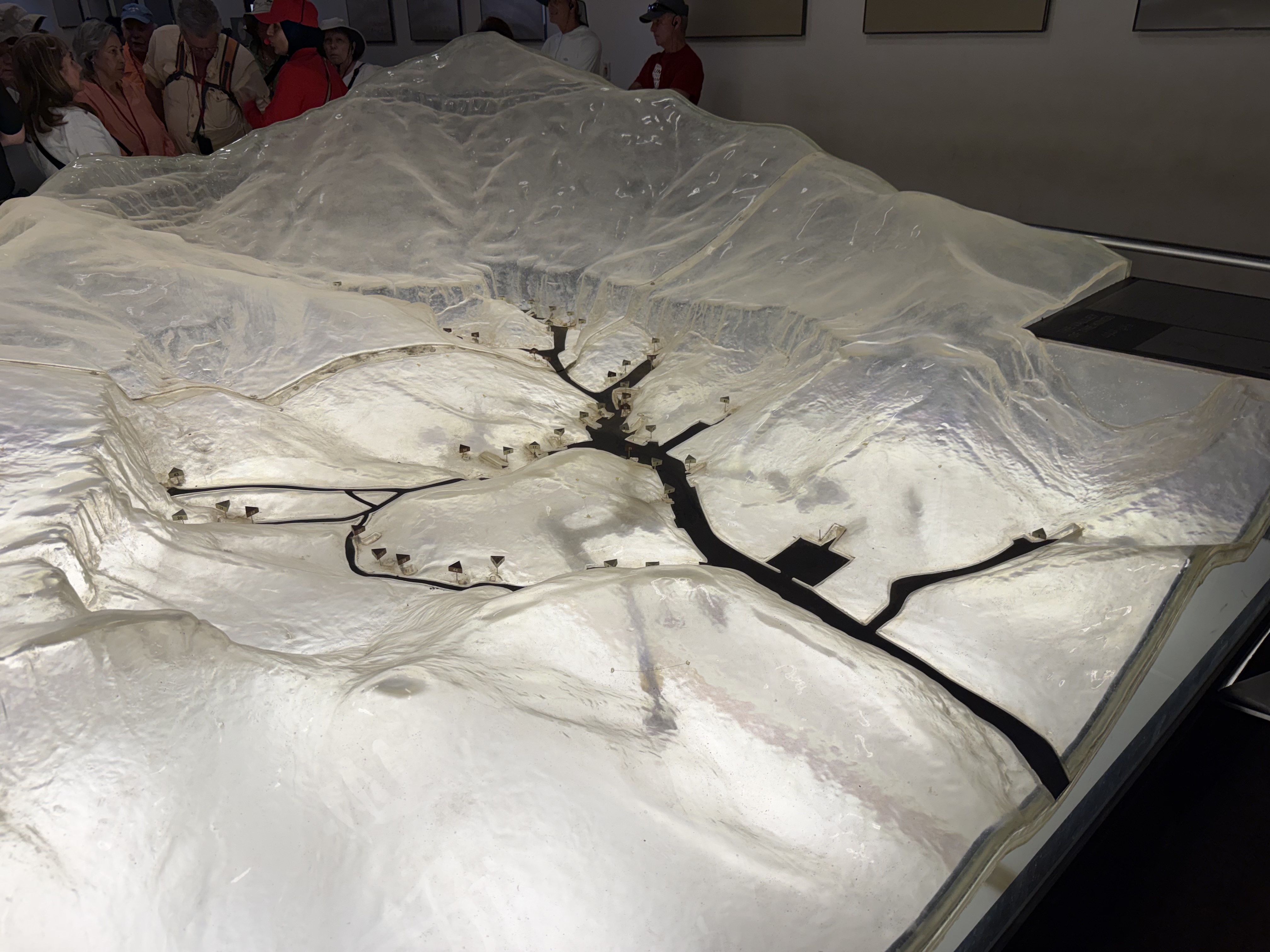
I drive a 35 foot Class A RV – and these Egyptian bus drivers put me to shame on how they maneuver these large tourist buses into incredibly tight spaces. After our bus driver let us off at the main entrance to the Valley of the Kings, our tour guide gave us an overview of the area with a 3D model showing the locations of the different tombs in the valley.
After a brief overview in the entrance station – we moved as a large mob of people towards the building exit to catch a ride on electric golf carts to take us from the entrance station to the tomb entrances. I expected a somewhat orderly line to get onto an electric cart – but instead it was more of a rugby scrum won by whichever tour guide elbowed their way to the front first.
Our tour guide did us proud – and managed to get all of “Bus C” onto two carts at the same time.
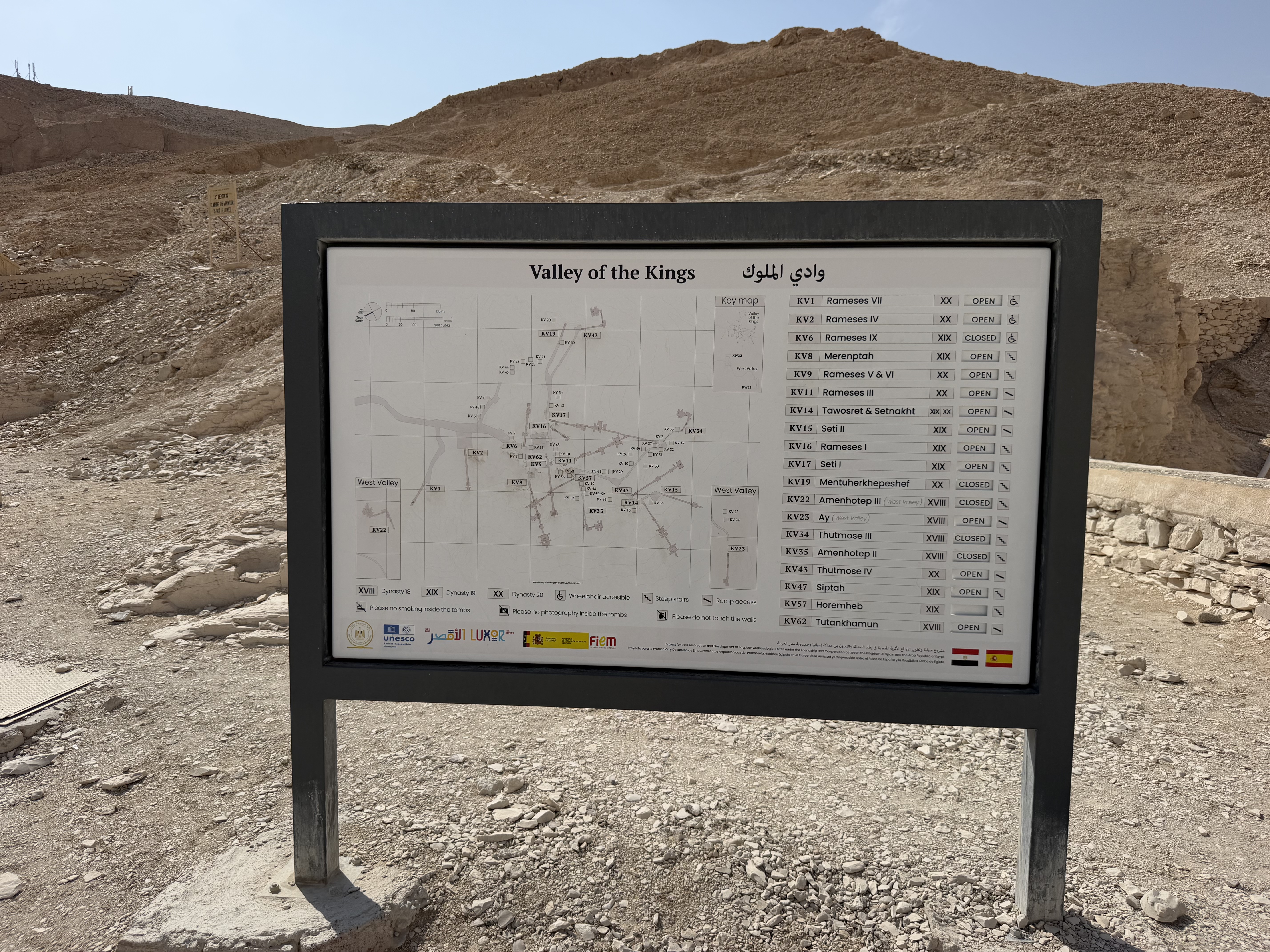
We rode for about 0.5 Km and got off the carts at a gift shop and reconvened as a group at a sign which showed a detailed map of the Valley of the Kings – and specifically which tombs were open for tours.
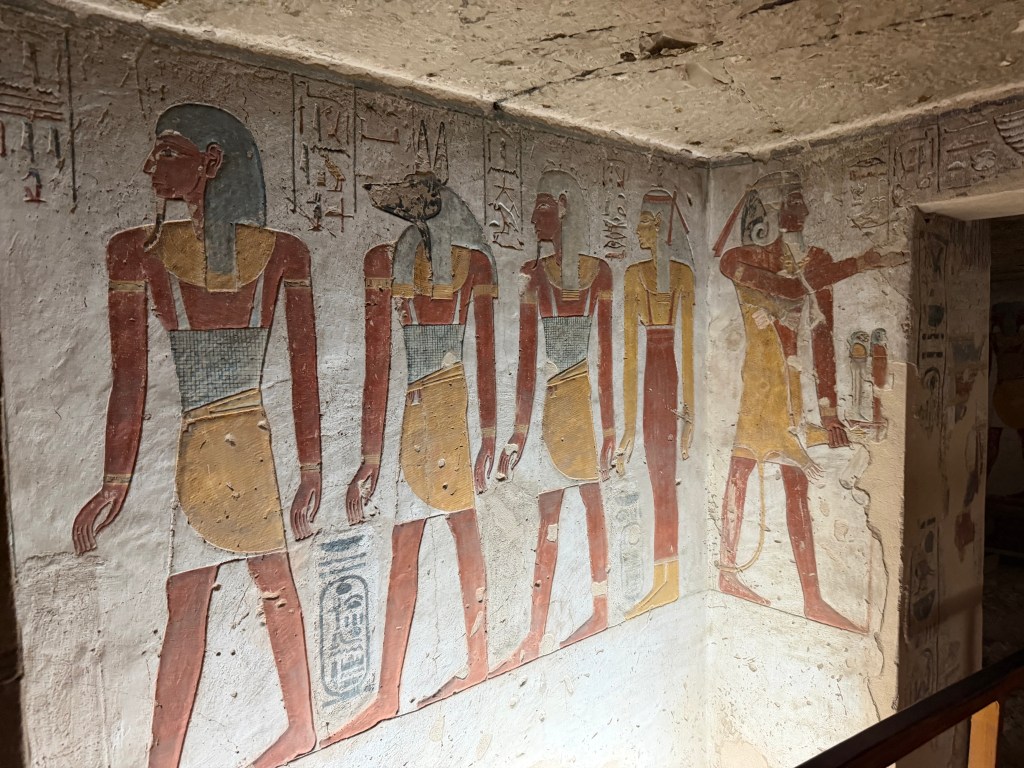
There are no mummies on display at the Valley of the Kings – they had all been moved to specialized display cases at the National Museum of Egyptian Civilization in Cairo. What we did see in the tombs were unique artwork and decorations that were part of the burial chambers.
Since the tombs are not exposed to weather the artwork is incredibly colorful and looks like it was painted yesterday. As soon as you get into the actual burial area – including the tunnels – every surface is covered with hieroglyphs. There were very few flat and smooth surfaces that were not used in storytelling.
Our guides were not allowed to do commentary inside the tombs to ensure people move through the relatively small spaces in a timely fashion. As such – our guides gave us a general overview of what we would be observing prior to entering each of the various tombs.
In general, the tomb heiroglypics were in three major zones or “registers” of storytelling. One register would have scenes depicting judgement as the Pharaoh would be in a boat leading to afterlife guided by the gods. Another register would contain passages from Chapters of various religious books such as the Book of the Dead. The final register would be an autobiography of the Pharaoh which would detail accomplishments during their reign with particular emphasis on beneficial things they did for the gods.
Following the overview by our tour guide it was time to visit our first tomb – that of Tut Ankh Amun (1342 to 1324 BC) or as we know him – King Tut.
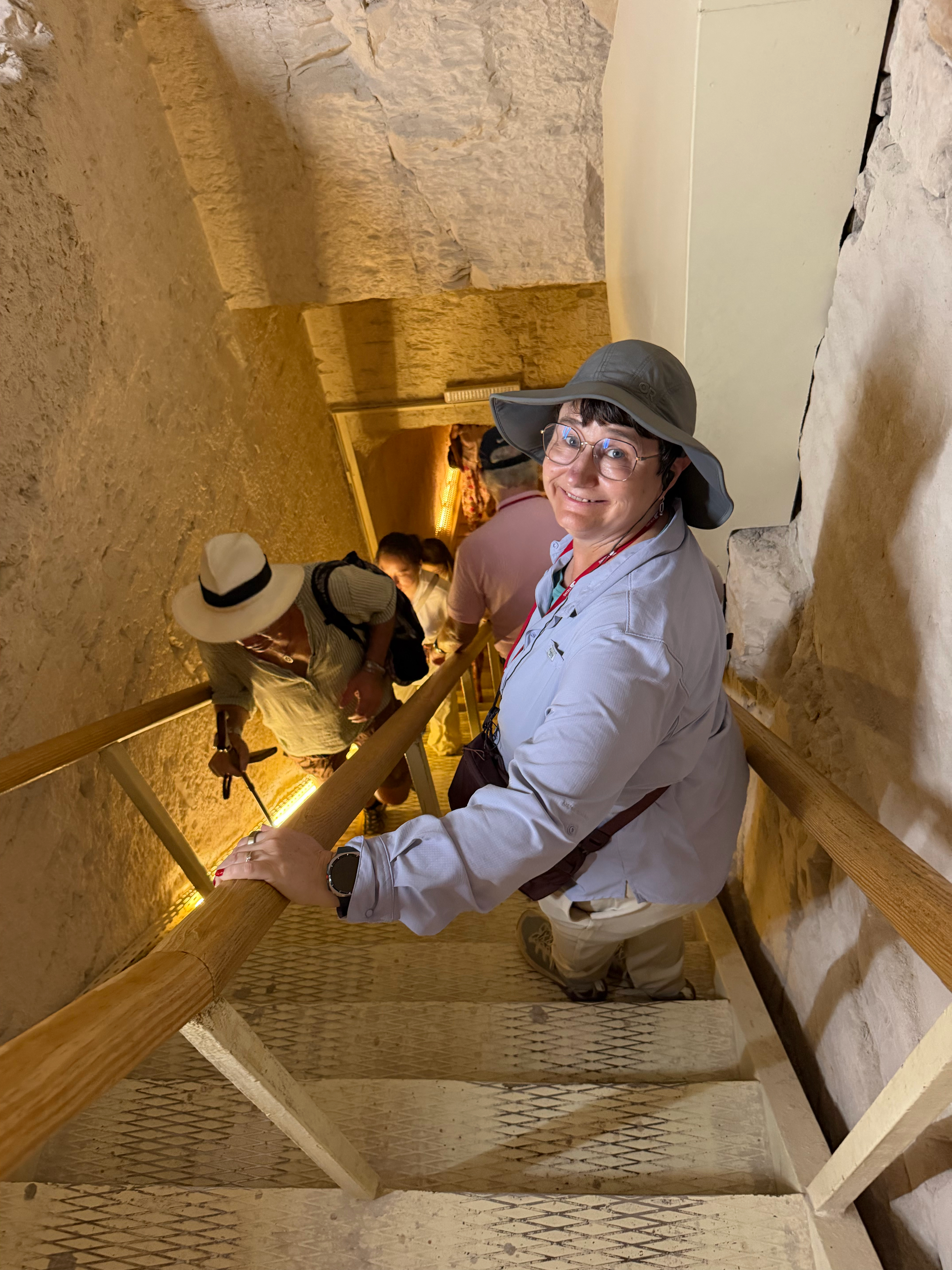
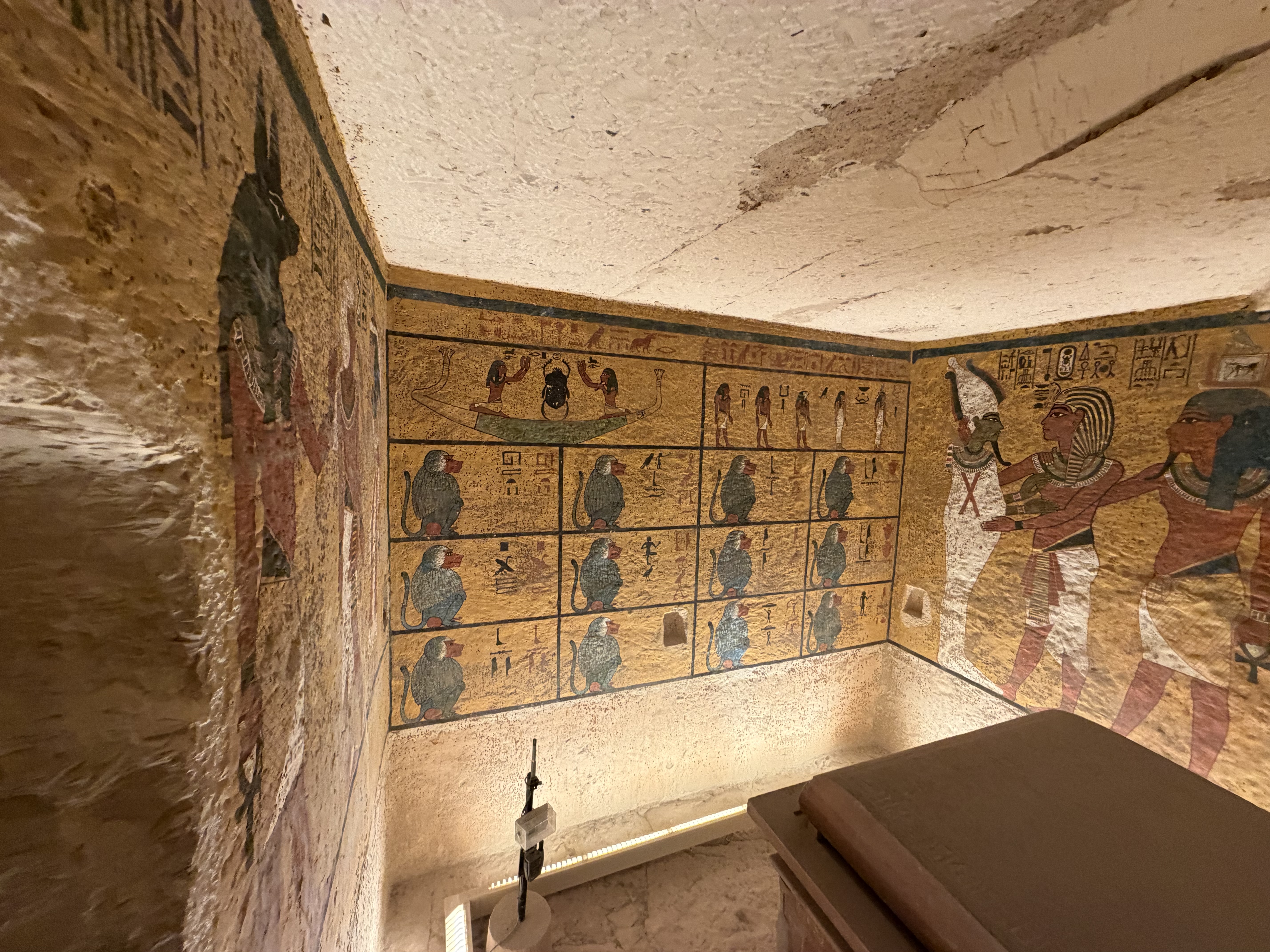
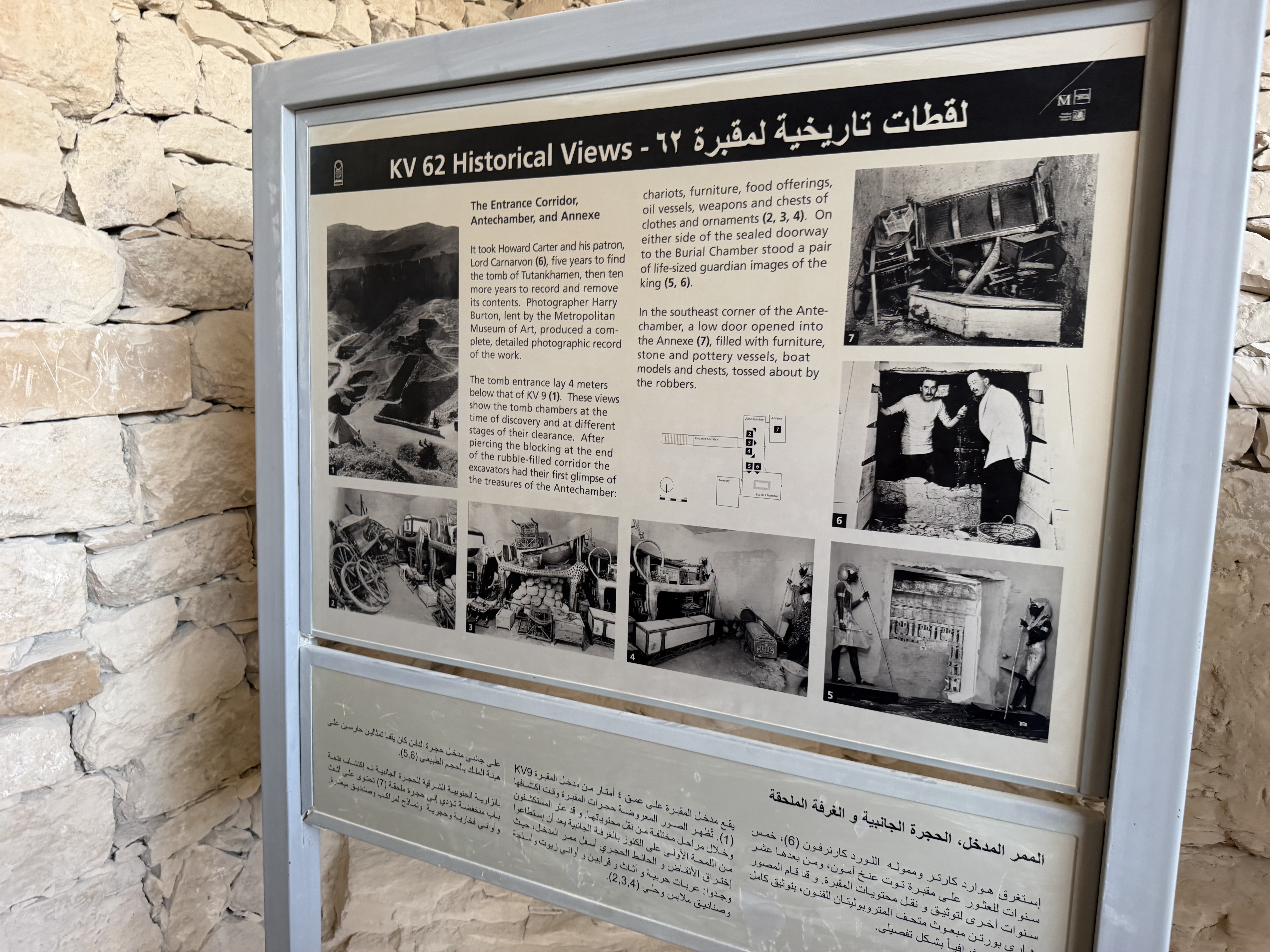
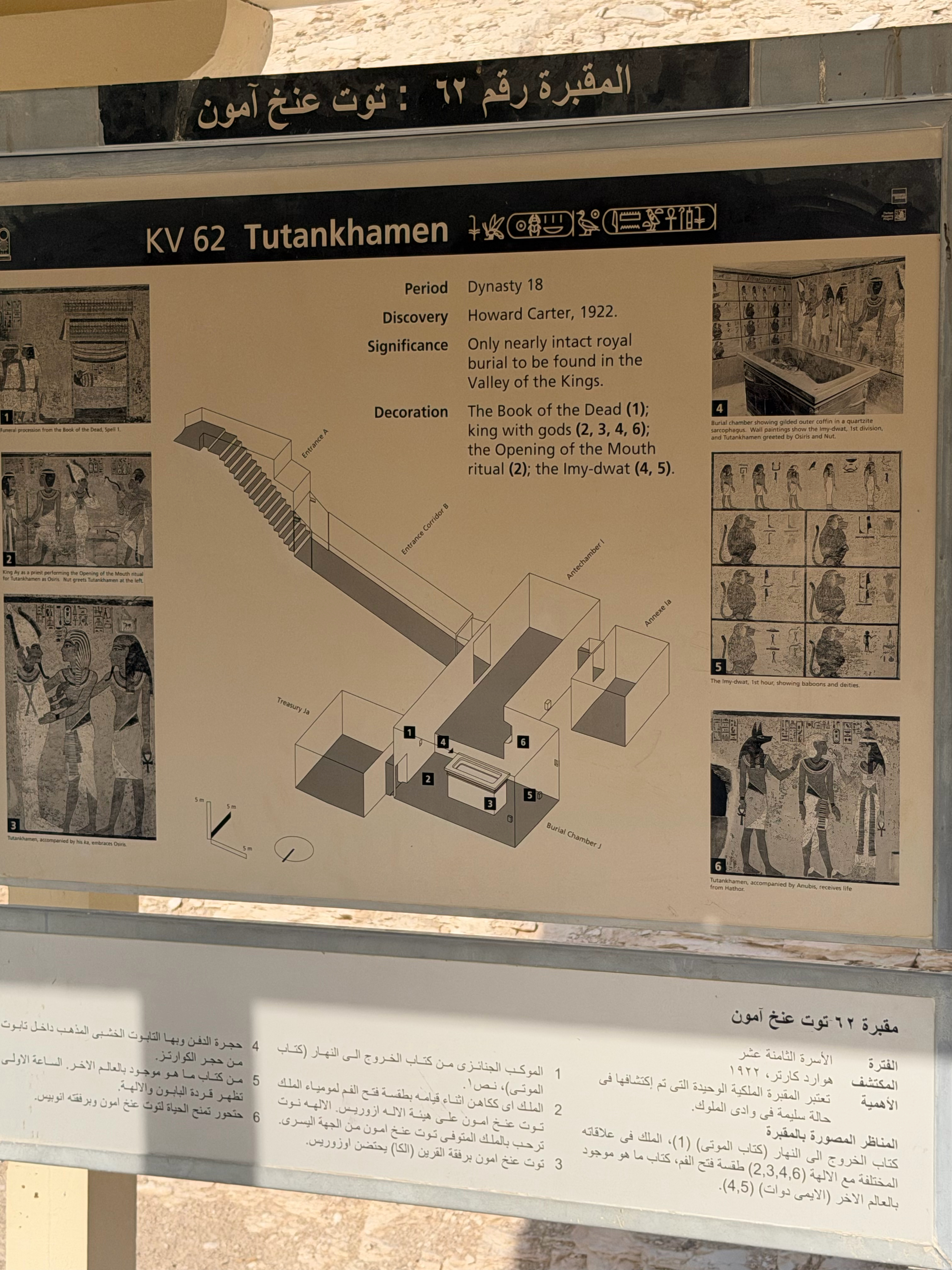
Our second tomb had a lot of stairs and steeply sloped tunnels – that of Sety I (1290 to 1279 BC).
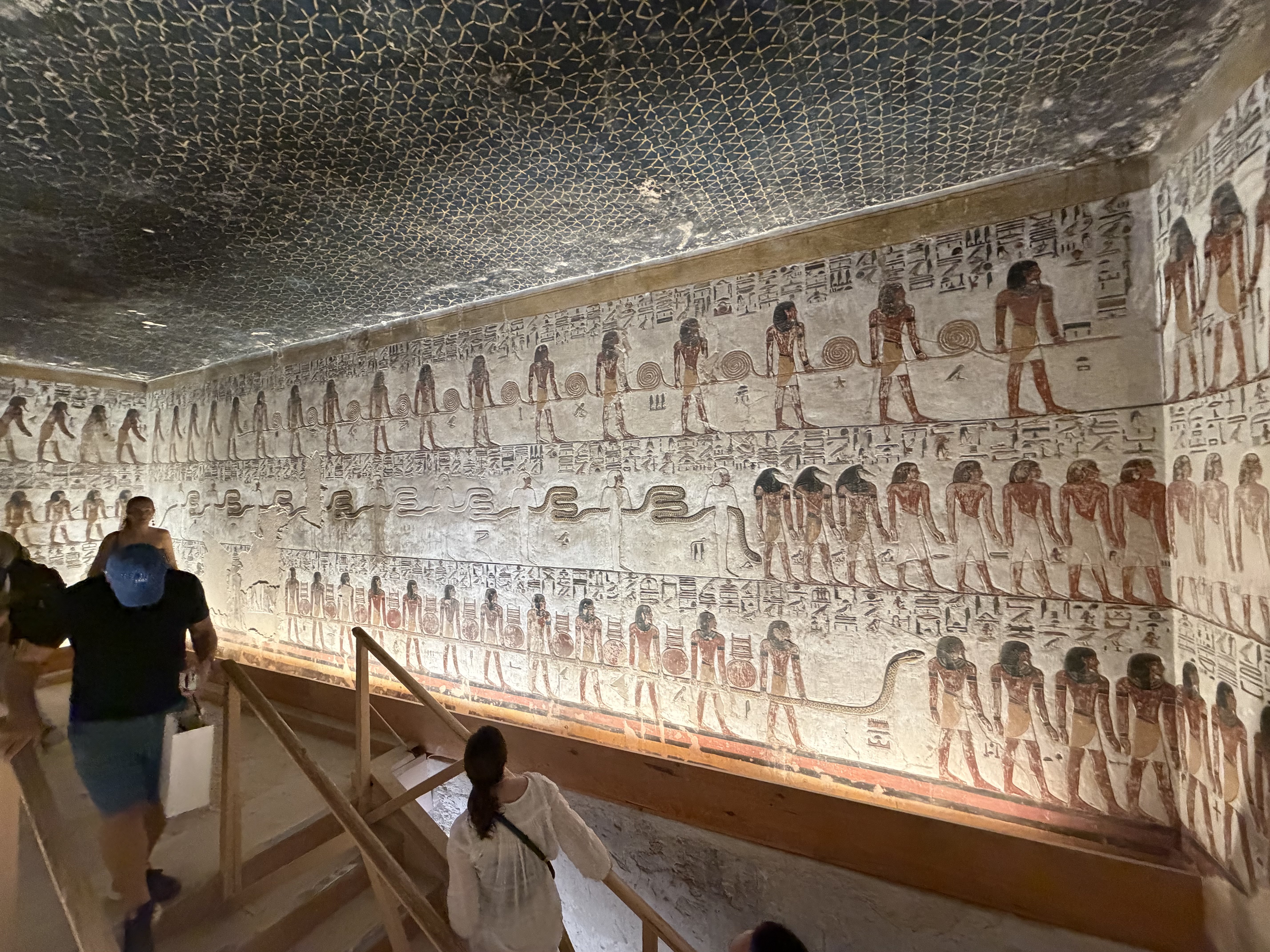
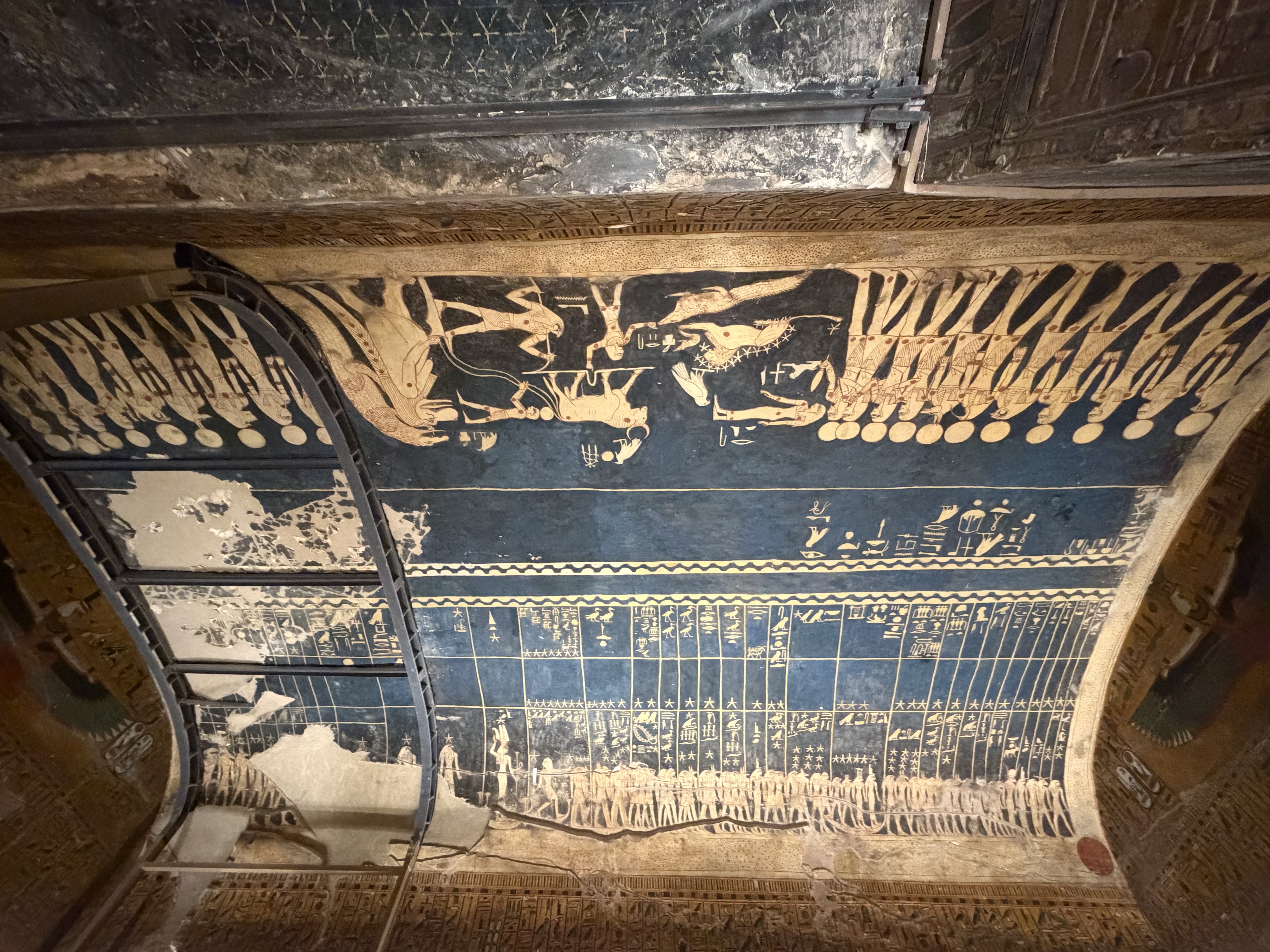
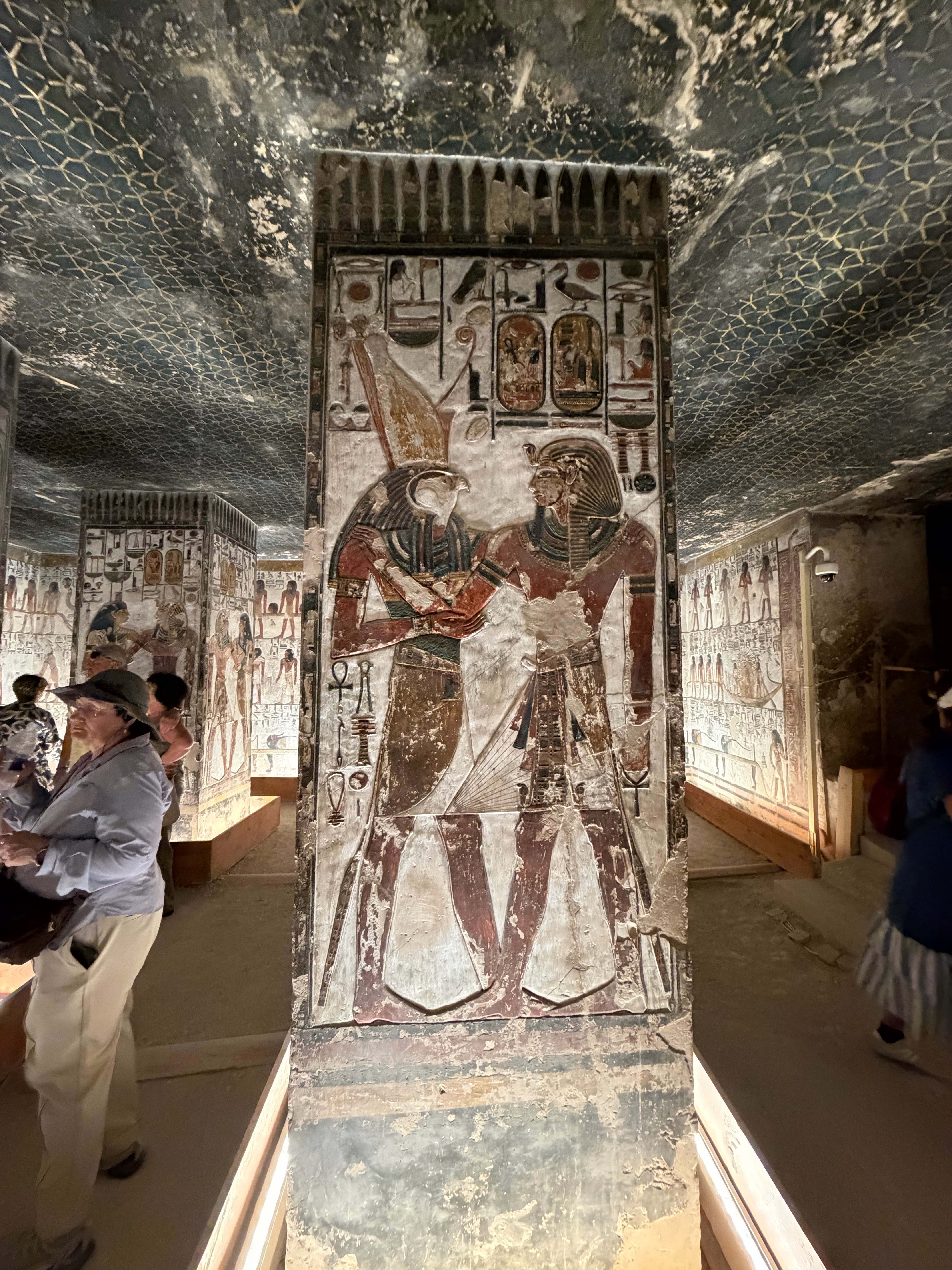
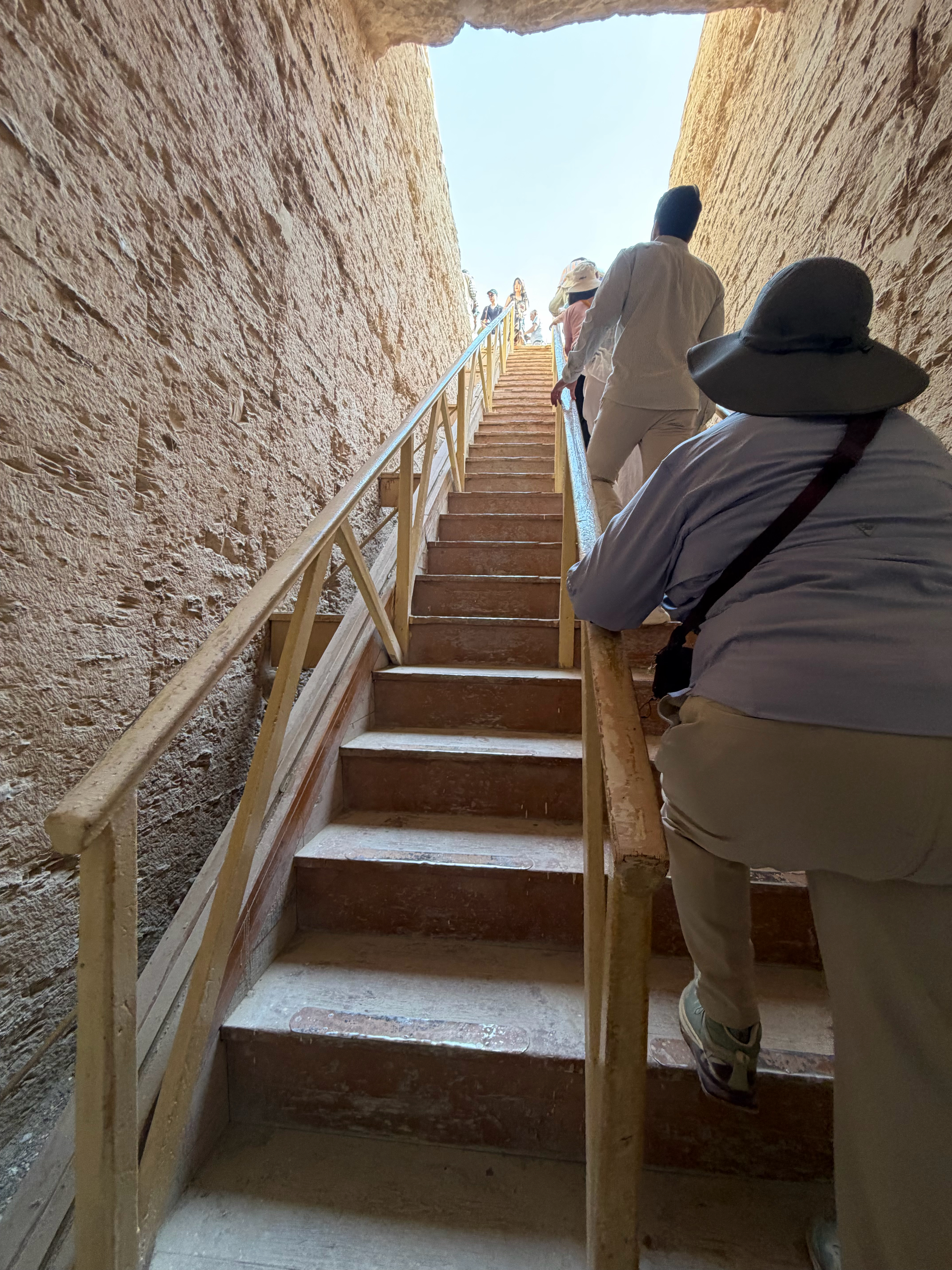
Our third tomb had artwork of both Tausert (1191 to 1188 BC) and Setnakht (1188 – 1185 BC). When Setnakht took over from Tausert he erased and redid some of the artwork in an attempt to erase Tauserts tomb art and minimize the accomplishments of her time as ruler.
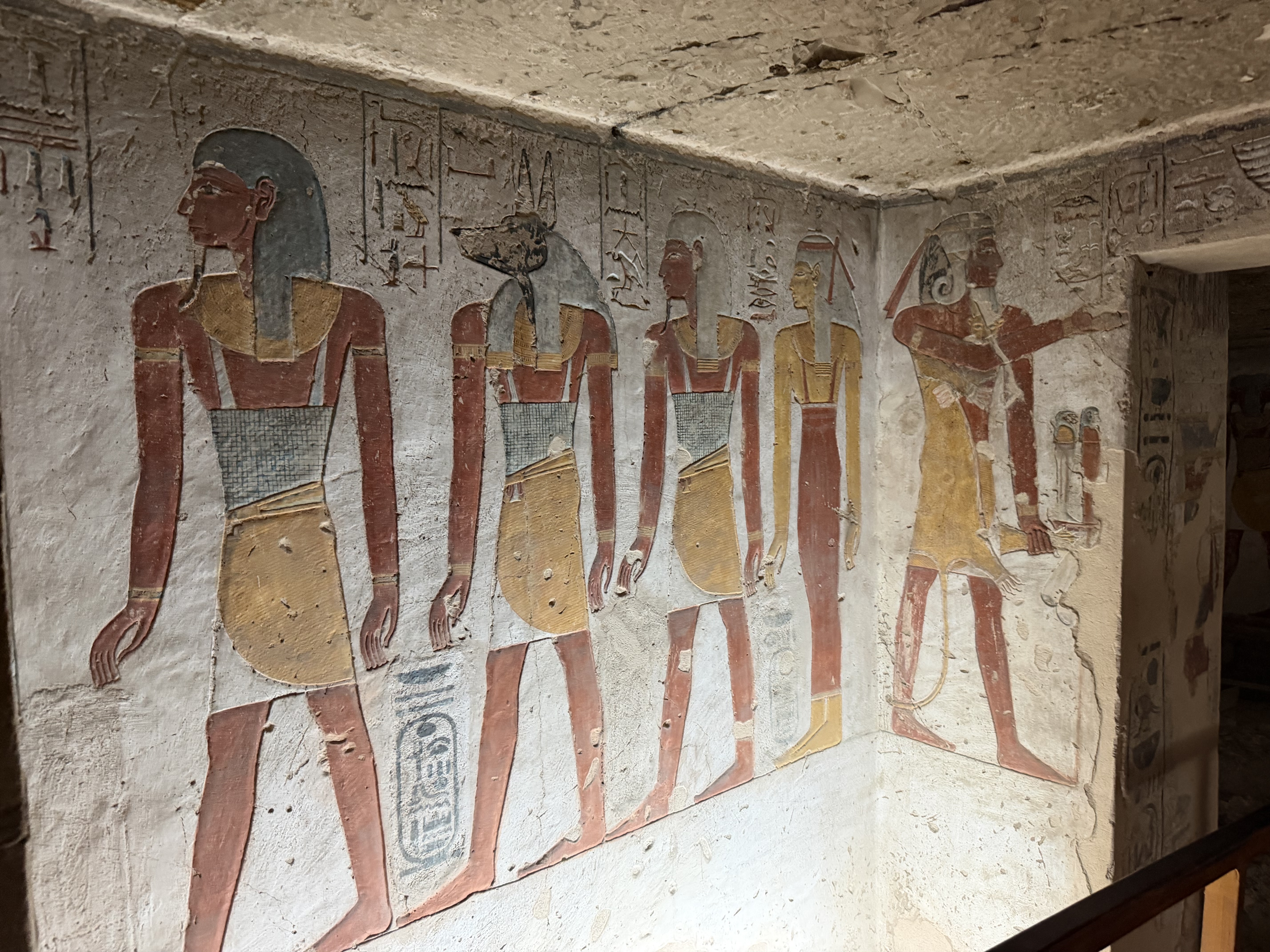
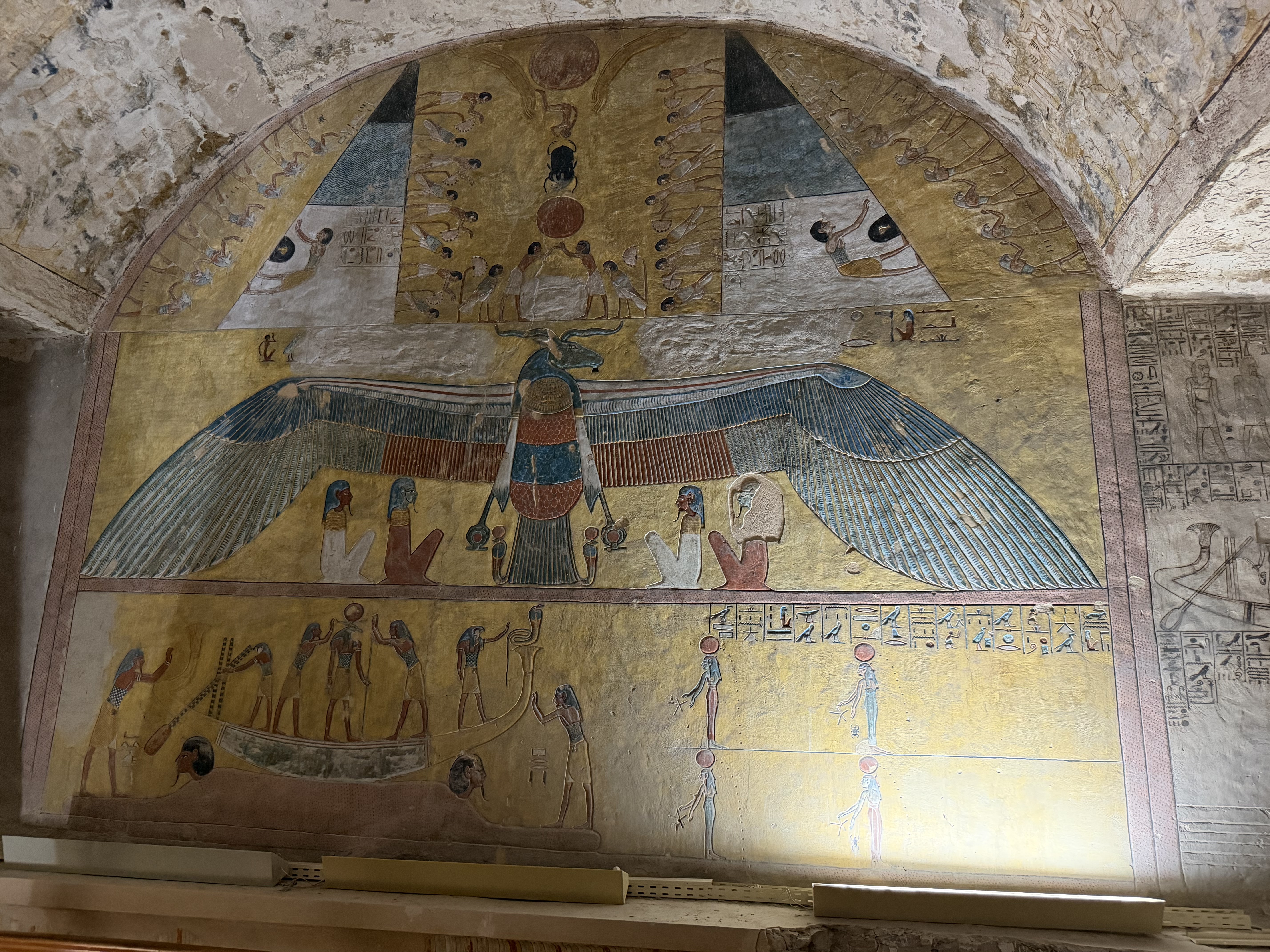
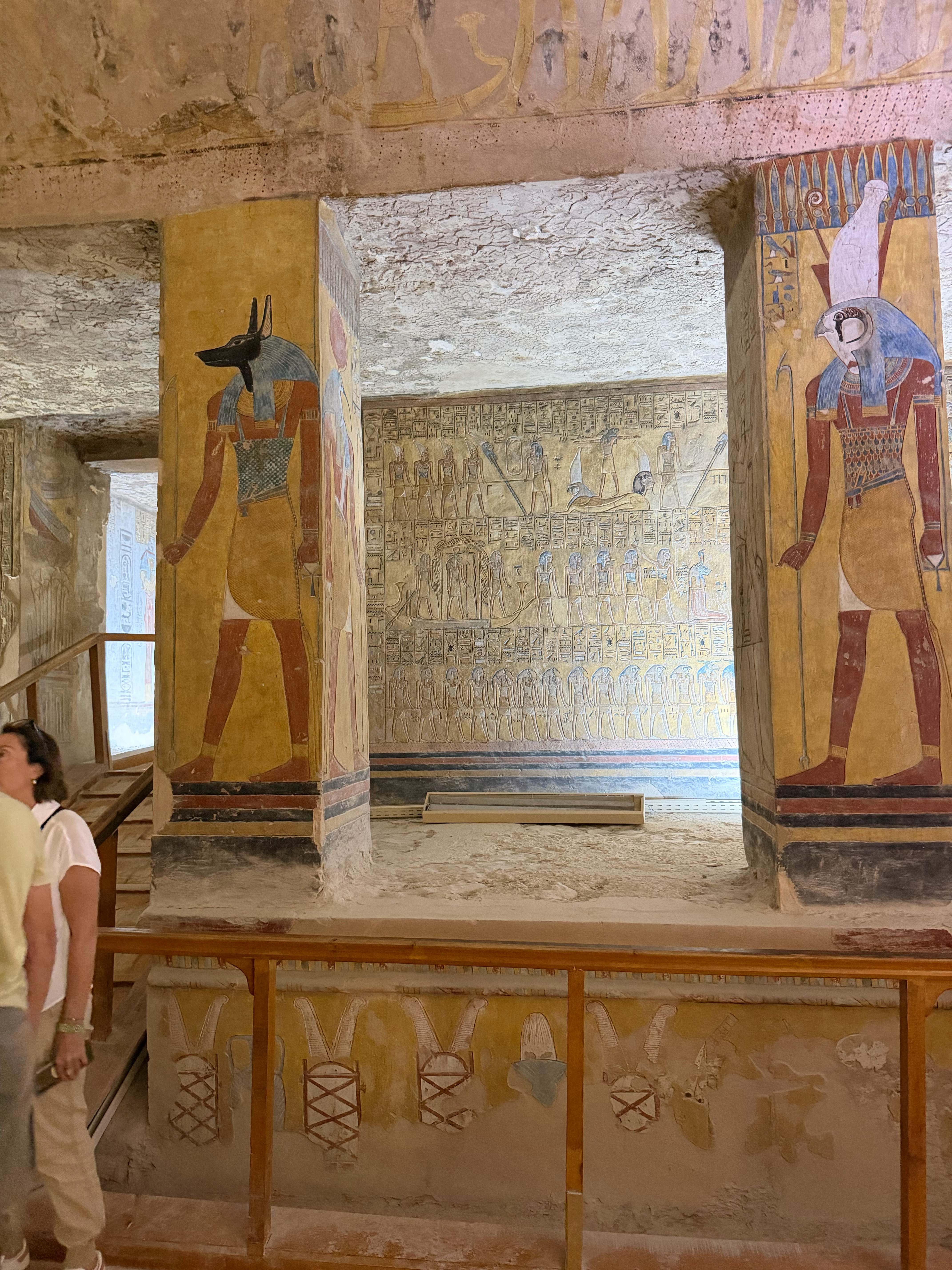
Our fourth and final tomb was the most spectacular – it was of Ramses III (1185 – 1154 BC).
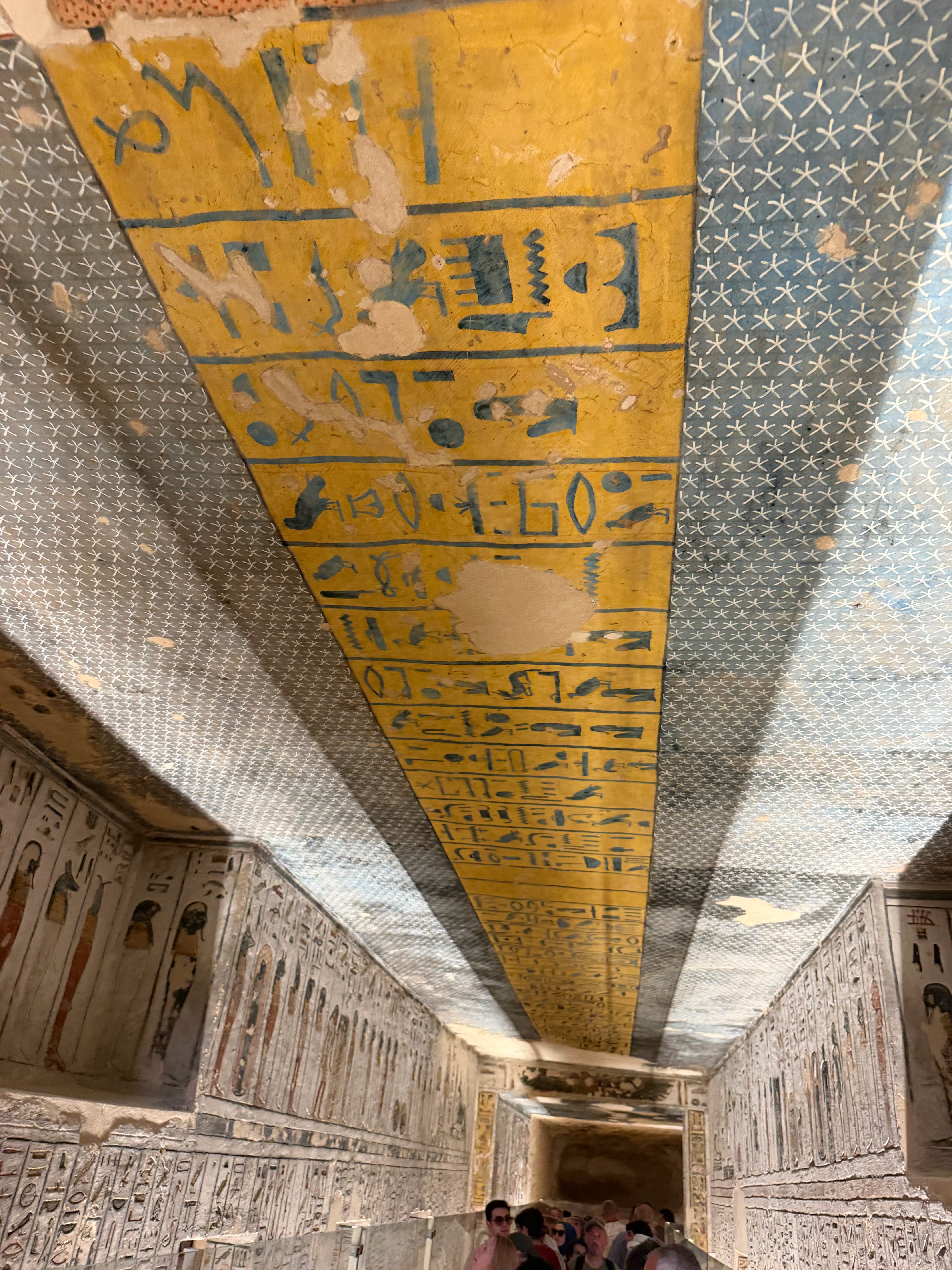
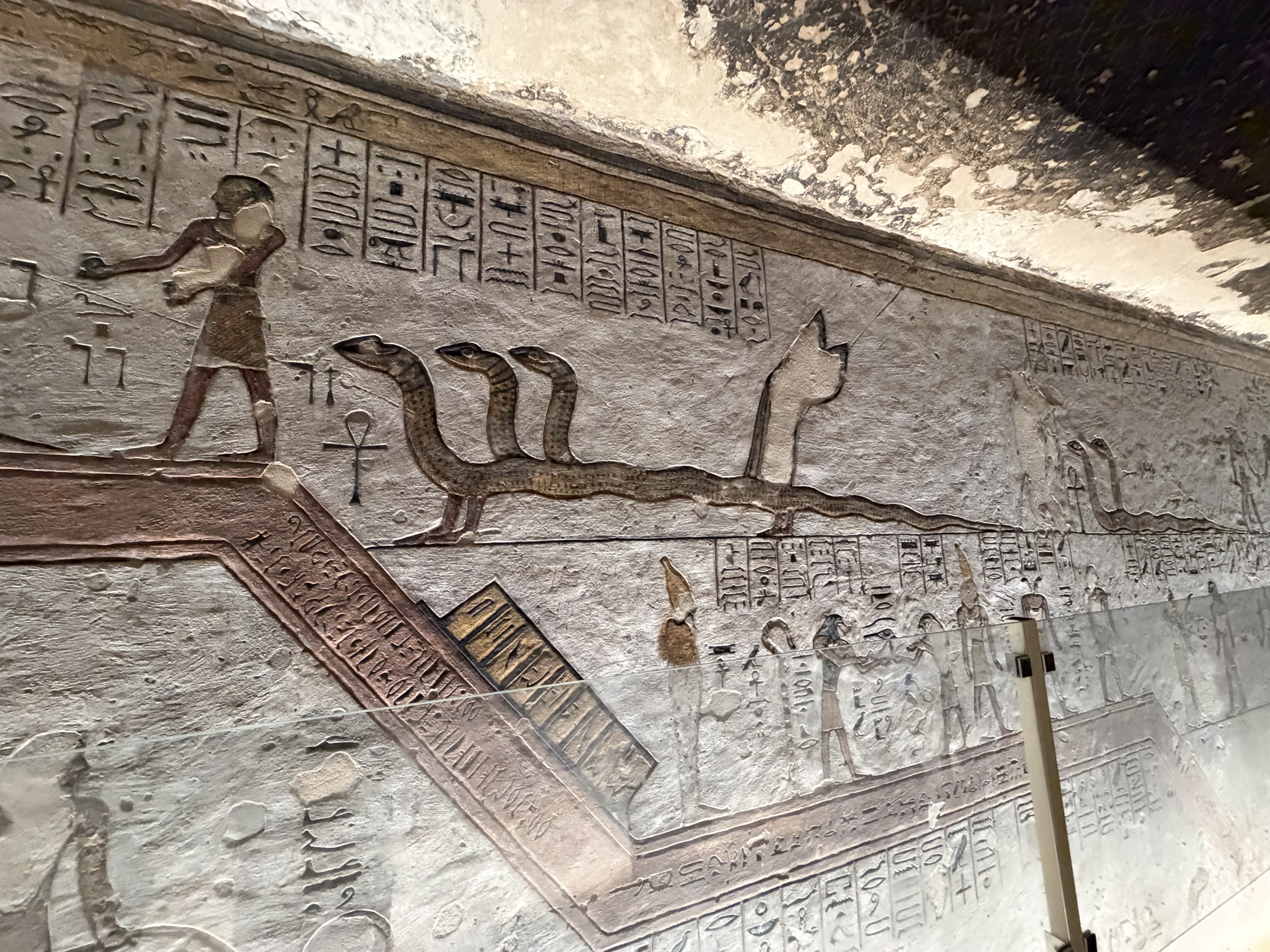
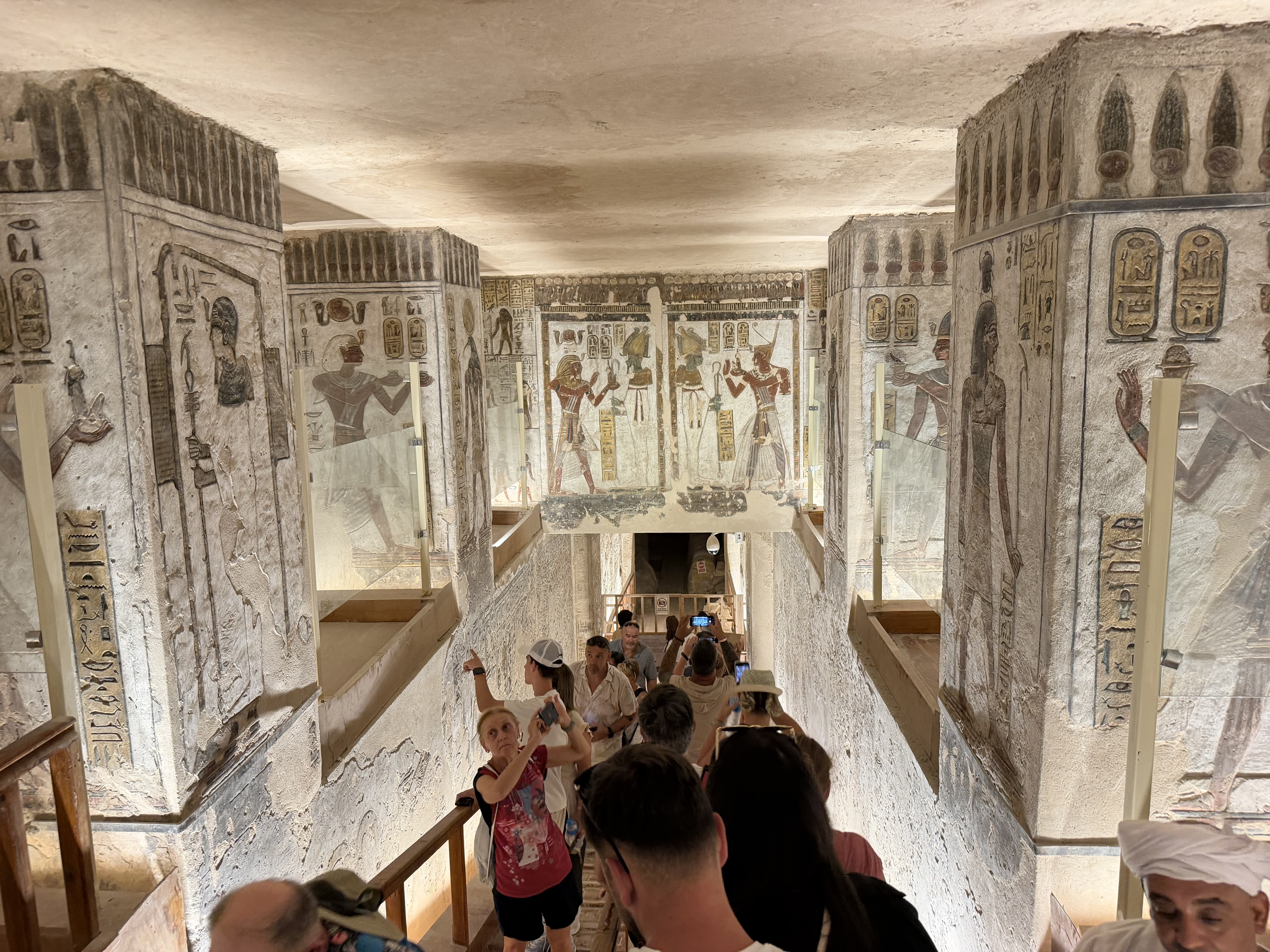
After touring the four tombs it was time to head back to the Viking Sobek.
Once we got back on the bus, our tour guide asked us how we thought the artisans did the artwork in the caves without modern technology – and more specifically – what did they use for light?
Since I had seen the movie “The Mummy” and “The Fifth Element” I knew of course that reflective mirrors were how to get light into the tunnels.
I was proud of my answer – but alas was not correct.
No one else on the bus had great guesses either – I am thinking that Hollywood was where most of us got our knowledge of Egyptology.
It turns out that the artisans used special candles that were used with sesame oil to ensure they did not get soot on the artwork. When the candle burned out – it was the end of your shift – ensuring all workers on a shift worked the same amount of time. If there was more work to be done – sometimes the candles would be longer and burn longer.
It was a fascinating day and the Valley of the Kings will certainly be near the top of the list for a return visit in the future.
Until next time …


