We were “templed out”. While I am not sure this is an actual real word – it does accurately express how we felt. We were coming off numerous consecutive days of walking through many impressive temples and ancient Egyptian ruins – and were ready for something different.
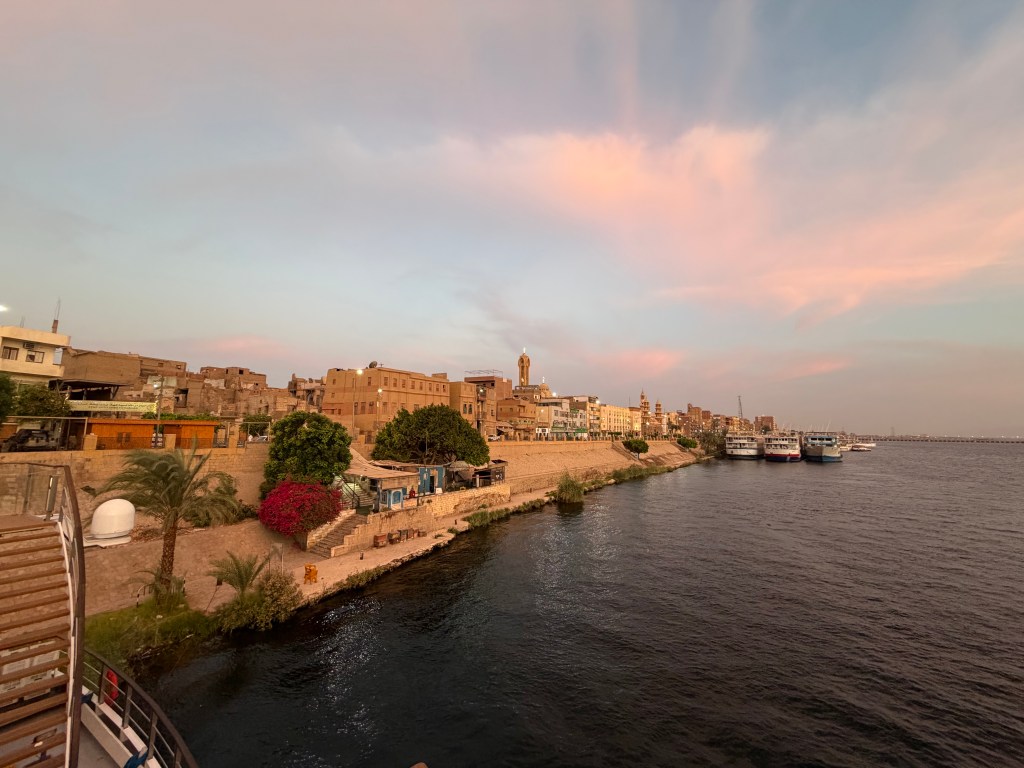
On all Viking cruises at least one guided tour is included each day as part of the cruise fare. We had docked at the small river town of Esna, Egypt and had a choice of two different tours. One was a full tour of the temple at Esna and the second was a guided walking tour through town to visit some local businesses.
We elected to do the town tour.
Winner, winner chicken dinner. It was the right choice.
Esna is a small, rural town with around 30,000 residents that gave us a feel for what life is like outside of the larger metropolitan areas in Egypt. Historically, it was a trading center in Greek and Roman times and had retained its small town character.
We started our walking tour at the marketplace – which had many colorful shops and local artisans. Our tour guide pointed out several different stores that she knew had locally produced products – and told us that they might be more expensive than other shops but that we would get some nice quality goods.
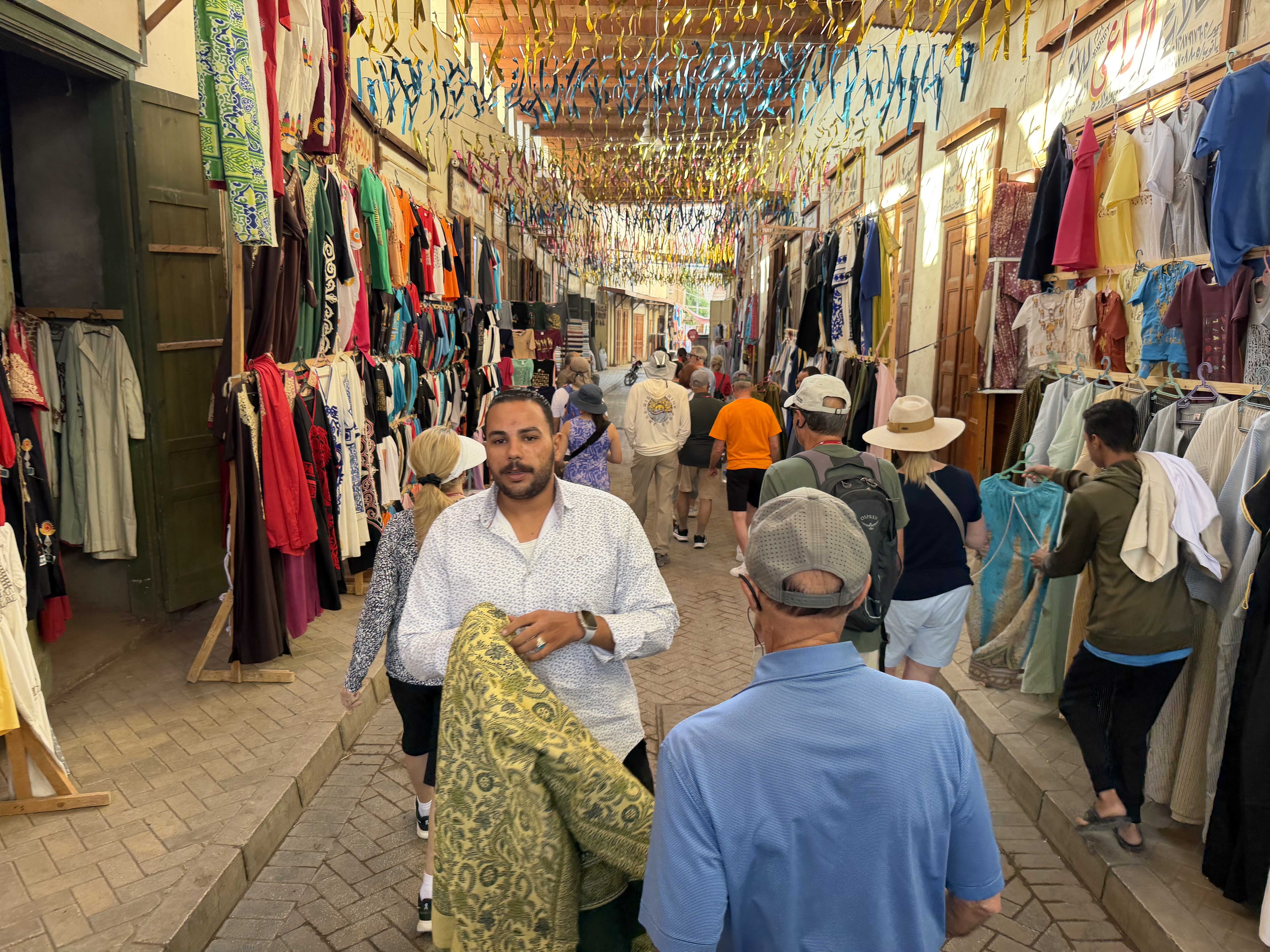
The really interesting part of the tour began when we left the marketplace and headed down a city street to meet some the local vendors and artisans.
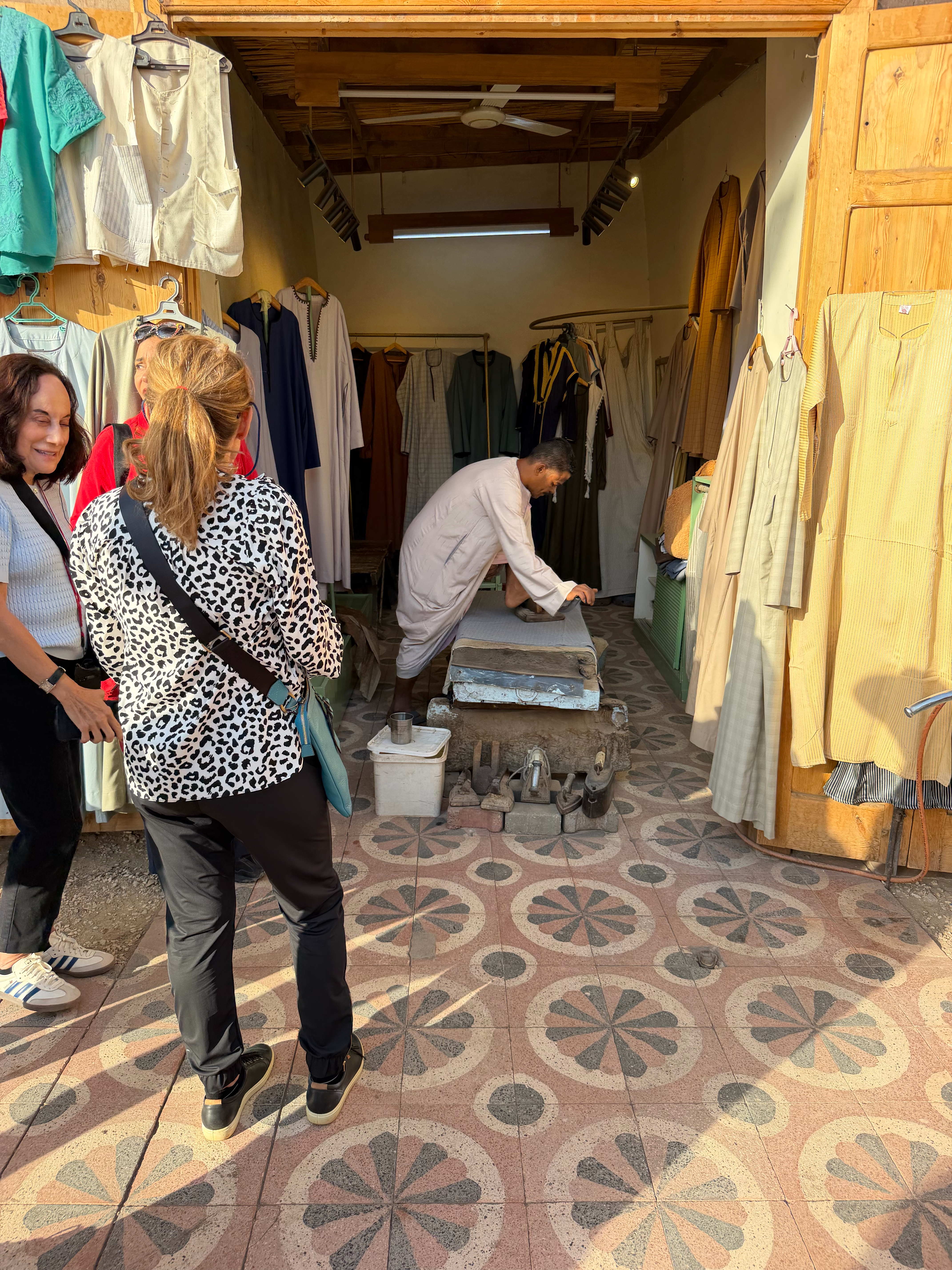
The first stop was to meet a gentleman that pressed clothes using a “foot iron”. He demonstrated by heating up an iron in a stove (both were significantly older than I was) and then pressing down with his foot while ironing the garment – and most importantly – not burning himself. He was at least the third generation in his family to have worked in this business. If he needed some water to iron out particularly challenging wrinkles, he drank some water and blew out a puff of moist air onto the garment.
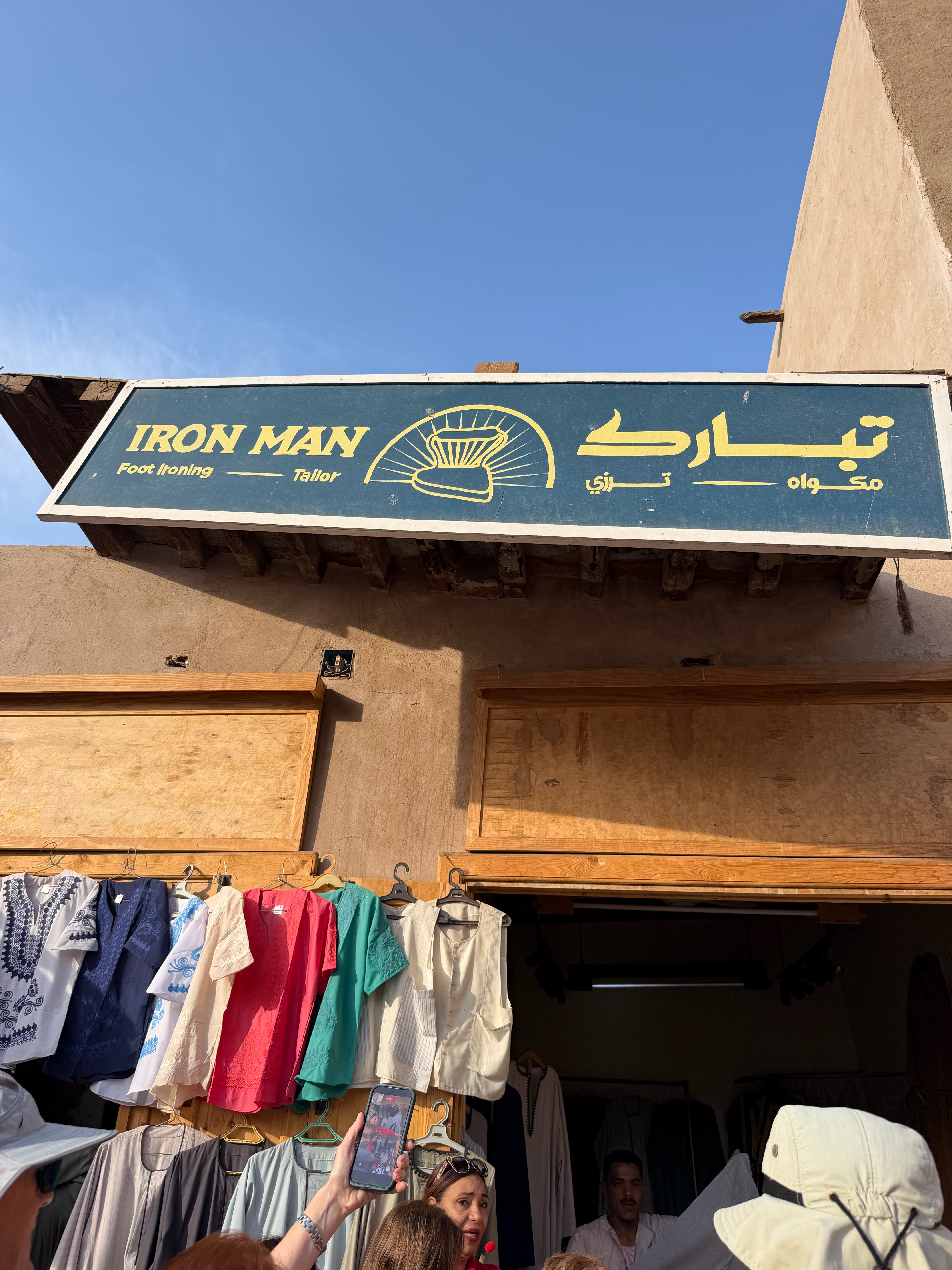
We then walked about 10 meters to one of the town tailors – who still did a majority of his work by hand sewing. He also proudly showed off an ancient Singer Sewing Machine that he used when he needed to. He was also at least the third generation to work in his shop – but he told us that he did not think any of his children would continue to maintain his shop in the future.
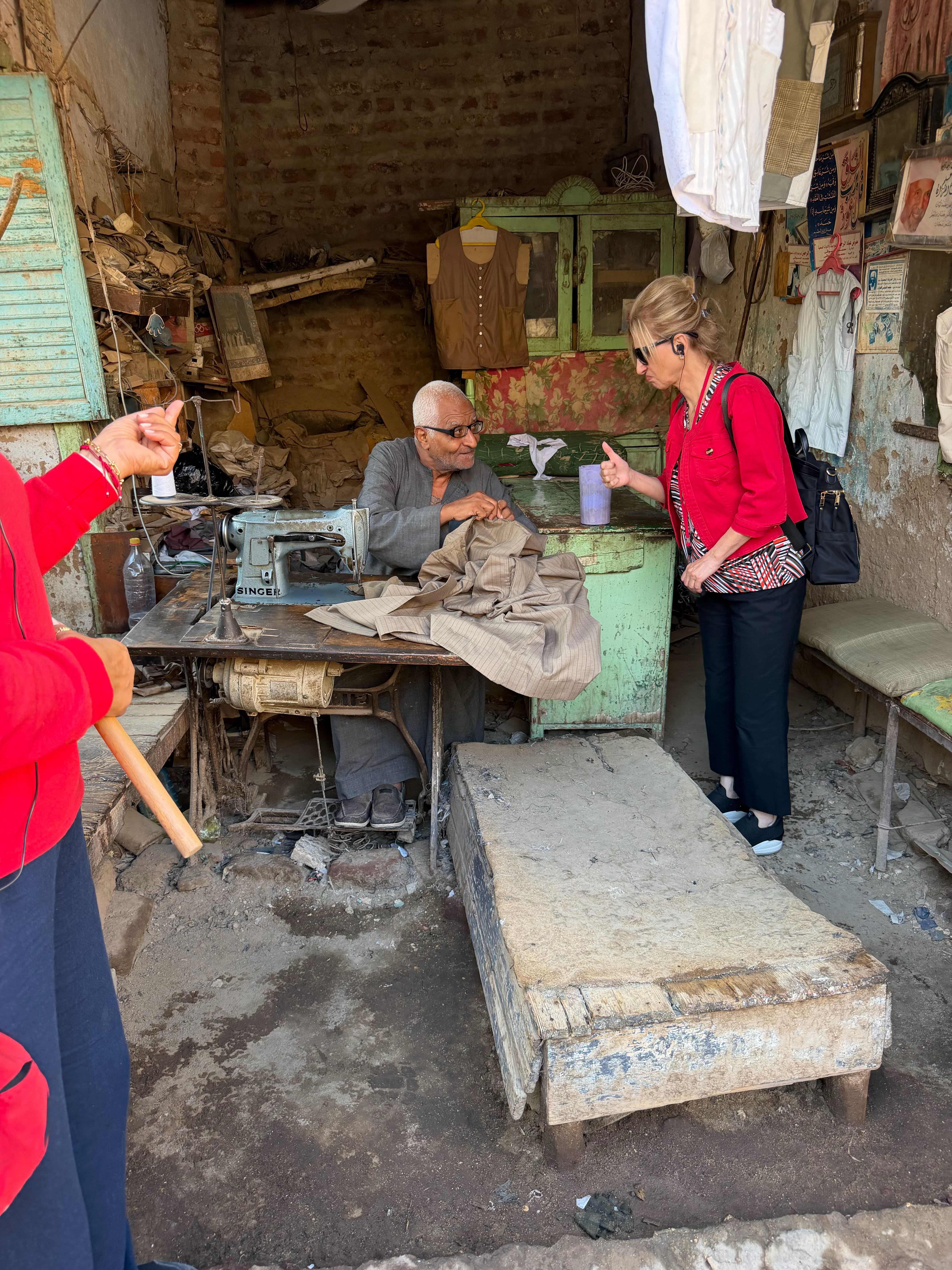
To be clear – these shops are very small and had been used for generations. These were not sham businesses for tourists – but were more focused on doing business with local community members and not for the tourist trade.
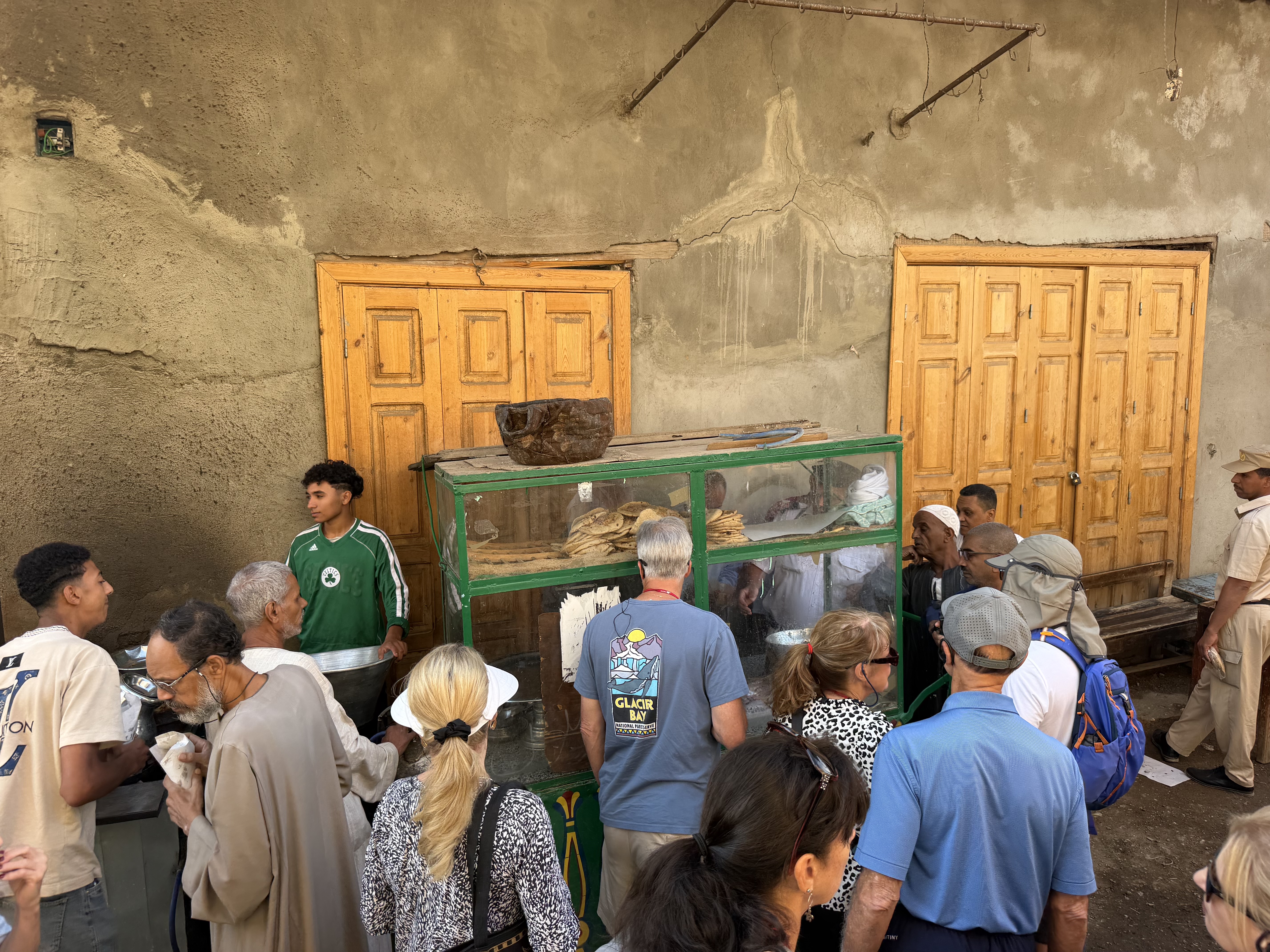
We next walked another 50 meters to the local baker who had a display box set up on the street. His stand included a single small table with one chair for a lucky patron that snagged the single seat! Local townspeople were milling about his stand talking with each other and getting some bread for breakfast or a mid-morning snack.
We came to the end of the street and facing us was the Temple at Esna. Our guide mentioned that you could see pock marks on the temple fascade where Ottoman soldiers had used the temple for target practice during the time when Egypt was part of the Ottoman Empire.
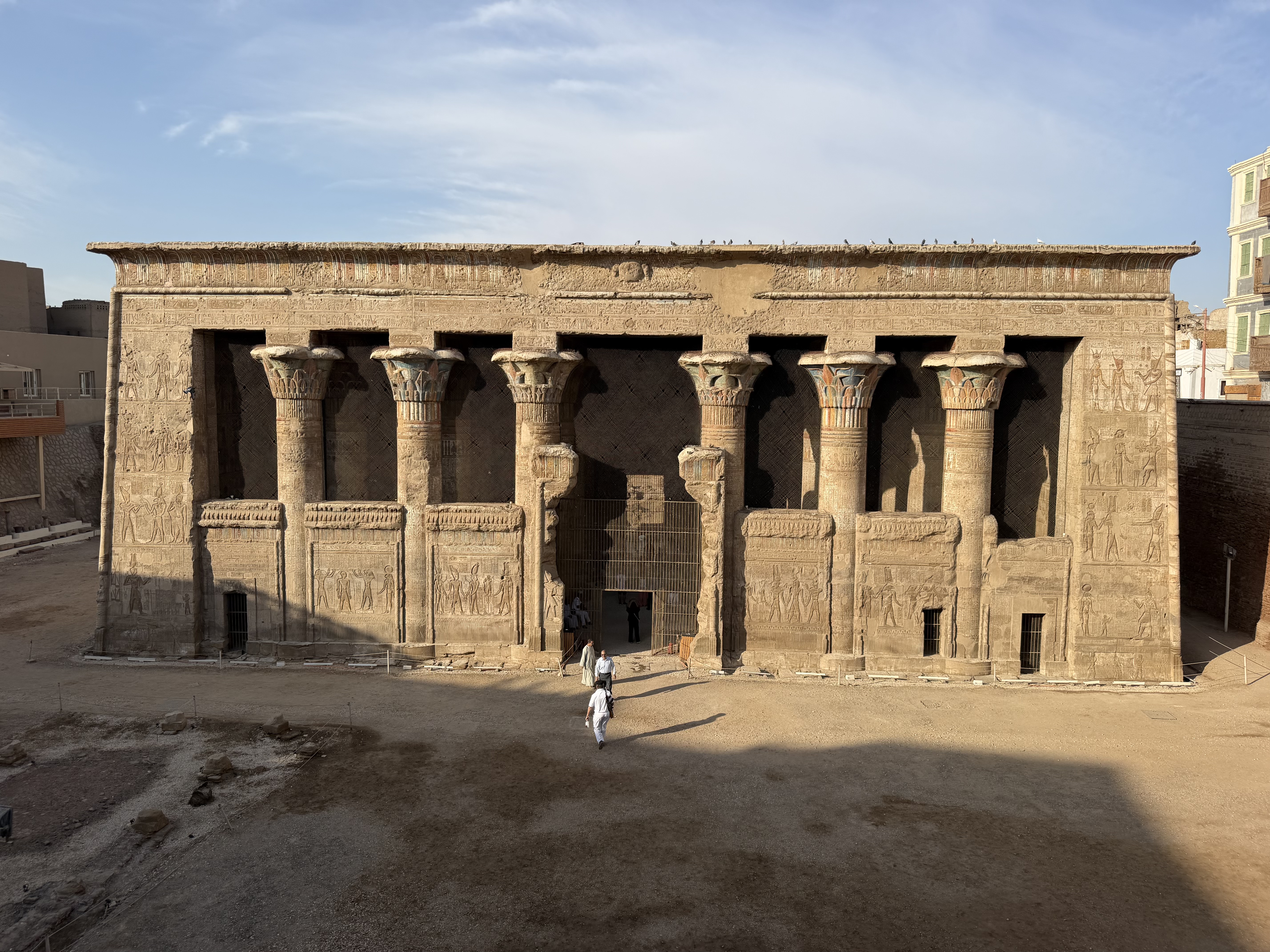
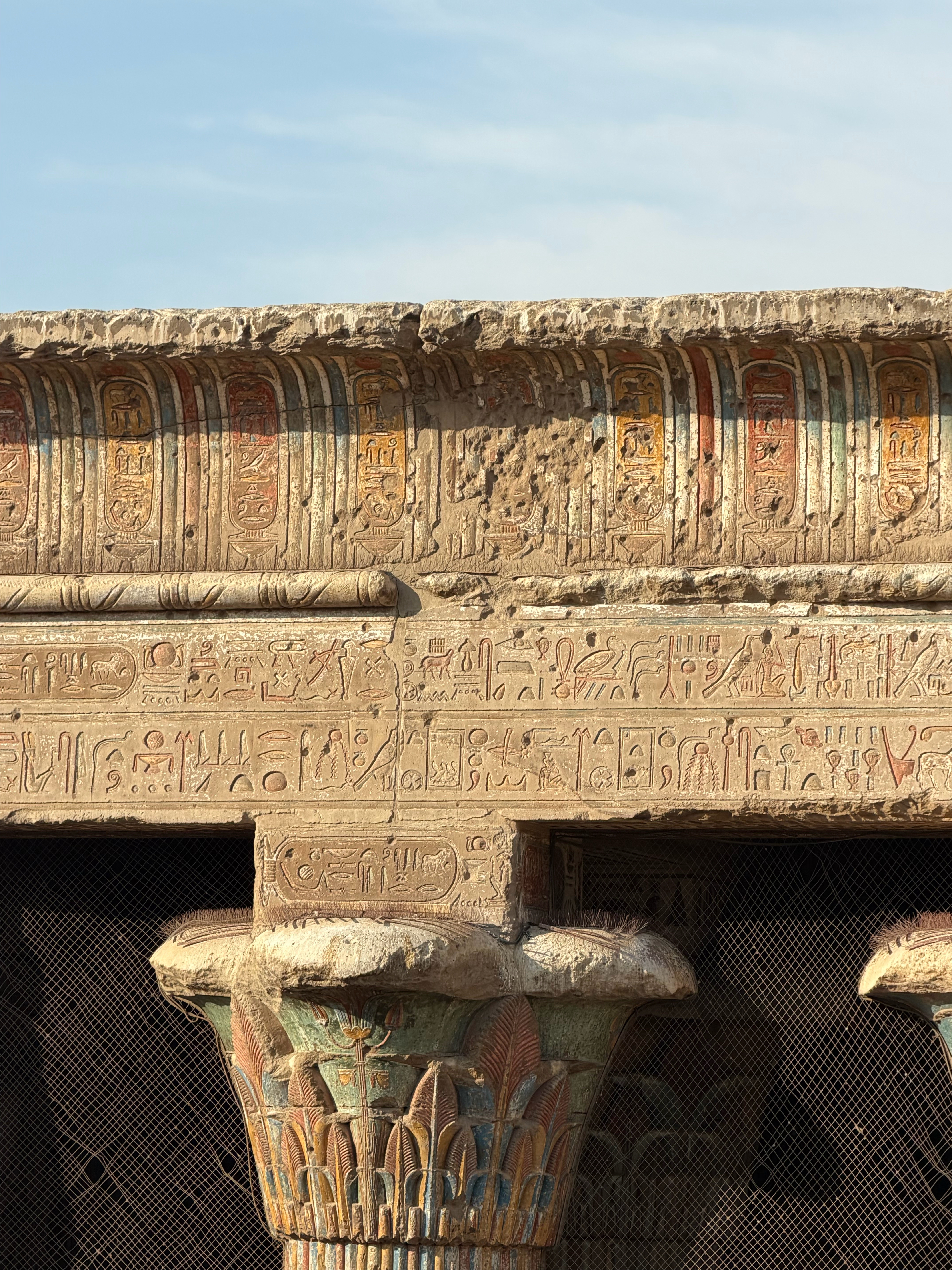
After gazing at the temple for a few minutes – and grabbing close-up photos of the bullet damaged areas – we continued our walking tour.
While Egypt has made significant progress in literacy there remains older citizens in rural areas that have not learned to read or write. Some of these folks need the ability to endorse business documents – so we next stopped at a stamp maker. This artisan would carve a persons name into a metal stamp which could be used as a signature when conducting official business. He did stamps in both Arabic and English while you waited – so of course we bought a couple of these as souvenirs.
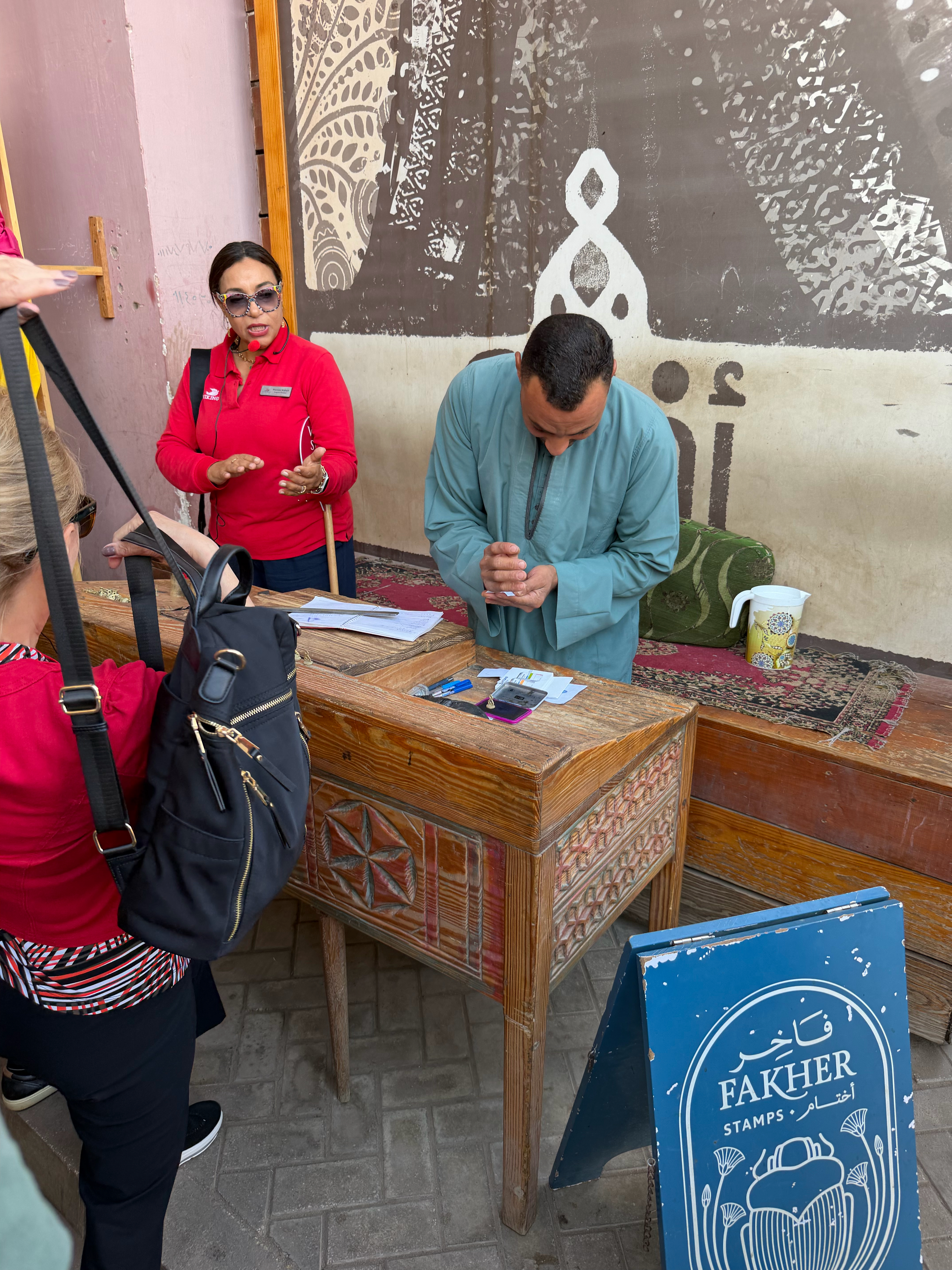
Our final stop on the tour was at a miller – who had a much larger shop compared with the previous places we had stopped. The large shop contained a millstone used for making flour and milling other grains. The proprietor showed us how the large millstone worked – and had one of our fellow passengers mill some grain on a smaller millstone used for making small quantities of flour.
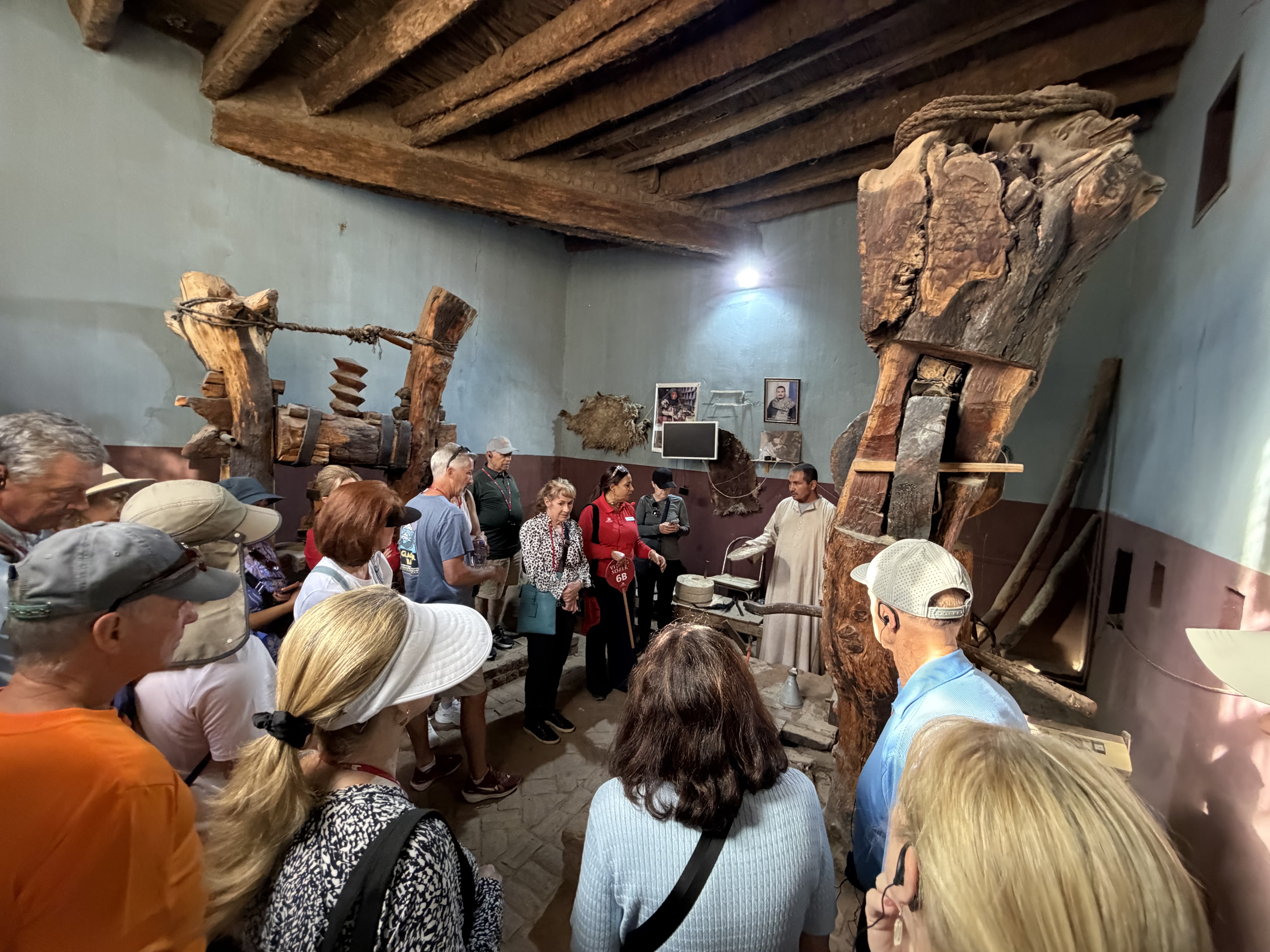
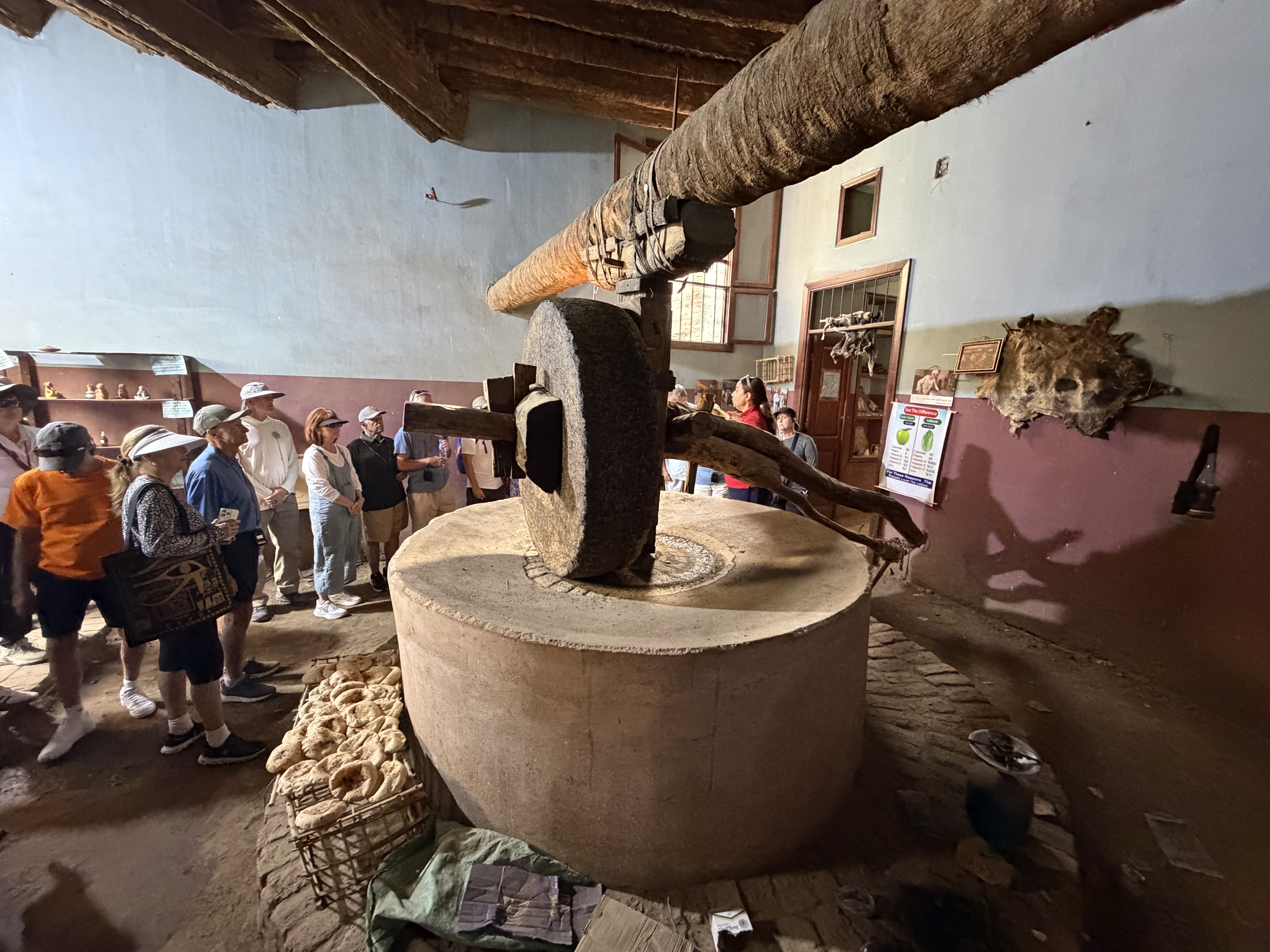
After our tour – we had about 45 minutes to work our way back to the ship – and to do some shopping along the way.
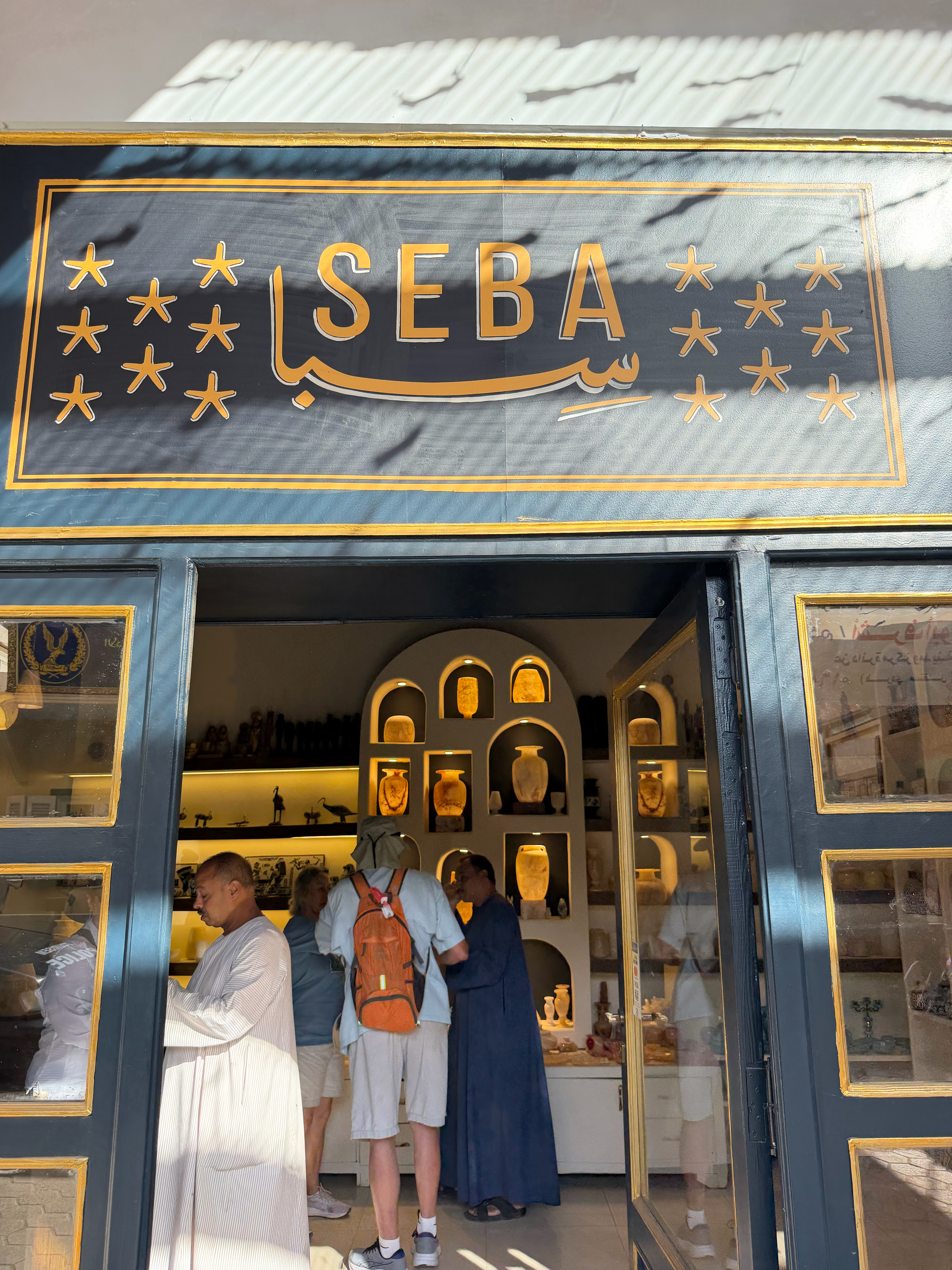
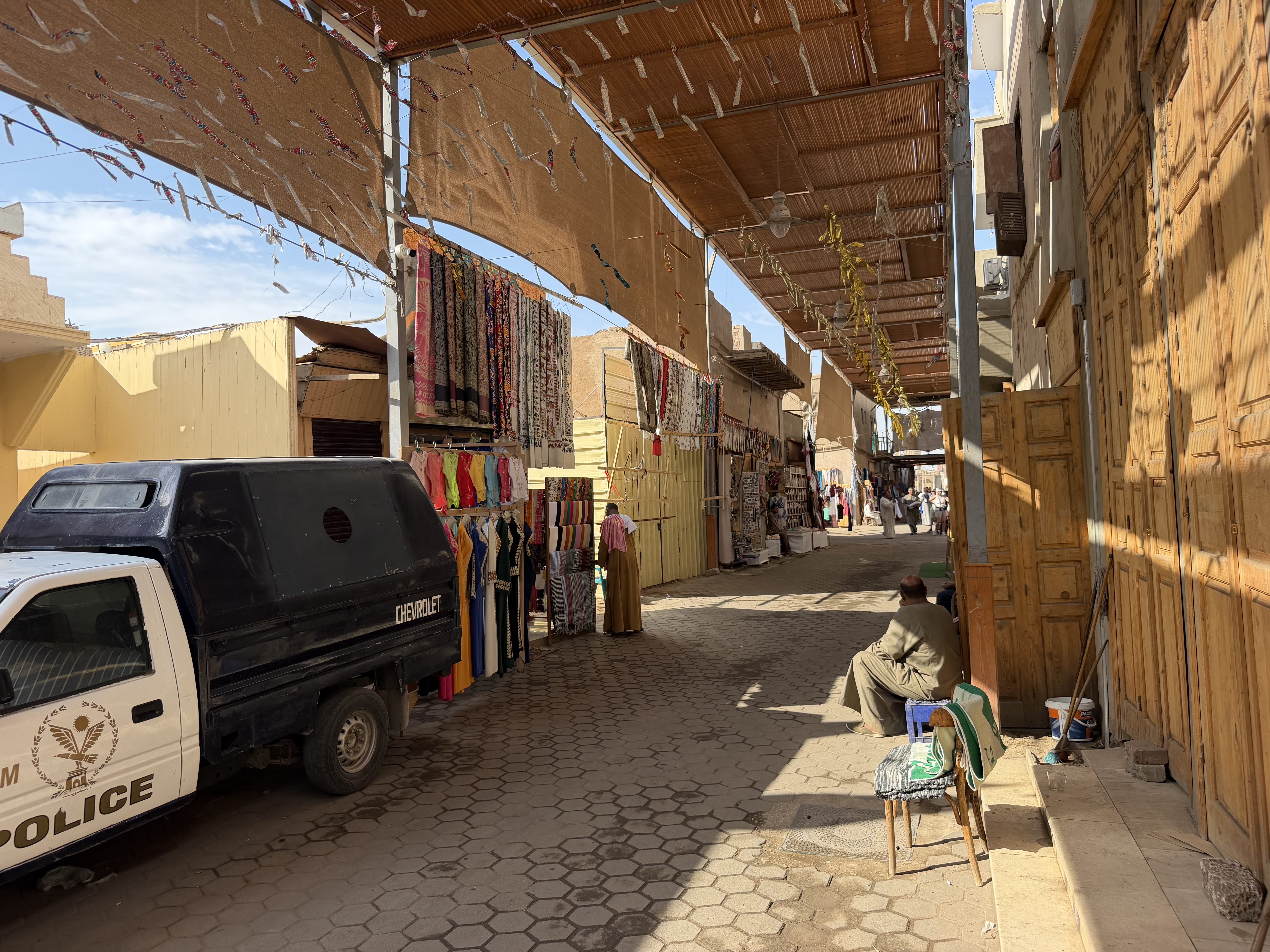
As we walked back to the Viking Sobek we thoroughly enjoyed a day without a temple tour. It was fascinating to have an opportunity to hear stories from rural Egyptian merchants who had lived and worked in the same place for multiple generations.
Until next time …


