As a former teacher, we used to always say that there was no such thing as a stupid question.
During one of our tours one of our fellow cruisers told us about a question asked on a previous tour of Egypt.
Q: Why did the Egyptians build so many ruins?
There really is no answer to that question. The person telling us was adamant that the person asking it was serious – and it was not done in jest.
Urban legend? Perhaps. It does make a nice story – and after being on lots of tours over the years is pretty believable.
It was time for our last temple tour of the trip.
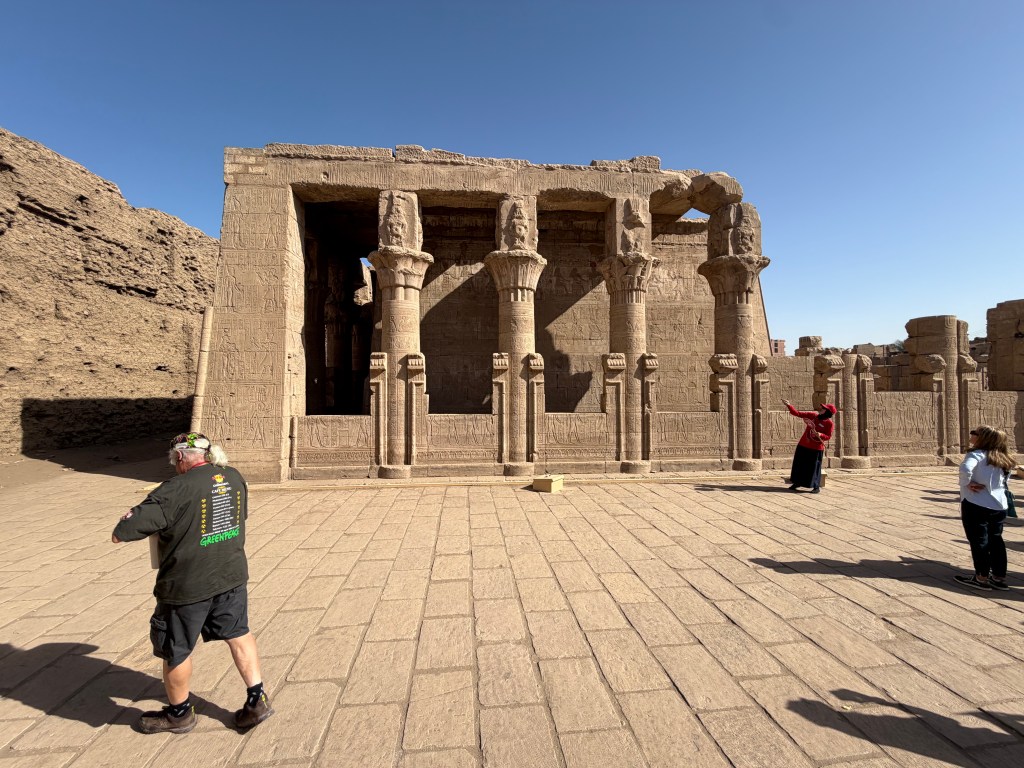
The Temple at Edfu was the most complete temple that we seen. Part of the reason this Temple was so well preserved was that it was under meters of sand and debris for centuries – meaning that when it was excavated in 1866 it was in exceptional shape. Additionally, it was finished much later than many of the other temples and was fully completed in 237 B.C. – so it was a bit younger than some of the other ruins we saw that were 1000 years older.
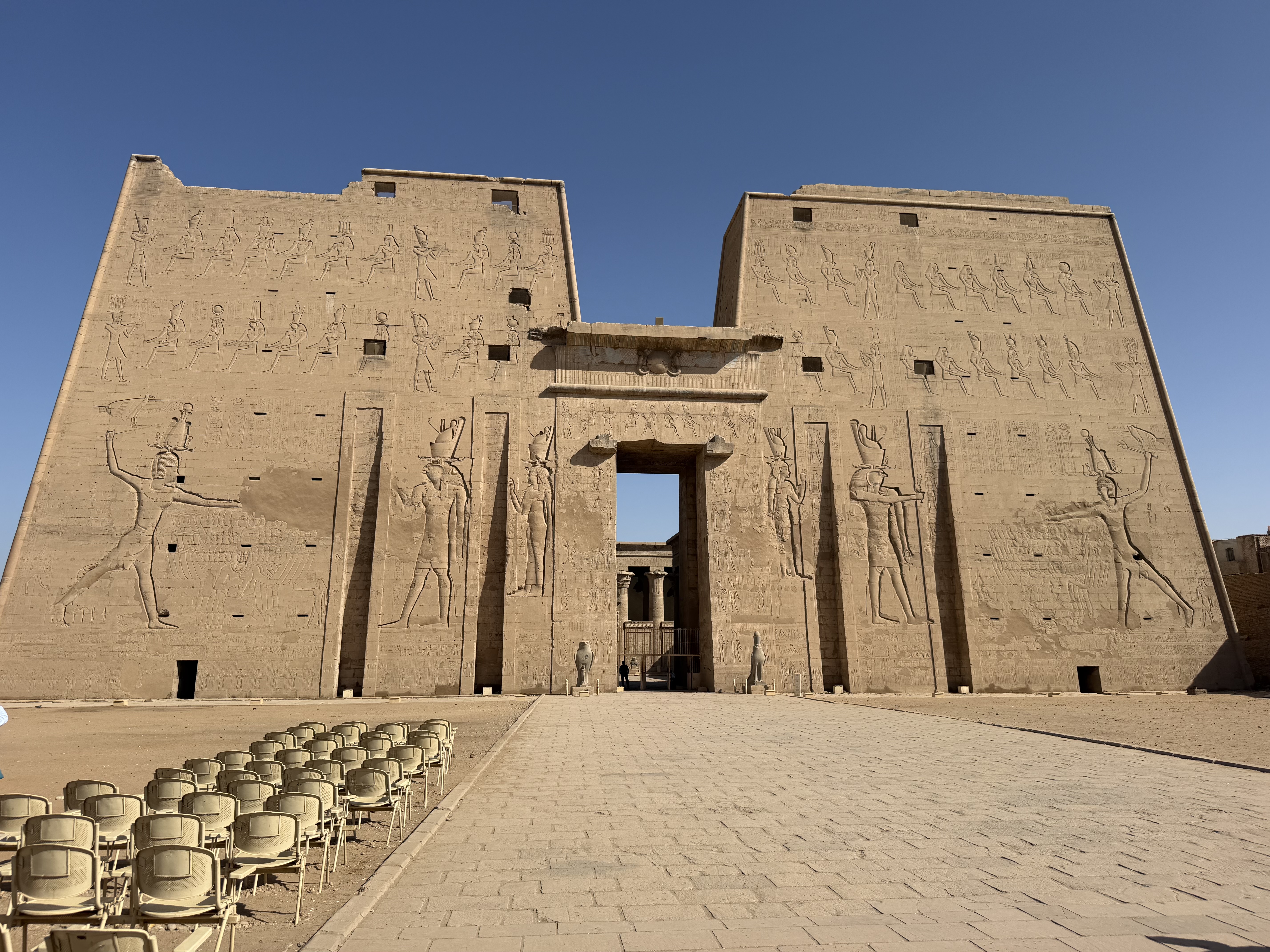
The inside of the temple was as magnificent as many of the other temples we had seen. The colors were vibrant and we had the usual hieroglyphics on the walls.
Since this temple was relatively new compared with others – there was documentation on some of the unique spaces in this temple so it was clear what many spaces were used for.
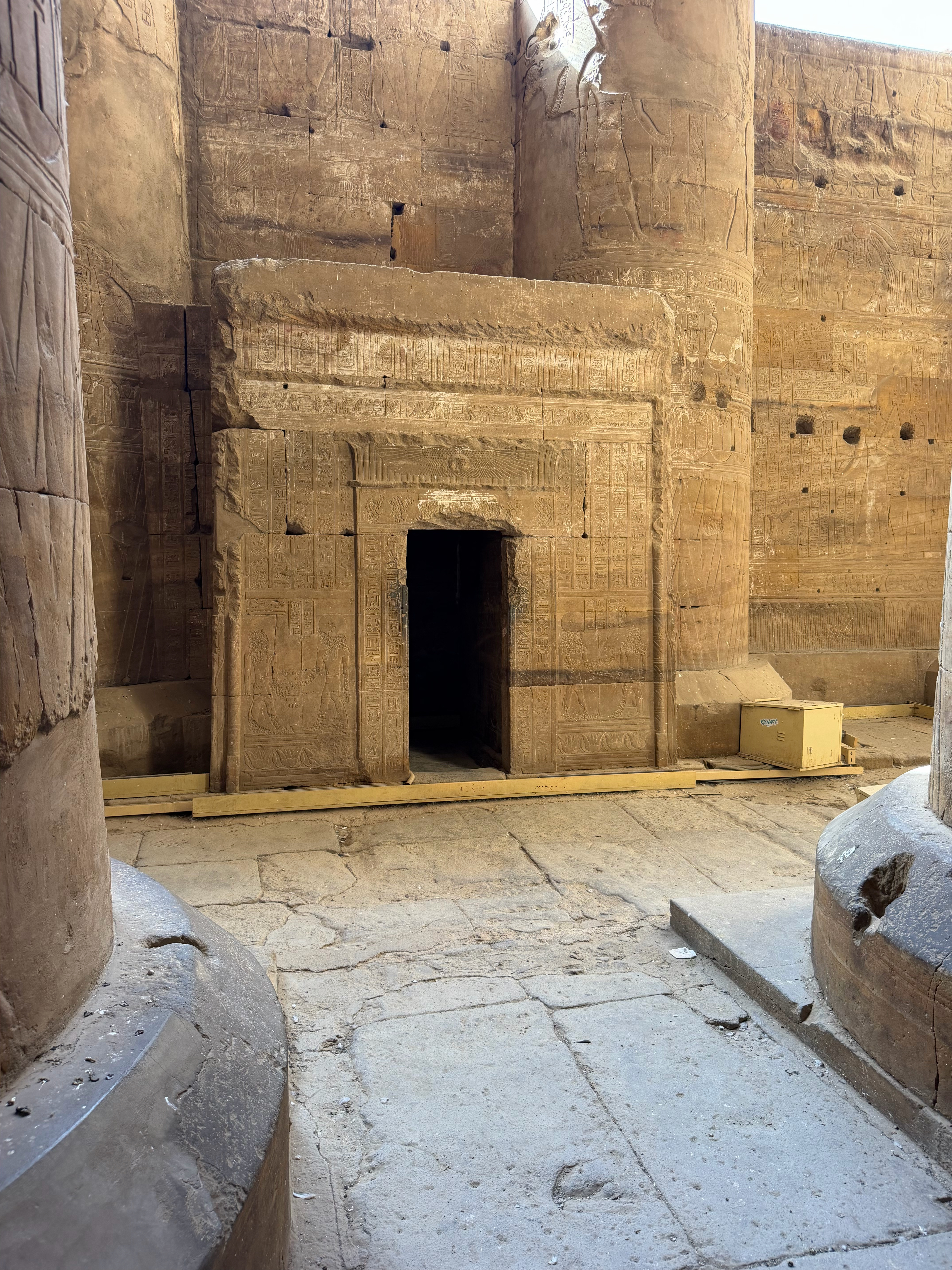
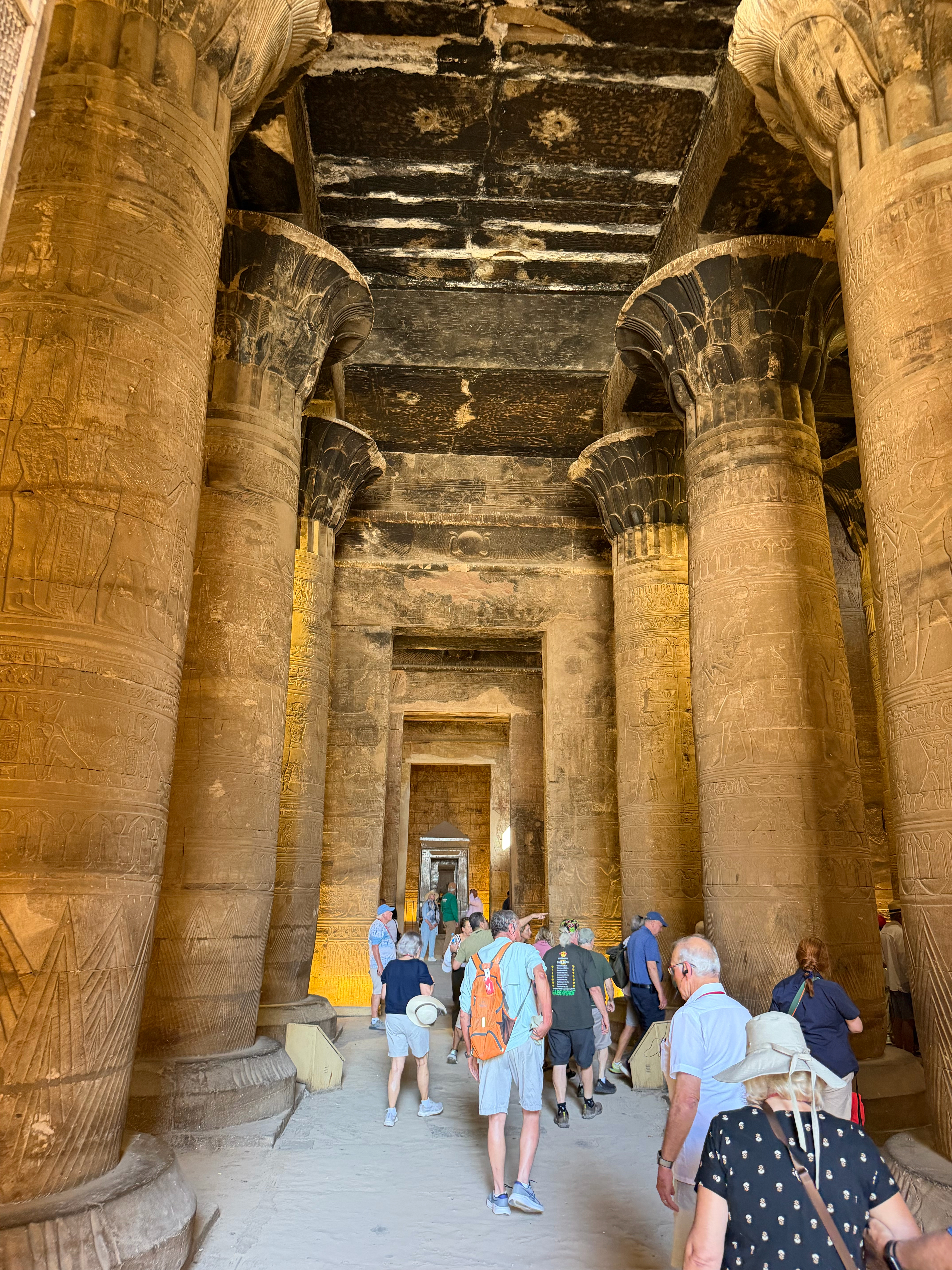
There were some unique hieroglyphics at this temple – and once again we were reminded that without a professional tour guide we would have simply walked right by them.
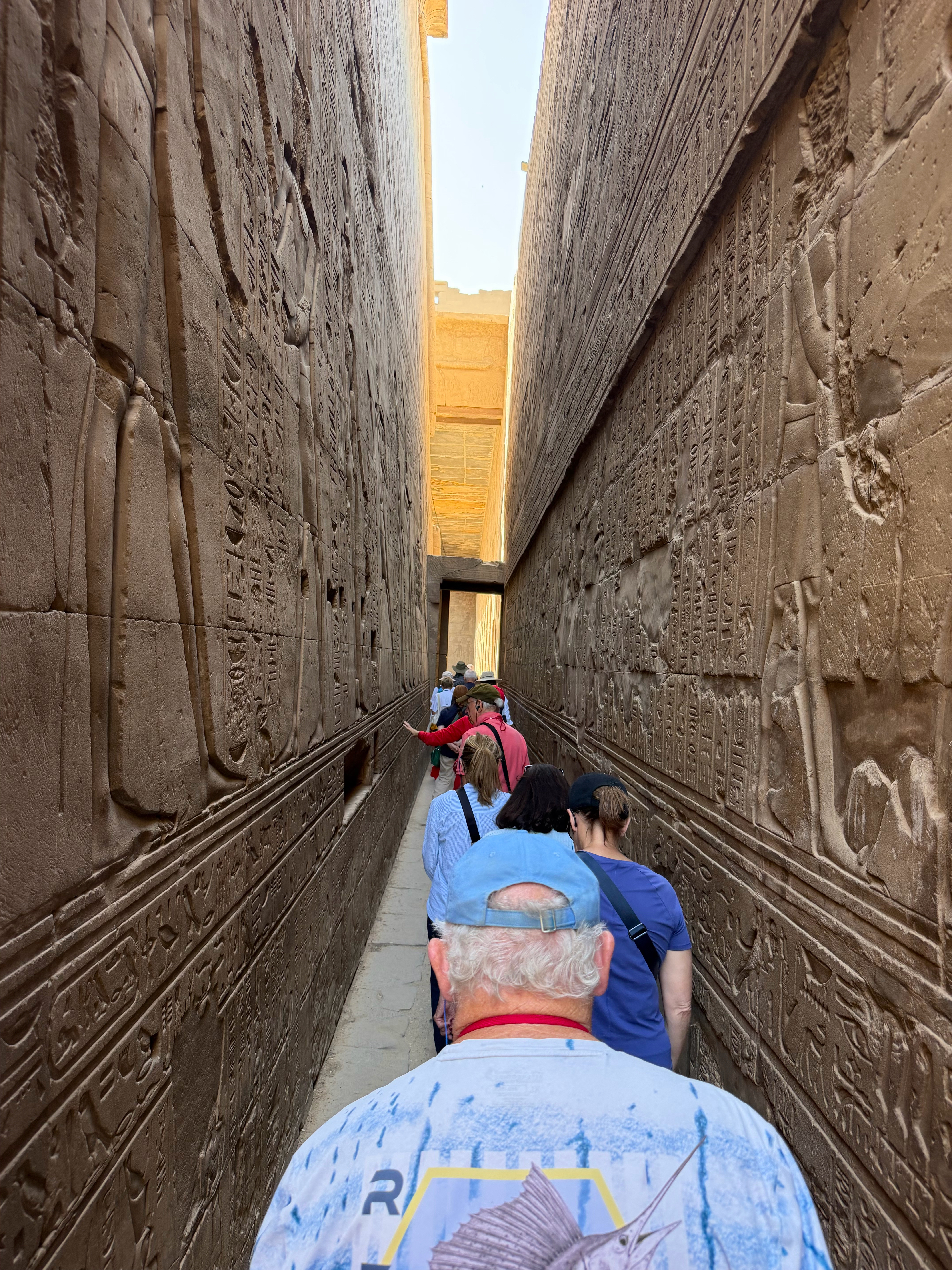
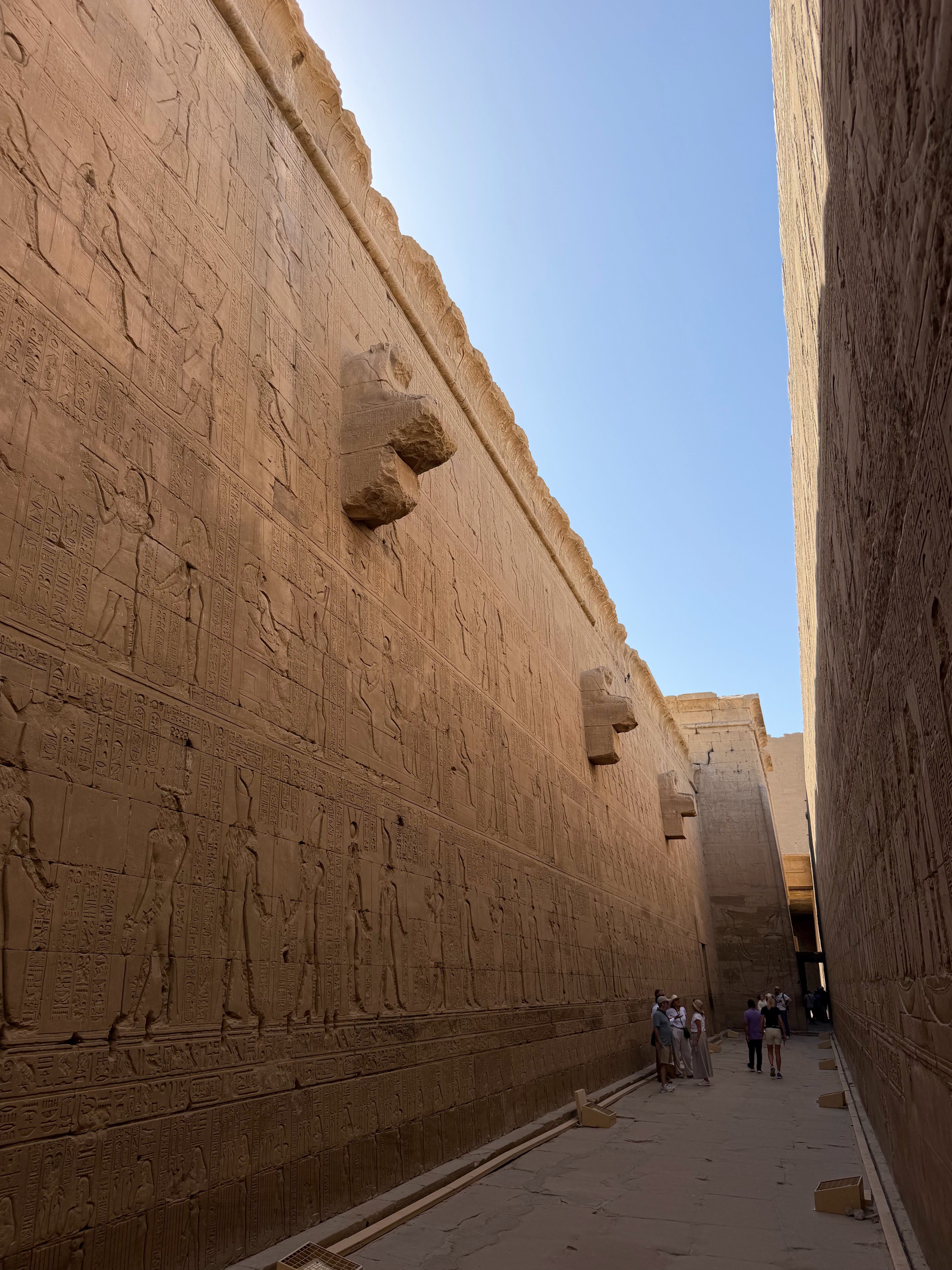
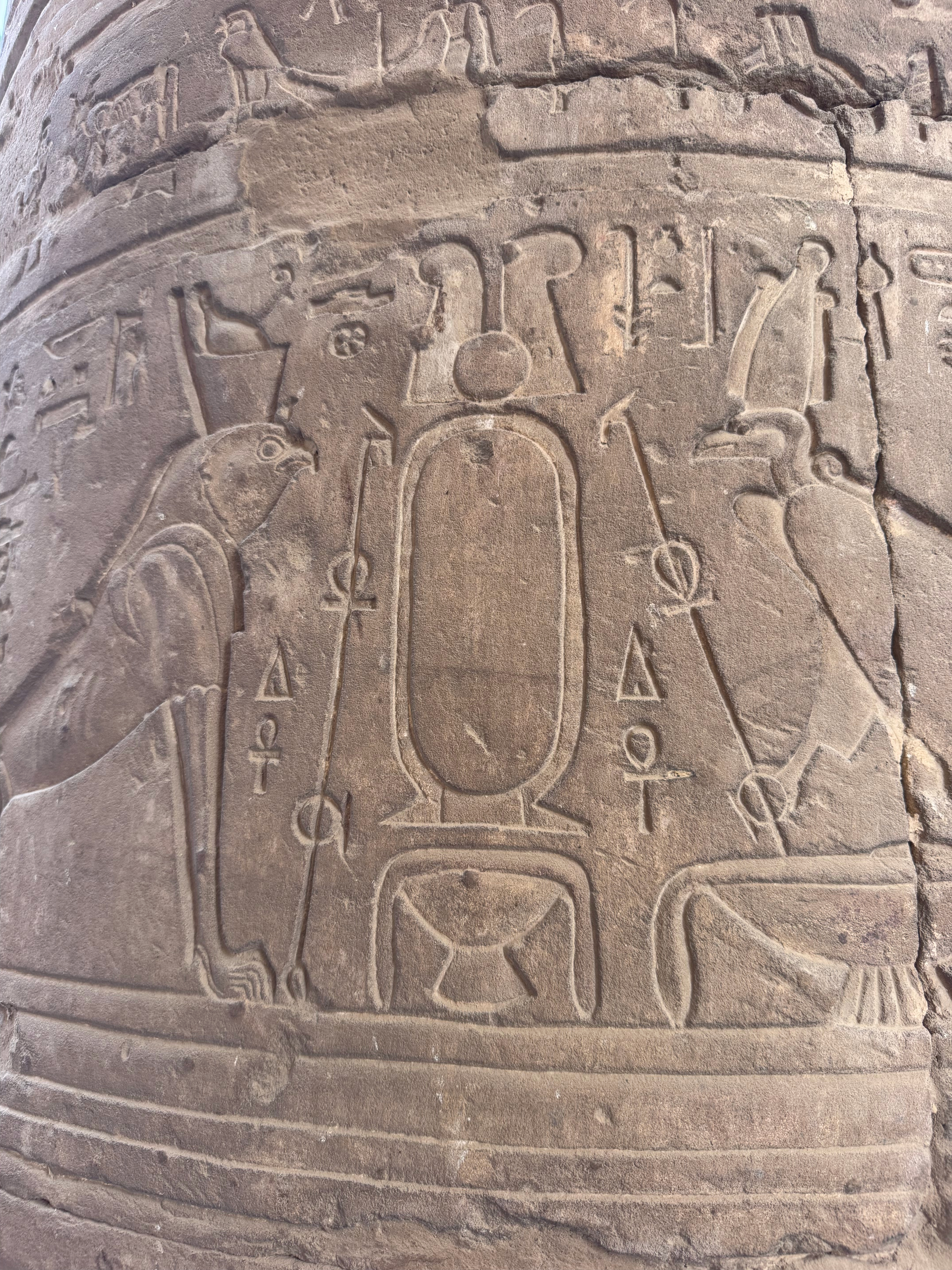
As we first entered the temple – we started looking at the drawings on the temple walls – and noticed that the cartouches used to signify who had built the structure were all present – but were blank. It turns out this was done for pragmatic reasons. When the temple was built the Pharaohs were changing quickly. Since the priests would know well in advance when a ruler was visiting they would use gold leaf to put whomever was the current ruler on the cartouches and not have to recarve the stone each time.
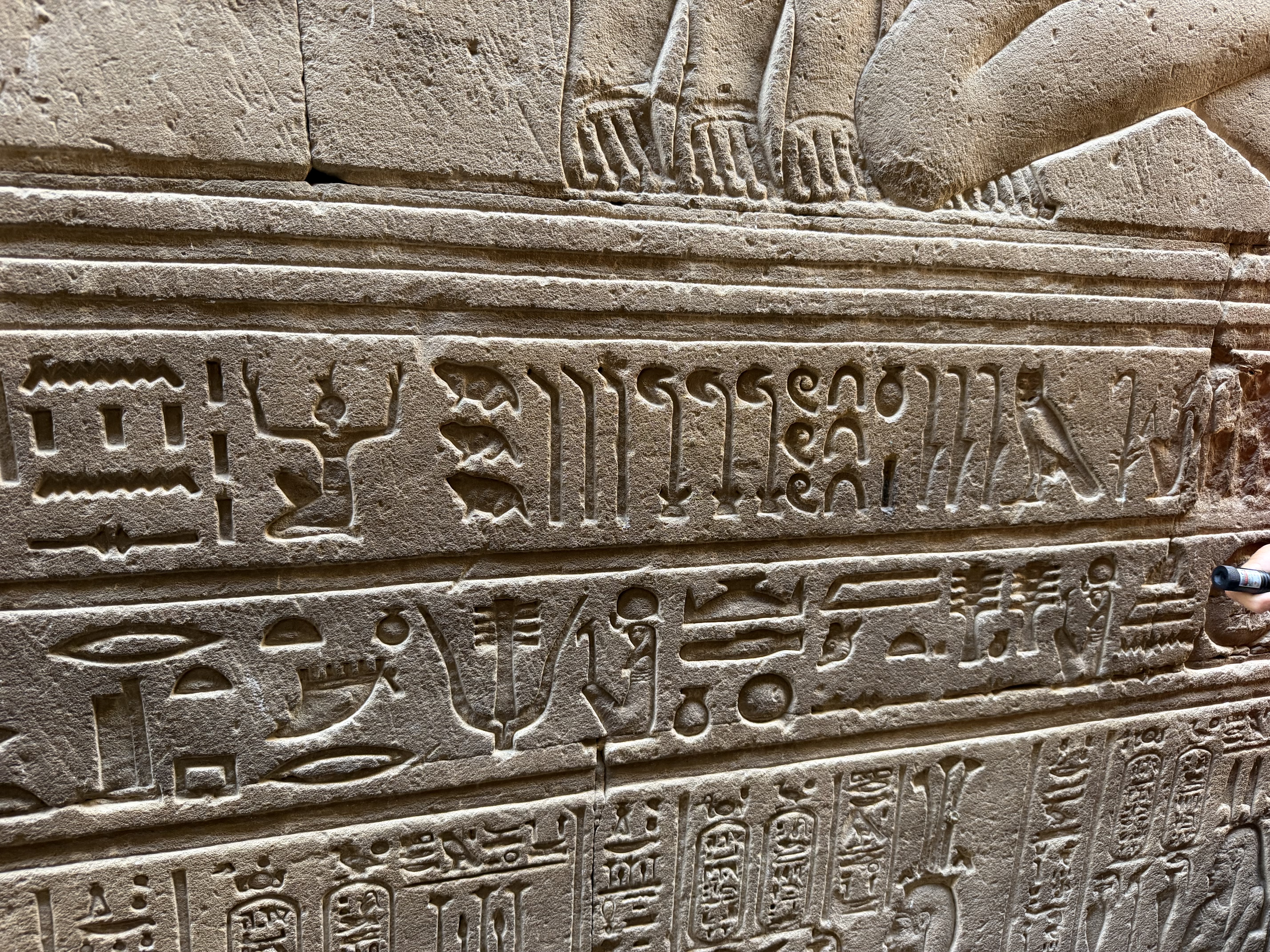
Noel and I had attended a workshop on the cruise ship that discussed hieroglyphics and as part of that we learned a bit about Egyptians and mathematics – including the way large numbers were represented and the concept of zero. Interestingly, the hieroglyph for 1,000,000 is a person with their hands raised in what looks like a touchdown signal!
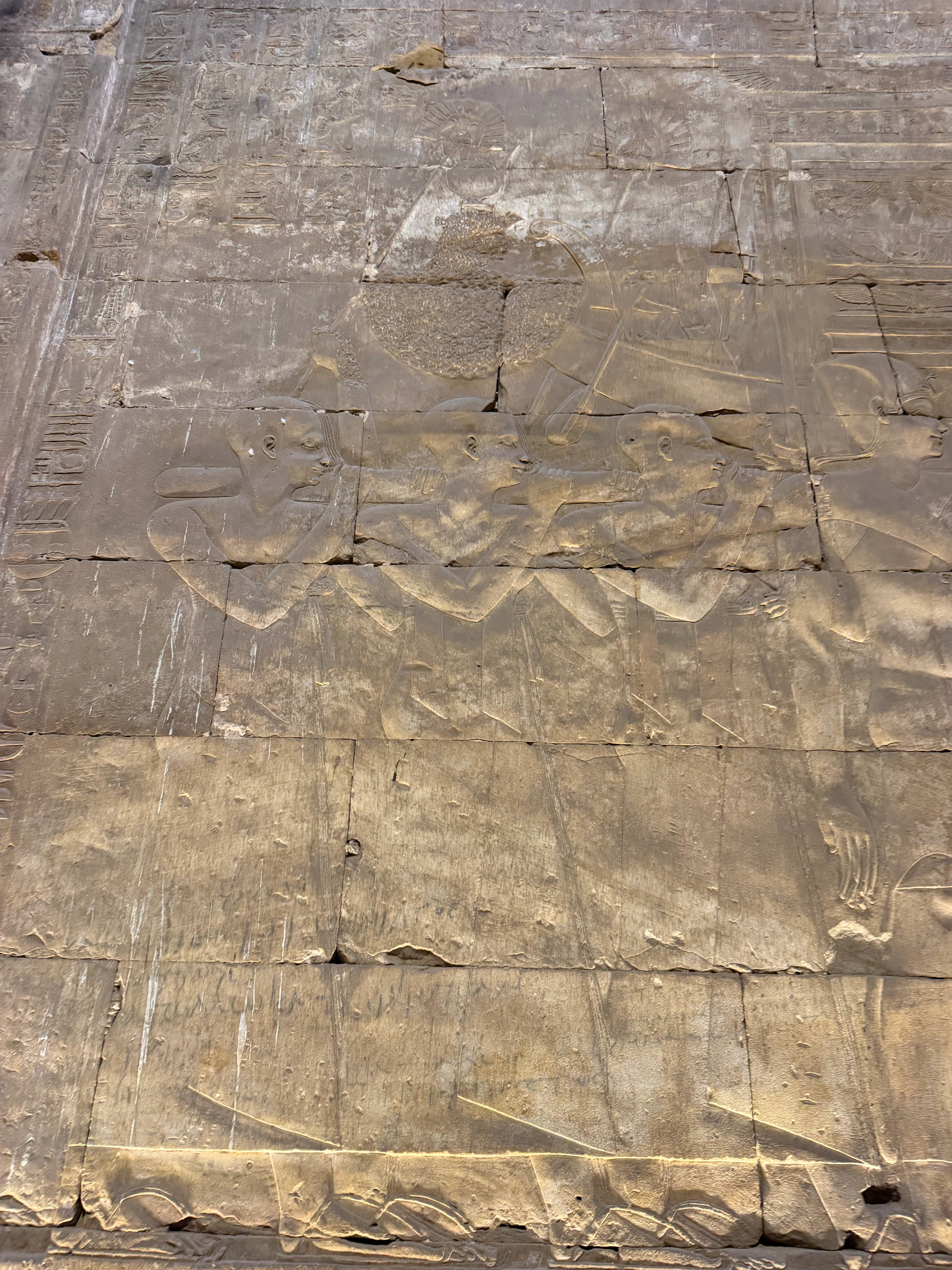
We also learned – from our tour guide- that the Priests had to be hairless and were completely bald. Interestingly I had already seen this in the Brandon Frazier movie “The Mummy” – but it was good to have it reinforced by a professional Egyptologist!
The temple also had an impressive set of carvings illustrating the Osiris Myth. In the telling of this story there are two brothers Osiris and Set. Osiris is King – and his brother Set murders him and usurps the throne. Isis – Osiris’ wife – restores his body. The two of them have a son named Horus who ultimately kills Set – and reclaims the throne. The story represents the ultimate triumph of good (Horus) over evil (Set). There are many more grotesque details to the story which are not appropriate to tell here. Various aspects to this myth were carved at many of the temples we saw but at Edfu this was illustrated in a very complete fashion on an entire wall of the temple.
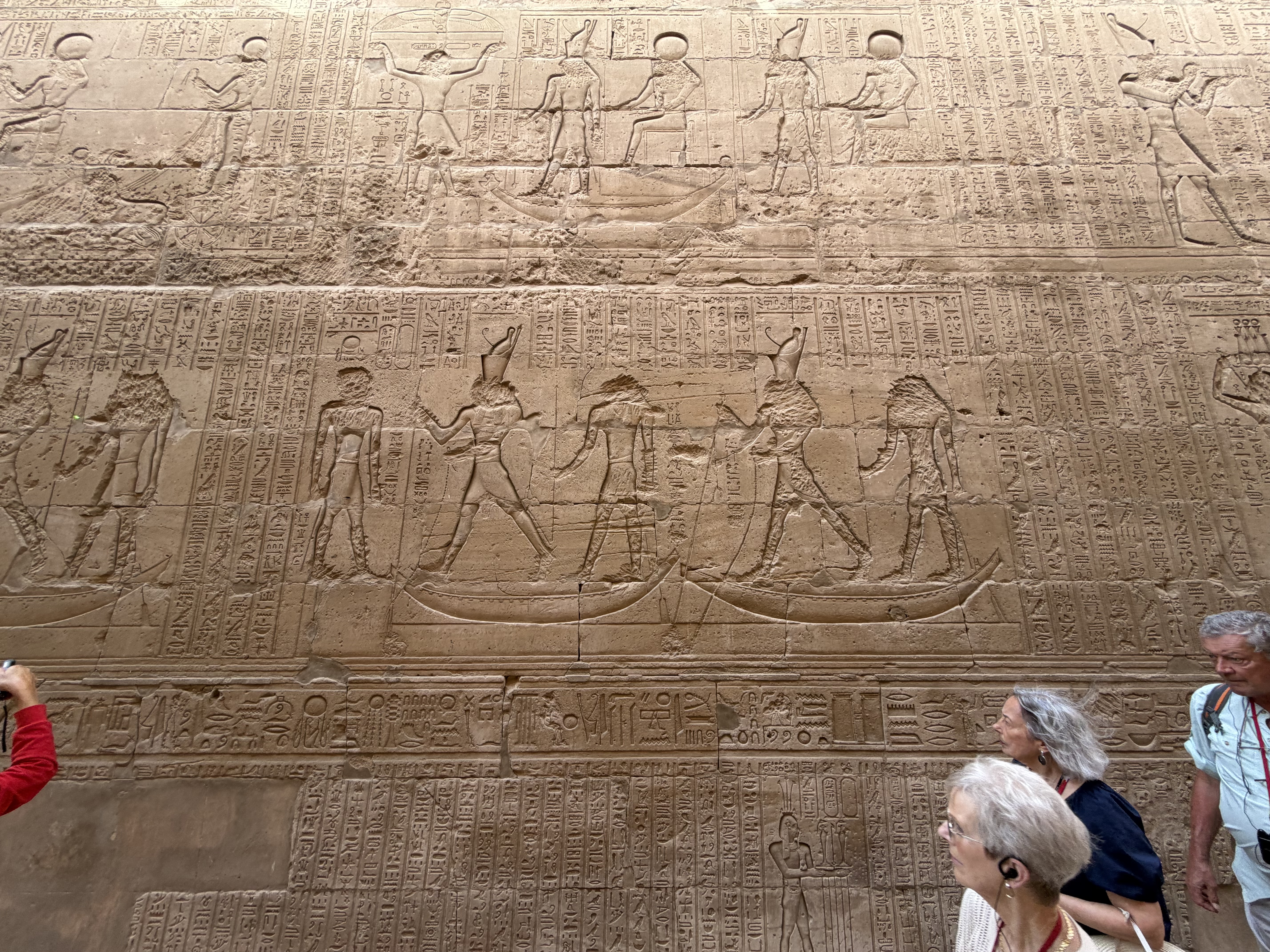
In addition to extensive art depicting this story – the priests would re-enact the story for village members at designated times during the Egyptian year.
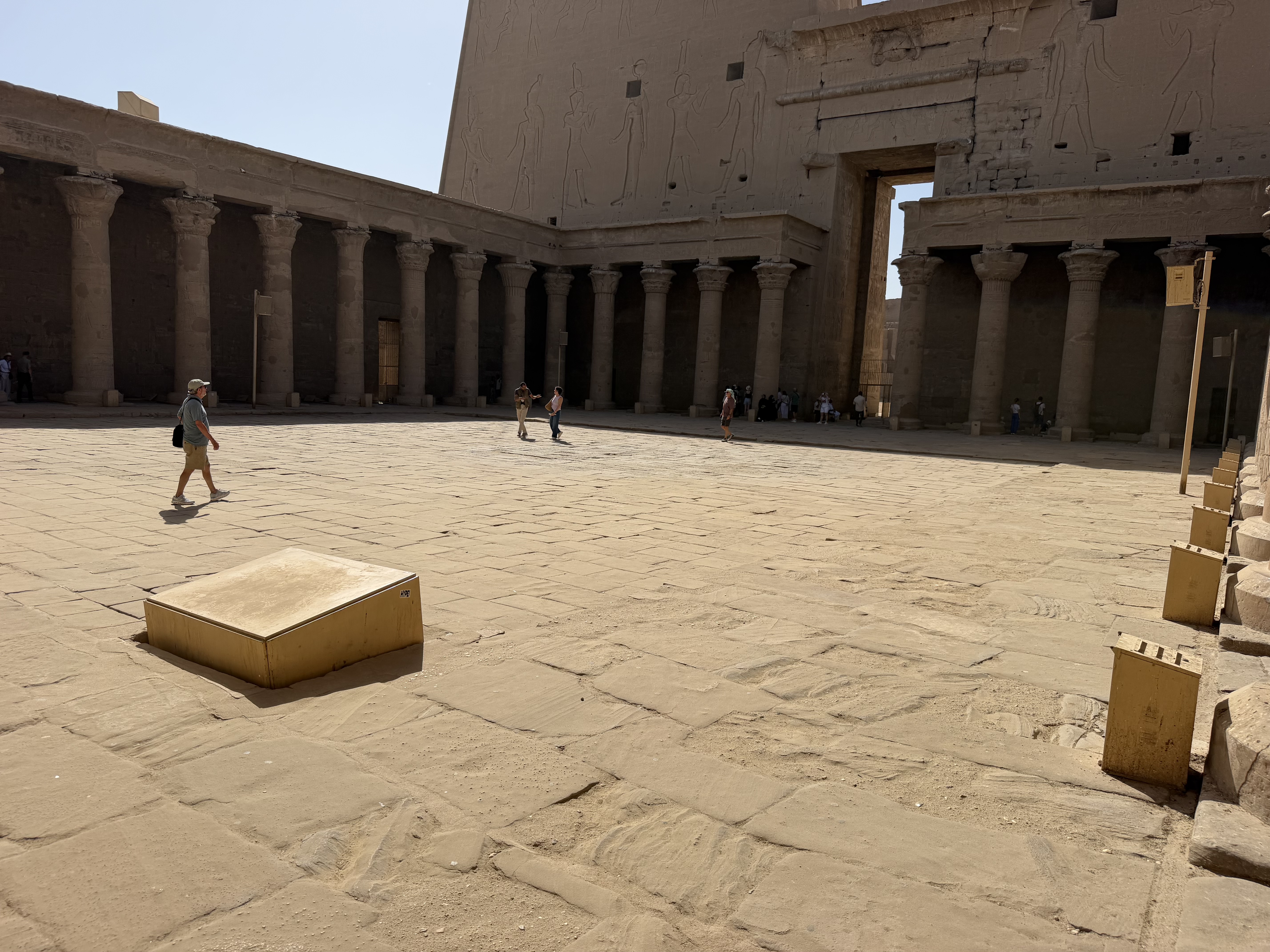
As our last temple – it was really nice seeing on that was so intact compared to some of the other ones we saw earlier in our tour.
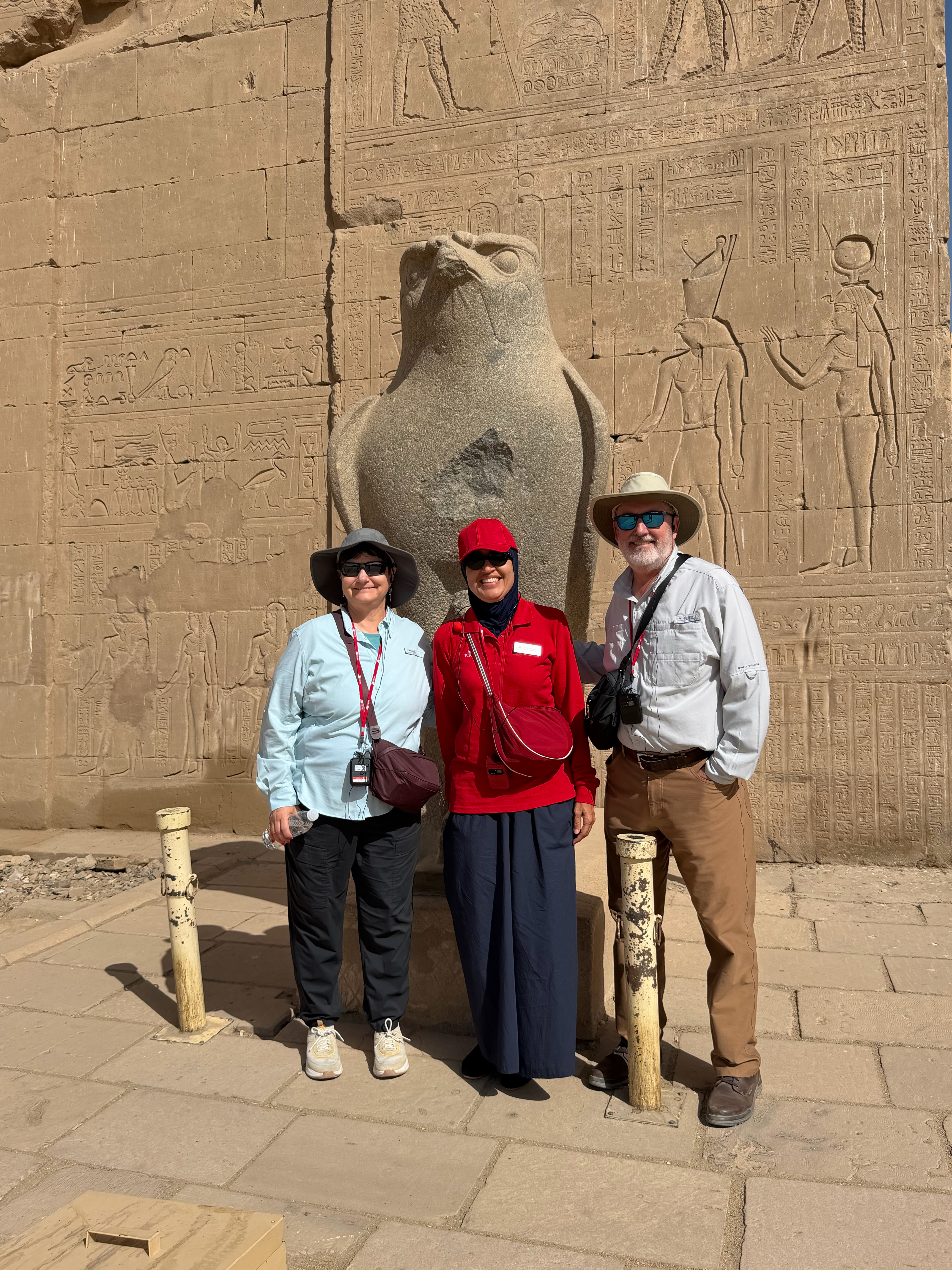
As we exited the temple complex, we got a picture with our outstanding tour guide who asked us tough questions all week and answered all of our other endless queries on hieroglyphics and ancient and contemporary Egypt.
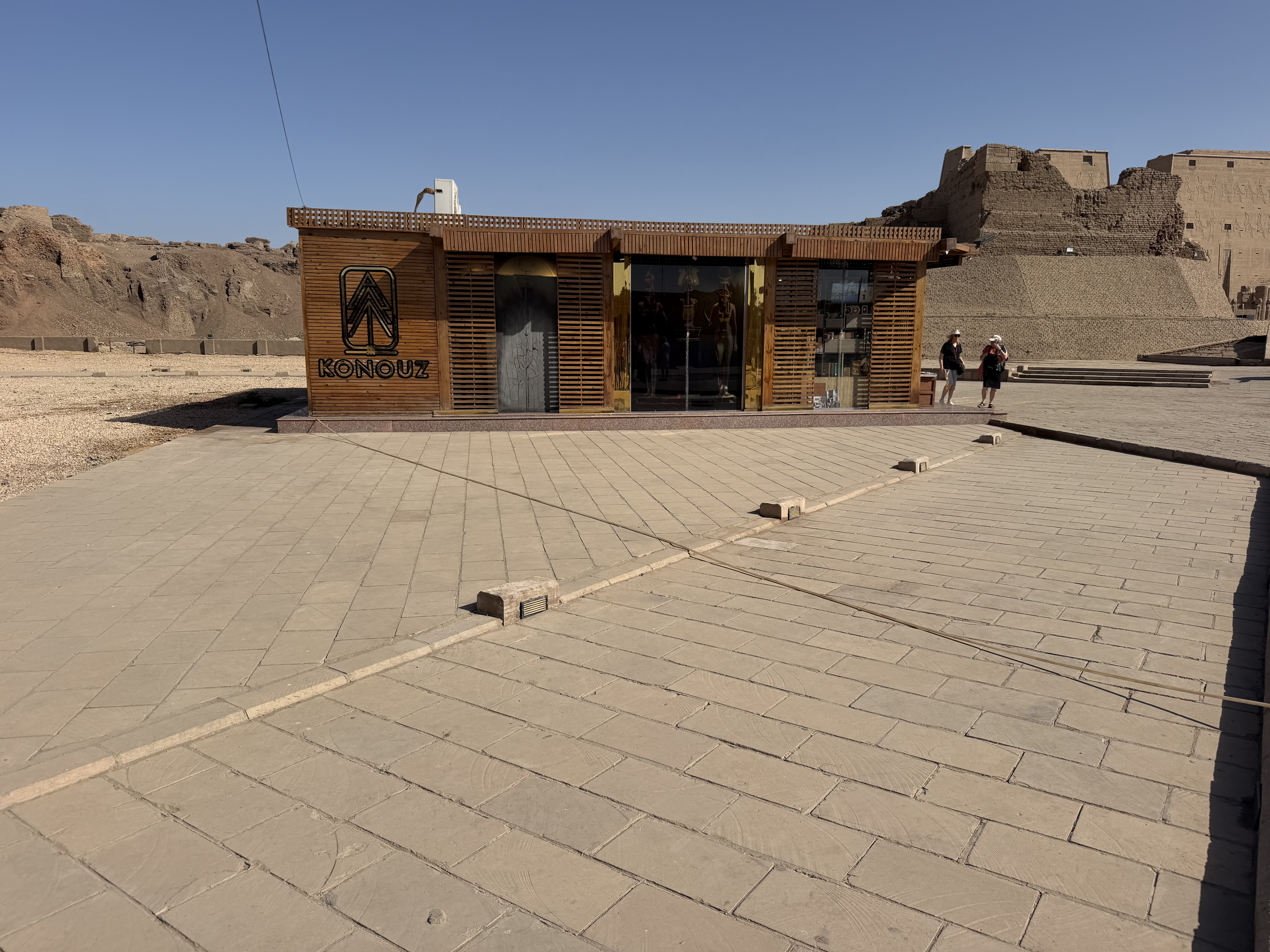
We did have time to go to an interesting gift shop on the way out of the temple complex – called Konouz. This store has replicas of lots of different ancient Egyptian artifacts that have been made in Egypt by local artisans – so there is no bargaining on price – and the prices are higher than you would pay on the street for something made out of country. We bought a couple of small items here for display back home in Washington.
After a short amount of shopping – we made our way back to the Viking Sobek for our last night on our ship before returning to Cairo.
Until next time!


