It was the last day of our organized Viking Tour of Egypt.
Our tour guide started her commentary on the bus letting us know that we had “ABT” syndrome at this point in our Egyptian tour – where “ABT” stands for “Another Bloody Temple”.
We had signed up and paid for this supplementary tour at the beginning of our Viking tour … so we plunged on ahead and got ready for more ruined temples.
Another bloody temple?
Not by a long shot.
The Coptic area of Cairo consisted of historic places of worship for multiple denominations including Coptic Christians, Jews, and others. We had an opportunity to visit a Jewish Synagogue, a historic Coptic Church, and to see the oldest Book of Psalms written on parchment in the Coptic language.
After our bus driver once again worked miracles to drive a large bus through narrow and crowded streets – we reached the historic Coptic Christian area of Cairo.
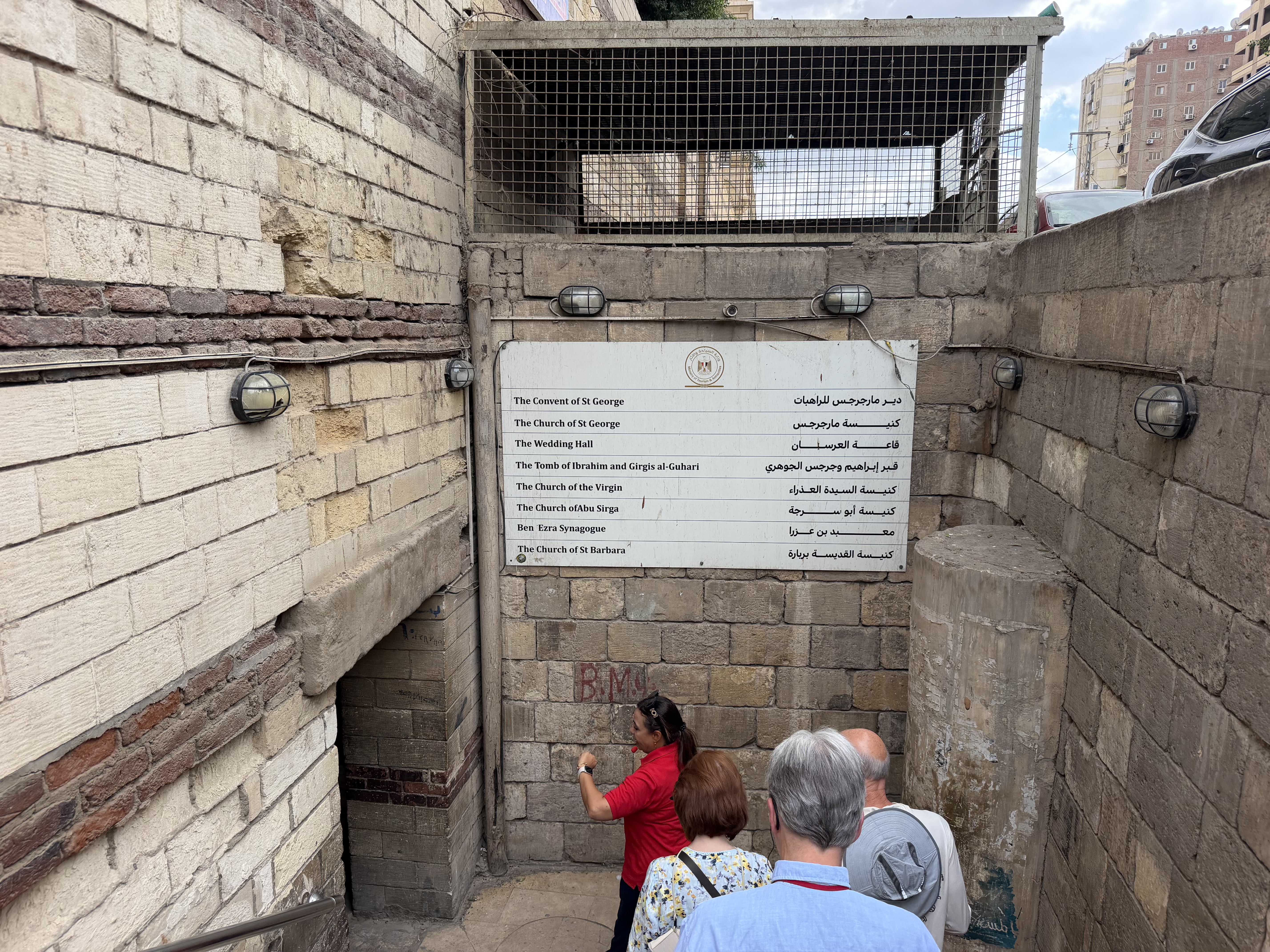
We did our usual dodging past numerous street vendors hawking t-shirts and other souvenirs and went down a set of stairs to enter a narrow alleyway. We were greeted with a sign showing directions to no less than eight different places of worship from various faiths.
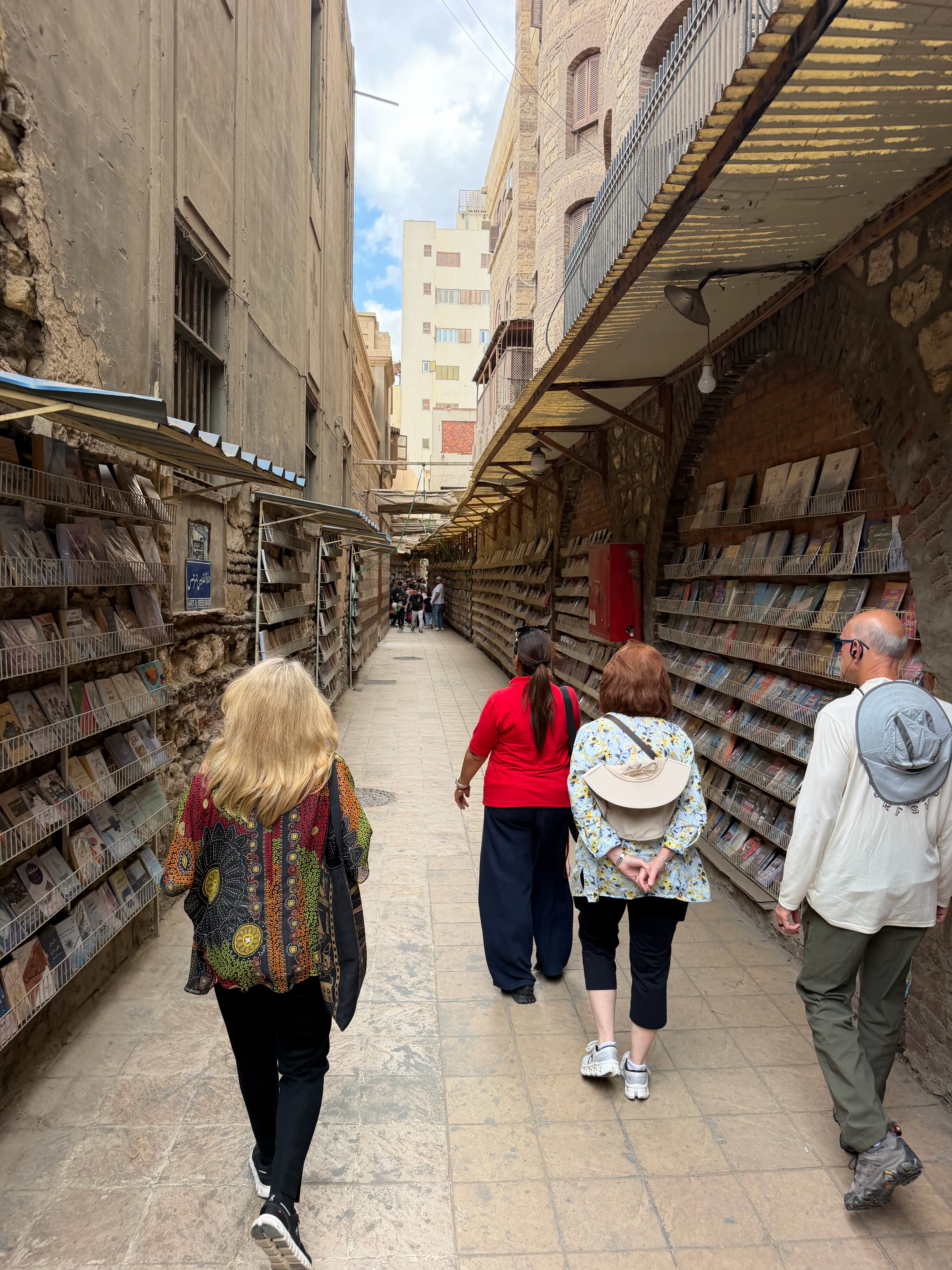
After a walk through the narrow alleyways we visited two places that have historical significance in western Christianity.
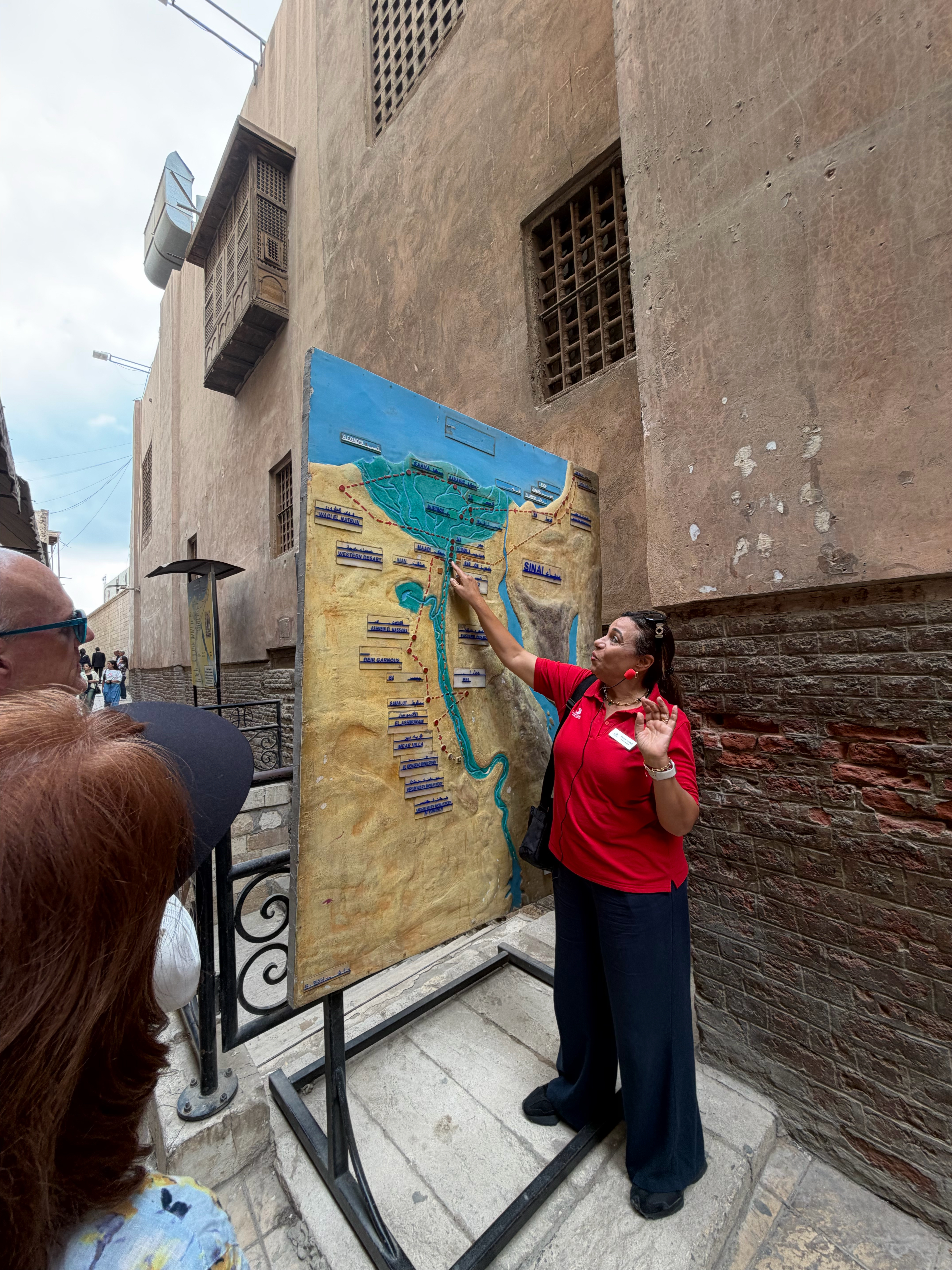
The first was a map showing the route through Egypt which the Holy Family (Mary, Joseph and Jesus) travelled after the birth of Jesus as told in the Gospel of Matthew. Interestingly, it coincided with many of the same towns that we had toured on our cruise.
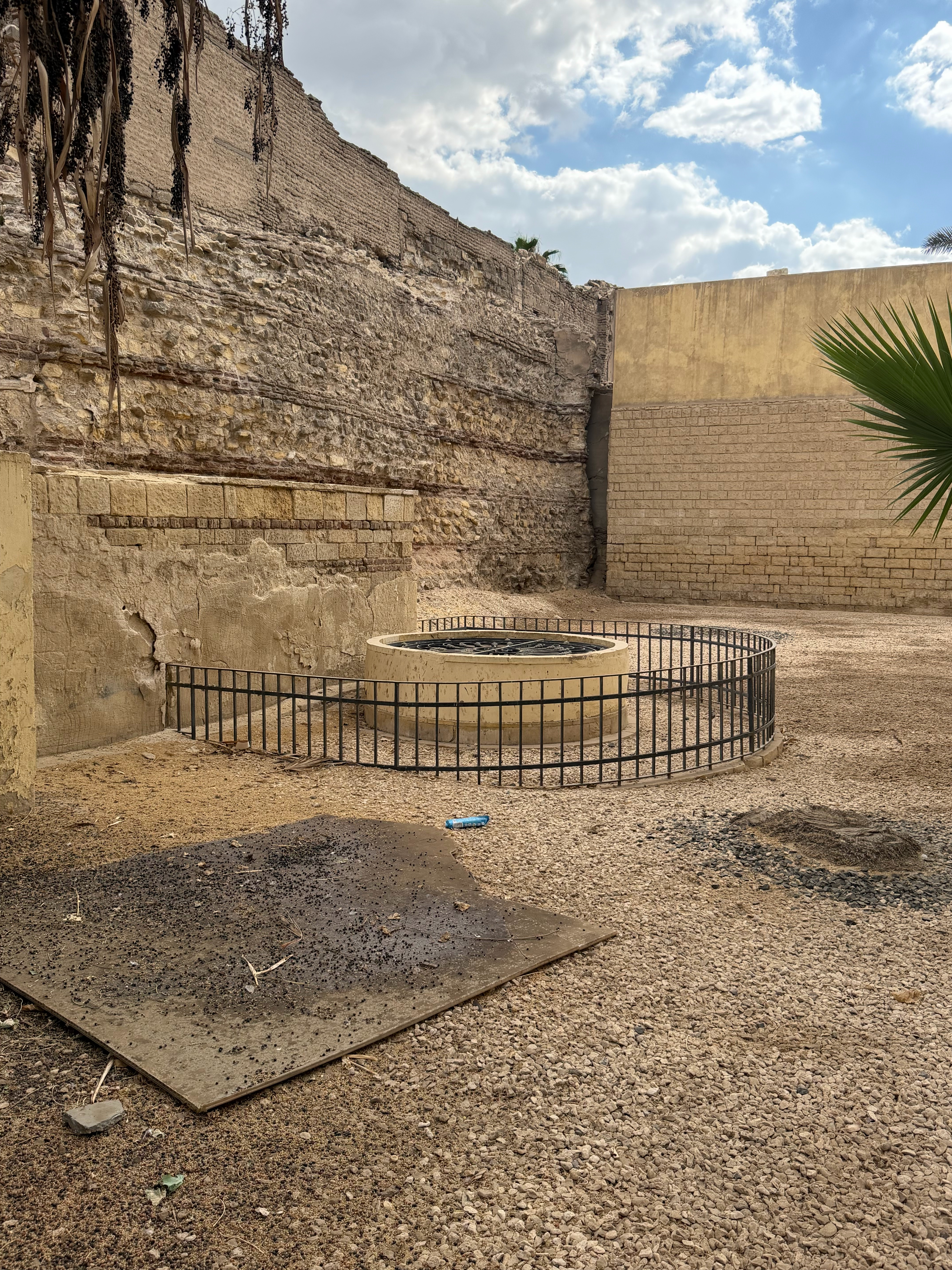
A little further along the walkway we stopped at a place with a well. Our guide told us that the Nile River used to run right through this area – and the stone ring was believed to be where Moses was placed in a basket by his mother when he was set adrift in the river Nile.
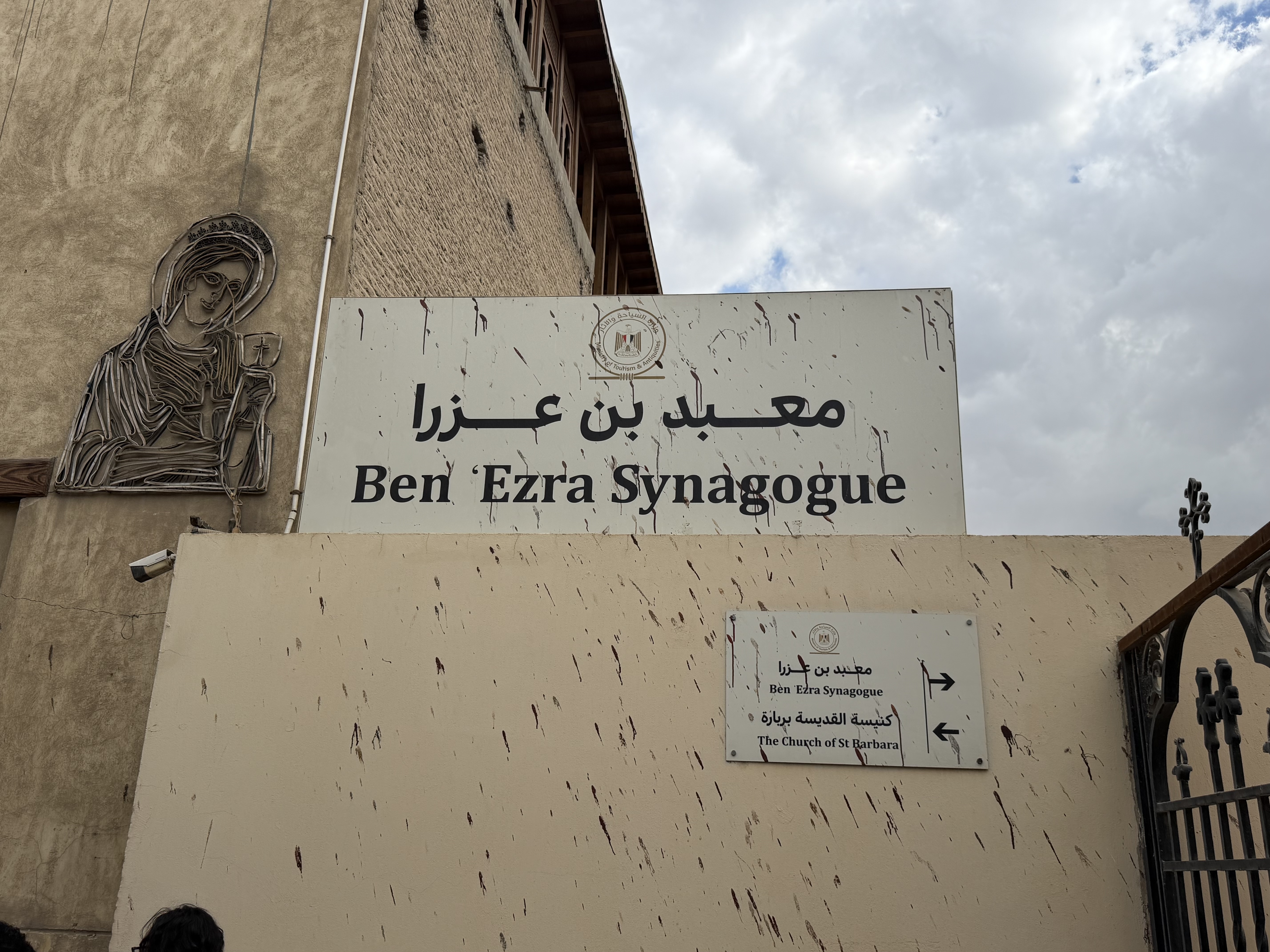
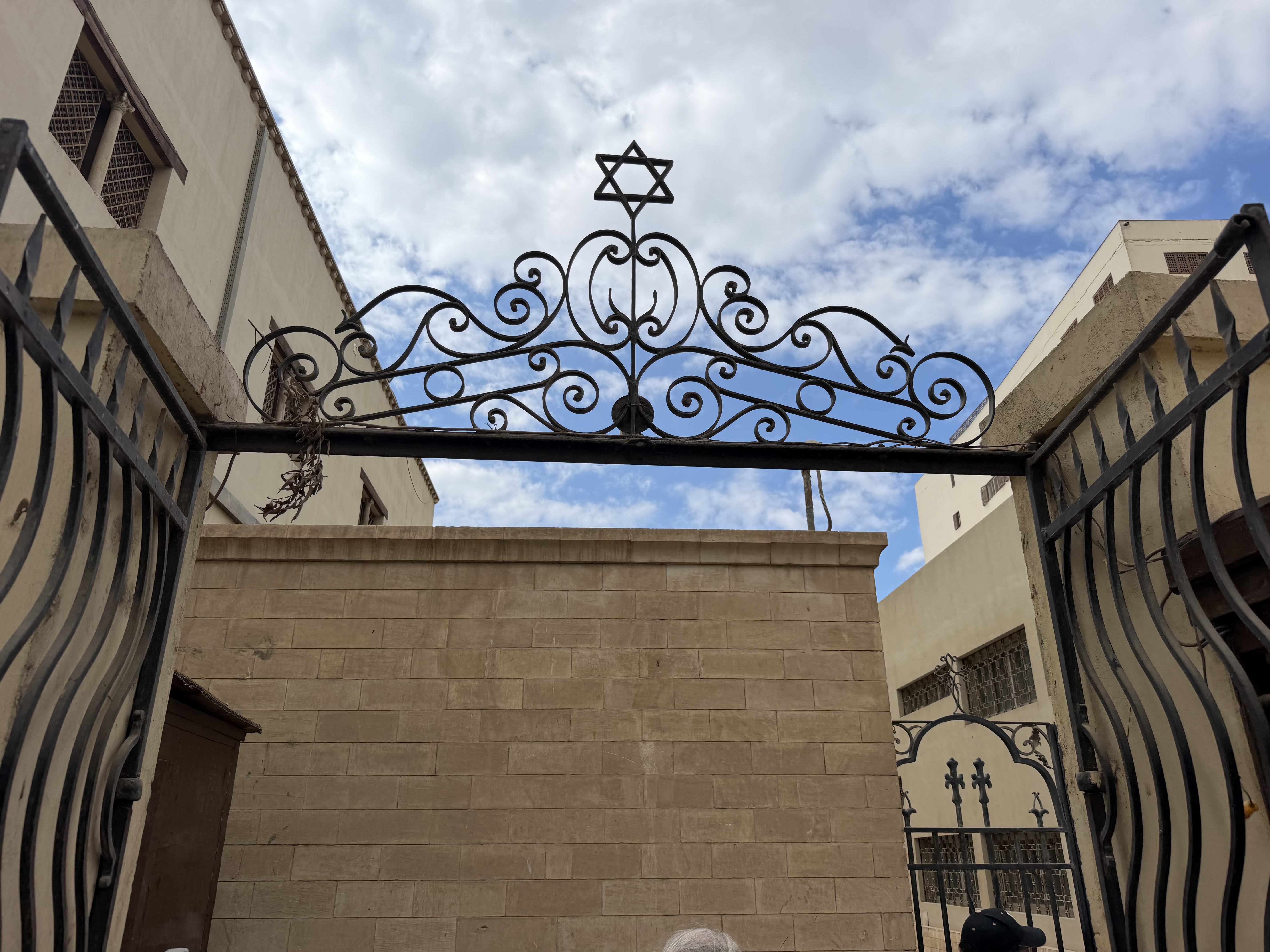
Our next stop was to walk through one of the 18 remaining synagogues in Egypt. The Ben Ezra Synagogue is the smallest of them and was decorated with the Star of David and other Jewish symbols on the walls and within the synagogue.
Interestingly, you could sometimes sneak a picture in this synagogue – but the supervisor of the person at the door was present that day (according to our tour guide) – so he wasn’t willing to let people take discreet iPhone photos. As a rule follower – I complied – so no pictures to share of the inside!
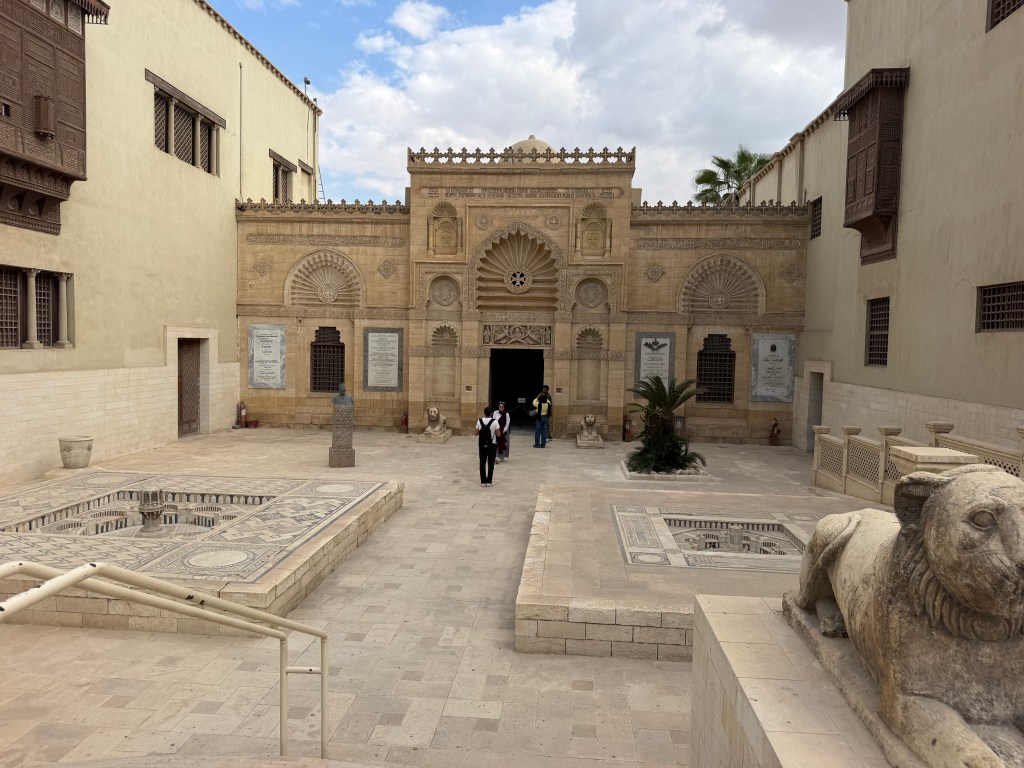
Our next stop was the Coptic Museum area. After a quick ticket scan we entered a large courtyard area. The courtyard was dominated by a what was termed the Roman Fortress at Babylon – so I guess we did find some ruins after all!
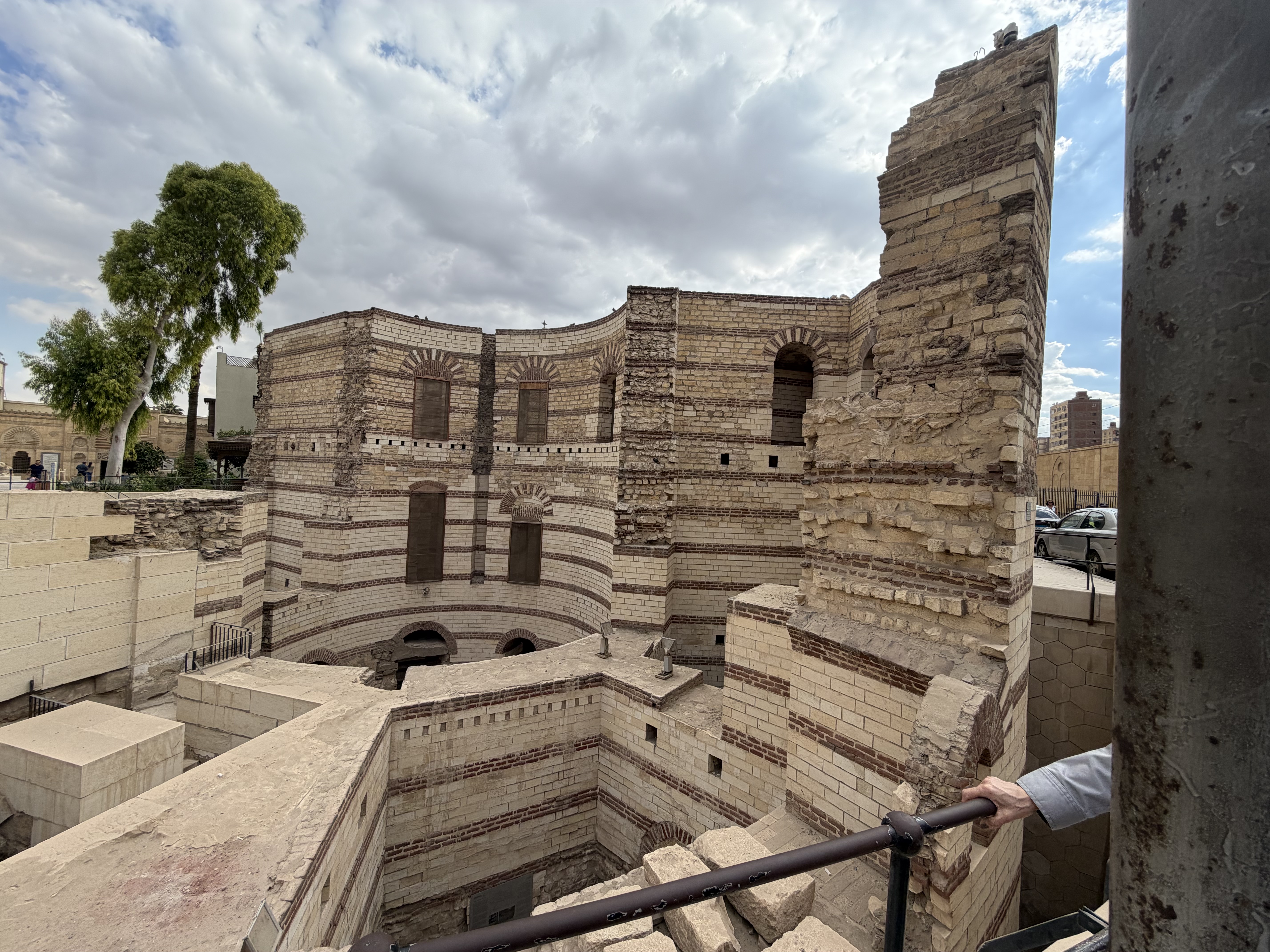
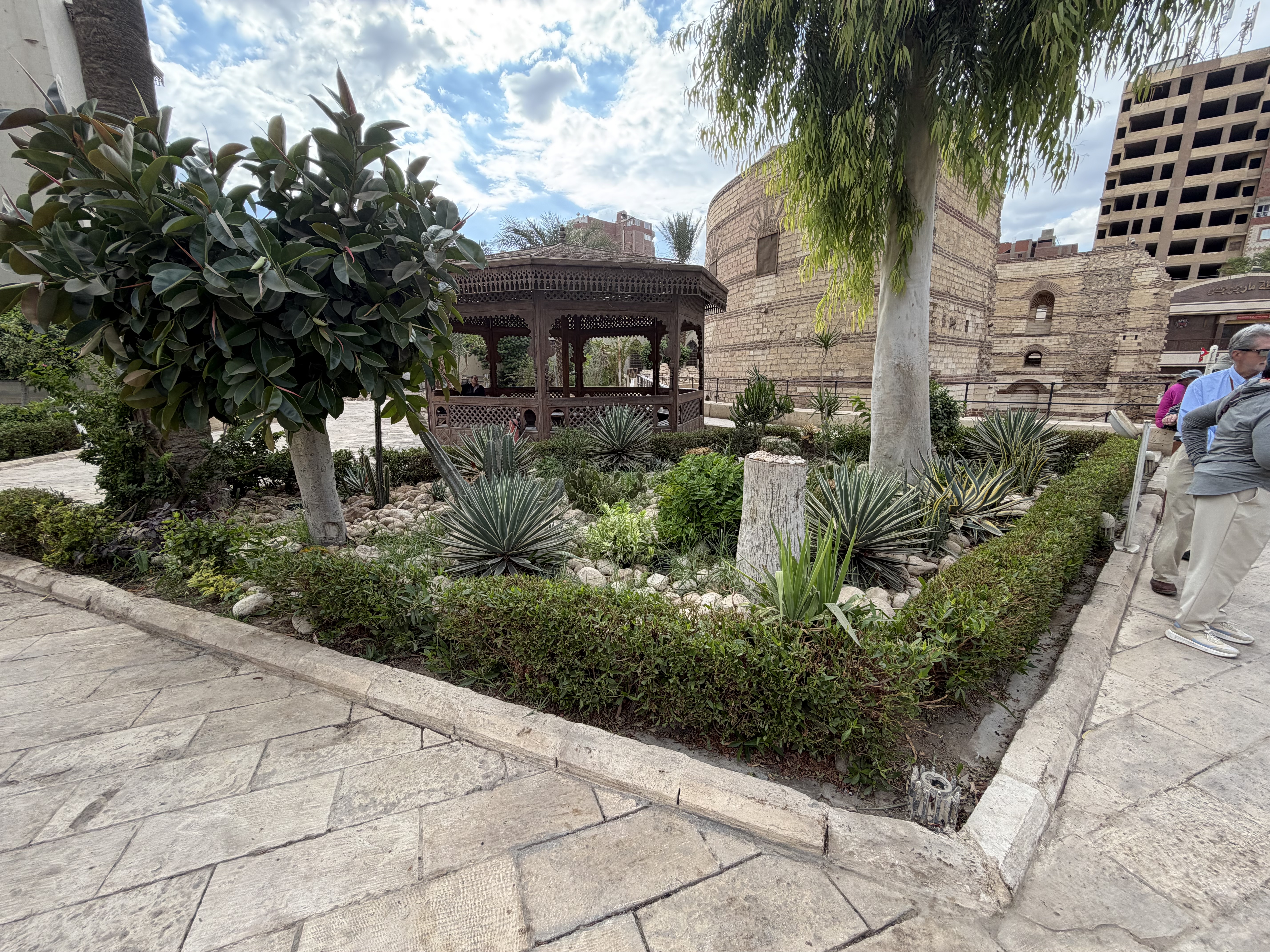
We walked through the courtyard to the front of the Coptic Museum. There were a couple of fountains (not functional any longer) and some nicely manicured desert gardens. We entered what we thought was a modestly sized museum judging by its appearance.
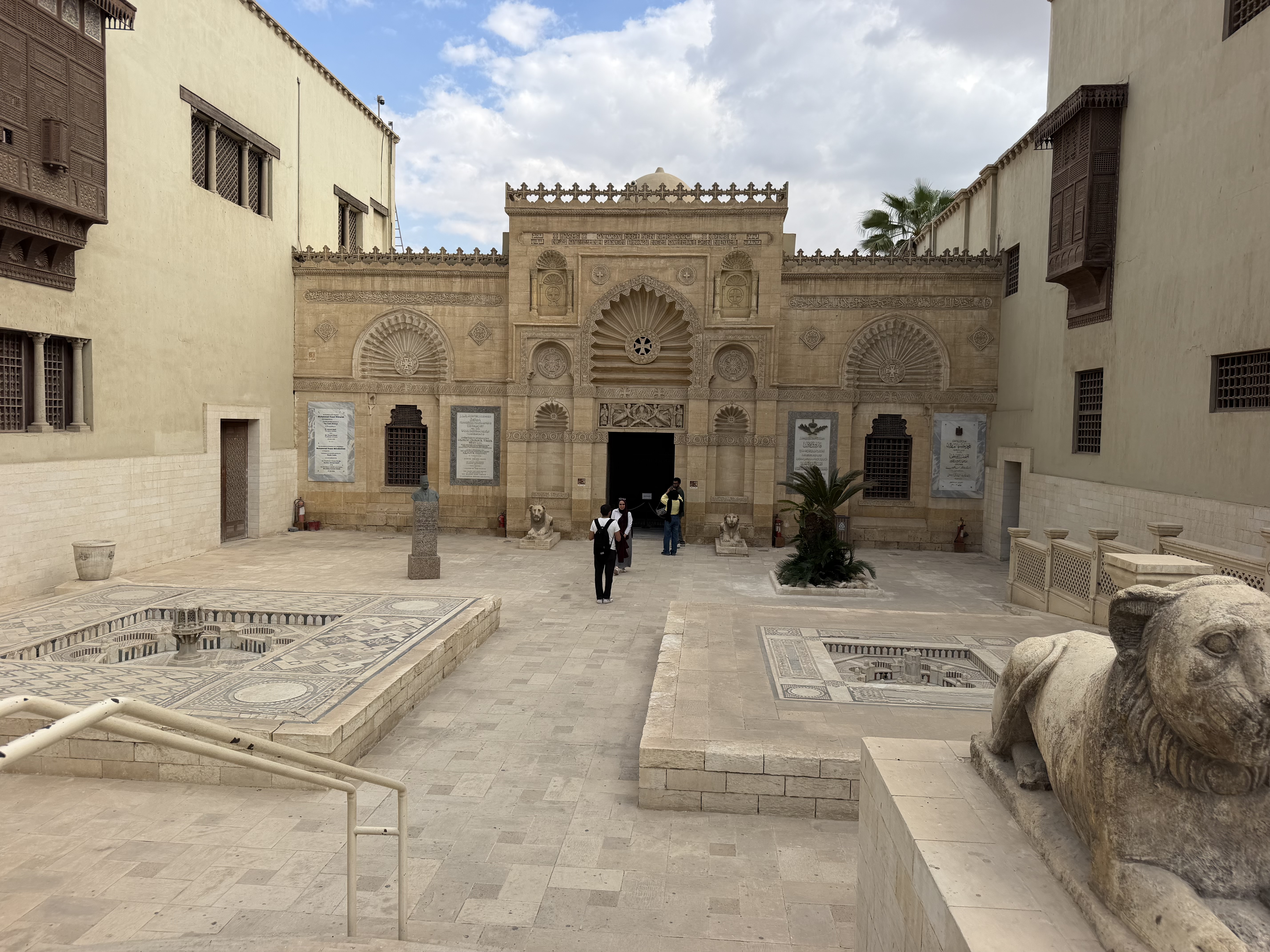
We were wrong – the museum was deceptively large. As we made our way through the galleries we observed exhibits displaying art, textiles, clothing, woodworking and religious icons from throughout the centuries of Coptic Christians being in Egypt.
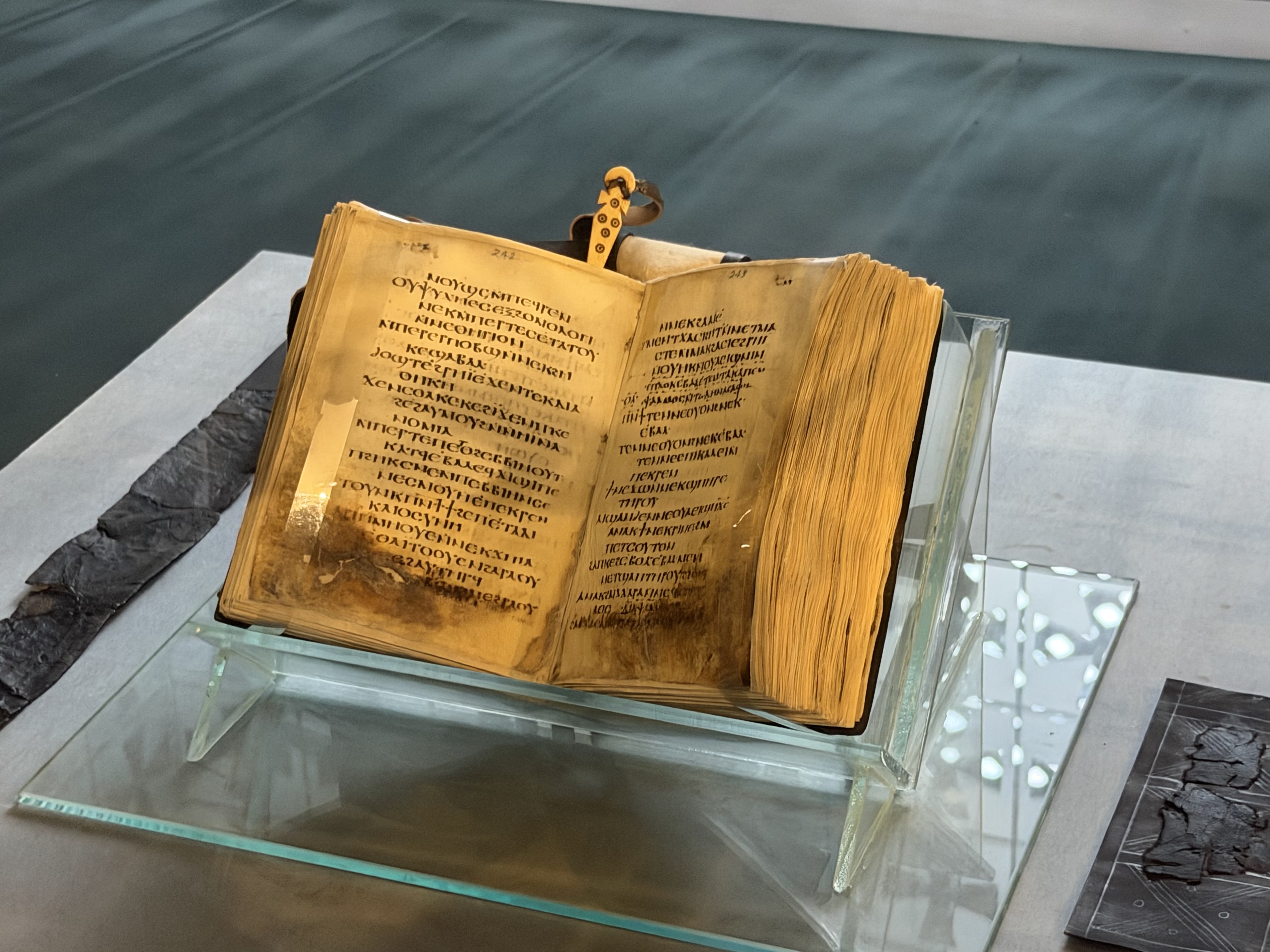
The highlight of the museum was a Coptic book of Psalms discovered in a farmers field which had been carefully curated and restored. It was displayed in a glass big glass cube with a carefully maintained environment to prevent further damage.
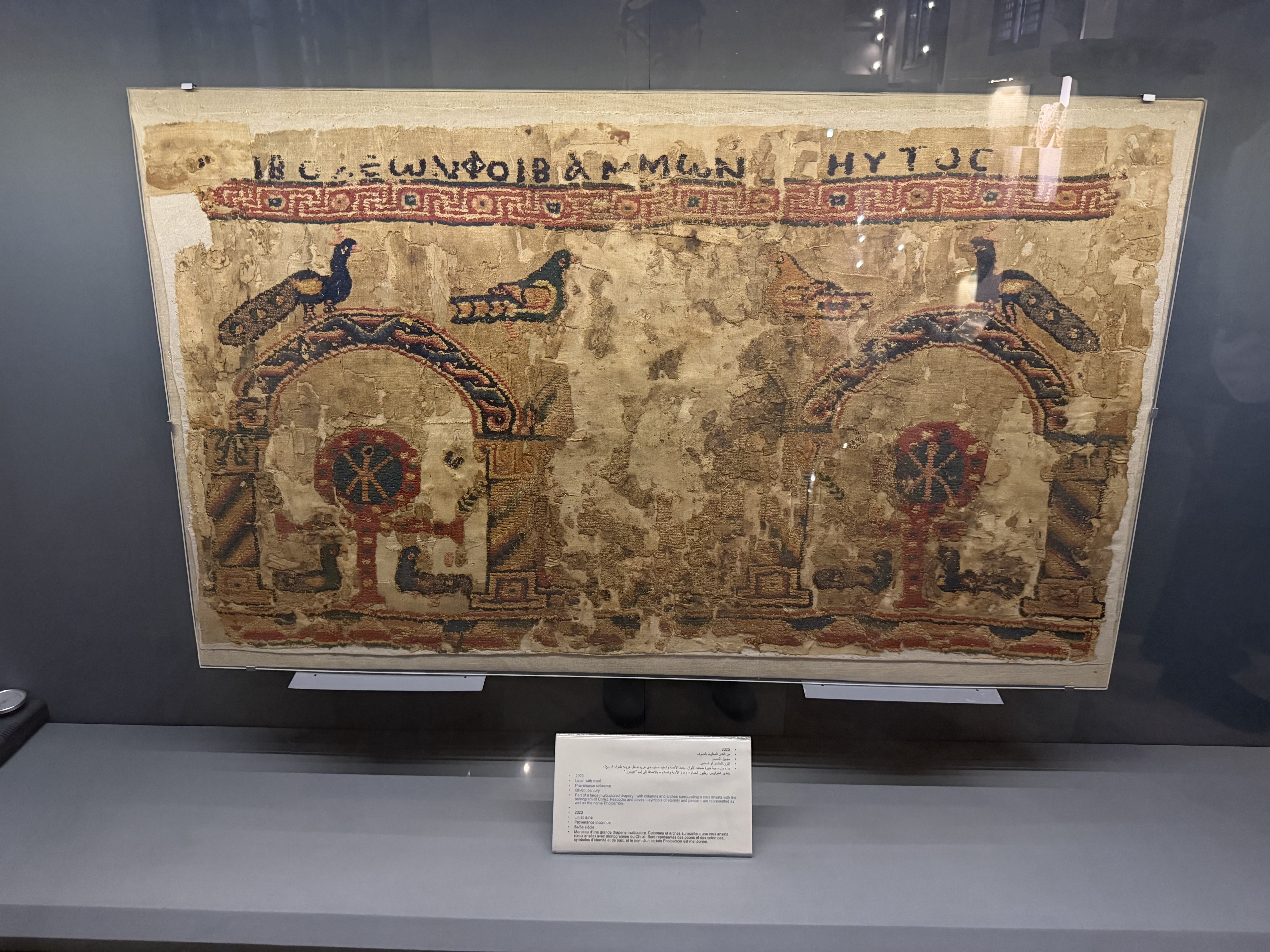
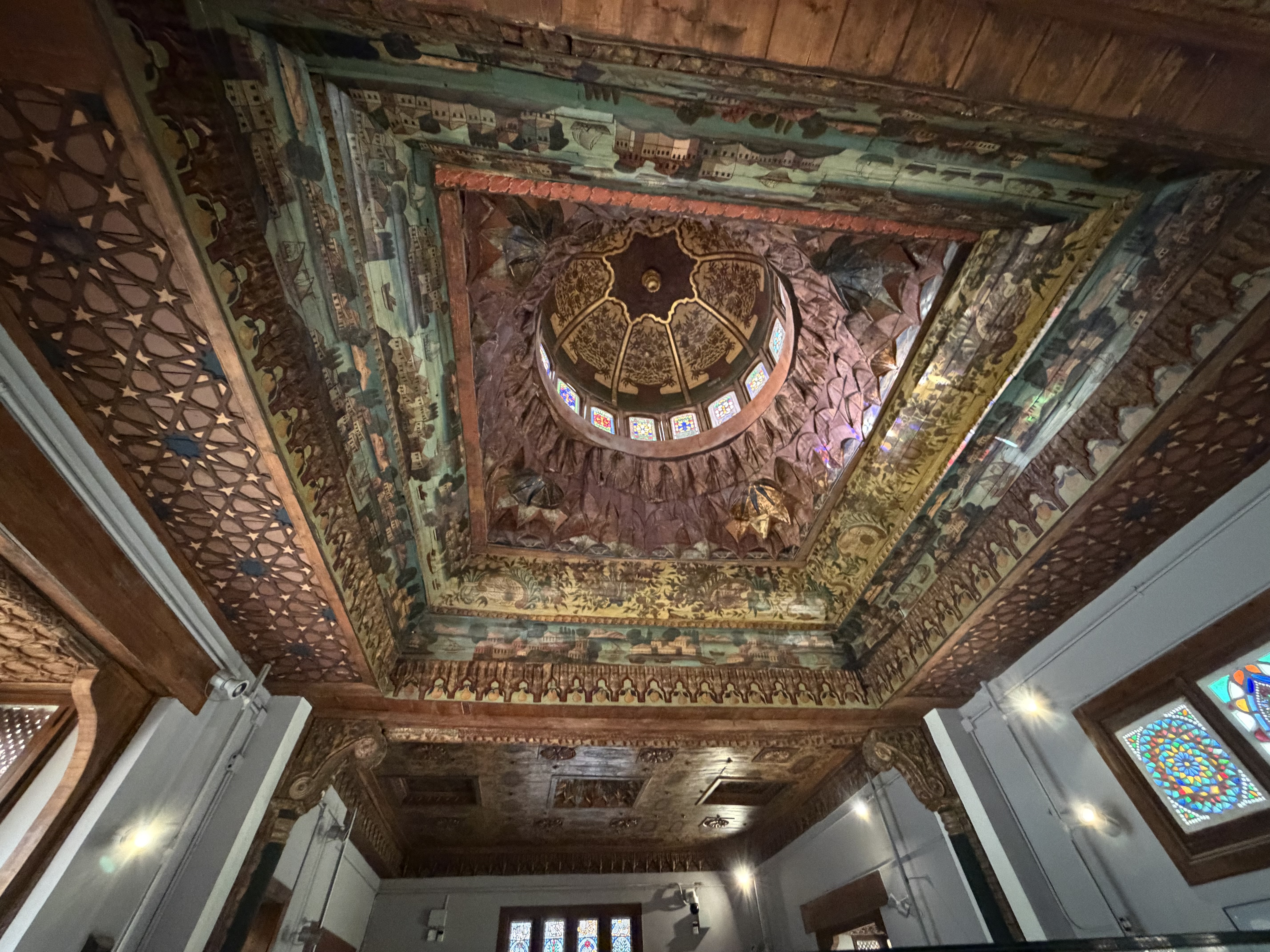
Our final stop on the tour was to walk through the appropriately nicknamed “Hanging Church” or by its official name of Saint Virgin Mary’s Coptic Orthodox Church.
Our tour guide reminded us that it had nothing to do with hanging people – but referred to how the church was constructed above the fortress ruins.
The Church courtyard area was decorated with colorful murals that focused on illustrating how Muslims and Coptic Christians work together in Egypt.
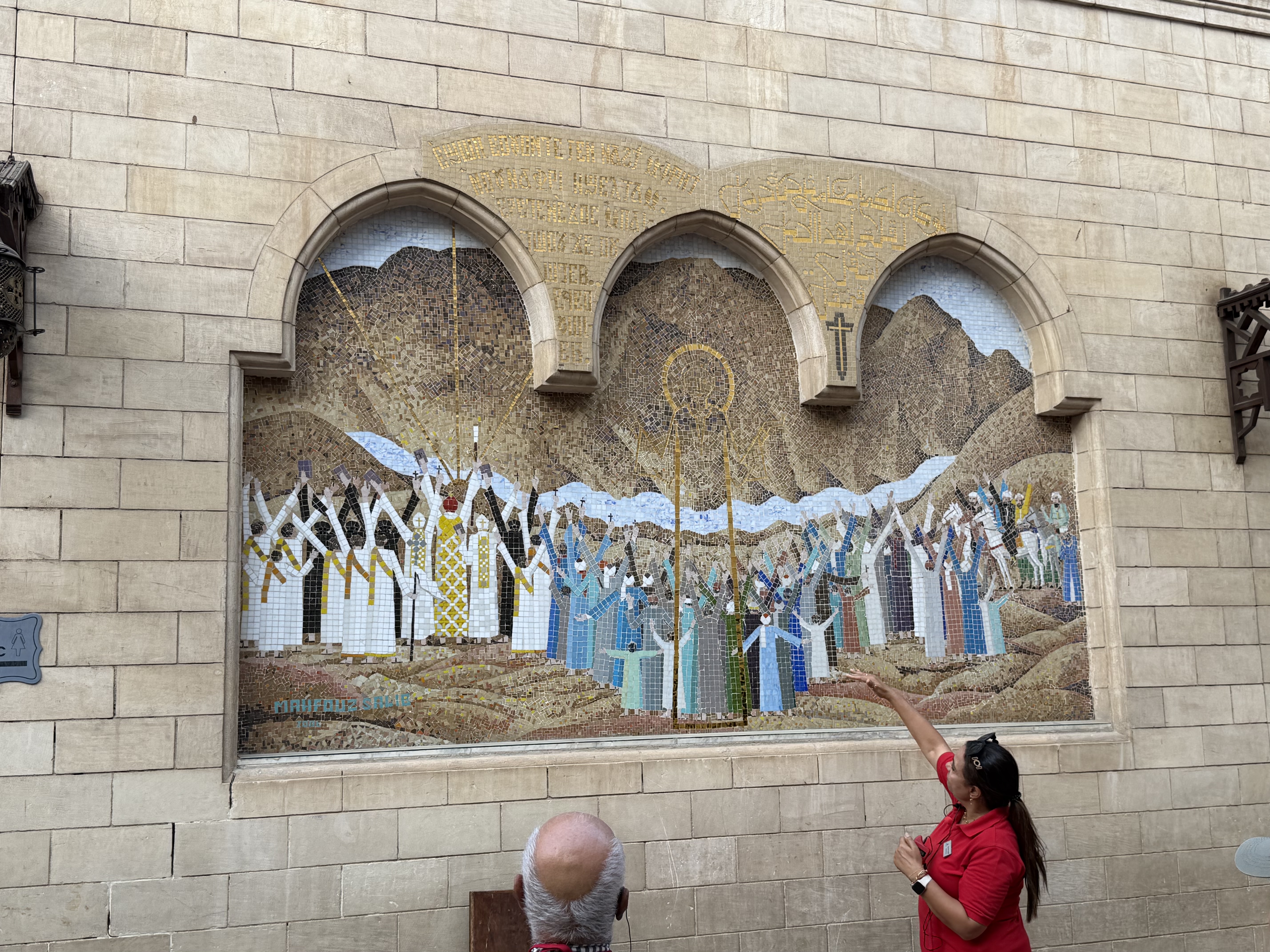
As we moved from the courtyard into the sanctuary entrance there were photo displays showing how Egyptian leaders come to this church for a blessing after they are elected. The photos were a veritable “who’s-who” of Egyptian leaders over the last century.
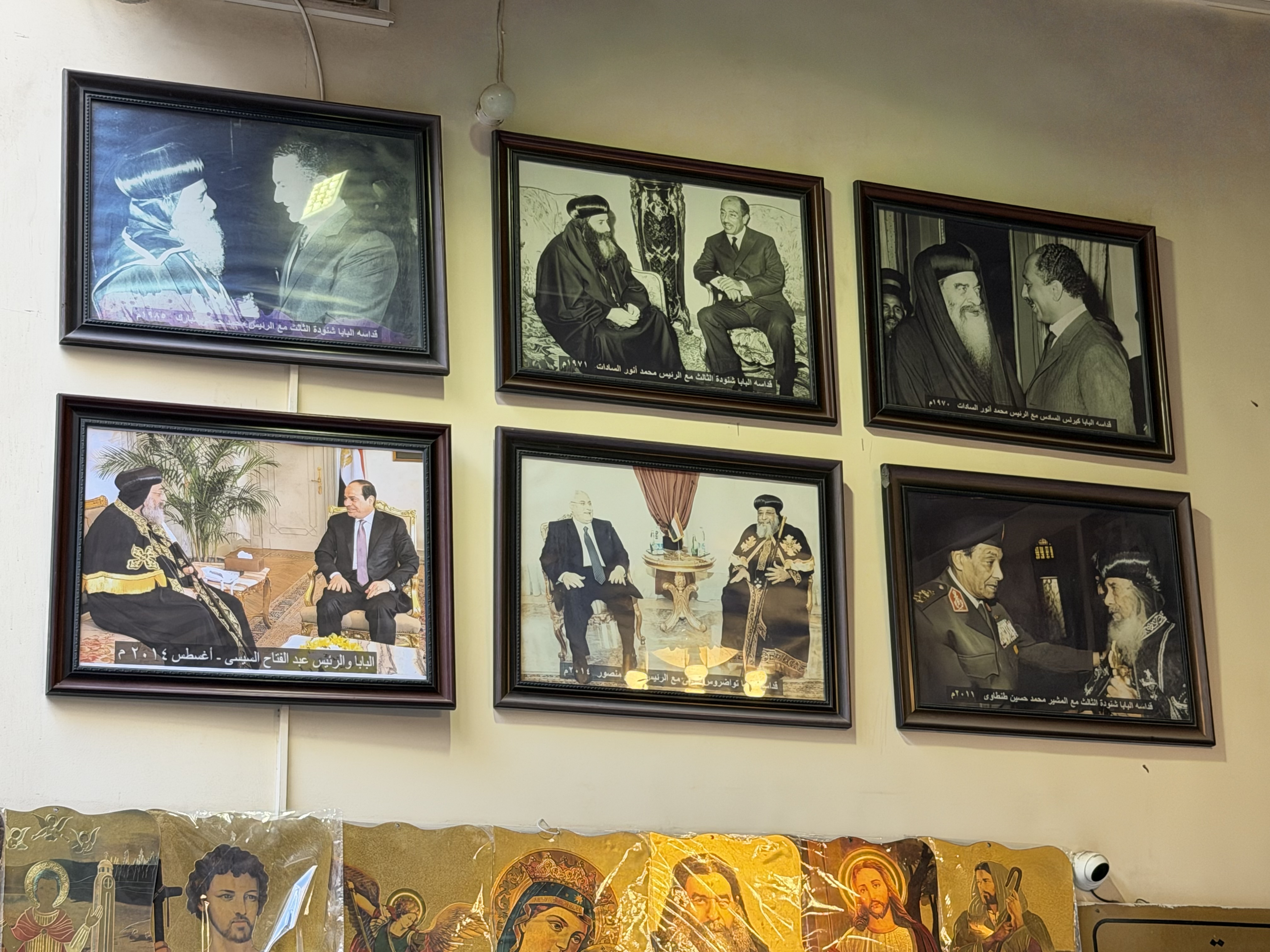
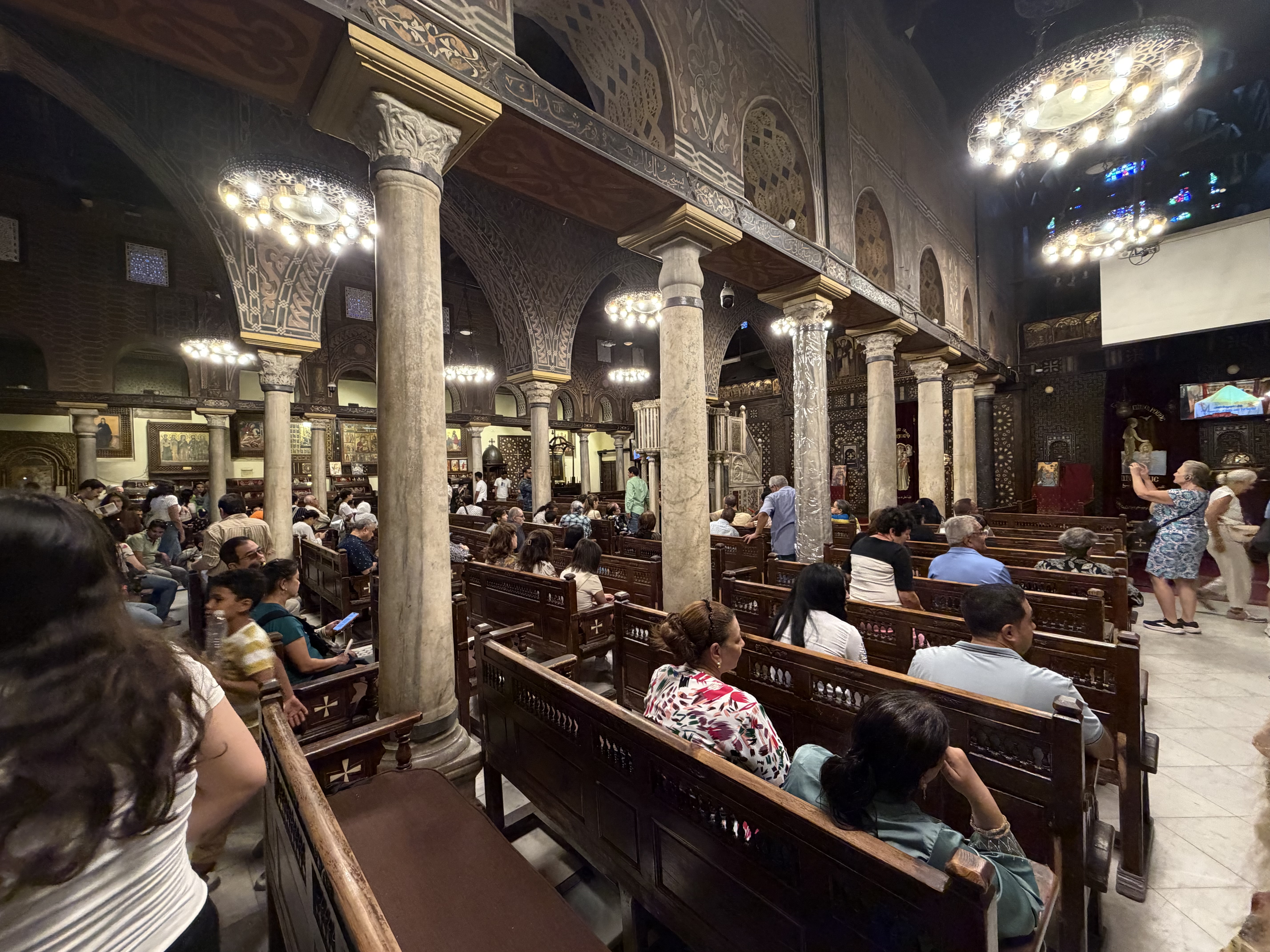
The inside of the church was very nice with significant numbers of religious icons throughout the sanctuary. In addition to legions of tourists going through the church – there were clearly Egyptians coming in to touch the various icons and ask for blessings.
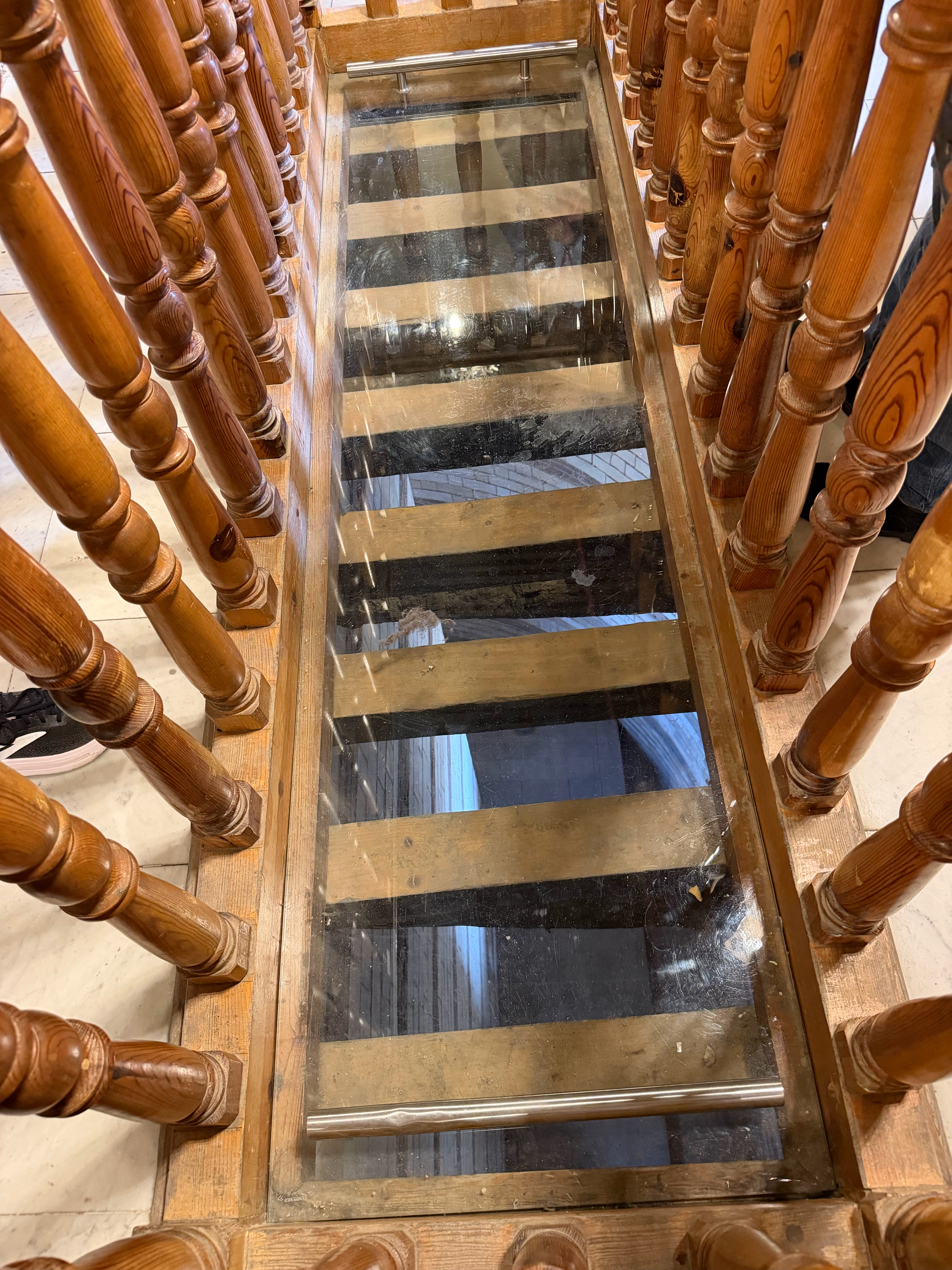
The final part of the tour also illustrated on why it was called the “hanging church” – as it is now significantly above ground level. You can look through a grated area and see the street below.
As we got back on the bus, our tour guide told us that the tour of Coptic Cairo was one of the most highly rated optional tours they do in Egypt. We agree.
Overall it was an amazing way to end our tour of Egypt with new friends we made on our Viking tour.
Until next time!


